Last Updated: October 4, 2026
Quick answer: Our top pick in 2026 is the Reusable aquarium prefilter sponge — our #1 rated choice. See the full ranked comparison, alternatives and buying advice below.
The Short Answer
Yes— aquarium filter prefilters are worth it if you keep shrimp, fry, small fish, or a tank with fine debris and your prefilter fits the intake tube securely. A simple sponge cover can prevent livestock from being pulled into a filter, extend the time between major filter cleanings, and add useful biological filtration. It is not a universal upgrade, though. If your aquarium has large fish, a very strong canister intake, or a prefilter that clogs quickly, the added maintenance may outweigh the benefit.
For most small freshwater aquariums, the decision is inexpensive and practical. A replacement sponge typically costs about $1 to $8, while a complete reusable prefilter setup may cost roughly $5 to $20. The important part is matching the sponge’s opening to the diameter of your filter intake—not simply choosing the cheapest option.
As an Amazon Associate we earn from qualifying purchases at no extra cost to you.

What You Actually Get
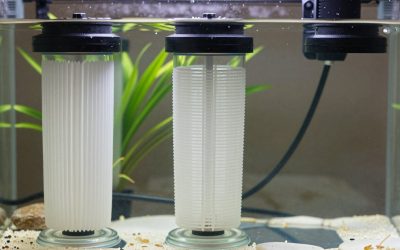
A prefilter is a porous sponge or mesh sleeve that fits over the intake of an internal, hang-on-back, or canister filter. Water passes through the material before reaching the filter’s impeller or main media chamber. The sponge catches larger particles, uneaten food, plant fragments, waste, and sometimes very small animals.
Most aquarium prefilters are made from coarse or medium open-cell foam. Coarse foam allows better flow and tends to resist clogging; finer foam catches smaller particles but usually requires more frequent rinsing. Some models include a slit, center hole, or elastic opening that stretches over an intake tube. Others use a plastic cage, cap, or clip to hold the sponge in place.
The two AQUANEAT six-packs are examples of the basic sponge-cover design. The 0.8-inch intake version is listed for under $10, while the 0.4-inch version is listed for under $10. Those measurements refer to the intake size the sponge is designed to fit, not necessarily the outside dimensions of the foam. Confirm your intake diameter with a ruler or caliper before ordering. A loose sponge can float off, while an undersized opening can restrict flow or split during installation.
In operation, the prefilter performs two jobs. First, it acts as a physical barrier that keeps vulnerable livestock away from the intake. Second, it becomes a colonization surface for beneficial bacteria. It should not replace the main filter media, water changes, or routine tank maintenance. Think of it as a first-stage filter and intake guard rather than a complete filtration system.
Pros
- Protects shrimp and fry: Tiny fish, newly hatched fry, and dwarf shrimp can be drawn into unguarded filter intakes. A sponge creates a much safer barrier.
- Catches debris early: Leaves, food particles, substrate dust, and loose waste collect on the prefilter instead of immediately entering the main filter.
- Can extend main-filter service intervals: Because the prefilter captures larger debris first, the internal cartridge, impeller housing, or canister media may stay cleaner for longer.
- Adds biological surface area: Once established, the sponge can host beneficial nitrifying bacteria. This is helpful, although its contribution depends on sponge size, water flow, and the aquarium’s biological load.
- Low purchase price: Multipacks can cost only a few dollars. The AQUANEAT examples work out to about $1.00 per sponge for the 0.8-inch six-pack and about $1.17 per sponge for the 0.4-inch six-pack.
- Simple to install: Most sleeves push over an intake tube without tools. Replacing a worn sponge is usually faster than cleaning a complicated intake guard.
- Reduces impeller-related problems: Larger debris is less likely to reach the impeller, where it can create rattling, reduce circulation, or require disassembly.
Cons
- It can restrict flow: A clogged sponge may reduce circulation and filtration. The risk is higher with fine foam, heavy feeding, messy fish, or an aquarium with lots of plant debris.
- It needs regular cleaning: Inspect the prefilter at least weekly in a heavily stocked tank and every one to two weeks in a lightly stocked tank. Rinse it in removed aquarium water rather than untreated tap water to reduce the risk of harming beneficial bacteria.
- It can be easy to size incorrectly: Intake measurements vary, and product labels may describe the opening rather than the full sponge. Measure the tube’s outside diameter and check the manufacturer’s fit guidance.
- It takes up space: A sponge cover may add 1 to 2 inches to the intake’s effective diameter. In a nano tank, that can crowd plants, hardscape, or a small internal filter.
- It is not a substitute for adequate filtration: A prefilter does not fix an undersized filter or poor water circulation. It also does not remove dissolved pollutants in the same way that activated carbon or specialized media may.
- It may need frequent replacement: Foam eventually tears, compresses, or becomes permanently clogged. Depending on the tank, replacement may be needed every few months to a year.
- Some fish can dislodge it: Large, active fish may pull at a loose sponge. If the cover is not snug, use a compatible retaining clip or intake guard.
Who Should Buy It
Buy a prefilter if you keep shrimp, fry, juvenile fish, snails, or other small animals that could be pulled into an intake. It is also a smart choice for planted aquariums, breeding tanks, and tanks with a lot of floating plant matter. Aquariums using hang-on-back filters often benefit because the intake is exposed and usually has substantial suction near the bottom.
Prefilters make particular sense on tanks from about 5 to 40 gallons, where a replacement sponge is cheap and easy to service. They are also useful when your main filter is difficult to open, such as a canister filter under a cabinet. Cleaning a removable prefilter every week is less disruptive than repeatedly opening the canister.
Choose coarse foam for higher-flow filters and messy fish. Choose a finer sponge when protecting very small fry is the priority, but be prepared to clean it more often. If your filter uses an intake tube about 0.4 inch or 0.8 inch in diameter, the corresponding AQUANEAT six-packs are budget options to compare. Verify the measurement before purchase; the price difference between the listed packs is small, but an incorrect fit is wasted money.
Who Should Skip It
Skip a prefilter if your aquarium already has a protected intake and you do not keep small livestock. It may also be unnecessary in a lightly stocked tank with a generous filter and little debris. If you rarely perform maintenance, adding a sponge can create another neglected blockage point rather than improving the system.
Be cautious with very high-flow aquariums, large messy fish, and filters that are already close to their practical capacity. A prefilter that clogs after a few days can cause more trouble than it prevents. In those setups, a larger coarse sponge, a wider intake guard, or a filter with more capacity may be the better solution.
Cheaper Alternatives
| Option | Cost | Trade-off |
|---|---|---|
| Reusable aquarium prefilter sponge | $1–$8 | Best balance of protection and price; requires regular rinsing and correct sizing. |
| DIY coarse filter foam sleeve | $2–$10 for a sheet or small piece | Can be cut to fit several intakes, but edges may fray and the fit is less predictable. |
| Plastic intake guard or strainer | $3–$12 | Does not clog as quickly and preserves flow well, but openings may be too large for shrimp or tiny fry. |
| Filter floss wrapped around an intake | About $1–$5 | Very inexpensive and catches fine particles, but it clogs rapidly and is usually disposable. |
| Replacement manufacturer intake sponge | $5–$20 | Usually offers the most reliable fit, but may cost more than a universal six-pack. |
A DIY solution can work, but avoid household foam, packing foam, or any material treated with flame retardants, adhesives, dyes, or cleaning chemicals. Aquarium-safe foam is the safer choice. Never secure a homemade cover with metal that can rust or with glue that has not been rated for aquarium use.
FAQ
Do aquarium prefilters reduce water flow?
They can. A clean, coarse sponge usually causes less restriction than a fine sponge, but every prefilter adds resistance. Flow drops most noticeably when the foam becomes packed with debris. If the filter output weakens, remove and rinse the sponge in aquarium water. If flow remains poor after cleaning, the sponge may be too fine, too small, or worn out.
How often should I clean an aquarium prefilter?
Check it weekly when the tank is new, heavily stocked, or filled with plants that shed leaves. In a lightly stocked aquarium, every one to two weeks may be sufficient. Rinse until the largest debris is gone, but do not scrub it with soap or try to make the water run perfectly clear. Replace the sponge when it tears, collapses, or stays clogged after cleaning.
Will a prefilter protect baby shrimp and fish fry?
Usually, yes, provided the sponge has no gaps and fits tightly around the intake. A coarse sponge may still allow very small fry or newly hatched shrimp to reach the intake, so use finer foam for the most vulnerable livestock. Check the cover after water changes and whenever you rearrange equipment.
Are aquarium filter prefilters worth it in 2026?
For most shrimp, fry, and planted-tank keepers, yes. The low cost, simple installation, and added intake protection make a prefilter one of the more practical aquarium accessories. For a standard community tank without small livestock, it is optional. Buy one when protection and easier debris management matter more than the small amount of extra cleaning it requires.
Ready to decide? Our #1 pick for 2026 is the Reusable aquarium prefilter sponge.
Live price & availability on Amazon.
Related Reviews & Guides
6 Best Siphon Aquarium Pumps 2026

How to Choose an Aquarium Air Pump: Complete Buying Guide (2026)