Last Updated: October 4, 2026
Choosing between a canister filter and an internal aquarium filter is less about finding the “strongest” machine and more about deciding how much space, maintenance time, and visual clutter your home can accommodate. Both types can keep aquarium water clear and support healthy fish, but they solve different household problems.
A canister filter sits outside the aquarium and sends water through hoses into a larger body of filter media. An internal filter operates inside the tank, usually with a submersible pump, sponge, cartridge, or debris chamber. Tank size matters, but so do cabinet space, pets, children, noise tolerance, and how often you want to reach into the aquarium.
As an Amazon Associate we earn from qualifying purchases at no extra cost to you.



For 2026, a practical buyer should also consider the full ownership cost. The purchase price is only part of the equation: replacement media, electricity, tubing, seals, and occasional repairs can matter over several years.
Quick Verdict
Choose a canister filter if you want strong mechanical and biological filtration, a cleaner-looking display, and enough capacity for a medium or large aquarium. It is usually the better long-term choice for heavily stocked freshwater tanks, planted aquariums, turtle tanks, and aquariums where equipment should stay out of sight.
Choose an internal aquarium filter if you want a low-cost, compact, easy-to-install solution. Internal filters are especially practical for nano tanks, quarantine tanks, temporary setups, rental homes, and aquariums where simple maintenance matters more than maximum media capacity.
In general, internal filters cost less and are easier for beginners. Canister filters usually offer more capacity, quieter operation at the tank wall, and better appearance, but they require more careful setup and maintenance.
Side by Side
| Factor | Canister filter | Internal aquarium filter |
|---|---|---|
| Comfort and convenience | Quiet at the aquarium and mostly hidden, but cleaning involves hoses, clamps, and seals | Simple to install and remove, though hands must enter the tank for cleaning |
| Durability | Often durable with proper seal and impeller care; more parts can eventually wear | Fewer external parts, but the pump and housing remain exposed to tank conditions |
| Typical price range | About $70-$450 for household aquarium models | About $15-$80 for most small and medium models |
| Maintenance | Usually every 4-8 weeks, with periodic hose and O-ring cleaning | Often weekly or every few weeks, depending on sponge and debris load |
| Space needed | Needs cabinet or floor space outside the tank; commonly about 8-14 inches tall | Uses tank interior space; common units are about 4-8 inches wide or deep |
| Look | Very clean display with only intake and return hardware visible | Visible pump, housing, cord, and sometimes an air tube |
| Media capacity | High; multiple baskets can hold sponge, biological media, and chemical media | Low to moderate; generally one sponge, cartridge, or small media chamber |
| Resale and flexibility | Can be attractive to buyers of established aquariums, especially larger models | Affordable and easy to repurpose for quarantine or temporary tanks |
| Best for | Medium to large displays, planted tanks, heavy bioloads, and long-term setups | Small tanks, beginners, hospital tanks, rentals, and budget-conscious owners |
Where Canister Filter Wins
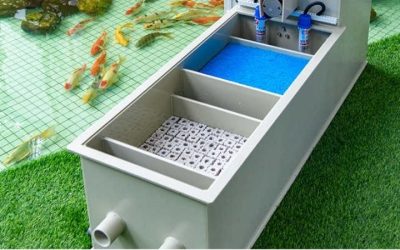
The biggest canister advantage is capacity. A typical external canister can hold several liters of filter media, while a compact internal filter may have room for only a sponge or small cartridge. More space lets you combine coarse mechanical filtration, fine polishing media, and biological media without crowding the flow path.
That flexibility is useful when fish produce a lot of waste. Goldfish, cichlids, turtles, and densely stocked community aquariums can overwhelm small internal units. A canister also gives you more options for adjusting flow. You can use a spray bar for gentle, even circulation or a directional outlet for stronger movement.
Appearance is another meaningful benefit in a living room, home office, or carefully designed furniture setting. The main body sits below or beside the aquarium, leaving only the intake and return visible. A cabinet can hide most of the equipment and its power cord. Internal filters, by contrast, occupy valuable swimming and viewing space and can become a prominent dark shape on the glass.
Many canister filters are also quiet from the viewer’s position because the motor is enclosed outside the aquarium cabinet. Models vary, and vibration can still travel through furniture, so a level surface and a thin vibration-damping pad are important. The PONDFORSE Canister Filter, listed for under $80, represents the lower-priced end of external filtration, while the Fluval FX6 High Performance Aquarium Filter, priced for under $450 and rated for aquariums up to 400 gallons, illustrates how far capacity and price can rise for large systems.
The trade-off is maintenance complexity. Before opening a canister, you generally need to close or disconnect the hoses, prevent water from siphoning, and carry the container to a sink or tub. A worn O-ring, clogged intake, or improperly seated lid can cause leaks. Regular inspection is essential, particularly when the unit is stored inside a wooden cabinet.
Where Internal Aquarium Filter Wins
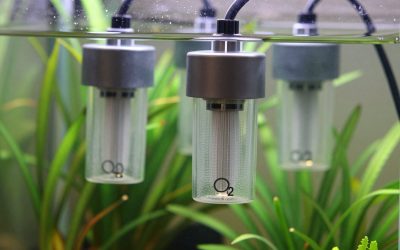
Internal filters win on simplicity. Most attach with suction cups or magnets, sit directly in the water, and plug into a nearby outlet. There is no intake hose to route, no external canister to position, and no cabinet clearance to measure. For a first aquarium, that straightforward installation can be more valuable than extra media capacity.
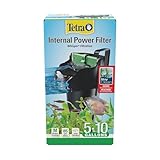
They are also economical. The Tetra Whisper 85 GPH Internal Power Filter For Aquariums is listed for under $20, making this category accessible for a small tank or a backup unit. A larger internal model such as the Aulofee Submersible Aquarium Filter, listed for under $40 and described for 50- to 150-gallon tanks, shows that internal designs are not limited to desktop aquariums. Still, advertised capacity should be treated as a starting point: fish load, tank shape, decorations, and required flow can reduce practical performance.
Internal filters are especially useful for quarantine, hospital, breeding, and temporary tanks. You can move one between setups without planning hose lengths or cabinet space. They are also a sensible choice when a rental agreement, small room, or lightweight aquarium stand makes permanent furniture changes undesirable.
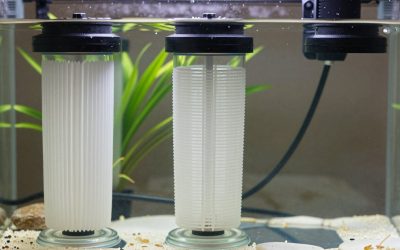
Maintenance is usually as simple as removing a sponge or cartridge and rinsing it in drained aquarium water. Avoid rinsing beneficial biological media under chlorinated tap water. The main disadvantage is that cleaning requires access to the tank, and debris can be released into the water while the unit is removed. Internal pumps also take up swimming space and may create a strong current in a small aquarium.
Cost Over 5 Years
Purchase prices commonly range from about $15 to $80 for internal filters and $70 to $450 for canister filters. A basic internal setup may therefore cost less than $50 initially, while a canister setup can reach $100-$500 after adding media, tubing, valves, and a suitable prefilter. High-capacity units can cost more.
Electricity is usually not the deciding factor. Many internal filters use roughly 3-15 watts, while canisters commonly use about 10-50 watts, depending on flow and size. At an electricity rate of $0.16 per kilowatt-hour, a continuously running 10-watt filter costs about $7 per year. A 30-watt filter costs about $42 over five years. Actual rates vary, but this shows why media and replacement parts often matter more than power consumption.
Over five years, an internal filter might cost approximately $15-$80 to buy, plus $25-$150 for replacement cartridges, sponges, or media. A canister may cost $70-$450 initially, plus roughly $40-$200 for media, seals, hoses, and occasional replacement parts. These are broad ownership ranges, not guarantees. Reusing washable media and buying bulk biological media can lower either figure.
Which One for Your Home
Small apartment
Choose an internal filter for a tank under about 30 gallons, particularly if you lack cabinet space. It avoids hose routing and keeps the setup portable. If the aquarium is a prominent piece of furniture and noise or appearance is a concern, a compact canister may justify its higher cost, provided you have a stable cabinet with room below the tank.
Family with kids or pets
A canister can be safer from curious hands and paws because the main equipment is enclosed below the aquarium. Secure the cabinet and use drip loops on electrical cords. An internal filter is easier to inspect, but its cord and visible housing may attract attention, and a dislodged unit can stir debris or reduce circulation.
Rental home
An internal filter is usually the least disruptive option. It requires no permanent modifications and is easy to pack when moving. A canister still works well in a rental if the aquarium stand provides enclosed storage, but check hose routing carefully so water cannot reach flooring or furniture.
Long-term home
For a permanent medium or large aquarium, a canister filter is often the better investment. Its larger media capacity, cleaner appearance, and adaptable return flow can serve the tank through changes in fish, plants, and décor. Select an appropriately sized model rather than simply choosing the highest advertised gallon rating.
FAQ
Is a canister filter better than an internal filter?
Not universally. A canister is generally better for filtration capacity, appearance, and larger or heavily stocked aquariums. An internal filter is better for low cost, simple installation, and temporary or small setups.
Can an internal filter replace a canister filter?
Yes, when its actual flow and media capacity suit the aquarium. It may be adequate for a lightly stocked small tank, but a single internal unit can be limiting in a large, heavily stocked, or messy aquarium. Always provide mechanical and biological filtration appropriate to the livestock.
Are canister filters hard to maintain?
They are more involved than internal filters, but routine care is manageable. Clean mechanical media regularly, inspect the impeller, lubricate or replace the O-ring as directed, and check hoses for buildup. Never reopen the unit without first stopping the pump and controlling the water flow.
Which filter is quieter?
Either can be quiet when correctly sized and maintained. A canister often produces less visible equipment noise at the tank, while an internal filter may transmit vibration through the glass. Air entering a canister, a dirty impeller, or a vibrating cabinet can make either design noticeably louder.
Ready to decide? Our #1 pick for 2026 is the Comfort and convenience.
Live price & availability on Amazon.
Related Reviews & Guides

Pearl Gourami Care: Space, Plants and Peaceful Tankmates
5 Best Aquarium Filters in 2026: Clean, Clear Water