Last Updated: October 21, 2026
Best aquarium filter for beginners comes down to three numbers and a single design decision. Turnover, real flow after media loading, and noise decide whether it suits your tank, and whether it takes loose media or a sealed cartridge decides what the thing costs you every month for years afterwards.
As an Amazon Associate we earn from qualifying purchases.
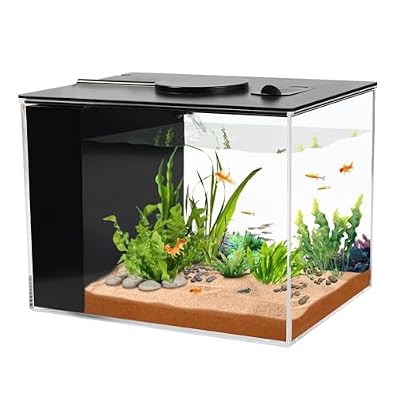
AQUANEAT Fish Tank, 1 Gallon Betta Fish Tank, Small Aquarium Kit with LED Light and Water Filter Pump
Included for 'Best Aquarium Filter for Beginners: Compared by the Numbers' as a representative aquarium product in this roundup; selection reflects the product set returned for this topic.
View on Amazon
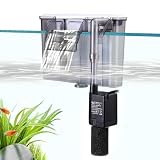
Tetra Whisper IQ 130 GPH Power Filter for Aquariums
Included for 'Best Aquarium Filter for Beginners: Compared by the Numbers' as a representative aquarium product in this roundup; selection reflects the product set returned for this topic.
View on Amazon
Tetra Whisper 27 GPH Internal Power Filter For Aquariums
Included for 'Best Aquarium Filter for Beginners: Compared by the Numbers' as a representative aquarium product in this roundup; selection reflects the product set returned for this topic.
View on Amazon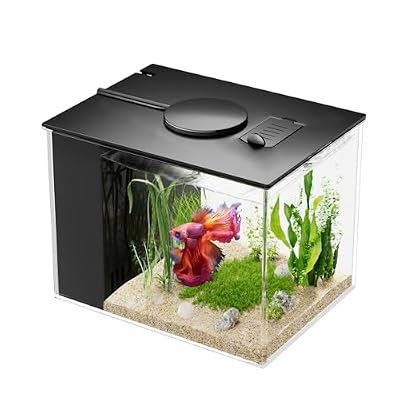
Vehipa Betta Fish Tank 1 Gal (3.7L), Acrylic Nano Aquarium Kit Black | With Water Filter Pump & LED Light, Ideal for Small Fish, Shrimp and Plants
Included for 'Best Aquarium Filter for Beginners: Compared by the Numbers' as a representative aquarium product in this roundup; selection reflects the product set returned for this topic.
View on Amazon
Tetra Complete 20 Gallon Fish Tank Kit for Freshwater & Saltwater Fish
Included for 'Best Aquarium Filter for Beginners: Compared by the Numbers' as a representative aquarium product in this roundup; selection reflects the product set returned for this topic.
View on Amazon
NICREW 2.5 Gallon Nano Nature Aquarium Kit Betta Fish Tank, Complete, Black
Included for 'Best Aquarium Filter for Beginners: Compared by the Numbers' as a representative aquarium product in this roundup; selection reflects the product set returned for this topic.
View on Amazon
NICREW Slim Aquarium Filter for up to 5 Gallon Fish Tank, 42 GPH, 3W
Included for 'Best Aquarium Filter for Beginners: Compared by the Numbers' as a representative aquarium product in this roundup; selection reflects the product set returned for this topic.
View on Amazon
1.5 Gallon Aquarium Starter Kits - Plastic Fish Tank Kit Clear Beta Fish Tank Small with Filteration Oxygenation, Water Circulation, Lighting - Beginner's Gift for Guppy, Shrimp, Goldfish
Included for 'Best Aquarium Filter for Beginners: Compared by the Numbers' as a representative aquarium product in this roundup; selection reflects the product set returned for this topic.
View on AmazonBy David Nguyen
Turnover, Media System and Real Flow
Filters are judged on the wrong things in most shop conversations. Choosing the best aquarium filter for beginners means checking turnover against real water volume, then asking what the media system will cost across twelve months of ownership.
The Deciding Numbers: GPH, Turnover and Real Volume
Turnover is the headline figure for any best aquarium filter for beginners comparison: aim for 4-6 times tank volume per hour for community stocking, and 8-10 times for goldfish and cichlids, which produce far more waste per unit of body weight than small tetras.
Printed GPH is measured with an empty housing. Once media and hoses are in place, real flow drops 30-50%, so a unit rated 200 GPH (757 LPH) may deliver 100-140 GPH (379-530 LPH) in service. Size from the loaded figure, not the box.
Work from real water volume too. A 20 gallon (76 L) tank holds roughly 17-18 gallons (64-68 L) after substrate, rock and the surface gap, so a filter chosen against the printed capacity is already generous by about 12% before flow loss.
The Other Criteria: Media System, Noise and Maintenance
Media type is the criterion that costs money for years. A filter taking loose media lets you replace floss while keeping colonised biological media in place, while a proprietary cartridge system discards the bacterial colony every time it is swapped.
Noise matters more than beginners expect, particularly in a bedroom or a studio. Air pumps buzz, hang-on-back units hum and splash as the water level drops, and canisters are quietest but not silent. Ask about noise before buying, not after.
Media order is the third criterion and it is free to get right. Water should pass through mechanical first, then biological, then chemical if used at all, because floss placed last clogs the biological media it was meant to protect.
Tank Size, Placement and Fit
Hang-on-back units need 4-6 in (10-15 cm) of clearance behind the tank, and a rimmed tank with a thick brace can prevent one seating properly. Canisters need cabinet height for the housing plus the hose bend above it.
Measure before you order: rear clearance against the unit depth, cabinet interior height against canister height, and stand capacity against roughly 10 lb/gallon (about 1 kg/L) filled. A 55 gallon (208 L) tank passes 600 lb (272 kg) with substrate.
The Options by Need
These six cover the realistic range of options for the best aquarium filter for beginners. Each is grouped by the situation it fits rather than ranked, because the best aquarium filter for beginners depends entirely on tank size, stocking and where the tank sits.
For First Tanks, Shrimp and Bettas: Sponge Filter
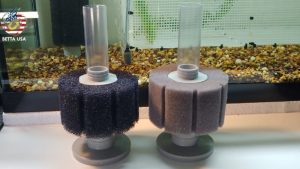
A sponge filter run by an air pump provides biological filtration with gentle flow, suits tanks from 5 gallons (19 L) up, and cannot trap shrimp or long fins. The sponge is the biological media, so nothing is discarded on a schedule.
Who it suits: shrimp tanks, betta tanks, quarantine and anyone wanting the lowest running cost available. Who it does not: heavily stocked tanks, goldfish and cichlids, since it provides limited mechanical filtration and no capacity for chemical media.
For Most Community Tanks: Hang-on-Back With Loose Media
A hang-on-back unit with a media basket rather than a cartridge slot is the most versatile choice for tanks from 10-55 gallons (38-208 L). You control what goes in and replace only the mechanical layer.
Who it suits: standard community tanks with rear clearance and no strong noise constraint. Who it does not: bettas and long-finned fish without a flow baffle, tanks pushed against a wall, and anyone who lets the water level drop, since these units lose prime.
For Cartridge Systems: Know What You Are Buying
Cartridge-based hang-on-back filters are the most widely sold beginner option and the most expensive to run. The whole cartridge, including the colonised biological surface, gets replaced monthly at a recurring cost that continues for the life of the tank.
Who it suits: someone who values simplicity above cost and will not open a filter. Who it does not: almost everyone else, because discarding the colony monthly is the most common cause of recurring mini-cycles in tanks that have run for years.
For Small or Rear-Constrained Tanks: Internal Power Filter
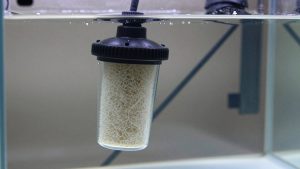
An internal filter sits fully submerged inside the tank, which removes the rear clearance requirement entirely and eliminates the risk of losing prime. Most suit tanks up to about 20 gallons (76 L).
Who it suits: nano tanks, tanks pushed against a wall, and hooded tanks where a hang-on-back unit will not fit. Who it does not: anyone with limited swimming space to spare, since the unit occupies volume inside the tank rather than outside it.
For Larger First Tanks: Canister Filter
A canister sits in the cabinet and holds far more media, which suits tanks from 40 gallons (151 L) up and any heavily stocked setup. Flow is adjustable, noise is low, and media is entirely loose and user-chosen.
Who it suits: anyone who started with a 55 gallon (208 L) tank or keeps goldfish or cichlids. Who it does not: nano keepers, and anyone unwilling to handle hoses and priming, since a canister is more involved to maintain than anything else here.
For Kit Buyers: The Filter That Came in the Box
All-in-one kits usually include a small hang-on-back or internal filter sized to the printed tank volume. It typically works, and it is typically cartridge-based, so the running cost applies from the first month.
Who it suits: someone starting with a kit who wants to get running immediately. Who it does not: anyone planning to stock heavily, since kit filters are sized to the minimum and most kits also omit a heater and a test kit entirely.
| Option | Turnover and flow | Tank suited | Recurring cost | Who it suits |
|---|---|---|---|---|
| Sponge filter | Gentle, air-driven | 5-20 gallons (19-76 L) | Air stone yearly, sponge rarely | Shrimp, bettas, quarantine |
| HOB, loose media | 4-6x volume per hour | 10-55 gallons (38-208 L) | Floss only | Standard community tanks |
| HOB, cartridge | 4-6x volume per hour | 10-40 gallons (38-151 L) | Full cartridge monthly | Simplicity over cost |
| Internal power filter | 4-6x volume per hour | Up to 20 gallons (76 L) | Sponge and floss | Nano, no rear clearance |
| Canister | 4-10x volume per hour | 40 gallons (151 L) and up | Floss, seals occasionally | Large or heavily stocked tanks |
| Kit filter | Sized to printed volume | As supplied | Usually cartridges | Starting from a kit |
Direct Comparisons and Who Should Not Buy
Two of these get compared constantly, one is oversold, and there is a cheaper route to the best aquarium filter for beginners than most shops mention. All three are worth settling before ordering anything.
Sponge Filter Versus Hang-on-Back
A sponge filter provides excellent biological filtration and minimal mechanical filtration, so water stays clean chemically while fine particles remain suspended. A hang-on-back does both, which is why a lightly stocked shrimp tank suits one and a community tank suits the other.
Cost separates them further. A sponge filter runs on an air pump with an air stone replaced roughly annually, while a hang-on-back consumes floss continuously and cartridge versions consume far more. Over twelve months the difference is substantial.
Who Should Not Buy an Oversized Filter
Buying a filter rated for double the tank is common advice and it has real costs. Excess flow stresses bettas, long-finned fish and fry, and a strong outflow in a 10 gallon (38 L) tank leaves fish holding position in the corners.
Oversizing also does nothing for biological capacity beyond a point, since the colony sizes itself to the waste available. Buy for turnover and add a baffle if the flow is too strong, rather than assuming more is safer.
The Cheaper Route Worth Considering
An air pump and a sponge filter cost a fraction of a powered unit, run for years, and are what most breeders use for exactly that reason. For a first 10 gallon (38 L) tank with a betta or a small shoal, it is genuinely sufficient.
Seeding matters more than the hardware. A handful of media from an established tank shortens cycling more than any filter upgrade does, and it costs nothing if you know someone with a running tank.
Running two small filters instead of one large one is the other option worth knowing. It costs slightly more in power, and it means a cleaning session or a failure never removes the whole colony at once, which is genuine insurance on a first tank.
Living With It: Failures and Twelve-Month Costs
The best aquarium filter for beginners runs continuously for years, so how it fails matters more than how it performs on day one. This is where the differences between these six become concrete.
Where Each Type Typically Fails
Hang-on-back units lose prime after a power interruption and can run dry without any change in sound. Impellers wear and rattle, intake tubes fall short as the water level drops through evaporation, and the lid warps and overflows.
Canisters leak at the seals when a gasket perishes, lose flow gradually as hoses clog, and are awkward to re-prime after maintenance. Sponge filters clog slowly, producing larger bubbles and reduced flow, and air pump diaphragms stiffen over the years.
What It Costs to Keep Running
The recurring items are mechanical floss, occasional seals or impellers, and continuous electricity. Cartridge systems add a fixed monthly purchase that loose-media filters do not, which is the single largest difference across a twelve-month period.
Prices change constantly, so check at the time of purchase. The comparison worth making is the twelve-month running total rather than the shelf price, because a cheaper cartridge filter usually costs more by month eight.
Electricity belongs in that figure as well. A filter runs every hour of every day, so its wattage is a small recurring cost that continues for the life of the tank, and it is worth glancing at on the specification before buying.
Warranty, Spares and Electrical Safety
Warranties commonly separate the housing from moving parts, with impellers and gaskets treated as consumables rather than covered components. Check whether spare impellers, seals and suction cups are sold separately, since a filter you can repair lasts far longer.
Electrical safety is a selection criterion rather than a footnote. Anything running beside water should carry a UL or ETL mark, and every powered device belongs on a GFCI outlet with a drip loop in the cable.
Frequently Asked Questions
These four come up most often when someone is choosing a first filter and the shop has offered three different options.
How do I know what turnover I need?
Multiply real water volume by 4-6 for a community tank, or 8-10 for goldfish and cichlids, then add 30-50% to account for flow loss once media is loaded. A 20 gallon (76 L) tank holding 17 gallons needs roughly 100-150 GPH (379-568 LPH) rated.
Can I run a filter that is too strong?
Yes, and it is a genuine problem for bettas, fancy goldfish and fry. Baffle the outflow with a sponge or a piece of plastic, or choose a unit with an adjustable flow control, rather than accepting fish that cannot swim comfortably.
Do I need chemical media like carbon?
Not routinely. Carbon adsorbs tannins and odours and saturates within two to four weeks, which makes it a periodic tool rather than a permanent stage. It also removes medications, so it must come out during any treatment.
Should I buy during a sale?
Equipment is genuinely cheaper at points like the mid-year and late-November sale events, and that is a reasonable time to buy a larger filter. It changes nothing about the biology: the tank still needs three to eight weeks of cycling before fish go in.
See More:
The Bottom Line
For most people the best aquarium filter for beginners is a hang-on-back unit with a loose media basket, sized for 4-6 times real water volume per hour and bought with 30-50% headroom for flow loss. It filters mechanically and biologically, and it never forces you to throw away a colonised sponge. The lower-cost option is a sponge filter on an air pump, which is genuinely sufficient for a first 10 gallon (38 L) tank with a betta or a small shoal and costs almost nothing to run. Avoid cartridge-based systems if you can, and measure your rear clearance before ordering anything.
Product links and buying checks
As an Amazon Associate, we earn from qualifying purchases.
- AquaClear 20 power filter on Amazon — A small hang-on-back example for a 5–20 gallon aquarium; confirm actual water volume, stocking and flow suitability before choosing it.
Prices, availability and included accessories can change. Review the current listing and the compatibility guidance above before purchasing.
Sponge Filter vs Internal Aquarium Filter: Which Is Right for Your Home (2026)
Air Stone vs Sponge Filter for Oxygen: A Clear Expert Guide