Last Updated: October 21, 2026
How to clean aquarium filter media has one rule that matters more than all the others: rinse in water taken out of the tank, never under the tap. The media holds nearly the whole bacterial colony, and chlorine kills it on contact within seconds. Check the outflow first, then work through the steps below in order.
As an Amazon Associate we earn from qualifying purchases.
As an Amazon Associate we earn from qualifying purchases at no extra cost to you.


By David Nguyen
Check the Filter Before Cleaning Anything
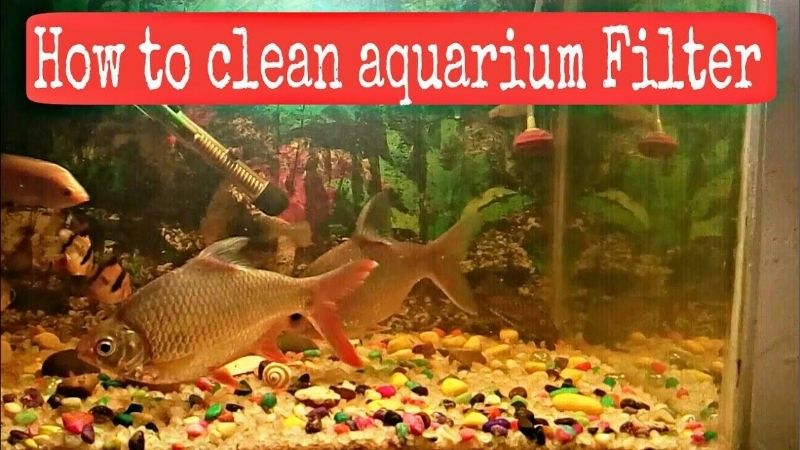
Deciding how to clean aquarium filter media starts with the fact that media is cleaned because flow has dropped, not on a calendar. Understanding how to clean aquarium filter media starts with identifying which layer is actually clogged, since the three types of media each need completely different handling.
The numbers behind the decision
Turnover should sit at four to six times tank volume per hour, and eight to ten for goldfish or cichlids. A 20 gallon (76 L) tank wants 80 to 120 GPH (303 to 454 LPH), and box ratings are measured with no media fitted, so real flow runs 30 to 50 percent lower.
Visible outflow is the practical measurement. When the return has weakened noticeably compared with the week it was set up, the mechanical layer is clogged and needs rinsing, which is typically once a month in a normally stocked tank.
Ammonia and nitrite should read 0 ppm before and after. Either appearing in the days following a service means too much biological media was disturbed, and that is precisely the failure this whole procedure exists to avoid.
Which aquarium filter media layer is which
Most filters contain two or three distinct materials stacked in the flow path, and they behave nothing like each other. Treating them as one thing to be cleaned together is what causes the ammonia readings that follow a service.
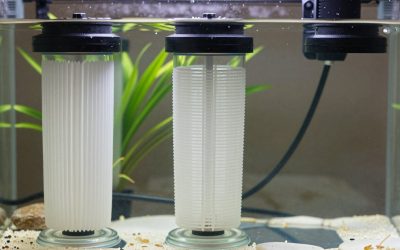
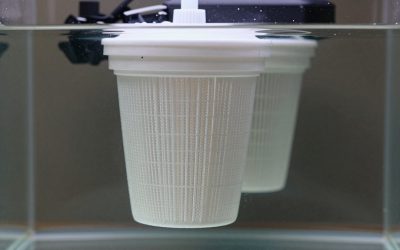
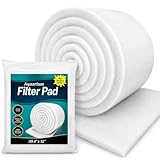
Mechanical media is floss, foam or a sponge and traps particles first. It clogs fastest, gets rinsed most often, and is the only layer that gets replaced on a schedule, roughly quarterly, or sooner when it starts to disintegrate in your hands.
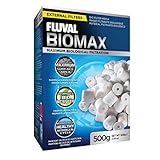
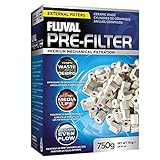
Biological media is ceramic rings, sintered glass or a matured sponge, and it holds the colony. It is rinsed gently only when visibly clogged and effectively never replaced, since an entirely fresh set restarts a large part of the nitrogen cycle.
| Media type | Job | Clean how | Replace when |
|---|---|---|---|
| Floss or fine pad | Traps fine particles | Rinse in tank water, or discard | Quarterly, or when falling apart |
| Coarse sponge or foam | Traps larger debris, holds bacteria | Squeeze gently in tank water | When it no longer springs back |
| Ceramic rings, bio media | Houses the bacterial colony | Swirl in tank water only if clogged | Effectively never |
| Activated carbon | Removes some dissolved compounds | Not cleanable | Every 3-4 weeks, or remove entirely |
| Proprietary cartridge | All three jobs in one disposable | Rinse in tank water to extend life | Replace half at a time, never all |
| Sponge filter | Mechanical and biological together | Squeeze in tank water monthly | When the sponge tears |
When the filter is not the problem
Weak flow with clean media points to the impeller rather than clogging. Grit in the impeller housing, a worn shaft or a hose kinked behind the tank will all reduce output, and none of them improve with more rinsing.
A canister that has lost prime after a power cut also moves no water while looking perfectly clean inside. Check that first, since restarting the flow matters far more urgently than servicing media that was never the issue.
How to Clean Aquarium Filter Media Step by Step
The whole job takes about ten minutes and is best done during a water change, because the water needed for rinsing is already coming out of the tank anyway. Follow the order below rather than improvising it.
Step one: draw off tank water first
Siphon the weekly 20 to 30 percent into a clean bucket before opening the filter, so there is dechlorinated water at tank temperature ready to rinse into. Using a bucket that has ever held detergent is the other common way this job goes wrong.
Unplug the filter before opening it, and unplug the heater too if the water line will drop below it. Measure the cabinet height and hose run before buying a canister, since a canister that cannot be lifted out is one that never actually gets serviced.
Step two: rinse only what needs it
Restraint is the whole technique here. The instinct is to clean everything in the housing while it is open and accessible, and that instinct is what turns a ten minute service into a fortnight of daily testing.
Swish the mechanical layer in the bucket until the water clouds, squeeze foam gently two or three times, and stop. The aim is restoring flow, not producing clean-looking media, and a sponge that still looks brown is usually working perfectly well.
Leave biological media alone unless it is visibly blocked, and then swirl it briefly in the same bucket without scrubbing. Never replace the whole biological layer at once; if it must be renewed, change half and wait four to six weeks before the rest.
Step three: reassemble and confirm flow
Put the layers back in order, mechanical first in the flow path, then biological, then chemical if used. Reversing that order sends particles straight into the bio media and clogs the one layer you least want to disturb.
Restart the filter and watch the outflow for a minute. Weak or noisy flow usually means trapped air or a seal not seated, and both are easier to fix now than after the cabinet has been closed and everything tidied away.
How to Clean Aquarium Filter Media Badly
Three actions undo weeks of stability in a single session, and each one is still repeated as common advice. All three have a specific mechanism behind them rather than being a general caution.
Do not rinse under the tap
Chlorine and chloramine kill nitrifying bacteria on contact, and the media holds nearly the entire colony. This single habit is the most common cause of an ammonia reading appearing in a tank that had been perfectly stable for months.
Do not replace cartridges wholesale
Proprietary cartridges combine all three jobs in one disposable unit, so discarding one throws away the colony with the floss. Rinse them in tank water to extend their life, and when replacement is unavoidable, run old and new together for a month.
Do not service the filter and substrate together
This one is easy to do accidentally, because both jobs are convenient during the same water change. Spacing them apart costs nothing and removes the most common cause of a post-maintenance reading.
Both hold bacteria, and cleaning both in the same week removes colony from two places at once. Alternate them so the filter is serviced in one week and the substrate vacuumed thoroughly in a different one.
How to Clean Aquarium Filter Media Less Often
How often media needs attention depends mostly on how much reaches it in the first place. Reducing that load is considerably more effective than cleaning more aggressively each month.
The routine that keeps flow steady
Servicing is triggered by flow rather than by the calendar, so the routine below is really a schedule of checks with one repair attached. Most months the check takes a minute and nothing else is needed.
Rinse mechanical media monthly in removed tank water, check the impeller for grit at the same time, and replace floss quarterly. Keep that session in a different week from any thorough vacuum of the substrate.
Feed only what is eaten in one to two minutes. Uneaten food and heavy stocking are what clog mechanical media, so portion control extends the interval between services far more reliably than any change in technique.
What wears out and when
Filter components have very different working lives, and only one of them is genuinely disposable. Knowing which is which prevents both premature replacement and running a worn part long past the point it stopped working.
Foam loses its structure and stops springing back after a year or two of squeezing, at which point it filters less and holds less. Impellers wear at the shaft and grow noisy, while O-rings on canisters harden and start weeping at the seam.
Activated carbon is a consumable rather than a permanent layer, exhausting within three to four weeks. It also strips medication from the water, so it comes out during any treatment and goes back in afterwards, if you use it at all.
Early signs worth acting on
Falling outflow, a rising noise from the motor, or debris drifting past the intake all mean the mechanical layer or the impeller needs attention. None of them are reasons to touch the biological media at all.
Ammonia or nitrite appearing within days of a service means too much colony was disturbed. Change 25 percent, feed lightly, and leave the filter alone entirely until the readings return to zero and hold there for a full week.
Frequently Asked Questions
These come up when a filter starts sounding different from usual, or when the outflow visibly weakens for the first time since the tank was originally set up.
How to clean aquarium filter media, and how often?
Monthly for the mechanical layer, or whenever outflow noticeably weakens. Biological media is left alone unless visibly clogged, and activated carbon is replaced every three to four weeks rather than being cleaned at all.
Can I replace all the media at once?
Not the biological layer. Replacing it wholesale removes most of the colony and restarts a large part of the cycle, so change half of it and wait four to six weeks before doing the rest.
Is it safe to rinse media in bottled water?
Tank water is better and free. Bottled or distilled water lacks the chemistry the bacteria are adapted to, and there is no advantage over the bucket of water that is already coming out during the weekly change.
Why did ammonia appear after I cleaned the aquarium filter media?
Almost always because the media met untreated tap water, or because the substrate was vacuumed thoroughly in the same week. Change 25 percent, reduce the feeding, and space the two tasks apart from now on.
See More:
Servicing Without Setbacks
How to clean aquarium filter media comes down to three habits: rinse in removed tank water only, touch the mechanical layer and leave the biological one alone, and never service the filter during the same week as a thorough substrate vacuum.
6 Best Sump Tank Aquariums 2026
Fluval FX6 vs FX4 Which Canister Filter Is Best? Compared