Last Updated: September 25, 2026
Amazon sword plant care is mostly a substrate question. This is a heavy root feeder that reaches 12-20 in (30-50 cm), so the deciding factors are bed depth, a supply of nutrients at the roots, and a tank tall enough that the leaves are not forced sideways along the surface. Size dictates nearly everything else.
As an Amazon Associate we earn from qualifying purchases.
As an Amazon Associate we earn from qualifying purchases at no extra cost to you. Prices and availability are accurate as of the date shown and are subject to change.

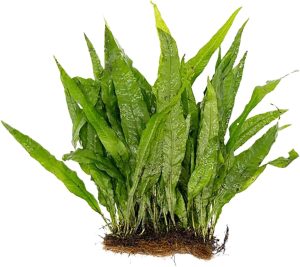
Amazon Sword - Echinodorus Bleheri x3 Plants - Live Aquarium Plant
Selected for "Amazon Sword Plant Care: How It Grows and What to Watch": this listing is aquarium equipment (Amazon Sword - Echinodorus Bleheri x3 Plants - Live Aquarium Plant), matching the equipment this article covers.
View on Amazon
Large Amazon Bleheri Sword 18-24 inches Tall | Live Freshwater Aquatic Plant
Selected for "Amazon Sword Plant Care: How It Grows and What to Watch": this listing is aquarium equipment (Large Amazon Bleheri Sword 18-24 inches Tall | Live Freshwater Aquatic), matching the equipment this article covers.
View on Amazon
Canton Aquatics Amazon Sword Echinodorus Red Rubin
Selected for "Amazon Sword Plant Care: How It Grows and What to Watch": this listing is aquarium equipment (Canton Aquatics Amazon Sword Echinodorus Red Rubin), matching the equipment this article covers.
View on Amazon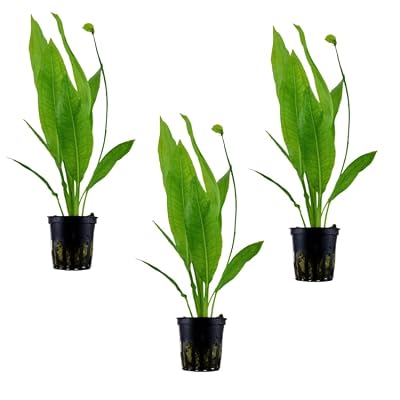
3 X Amazon Sword Bare Root | Echinodorus grisebachii 'Bleherae' + 1 Bonus Plant (Tropical Live Aquarium Plants) 2-Day Arrival
Selected for "Amazon Sword Plant Care: How It Grows and What to Watch": this listing is aquarium equipment (3 X Amazon Sword Bare Root | Echinodorus grisebachii 'Bleherae' + 1 Bo), matching the equipment this article covers.
View on AmazonBy David Nguyen
Root Mass, Substrate Depth and Mature Size
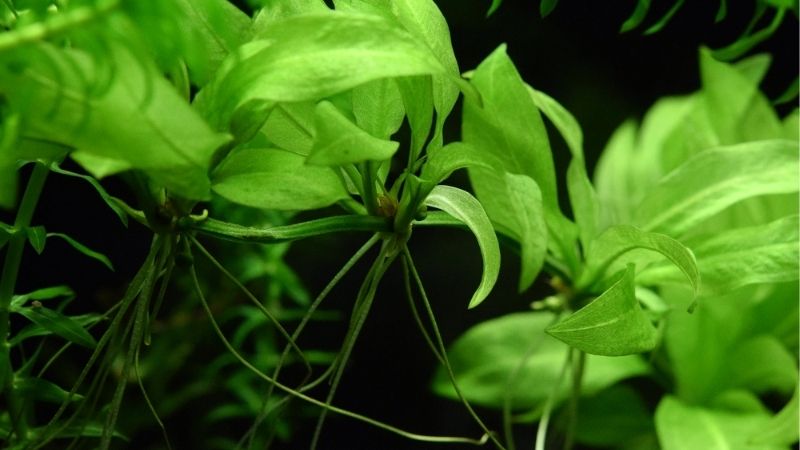
Getting amazon sword plant care right starts with recognising what kind of plant it is. Echinodorus builds a large root mass and draws most of its nutrients through it, which is the opposite of the epiphytes people often buy alongside it and explains almost every failure mode. Feed the bed, not the water.
The Deciding Numbers: Tank Minimum, Substrate Depth and Water Range
The plant tolerates 72-82 F (22-28 C), pH 6.5-7.5 and GH 3-15 dGH (54-268 ppm), so most tap water suits it without adjustment. It does not require CO2 injection, though injected tanks grow it considerably faster. Medium light around 30-50 micromoles of PAR at the substrate is the target.
Substrate depth is the number people skip. A mature sword needs at least 3 in (7.6 cm) of bed, and 4 in (10 cm) is better at the back of the tank. Anything shallower forces roots sideways along the glass and stunts the plant regardless of how well you dose it. Depth is not negotiable here.
Tank minimum follows mature size. A standard Echinodorus reaches 12-20 in (30-50 cm) and needs a 20-gallon (76 L) tank as an absolute floor, with 29 gallons (110 L) more realistic. Compact varieties stay near 8-12 in (20-30 cm) and work in a 15-gallon (57 L) tank. Check the variety name before buying.
Root Mass, Feeding Route and Why Tabs Matter
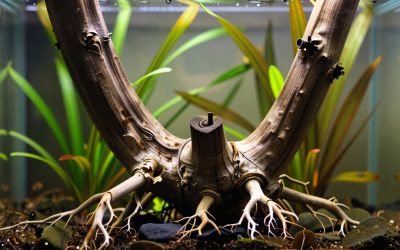
A settled sword develops a dense root ball that can fill a hand-sized volume of substrate. That mass is doing the feeding, which is why liquid dosing alone produces disappointing results in inert gravel and why the plant thrives in aquasoil or in a bed with tabs pushed underneath it.
In inert gravel or sand, place one root tab under the crown every three to four months. Push it 2 in (5 cm) down and directly beneath the plant, because a tab placed shallow or off to one side leaches into the water column and feeds algae instead of the sword. Placement decides whether tabs work.
Normal Appearance Versus Action Thresholds
New swords look alarming for their first fortnight because nearly all shop stock is grown emersed. The table below separates the transition from genuine problems, pairing what you see with the reading that usually accompanies it so you can act on the evidence rather than on appearance.
| What you see | Reading alongside it | What it means | What to do |
|---|---|---|---|
| Most leaves melt in the first 2 weeks | Parameters normal | Emersed growth converting | Trim dead leaves, leave roots alone |
| New leaves pale, veins stay green | No micro dosing | Iron shortage | Dose a comprehensive micro mix |
| Old leaves yellow, plant still growing | Nitrate under 5 ppm | Nitrogen shortage | Dose macros, add a root tab |
| Pinholes spreading in mid-age leaves | Nitrate normal | Potassium shortage | Dose potassium separately |
| Plant stops growing, leaves stay small | Bed under 3 in (7.6 cm) | Root space or nutrients exhausted | Deepen the bed, add tabs |
| Leaves lie flat along the surface | Tank under 15 in (38 cm) tall | Variety too large for the tank | Move to a taller tank or trim |
The Amazon Sword in Real Tanks
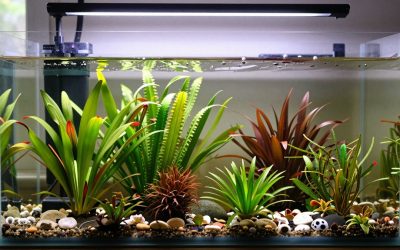
Practical amazon sword plant care is largely about space, both above the substrate and within it. A single mature plant occupies a surprising share of a small tank, and it is very difficult to move once the root ball has spread through the bed around it. Plan the position once, carefully.
Tank Size, Placement and Fit
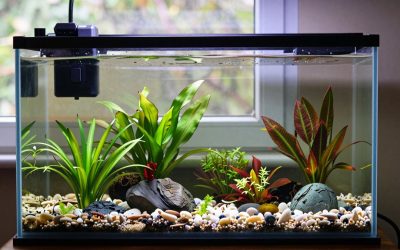
Place a sword in the background or as a single centrepiece, allowing a footprint of roughly 8-10 in (20-25 cm) across for a mature standard variety. Set it far enough from the glass that leaves are not pressed flat, which happens routinely in tanks under 12 in (30 cm) front to back.
Height is the other constraint. A plant reaching 20 in (50 cm) in a 16 in (40 cm) tank grows along the surface and shades everything below it. Measure the real numbers before you order: mature leaf length against tank height, and substrate depth against the full length of a root tab.
What Changes Between 20, 29 and 55 Gallon Tanks
In a 20-gallon (76 L) tank one standard sword is the whole background, and it will crowd anything planted near it within a year. That is a reasonable design choice, but it means the rest of the layout has to be built around a plant that cannot easily be relocated. Decide that before planting anything else.
In a 55-gallon (208 L) tank three or four swords form a genuine background with room between them for flow. Spacing at 10-12 in (25-30 cm) prevents the outer leaves shading each other, and it leaves access for pushing tabs under each crown every few months. Spacing pays off within a year.
Runners, Propagation and Bioload
Mature swords send out runners carrying plantlets, which root themselves wherever they touch down. Leave each plantlet attached until it has three or four leaves and visible roots, then cut the runner and plant it separately with the crown level with the substrate surface. Runners are effectively free plants.
Because the plant is a heavy feeder, it copes well with the nitrate levels in stocked community tanks and helps export waste. That does not make it a substitute for water changes: keep nitrate in the 10-25 ppm range for the plants and well under 40 ppm for the fish. Plants supplement water changes, never replace them.
Myths and Mistakes Worth Clearing Up
Three ideas cause most of the failures in amazon sword plant care, and each one comes from applying advice written for other plants. Replacing them with numbers turns this from a difficult species into one of the easier large plants to keep in a low-tech tank. Amazon sword plant care is mostly patience.
Myth: Melt After Planting Means the Plant Is Dying
Nearly all commercial stock is grown emersed in humid greenhouses, and those leaves dissolve within roughly two weeks of submersion. The plant is spending stored energy building submersed leaves, and pulling it up to inspect the roots breaks that process and resets it entirely from scratch.
Trim melted leaves at the base and leave everything else alone. A sword that loses every leaf can still regrow from the crown within a month, provided the roots are undisturbed and there are nutrients in the substrate for it to draw on while it rebuilds itself. Leave the roots alone.
Myth: Burying the Crown Deeper Anchors It Better
The crown is the growing point where leaves emerge, and covering it stops leaf production and eventually rots the plant. Roots go under the substrate; the crown sits level with the surface. New swords float loose for a few days until roots grip, and that is normal. Weight it rather than burying it deeper.
If a plant keeps lifting, weight it temporarily with a small stone rather than planting it deeper. Within a fortnight the root mass anchors it firmly enough that even large cichlids struggle to dislodge it from a bed of appropriate depth and grain size. Anchoring solves itself with time.
Myth: Liquid Fertiliser Is Enough on Its Own
A sword takes the majority of its nutrients through roots, so liquid dosing alone in inert gravel produces small, pale leaves however carefully you follow the bottle. The plant is not failing to absorb nutrients; it is drawing on a route that has nothing available in it. Give the roots something to find down there.
Use both routes. Root tabs every three to four months handle the sword, while a weekly liquid at half the label rate covers epiphytes and floaters in the same tank. In fresh aquasoil, skip the tabs entirely for the first 18-24 months because the bed is already charged. Tabs come later, around year two.
Long-Term Care, Trimming and Twelve-Month Costs
A sword is a multi-year plant, and the last part of this amazon sword plant care rundown covers the slow changes. Substrate exhausts, root balls outgrow their space, and the plant quietly demands more of the tank each year until someone divides or removes it. Plan for that from the start.
Trimming, Dividing and Replanting
Cut damaged or algae-covered leaves at the base rather than partway up the blade, and never remove more than about a third of the foliage at once. The plant regrows from the crown, so leaving healthy leaves in place funds that regrowth while the roots continue working. Never strip a sword bare.
Dividing means lifting the whole plant and separating the crown, which sets it back by months and is rarely worthwhile. Propagating from runners is the better route: plantlets arrive already adapted to submersed growth and establish far faster than a divided parent plant does. Let the plant propagate itself.
What Degrades: Substrate, Tabs and Lighting
Aquasoil loses most of its useful nutrient loading around 18-24 months, which is exactly when a sword planted at setup is at its largest and hungriest. That timing catches people out, and the symptom is a plant that stalls and yellows despite unchanged lighting and dosing. Add tabs at that point.
Lighting fades too. LED fixtures lose measurable output over several years, and a sword receiving 30 micromoles at the substrate when new may be receiving noticeably less by year three. Both changes are gradual, which is why they get blamed on the plant rather than the equipment.
Twelve-Month Cost and Seasonal Demand
Budget for 18-24 root tabs a year in a tank with several swords, plus a comprehensive liquid for the rest of the plants. Prices move constantly, so check them at the moment of purchase rather than relying on figures quoted in an article written some months ago. Treat fixed prices as stale.
Demand shifts with the seasons as well. Longer daylight and warmer rooms from March onward push growth and consumption up noticeably, while a cold winter room slows both, so a tab schedule that suited the tank in summer may be running ahead of the plant by January. Adjust the schedule seasonally.
Frequently Asked Questions
These questions come up in the first months after planting, usually when the plant has melted, stalled, or grown considerably larger than the person buying it expected from a small potted specimen on a shop shelf. Amazon sword plant care questions almost always reduce to size, depth or melt.
How big does an amazon sword actually get?
Standard varieties reach 12-20 in (30-50 cm) tall with a spread of 8-10 in (20-25 cm), and large specimens exceed that in deep tanks. Compact varieties stay near 8-12 in (20-30 cm). Buy according to mature size rather than the size of the pot on the shelf. Pots always understate the mature plant.
Does amazon sword plant care require CO2?
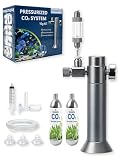
No. It grows well without injection at 30-50 micromoles of PAR, though growth is slower than in an injected tank. Root nutrition matters far more here than carbon, so a tab schedule in inert substrate does considerably more for the plant than a CO2 system would. Feed the roots first, always.
Why are my sword’s new leaves yellow with green veins?
That pattern points to iron, and it appears on new growth because the plant cannot move iron from older leaves. Dose a comprehensive micro mix targeting 0.1-0.5 ppm and give it a fortnight, judging the newest leaf rather than the overall appearance of the plant. Old leaves never recover colour.
Can I keep a sword in sand?
Yes, provided the bed is at least 3 in (7.6 cm) deep and you use root tabs, since sand carries no nutrients. Keep sand at 0.45-0.55 mm and stir it during water changes, because compacted beds develop pockets that release a sulphur smell when disturbed. Stirring prevents that entirely.
See More:
Conclusion
Sound amazon sword plant care comes down to four numbers: 3-4 in (7.6-10 cm) of substrate, a tank of at least 20 gallons (76 L) and 15 in (38 cm) tall, 30-50 micromoles of PAR, and a root tab under the crown every three to four months. Those four numbers settle nearly every question people ask about it.
Plant the crown level with the surface, expect the first fortnight to look like failure, and resist lifting anything to check on it. Feed the roots rather than the water, and a single sword will hold the background of a low-tech tank for several years without complaint. It rewards being left alone.
Best Black Sand Substrate for Aquarium: Well-Researched Pick
Best Aquarium Substrate Flattener: Proven Top Picks Guide