Last Updated: September 25, 2026
Amazon frogbit care guide advice divides neatly into what happens above the waterline and what hangs below it. Limnobium laevigatum needs dry leaf tops and humid air above, while its roots trail 4-12 in (10-30 cm) down and do most of the nutrient export people buy it for. Both halves of the plant need attention.
As an Amazon Associate we earn from qualifying purchases.
As an Amazon Associate we earn from qualifying purchases at no extra cost to you. Prices and availability are accurate as of the date shown and are subject to change.

AQUARIUM PLANT CENTER EST. 2020 Live Aquarium Floating Plant Mix – Amazon Frogbit & Water Spangles (Floating Mix, 6, Count)
Selected for "Amazon Frogbit Care Guide: Light, Roots and Surface Cover": this listing is aquarium equipment (AQUARIUM PLANT CENTER EST. 2020 Live Aquarium Floating Plant Mix – Ama), matching the equipment this article covers.
View on Amazon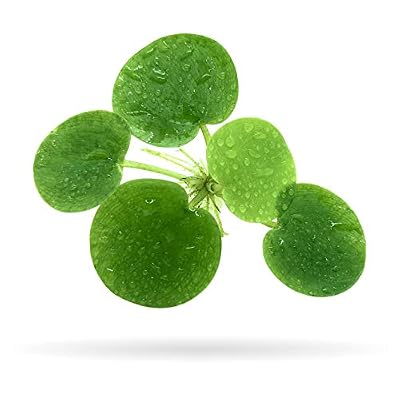
20+ Leaves Amazon Frogbit (+Free Bonus Plant) Live Floating Plant for Aquarium (Limnobium Laevigatum) by Aquarigram
Selected for "Amazon Frogbit Care Guide: Light, Roots and Surface Cover": this listing is aquarium equipment (20+ Leaves Amazon Frogbit (+Free Bonus Plant) Live Floating Plant for ), matching the equipment this article covers.
View on Amazon
6 Mini Amazon Frogbit + 6 Water Spangles Combo, Betta Fish Aquarium Floating Plants for beginners
Selected for "Amazon Frogbit Care Guide: Light, Roots and Surface Cover": this listing is aquarium equipment (6 Mini Amazon Frogbit + 6 Water Spangles Combo, Betta Fish Aquarium Fl), matching the equipment this article covers.
View on Amazon
Amazon Frogbit Freshwater Live Plants – Limnobium laevigatum, 3 Plants
Selected for "Amazon Frogbit Care Guide: Light, Roots and Surface Cover": this listing is aquarium equipment (Amazon Frogbit Freshwater Live Plants – Limnobium laevigatum, 3 Plants), matching the equipment this article covers.
View on AmazonBy David Nguyen
Above the Waterline and Below It
This amazon frogbit care guide starts at the surface because that is where the plant lives and where it fails. The rosettes float with rounded leaves held above the water, and anything that wets those upper surfaces regularly will rot them faster than any water parameter will. The surface is where it fails.
The Deciding Numbers: Light, Flow, Temperature and Root Length
Frogbit tolerates 68-84 F (20-29 C), pH 6.0-7.5 and GH 3-15 dGH (54-268 ppm), covering most tap water without adjustment. It needs no CO2, and it grows well from 20 micromoles of PAR upward, which puts it comfortably within reach of an inexpensive LED fixture on a timer. No specialist equipment is required.
Surface agitation is the variable with no meter attached. Leaf tops must stay dry, so a spray bar, an upward-angled return or an air stone breaking the surface will melt a healthy mat within a week while every reading on your test kit stays completely normal. Check flow before checking chemistry.
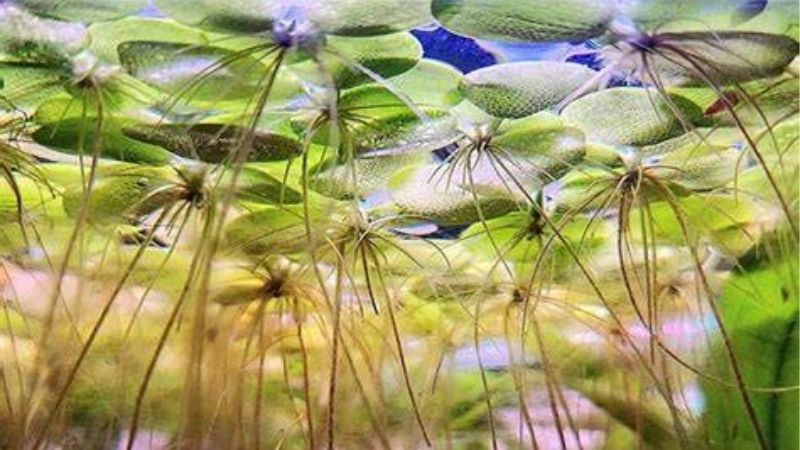
Growth and root length set the maintenance load. Leaves reach 0.5-2 in (1.3-5 cm) across, roots trail 4-12 in (10-30 cm) below, and a healthy mat can double in one to two weeks, which is why thinning becomes a fortnightly job rather than an occasional one. Growth is the trade for the cover.
Why the Roots Matter More Than the Leaves
The long trailing roots are where most of the nutrient uptake happens, and they are also the plant’s main functional benefit. In a stocked tank they strip nitrate steadily between water changes, and they give fry and shrimplets dense cover that no artificial substitute matches. Breeders use it for exactly that.
Those roots can reach the substrate in a shallow tank, which looks untidy and shades plants below. Trimming them back to 4-6 in (10-15 cm) with scissors does no harm, though the plant regrows them within a few weeks and the trim becomes part of the routine. Trimming roots harms nothing.
Normal Appearance Versus Action Thresholds
Frogbit signals problems clearly, and almost all of those signals point to conditions above the waterline rather than below it. The table below pairs each appearance with its usual cause so you can fix the real variable instead of adjusting water chemistry unnecessarily. Most rows point above the waterline.
| What you see | Condition alongside it | What it means | What to do |
|---|---|---|---|
| Leaves yellowing and rotting on top | Spray or splash on the surface | Upper leaf surface staying wet | Redirect flow, calm the surface |
| Brown crisp leaf edges | Open top, dry room air | Low humidity above the water | Fit a lid, raise the water line |
| Small pale leaves, short roots | Nitrate under 5 ppm | Nitrogen shortage | Dose macros, retest in a week |
| New leaves yellow, veins green | No micro dosing | Iron shortage | Dose a comprehensive micro mix |
| Roots reaching the substrate | Tank under 15 in (38 cm) deep | Normal root growth in a shallow tank | Trim roots to 4-6 in (10-15 cm) |
| Mat covering the whole surface | Plants below stretching or yellowing | Shading everything underneath | Thin by a third every 1-2 weeks |
Amazon Frogbit in Real Tanks
The practical part of any amazon frogbit care guide is managing shade and containment. This plant grows fast enough to cover a surface in a month, and the plants underneath usually show the consequences before anyone notices how much the mat has expanded. Watch the plants underneath it.
Tank Size, Placement and Fit
Frogbit suits any tank size, but the gap under the lid decides how well it does. Leave 1-2 in (2.5-5 cm) between the water line and a closed lid so humid air collects without leaves pressing against a warm fixture, which scorches them over a few hours of running. Leave a finger’s width of air.
Depth matters for the roots. In a tank under 15 in (38 cm) deep the roots reach the substrate and tangle in plants below. Measure the real numbers before you order: the clearance between water line and light, and tank depth against the 4-12 in (10-30 cm) roots reach. Both checks take a minute to do.
What Changes Between 10, 20 and 55 Gallon Tanks
In a 10-gallon (38 L) tank a few rosettes become a full mat within a month, and the shading effect on plants below is immediate. Thinning every one to two weeks is essential, though the nutrient export is proportionally strong in that small a volume of water. Small tanks benefit most from it.
In a 55-gallon (208 L) tank the same growth is easier to live with, and a floating ring lets you keep the mat over one section while leaving the rest of the surface open. Deeper tanks also reduce the shading problem, since plants below get less light regardless. Depth softens the shading effect considerably.
Fish, Shrimp and What Lives Underneath
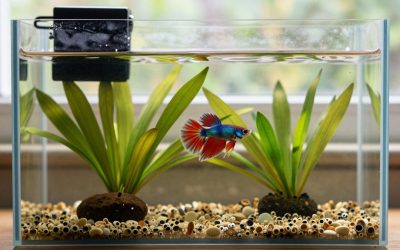
The dense root curtain is excellent fry cover, and shy species use the shade to settle. Bettas in particular benefit, since the calm surface frogbit requires is the same condition a betta prefers, and they will rest against the leaves near the top of the tank. This amazon frogbit care guide suits betta tanks well.
Goldfish and larger cichlids eat frogbit readily, so it suits community tanks rather than boisterous stock. In shrimp tanks the roots collect biofilm for grazing, with the usual caution about copper in fertilisers and treatments rather than any issue with the plant itself. Read every label before dosing.
Myths, Mistakes and the Rules Around This Plant
Two ideas cause most of the frustration this amazon frogbit care guide has to address, and the third item is not a myth but a disposal point that applies to fast-spreading floating plants generally and deserves treating as part of routine maintenance. It takes seconds to do properly.
Myth: Melting Means Bad Water
Water on the leaf tops is the usual cause. Filter spray, an air stone or an upward-angled return rots a healthy mat within a week while ammonia, nitrite, nitrate and temperature all read exactly as they should, which sends people chasing a chemistry problem that does not exist. Look up, not down.
Check the surface before the water. Angle the return along the glass, lower or remove the air stone, and watch for recovery over the next fortnight. Frogbit rebuilds quickly once the surface is calm, often doubling again within two weeks of the flow being corrected. Recovery is usually complete.
Myth: Floating Plants Cannot Cause Problems
A mat doubling every one to two weeks covers a surface in about a month, and everything below then receives substantially less light. Stem plants stretch, crypts yellow, and carpeting plants thin out, usually well before anyone connects those changes to the floaters above them. Shade builds quietly over weeks.
Thin on a schedule rather than in response to problems. Removing about a third of the mat every one to two weeks keeps light reaching the layout below while preserving the nutrient export and the cover that made the plant worth adding in the first place. A third every fortnight is enough.
Not a Myth: Dispose of Surplus Properly
Fast-spreading floating plants are regulated in some states and countries, and those lists are revised periodically, so check your local authority before buying or discarding this species. Rules differ noticeably between neighbouring jurisdictions and change more often than people expect.
Never release plants or trimmings into natural waterways, and do not tip tank water into a storm drain. Bag surplus rosettes for household waste or dry them out completely first, because floating plants establish from very small fragments in warm outdoor water. Treat disposal as routine work.
Long-Term Care, Thinning and Twelve-Month Costs
Across a year, this amazon frogbit care guide reduces to a thinning schedule and attention to equipment that shapes the surface. The plant itself costs almost nothing to run, and the meaningful variables are lighting output and how your filter behaves as it ages. Both drift slowly and quietly.
The Thinning and Feeding Routine
Remove roughly a third of the mat every one to two weeks, scooping rather than grabbing, since the roots tangle and pulling one clump lifts healthy neighbours with it. Trim roots to 4-6 in (10-15 cm) at the same time if they are reaching plants below. Roots regrow within a few weeks.
Feed through the water column with a comprehensive liquid at half the label rate weekly, aiming for 10-25 ppm nitrate and 0.1-0.5 ppm iron. In a well stocked tank fish waste covers much of the nitrogen, so judge by new leaf colour before raising any dose. New leaves show the answer first.
What Degrades: Lighting, Filters and Lids
LED fixtures lose measurable output across several years, and growth that was vigorous at setup slows without any obvious change. Because floaters sit closest to the light, they usually show that decline later than plants on the substrate, which masks the real cause for a while. Recheck output every year or two.
Filters alter the surface as they age. A partially blocked intake or a worn impeller changes the outflow angle, and flow that once ran along the glass starts breaking the surface. Check outflow direction during monthly maintenance rather than assuming it has stayed where you set it.
Twelve-Month Cost and Seasonal Demand
Costs are minimal: a comprehensive liquid fertiliser lasting most of a year, and a floating ring if flow pushes plants into a corner. Prices move constantly, so check them at the moment of purchase rather than relying on older figures. Any amazon frogbit care guide quoting fixed prices is already stale.
Seasonal swings are noticeable without climate control. Longer daylight and warmth from March onward can double the thinning frequency, while dry winter heating reduces humidity above an open-topped tank and produces crisp brown leaf edges that look like a nutrient deficiency. Humidity is the real variable.
Frequently Asked Questions
These come up in the first couple of months, usually after a mat has rotted unexpectedly or spread far faster than anticipated. Most questions reduce to surface agitation, lid humidity and how often the mat needs thinning back. Most amazon frogbit care guide questions come down to those three.
Why is my amazon frogbit turning yellow and rotting?
Usually water landing on the leaf tops from filter spray, an air stone or an angled return. Redirect the flow along the glass and calm the surface, then expect the survivors to recover and double again within about two weeks once their upper surfaces stay dry. Chemistry is rarely the issue.
How is frogbit different from duckweed?
Size and control. Frogbit rosettes reach 0.5-2 in (1.3-5 cm) with long trailing roots and can be scooped out by hand, whereas duckweed leaves are a few millimetres across and are effectively impossible to remove completely once established in a tank. Frogbit stays manageable by comparison.
Do I need to trim the roots?
Only if they reach plants below or look untidy to you. Trimming to 4-6 in (10-15 cm) does no harm, and the plant regrows them within a few weeks. In tanks over 18 in (46 cm) deep the roots rarely cause any problem at all. Trim only when the roots bother you or start tangling in the layout below.
How fast does amazon frogbit spread?
A healthy mat roughly doubles every one to two weeks at 20 micromoles of PAR or more with nitrate around 20 ppm. That works out to full surface coverage in roughly a month from a handful of rosettes, so plan thinning into the maintenance routine from the very start rather than reacting later.
Will frogbit help control algae?
Indirectly, by consuming nitrate and phosphate and by shading the surface, and fast growth makes it reasonably effective at both. It is not a treatment though, so correct light hours and feeding levels rather than relying on any plant to solve an algae problem alone. Cutting the photoperiod works faster.
See More:
Conclusion
Everything in this amazon frogbit care guide follows from the surface: dry leaf tops, calm water, 1-2 in (2.5-5 cm) of humid air under the lid, and light from 20 micromoles of PAR upward. Get those right and the plant looks after itself entirely. Nothing below the surface matters much.
Thin a third of the mat every one to two weeks, trim roots to 4-6 in (10-15 cm) when they reach plants below, and bag surplus rather than releasing it anywhere. Handled that way it is one of the most effective nutrient exporters available for a freshwater tank. Few plants ask less in return.
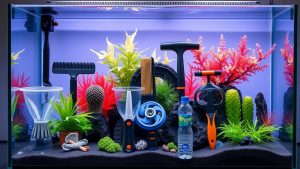
5 Best Aquascaping Tool Kits
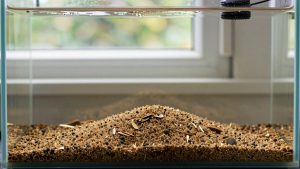
How to Rinse Aquarium Substrate Safely (2026): Step-by-Step