Last Updated: September 25, 2026
Amano shrimp care guide numbers differ from cherry shrimp in three ways that matter: they reach 2 in (5 cm), they live two to three years, and they cannot reproduce in fresh water because their larvae require brackish conditions to develop at all. That last point quietly decides how you plan and budget the tank.
As an Amazon Associate we earn from qualifying purchases.
As an Amazon Associate we earn from qualifying purchases at no extra cost to you. Prices and availability are accurate as of the date shown and are subject to change.

SunGrow Shrimp Rocks, for Crayfish, Hermit Crab, Snails, Crystal Red, Amano, and Ghost Shrimps (60 Grams)
Selected for "Amano Shrimp Care Guide: Size, Parameters and Algae Work": this listing is substrate and hardscape (SunGrow Shrimp Rocks, for Crayfish, Hermit Crab, Snails, Crystal Red, ), matching the equipment this article covers.
View on Amazon
Swimming Creatures™ 10 Amano Premium High-Grade Caridina Freshwater Aquarium Shrimp Live
Selected for "Amano Shrimp Care Guide: Size, Parameters and Algae Work": this listing is aquarium equipment (Swimming Creatures™ 10 Amano Premium High-Grade Caridina Freshwater Aq), matching the equipment this article covers.
View on Amazon
Brightwell Aquatics Shrimp Prep Shrimp Tank Starter 250ml
Selected for "Amano Shrimp Care Guide: Size, Parameters and Algae Work": this listing is tanks (Brightwell Aquatics Shrimp Prep Shrimp Tank Starter 250ml), matching the equipment this article covers.
View on Amazon
Aquatic Arts 5 Amano Shrimp | Live Freshwater Aquarium Clearer | Real Living Nano Fish Kit | Natural Glass Clearing Dwarf Caridina | Live Shrimp
Selected for "Amano Shrimp Care Guide: Size, Parameters and Algae Work": this listing is aquarium equipment (Aquatic Arts 5 Amano Shrimp | Live Freshwater Aquarium Clearer | Real ), matching the equipment this article covers.
View on AmazonBy David Nguyen
What Separates Amano Shrimp From the Rest
An amano shrimp care guide has to cover a different animal from the dwarf shrimp most keepers meet first. Caridina multidentata is larger, longer lived, tolerant of a wider parameter range, and a genuinely effective algae grazer rather than an incidental one.

The Decision Numbers: Size, Tank, Parameters and Copper
Females reach 2 in (5 cm) and males around 1.5 in (3.8 cm), with lifespans of two to three years and occasionally longer. Target GH 6-10 dGH (107-179 ppm), KH 1-8 dKH (18-143 ppm), pH 6.5-7.5, TDS 150-250 ppm and 68-78 °F (20-26 °C).
Copper remains the hard limit regardless of their hardiness. It kills invertebrates far below concentrations tolerated in drinking water, where the US EPA Lead and Copper Rule, first set in 1991, uses an action level of 1.3 mg/L. Check plant fertilisers, snail treatments and any medication before dosing a tank containing them.
Why They Cannot Breed in Your Tank
Amano shrimp are amphidromous: adults live in fresh water, but the larvae hatch as free-swimming zoea that require brackish water of roughly 17-35 ppt to develop, then migrate back into fresh water as juveniles across several weeks of development in the wild.
In practice this means berried females in a home tank release larvae that die within days. It is not a husbandry failure, and it has one useful consequence: an amano population never explodes, so the stocking number you choose is the number you keep.
Target Ranges and Action Thresholds
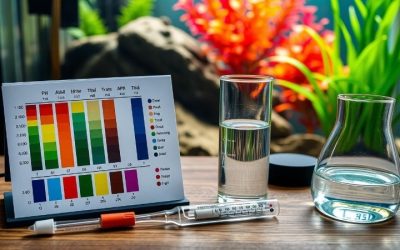
The table below sets the working range beside the point that needs a response. Amanos tolerate a wider band than Neocaridina, but the ammonia and copper lines are just as strict, because tolerance of hardness is not tolerance of toxins.
| Measurement | Target range | Action threshold | First action |
|---|---|---|---|
| GH | 6-10 dGH (107-179 ppm) | Under 4 dGH (72 ppm) | Remineralise slowly over several days |
| KH | 1-8 dKH (18-143 ppm) | KH 0 with drifting pH | Add buffering, recheck pH |
| pH | 6.5-7.5 | Daily swing over 0.3 | Test KH before touching pH |
| TDS | 150-250 ppm | Change over 20 ppm in a day | Slow the water change rate |
| Temperature | 68-78 °F (20-26 °C) | Above 80 °F (27 °C) | Add surface agitation, shade the tank |
| Ammonia | 0 ppm | Any detectable reading | Small water change, stop feeding |
| Nitrate | Under 20 ppm | Above 20 ppm | Increase change frequency |
| Stocking for algae | 1 per 2-5 gallons (7.6-19 L) | Visible algae persisting | Cut light hours before adding shrimp |
Note the last row. Adding more amanos is the reflex answer to an algae problem and rarely the correct one, since algae is driven by light duration and surplus nutrients rather than by any shortage of grazers already present in the tank.
Applying the Numbers to a Real Tank
An amano shrimp care guide has to account for two practical habits of the species that no parameter table captures: they are strong climbers and determined jumpers, and they are assertive enough at feeding time to displace smaller tank mates.
Tank Size, Placement and Fit
Measure the lid against every cable and hose entry before ordering, because amanos climb filter tubing and airline and will leave through a gap of a centimetre. Escapes are the single most common cause of loss reported by keepers of this species.
Ten gallons (38 L) is a sensible floor for a small group, since a 2 in (5 cm) animal needs grazing surface rather than open water. Keep the tank out of direct sun, which drives the algae growth that the shrimp are then blamed for not clearing.
Stocking Rate for Algae Control
One amano per 2-5 gallons (7.6-19 L) is the working range, at the denser end for tanks with an existing algae problem and the sparser end for maintenance in a balanced planted tank. Six animals in a 20 gallon (76 L) tank is a typical starting point.
They handle soft green algae and hair algae well, are indifferent to black beard algae, and will not touch algae on glass with the thoroughness people expect. Treat them as part of a solution that also includes shorter light periods and controlled feeding.
Behaviour With Fish and Other Shrimp
Amanos are harmless to fish and are themselves too large for most community species to eat, which is a real advantage over dwarf shrimp. They will steal food aggressively, including pellets intended for bottom feeders, and they usually win those contests.
That assertiveness is why they are a poor choice for a Neocaridina breeding tank. Adults will not hunt cherry shrimp, but they monopolise food, and a colony that should be expanding grows slowly when a group of amanos clears every feed within seconds.
Myths About Amano Shrimp
Three claims cause most of the disappointment this amano shrimp care guide is meant to prevent, and each one has a measurable replacement. All three come from expectations set by how the shrimp are marketed rather than by how the animal actually behaves in a tank.
Myth: They Will Clear Any Algae Problem
Amanos graze soft green and hair algae effectively and ignore several common types entirely. A tank with persistent algae has surplus light or surplus nutrients, and adding grazers to that tank treats the symptom while the underlying driver continues unchanged.
Replace the reflex with two numbers. Cut the photoperiod to six or seven hours and measure nitrate before the weekly change, aiming under 20 ppm. Then stock at one shrimp per 2-5 gallons (7.6-19 L) to handle what remains rather than to fix the cause.
Myth: Berried Females Mean Babies Are Coming
Females carry eggs readily in fresh water and the larvae hatch normally, then die within days because they need brackish conditions of roughly 17-35 ppt to develop. Nothing is wrong with the tank when this happens; it is simply the species life cycle.
Plan around it rather than fighting it. Amano populations do not replace themselves at home, so budget for occasional replacement every two to three years, and treat any surviving juveniles as an unusual outcome rather than an expected one.
Myth: Bigger Shrimp Are Tougher About Water
Amanos tolerate a wider hardness and temperature band than Neocaridina, which is not the same as tolerating poor water. Ammonia is toxic at concentrations well below the 0.25 ppm often quoted for fish, and copper is lethal at trace levels for both species alike.
Their real advantage is parameter width, not toxin tolerance. Treat detectable ammonia as an immediate small water change, keep nitrate under 20 ppm, and check every product label for copper exactly as carefully as you would for a dwarf shrimp tank.
Keeping Them for the Full Two to Three Years
Amanos are long-lived by shrimp standards, so this amano shrimp care guide has to cover a maintenance horizon measured in years. This section covers the routine, what drifts in the background, and the recurring cost of keeping a group.
The Weekly and Monthly Routine
Weekly: a 10-20% water change matched for temperature and TDS, plus a check that the lid still seals at every cable entry. Amanos need less feeding than dwarf shrimp in a planted tank, since they cover far more surface area while grazing.
Monthly: squeeze the sponge prefilter in old tank water, clear detritus from dense planting, and test GH and KH. Quarterly, check reagent dates and calibrate the TDS meter, because an uncalibrated meter invalidates the reading you check most often.
What Drifts and What It Does
TDS climbs whenever evaporation is topped up with tap water rather than pure water, and in a warm room that drift is fast enough to matter within a month. A weekly meter reading catches it while the correction is still a small adjustment.
Filter flow falls as sponge pores clog and air pump diaphragms stiffen over one to two years. Heater accuracy moves 2-4 °F (1-2 °C) across the same period, and in summer a room above 80 °F (27 °C) pushes a tank past the upper limit without warning.
Replacement and the 12-Month Cost
Because the population cannot replace itself, plan on replacing animals every two to three years rather than never. That is the main ongoing cost of this species, and it is worth weighing against dwarf shrimp, which cost more to establish but then sustain themselves.
Other recurring spend is small: remineraliser, air stones and diaphragms, food, and test reagents. Lights, heaters and small tanks discount most deeply in late June and late November. A sale changes nothing biological, since the tank still needs full cycling first, and prices move constantly.
Amano Shrimp Care Guide Questions
These questions come up in the first few months of keeping the species. Each answer in this amano shrimp care guide points at a number or an observed behaviour rather than at an impression, since the two disagree with this animal more often than not.
How many amano shrimp do I need?
One per 2-5 gallons (7.6-19 L), denser where algae is already established and sparser for maintenance. Six in a 20 gallon (76 L) planted tank is a common and effective starting group, and it can be increased later if algae persists after light control.
Can amano shrimp live with cherry shrimp?
They can coexist safely, but amanos dominate feeding and slow a cherry colony’s growth considerably. Where the goal is an expanding Neocaridina population, keep the two species in separate tanks rather than relying on heavy feeding to compensate.
Why did my amano shrimp escape?
They climb filter tubing, airline and heater cables, and they leave through any gap in the lid. Seal cable entries with lid cut-outs or foam, and check the seal after any equipment change, since a new hose is the usual cause of a fresh gap.
Are they safe with fish medications?
Many are not, particularly anything containing copper, and treatments intended for parasites often harm the filter bacteria as well. Where a tank needs treating, move the fish to a separate tank rather than dosing the display with invertebrates in it.
Do amano shrimp need a heater?
Usually not, since 68-78 °F (20-26 °C) covers most heated rooms. Where the room drops below 68 °F (20 °C) or swings widely across a day, a heater used to hold a steady figure is far more useful than one used simply to raise the temperature.
See More:
Conclusion
This amano shrimp care guide reduces to four numbers: adults at 2 in (5 cm) living two to three years, GH 6-10 dGH (107-179 ppm) with TDS 150-250 ppm, 68-78 °F (20-26 °C), and one shrimp per 2-5 gallons (7.6-19 L) for algae work.
Seal the lid, keep copper out entirely, and treat algae with light duration and nutrient control rather than by adding more grazers. Accept that the population will not replace itself, and the species repays that with two to three years of consistent, visible work.
Related Reviews & Guides
Best Aquarium Setup for Betta Fish: Top Compared Tank Guide
5 Best Beginner Fishes: Top Hardy Species for New Aquarists