Last Updated: September 25, 2026
Goldfish tank size guide numbers exist because these fish reach 6-12 in (15-30 cm) and live 10-20 years. One fancy goldfish needs 20 gallons (76 L), a single-tail needs 40 gallons (151 L) indoors, and footprint matters at least as much as the capacity printed on the box. Filled weight and swimming length decide most of the rest.
As an Amazon Associate we earn from qualifying purchases.
As an Amazon Associate we earn from qualifying purchases at no extra cost to you. Prices and availability are accurate as of the date shown and are subject to change.

1.5 Gallon Aquarium Starter Kits - Plastic Fish Tank Kit Clear Beta Fish Tank Small with Filteration Oxygenation, Water Circulation, Lighting - Beginner's Gift for Guppy, Shrimp, Goldfish
Selected for "Goldfish Tank Size Guide: Real Minimum Gallons Explained": this listing is filtration (1.5 Gallon Aquarium Starter Kits - Plastic Fish Tank Kit Clear Beta Fi), matching the equipment this article covers.
View on Amazon
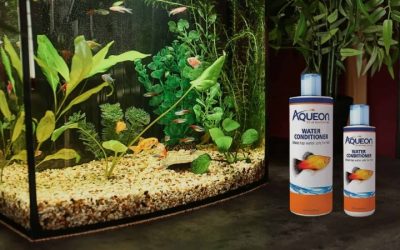
API GOLDFISH PROTECT Aquarium Water Conditioner 4-Ounce Bottle
Selected for "Goldfish Tank Size Guide: Real Minimum Gallons Explained": this listing is water treatment (API GOLDFISH PROTECT Aquarium Water Conditioner 4-Ounce Bottle), matching the equipment this article covers.
View on Amazon
Tetra ColorFusion Starter 3 Gallon Fish Tank Kit for Small Freshwater Fish
Selected for "Goldfish Tank Size Guide: Real Minimum Gallons Explained": this listing is tanks (Tetra ColorFusion Starter 3 Gallon Fish Tank Kit for Small Freshwater ), matching the equipment this article covers.
View on Amazon
DaToo 1 Gallon Mini Fish Bowl Kit Impact-Resistant Plastic Aquarium Starter Kits with USB Filtration System and Lighting for Betta Fish Tank Goldfish Bowl Tabletop or Desktop Display
Selected for "Goldfish Tank Size Guide: Real Minimum Gallons Explained": this listing is lighting (DaToo 1 Gallon Mini Fish Bowl Kit Impact-Resistant Plastic Aquarium St), matching the equipment this article covers.
View on AmazonBy David Nguyen
Quick answer: Our top pick in 2026 is the Fancy, single fish — our #1 rated choice. See the full ranked comparison, alternatives and buying advice below.
Why the Minimums Are What They Are
A goldfish tank size guide is really an adult-size guide. Nothing in these minimums is arbitrary: each figure comes from the length the fish reaches, the ammonia it produces getting there, and the horizontal room it needs to turn without scraping decor, glass or its own tail.

The Decision Numbers: Adult Size, Minimum Volume and Filled Weight
Fancy varieties, meaning the egg-shaped bodies such as oranda, ryukin, fantail and black moor, reach 6-8 in (15-20 cm) including tail. They need 20 gallons (76 L) for the first fish plus 10 gallons (38 L) for each one after, and they commonly live 10-15 years.
Single-tails, meaning common, comet and shubunkin, reach 10-12 in (25-30 cm) and sometimes more. The indoor floor is 40 gallons (151 L) for one plus 20 gallons (76 L) per extra fish. Filled weight runs near 10 lb per gallon (1.2 kg per litre), so that tank sits around 450 lb (204 kg).
Why Capacity Alone Does Not Decide It
Two tanks of identical volume can be very different homes. A 40 gallon breeder at 36 x 18 in (91 x 46 cm) gives a 6 in (15 cm) fish room to turn, while a 55 gallon at 48 x 13 in (122 x 33 cm) holds more water but is simply too narrow front to back.
Surface area drives gas exchange, and goldfish are heavy oxygen users at the temperatures most rooms sit at. A wide, shallower footprint moves more oxygen into the water at the same volume, which is why breeder-format tanks outperform tall show tanks for this species in particular.
The Lookup Table by Variety and Count
The table below is the working part of this goldfish tank size guide. Read it left to right, then check the footprint column against furniture you already own, because available surface length is usually the constraint that actually decides the purchase in a real home.
| Variety | Adult length | Minimum for one | Each additional | Workable footprint | Filled weight |
|---|---|---|---|---|---|
| Fancy, single fish | 6-8 in (15-20 cm) | 20 gallons (76 L) | +10 gallons (38 L) | 30 x 12 in (76 x 30 cm) | ~225 lb (102 kg) |
| Fancy, pair | 6-8 in (15-20 cm) | 30 gallons (114 L) | +10 gallons (38 L) | 36 x 12 in (91 x 30 cm) | ~340 lb (154 kg) |
| Fancy, trio | 6-8 in (15-20 cm) | 40 gallons (151 L) | +10 gallons (38 L) | 36 x 18 in (91 x 46 cm) | ~450 lb (204 kg) |
| Single-tail, one fish | 10-12 in (25-30 cm) | 40 gallons (151 L) | +20 gallons (76 L) | 48 x 18 in (122 x 46 cm) | ~450 lb (204 kg) |
| Single-tail, pair | 10-12 in (25-30 cm) | 75 gallons (284 L) | +20 gallons (76 L) | 48 x 18 in (122 x 46 cm) | ~850 lb (386 kg) |
| Single-tail group | 10-12 in (25-30 cm) | Pond preferred | +20 gallons (76 L) | 125 gallons (473 L) indoors | 1400 lb (635 kg) or more |
| Quarantine or grow-out | Under 3 in (7.6 cm) | 10 gallons (38 L) | Temporary only | 20 x 10 in (51 x 25 cm) | ~110 lb (50 kg) |
Treat every row as a floor rather than a target. The figures assume filtration at 8-10x turnover per hour and a weekly 20-30% water change; drop either of those and the same tank stops holding nitrate below 40 ppm between changes, whatever the table happens to say.
Fitting the Numbers Into a Real Room
Any goldfish tank size guide is only useful once the numbers meet a floor and a wall. Weight, clearance and access decide whether the tank you chose on paper is the tank you can keep running for the next decade without quietly resenting it every week.
Tank Size, Placement and Fit
Measure the length and depth of the cabinet top against the tank footprint, and the wall clearance against your filter, before ordering anything, since hang-on-back units generally need 4-6 in (10-15 cm) behind the glass. A stand narrower than the tank base is not usable at any price.
A 75 gallon (284 L) build at 850 lb (386 kg) concentrates more load per square foot than almost anything else in a home, so position it across joists where the layout allows. Leave vertical clearance too: tank height plus light plus room to get a forearm inside.
What Changes Between 20, 40 and 75 Gallons
At 20 gallons (76 L), with only 17-18 gallons (64-68 L) of actual water after substrate, one missed water change shows up immediately in the nitrate reading. The tank is manageable and light at roughly 225 lb (102 kg), but it forgives very little in either direction.
At 40 gallons (151 L) in breeder format the same weekly routine covers three fancy goldfish and parameters move slowly enough that a week away is survivable. At 75 gallons (284 L) stability improves again, though the tank is now furniture that will not move without being fully drained.
Fancy Versus Single-Tail Stocking
The two body types are effectively different animals for stocking purposes. Fancy goldfish swim and feed slowly, so they lose out to a comet that covers the tank length in a second, and they struggle in currents that a single-tail ignores entirely without any visible effort.
Housing pressure also shows up seasonally. Dorm and rental rules often cap aquarium capacity around 10 gallons (38 L), which sits below the floor for any adult goldfish, and small kits sold in late summer and again in December frequently carry goldfish images on the packaging regardless of that.
Where the ceiling really is 10 gallons (38 L), a goldfish is the wrong fish for that room, and a single betta or a small shrimp tank is the honest substitute rather than a compromise. Check the rules in writing first, since capacity limits are enforced unevenly.
Sizing Myths That Cost Fish
Three claims keep goldfish in tanks that are too small, and each has a measurable replacement. A goldfish tank size guide is only useful once these are cleared out, because for many new keepers they quietly override every number in the table above.
Myth: Goldfish Grow to the Size of Their Tank
Growth in a small tank is suppressed by accumulated waste and poor water quality, not regulated by the distance to the nearest wall. The skeleton keeps developing while the body cannot, and the result is internal compression rather than a naturally smaller but healthy adult fish.
The measurable version is simple: a goldfish that stops growing in a small tank is usually a goldfish living with elevated nitrate. Test before the weekly change, and if the reading is above 40 ppm, the tank is undersized regardless of how the fish looks from the front.
Myth: One Inch Per Gallon Works
Inch-per-gallon treats a 6 in (15 cm) goldfish as equivalent to six 1 in (2.5 cm) tetras. Body mass scales roughly with the cube of length and waste output scales with mass, so the goldfish produces vastly more ammonia while also needing far more room to turn around.
Replace the rule with footprint plus measured nitrate. If the tank is at least 30 in (76 cm) long for a fancy goldfish and nitrate stays below 40 ppm at the end of a week, the stocking works. If either condition fails, it does not, whatever the arithmetic suggests.
Myth: Bigger Tanks Are More Work
A larger tank dilutes the same waste into more water, so parameters drift more slowly and mistakes have longer to be noticed and corrected. The weekly change takes more minutes, but the frequency of genuine emergencies falls, which is a trade most new keepers would accept if it were framed clearly.
The real cost of scale is fixed rather than recurring: a heavier stand, a stronger floor position, and a filter moving 8-10x the volume. Once those are handled, the practical difference between maintaining 20 and 40 gallons (76 and 151 L) is roughly ten minutes a week.
Choosing a Size You Will Still Want in Year Five
Goldfish outlive most aquarium equipment, so tank choice is a decade-scale decision rather than a seasonal one. This section covers what the tank still has to do years later, what degrades underneath it, and what choosing too small actually costs across twelve months.
What the Tank Still Has to Do in Year Three
By year three a fancy goldfish is near adult length and producing its full waste output, so the tank has to hold nitrate below 40 ppm on a weekly change at that load. A tank sized for a 2 in (5 cm) juvenile will have failed that test long before then.
Verify with readings rather than appearance, and recheck every few months while the fish is still growing. Heaters, test kits, siphons and seeded biological media all transfer to a larger tank, so the sunk cost of upgrading later is mostly the tank, the stand and the filter.
What Degrades Underneath
Silicone seams age, and a secondhand tank carries a leak risk that scales with volume, since a 75 gallon (284 L) failure becomes a household event. Inspect seams for peeling or gaps before filling any used tank, and never simply reseal over old silicone that is already lifting.
MDF stands are the most overlooked failure point in the hobby. Repeated spills swell the board at the base, the top loses flatness, and load then transfers unevenly into the tank bottom. Wipe spills immediately and check the stand corners with a level once each season.
What Choosing Too Small Costs Over 12 Months
An undersized tank costs more in consumables rather than less. More frequent and larger water changes mean more dechlorinator, more test reagent and more replacement filter floss, and the livestock failure rate rises, which is the expense nobody ever writes into the original budget.
Buying the right size once also avoids a second full purchase of tank, stand, lid and filter within two years. Large-tank discounts cluster in late June and again in late November, which makes those windows a sensible time to buy the size you actually need. Prices move constantly, so verify at the time of purchase rather than trusting an older figure.
Goldfish Tank Size Guide Questions
The questions below come up whenever this goldfish tank size guide is compared against advice given at a store counter. Each answer stays with measurable minimums rather than with what a given tank can be made to survive for a short period.
Is a 20 gallon enough for two fancy goldfish?
It is tight, and workable only with strong filtration and a strict weekly 30% change. Thirty gallons (114 L) is the comfortable figure for a pair, and the difference in footprint, 36 in against 30 in (91 against 76 cm), matters more than the extra water does.
Why is a 55 gallon not ideal?
Volume is fine but shape is not. At 48 x 13 in (122 x 33 cm) it is too narrow front to back for a fish that turns using its whole body. A 40 gallon breeder or a 75 gallon at 18 in (46 cm) deep is a better home despite one holding less water.
Can a goldfish live alone?
Yes. Goldfish are social but not obligate shoalers, and a single fancy goldfish in 20 gallons (76 L) does well. Keeping one is often the better outcome in a small home, because it removes the pressure to squeeze a second fish into a tank that was sized for one.
Do I need a bigger tank for a bare bottom?
No, though a bare bottom raises usable water volume by a few gallons and makes waste removal faster, which buys a little stocking headroom in practice. It does not change the footprint requirement at all, since that is driven by the adult length of the fish.
What size for goldfish bought at 1 inch?
Size for the adult rather than the bag. A 1 in (2.5 cm) fancy goldfish will pass 6 in (15 cm) within two to three years under good conditions, so 20 gallons (76 L) is the correct starting point even though the fish looks absurd in it on day one.
See More:
Conclusion
This goldfish tank size guide reduces to three figures: 20 gallons (76 L) for one fancy goldfish plus 10 gallons (38 L) for each one after, 40 gallons (151 L) as the indoor floor for a single-tail, and a footprint at least 30 in (76 cm) long with 18 in (46 cm) of depth preferred.
Choose for the adult fish and for the decade, not for the juvenile and the first year. The larger tank costs more once, forgives more every week, and removes the second purchase that undersized builds almost always force on their owners within about two years.
Ready to decide? Our #1 pick for 2026 is the Fancy, single fish.
Live price & availability on Amazon.
Related Reviews & Guides
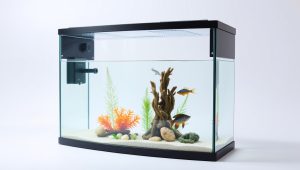
6 Best Fish Tank Skull Decorations 2026
Betta Fish Disease Treatment: Best Products Guide