Last Updated: September 25, 2026
Low light aquarium plants lighting is the easiest planted setup to run and the one most often abandoned too early, usually because the owner adds intensity long before the tank has settled. This guide covers the PAR band that defines low light, the photoperiod that suits it, and what genuinely limits growth.
As an Amazon Associate we earn from qualifying purchases.
As an Amazon Associate we earn from qualifying purchases at no extra cost to you. Prices and availability are accurate as of the date shown and are subject to change.

hygger Clip On 24/7 Lighting Aquarium LED Light,Sunrise-Daylight-Moonlight and DIY Mode, Adjustable Timer/Brightness Fish Tank Light with 7 Colors for Planted Tank (14W for 12~20in Tank)
Selected for "Low Light Aquarium Plants Lighting: PAR, Hours and Care": this listing is lighting (hygger Clip On 24/7 Lighting Aquarium LED Light,Sunrise-Daylight-Moonl), matching the equipment this article covers.
View on Amazon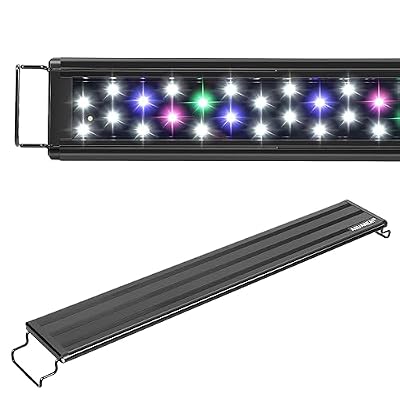
AQUANEAT LED Aquarium Light Full Spectrum 12 Inch Fish Tank Light Fresh Water
Selected for "Low Light Aquarium Plants Lighting: PAR, Hours and Care": this listing is lighting (AQUANEAT LED Aquarium Light Full Spectrum 12 Inch Fish Tank Light Fres), matching the equipment this article covers.
View on Amazon
SEAOURA Clip On Aquarium Light for Plants-24/7 Fish Tank Light, 7-12 Inch
Selected for "Low Light Aquarium Plants Lighting: PAR, Hours and Care": this listing is lighting (SEAOURA Clip On Aquarium Light for Plants-24/7 Fish Tank Light, 7-12 I), matching the equipment this article covers.
View on Amazon
AQUANEAT LED Aquarium Light with Timer for 12-16 Inch Fish Tank, Brightness Adjustable, Full Spectrum, Low Medium Light Plant Lamp
Selected for "Low Light Aquarium Plants Lighting: PAR, Hours and Care": this listing is lighting (AQUANEAT LED Aquarium Light with Timer for 12-16 Inch Fish Tank, Brigh), matching the equipment this article covers.
View on AmazonBy David Nguyen
Quick answer: Our top pick in 2026 is the Very low — our #1 rated choice. See the full ranked comparison, alternatives and buying advice below.
What Low Light Means and the Numbers Behind It
Getting low light aquarium plants lighting right begins with a proper definition of the term, because it is used loosely enough to mean anything from a dim desk lamp through to a dimmed high-output fixture. In practice it describes a measurable band of light arriving at the substrate.
The decisive numbers that define the low light band
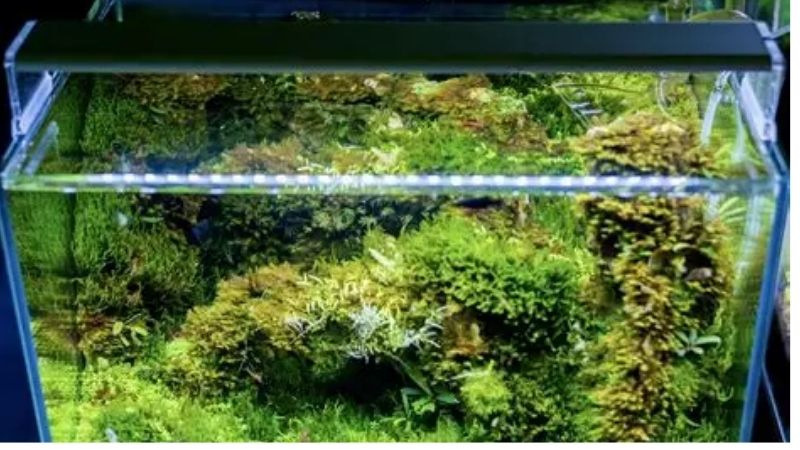
Low light means roughly 10–30 PAR measured right down at substrate level, in micromoles per square metre per second. Medium sits at 30–50 and high sits above 50, and the boundaries matter because the point where carbon becomes limiting falls somewhere around the top of the medium band.
Depth is the reason that the same fixture lands in different bands. A unit delivering 40 PAR on a 12 inch (30 cm) tank may only deliver 20 PAR at the substrate of a 21 inch (53 cm) tank, so a light sold as low output can be medium on a shallow tank and genuinely low on a deep one.
Low light aquarium plants lighting needs a sensible period too. Six to eight hours suits these tanks, with six the safer starting point, and extending hours is a poor substitute for intensity because the surplus time favours algae more reliably than it favours the plants you are trying to grow.
Why low light works without injected carbon
Photosynthesis needs light, carbon and nutrients all together, and whichever is scarcest sets the ceiling. At low intensity, plants can meet their carbon needs from what is dissolved in the water naturally, which is why these tanks run stably without any injection equipment at all.
Raise the intensity and that balance quickly breaks. Plants become carbon limited before they become light limited, the surplus light then goes unused, and algae exploits it because it is far better at taking advantage of whatever a planted tank cannot consume in the time available.
This is why low light tanks are genuinely more forgiving rather than being merely slower to develop. Far fewer variables interact, mistakes take much longer to show, and the correction window is measured in weeks rather than the days that a high-output injected setup typically allows.
Normal ranges against situations that need action
Slow growth is entirely normal and expected here. A healthy low light tank may produce a new leaf every week or two rather than requiring weekly trimming, and older leaves gradually yellowing and being replaced is simply part of how these plants behave rather than a sign of any problem.
Act only when stems stretch with long gaps between the nodes, when lower leaves drop faster than new ones appear, or when algae returns within days of cleaning the glass. The first two point to too little light and the third to too much, and both are correctable without new equipment.
| Band | PAR at substrate | Carbon requirement | What it suits |
|---|---|---|---|
| Very low | Under 10 | None | Mosses and anubias only, slow |
| Low | 10–30 | None needed | Java fern, crypts, vallisneria |
| Medium | 30–50 | Liquid carbon helps | Wider plant list, more trimming |
| High | Above 50 | Injected CO2 required | Carpets, red stems, high upkeep |
| High without carbon | Above 50 | Unmet | Algae rather than plant growth |
What This Looks Like in a Real Tank
The theory holds everywhere, but low light aquarium plants lighting behaves quite differently in a shallow nano than it does in a deep display tank. Depth, fixture height and the plant list all interact, and getting the three of them roughly right matters more than any single specification does.
Tank size, placement and physical fit
Mounting height is the adjustment that most people forget about. Raising a fixture a few inches (several cm) reduces PAR at the substrate noticeably, which is often exactly what an algae-prone tank needs, and lowering it again recovers that output without buying anything new at all.
Weight sets the wider limits here as well: a full tank runs near 10 lb per gallon (about 1 kg per L), so a 55 gallon (208 L) setup passes 600 lb (272 kg) and needs a purpose-built stand. Measure the tank length and the rim width with a tape before ordering any fixture or bracket.
How the picture changes across 10, 20 and 55 gallon tanks
Shallow tanks make low light rather harder to achieve rather than any easier. In a 10 gallon (38 L) tank holding only 10 inches (25 cm) of water, most modern fixtures overshoot the low band comfortably, so dimming the light or raising it is usually necessary rather than optional.
Deep tanks present exactly the opposite problem. A 21 inch (53 cm) column absorbs a great deal, so a fixture that would be medium on a shallow tank lands squarely in low light at the substrate, which suits shade-tolerant species but rules out anything wanting brighter conditions.
Which plants actually suit this band
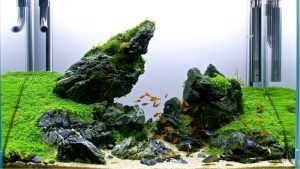
The reliable low light plant list is short and forgiving: java fern, anubias, cryptocoryne species, java moss, vallisneria and most floating plants. All of these attach or root easily, tolerate irregular fertilising, and recover from neglect far better than faster-growing species do.
Two of these need specific handling at planting time. Java fern and anubias are attached to hardscape rather than buried, because burying the rhizome causes it to rot, and cryptocoryne species commonly melt back after any change before regrowing from the roots over several weeks.
What does not belong in this band is equally clear. Carpeting species, most red stem plants and anything sold as demanding will struggle at 10–30 PAR regardless of fertilising, and buying them for a low light tank is easily the most common route into a disappointing planted setup.
Myths That Push People Out of Low Light
Three beliefs about low light aquarium plants lighting persist, and every one of them leads towards unnecessary spending. Replacing them with the underlying mechanism usually means keeping the fixture that is already installed and changing the schedule or the plant list instead of buying.
The myth that more light always means more growth
Growth is set by whichever input is scarcest, so adding light to a carbon-limited tank produces no extra growth at all. The surplus is taken up by algae, which is why so many tanks develop problems almost immediately after the owner upgrades the fixture in search of faster results.
If growth genuinely needs speeding up, the honest sequence is nutrients first, then carbon, and only then light. Checking that nitrate sits at 20–40 ppm rather than being stripped to zero by heavy water changes solves far more slow-growth complaints than any fixture upgrade ever does.
The myth that low light tanks do not need fertiliser
Slow growth still consumes nutrients, and a tank with few fish and frequent water changes can genuinely run short of nitrogen, phosphorus and potassium. Yellowing older leaves and pale new growth in an otherwise stable tank usually point at the nutrients rather than at the light.
The dose actually required is modest. A light routine matched to the actual growth rate is enough, and overdosing brings its own problems, so it is worth starting with a fraction of the label recommendation and then watching the response across several weeks before increasing it.
The myth that longer hours can substitute for intensity
Running the light for ten or even twelve hours does not turn low light into medium light in any useful sense at all. Plants photosynthesise only at the rate that the intensity allows, and the extra hours mostly extend the window in which algae can use up whatever the plants leave behind.
Keep the period at six to eight hours on a timer, and adjust intensity or fixture height instead. If a longer period genuinely appears to help, it is usually a sign that the fixture sits at the very bottom of the low band and that the plant list is more demanding than it should be.
Running a Low Light Tank Over the Long Term
The advantage of low light aquarium plants lighting is that the whole routine stays small, but it does not disappear entirely. Trimming, fertilising and reviewing the schedule seasonally keep these tanks stable for years, with very little intervention needed between those points.
What to do periodically, and how often
Run the light on a timer at a consistent six to eight hours, review that schedule again in late spring when daylight lengthens, and then trim as needed rather than on any fixed cycle. Growth here is slow enough that a monthly look at the tank usually covers everything that is required.
Keep water changes at 20–30 percent and watch the nitrate rather than eliminating it entirely. A planted tank that never rises above 5 ppm nitrate between changes is being stripped of the nutrients the plants need, and easing back on the change volume is often the correct response.
What degrades and how it shows up
LED output declines slowly across the years, which shows up first as slower growth rather than as anything that looks visibly dimmer. A fixture that suited the low band when it was new may drift towards the very low band by its fifth year without giving any obvious change to the eye.
Condensation deposits a mineral film on the lens or cover which reduces output measurably, and on open-top tanks that film builds up faster. Wiping it down every few months is the single most effective maintenance task for a fixture, and it costs nothing beyond a soft cloth and a minute of your time.
The twelve month cost of running this setup
The costs here are low by design: a timer, a modest fertiliser, an algae scraper, and the electricity for a fixture running six to eight hours daily. There is no carbon dioxide equipment involved, no regular trimming waste, and no pressure to keep pace with fast-growing stem plants.
That restraint is very much the point. Prices move constantly across budget and mid-range fixtures, so check the figures at the time of purchase, but the money saved in a low light tank sits mostly in the things you never have to buy rather than in the price of the fixture itself.
Frequently Asked Questions
These questions come up repeatedly once people accept that slow growth is the whole design of this approach rather than a fault, because low light aquarium plants lighting rewards patience and punishes the instinct to solve every problem by simply adding more intensity to the tank.
How many hours should a low light tank be lit?
Six to eight hours on a timer, starting at six hours while the tank establishes itself. Extending the hours does not compensate for low intensity, and the surplus time simply favours algae, so leave the period alone and adjust fixture height if the plants genuinely need more light.
Do low light plants need fertiliser?
Usually yes, though only in modest amounts. Slow growth still consumes nitrogen, phosphorus and potassium, and a lightly stocked tank with frequent water changes can run short. Start well below the label dose and increase only if pale new growth suggests that something is lacking.
Can I grow a carpet under low light?
Realistically no, you cannot. Carpeting species need light reaching the substrate at levels that sit well above the low band, and they usually need injected carbon as well. A moss attached to hardscape, or a low crypt, gives a similar visual effect without the equipment or the upkeep.
Why did my cryptocoryne melt after I changed the light?
Crypts commonly melt back after almost any change in conditions and then regrow from the roots over several weeks. Leave the plant where it is, keep the schedule steady and avoid making any further changes, since repeated adjustment is what turns a temporary melt into a permanent loss.
Is a dimmable fixture worth it for a low light tank?
Yes, and more so than almost any other feature listed on the box. Most modern fixtures overshoot the low band on shallow tanks, and dimming lets you sit precisely where you want to without raising the light awkwardly or having to shorten the photoperiod below a sensible six hours.
See More:
Conclusion
In practice, low light aquarium plants lighting means roughly 10–30 PAR down at the substrate, a six to eight hour photoperiod run on a timer, and a plant list built around java fern, anubias, cryptocoryne, vallisneria and mosses rather than around carpets or demanding red stems.
When growth disappoints, check the nutrients before the intensity, and remember that adding light to a carbon-limited tank feeds algae rather than plants. The strength of this approach is how few variables it has, so change one thing at a time and then give the tank several weeks to respond.
Ready to decide? Our #1 pick for 2026 is the Very low.
Live price & availability on Amazon.
Related Reviews & Guides

Best Algae Eaters for Freshwater Tank Setups, by the Numbers

Aquarium Planted Fertilizer Liquid Review