Last Updated: October 21, 2026
- Top Pick: API ALGAEFIX Algae Control 16-Ounce Bottle
- Best Value: MICROBE-LIFT Algaway 5.4 Algae Remover for Aquariums, Algaecide for Freshwater and Saltwater Tanks, Aquarium Algae Control and Fish Tank Cleaner, Safe for Fish and Plants, 8 Ounces (ALGAA08)
- Premium Choice: API ALGAEFIX Algae Control 4-Ounce Bottle, Multi-colored
Hair algae in aquarium tanks is a competition problem rather than a cleanliness problem. Long green strands appear when nutrients and light are available but the plants are not using them, and correcting that imbalance is the thing that clears it, over a period of two to four weeks rather than days.
As an Amazon Associate we earn from qualifying purchases.
As an Amazon Associate we earn from qualifying purchases at no extra cost to you.




By David Nguyen
Nutrients Outrunning Plant Growth
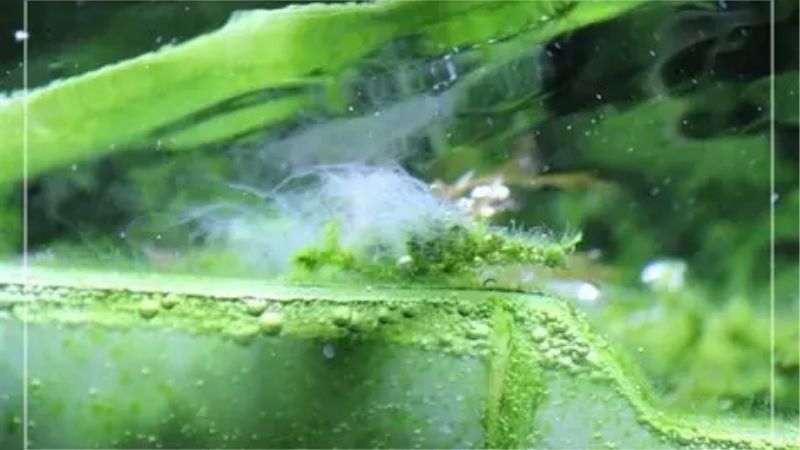
Hair algae is a group of filamentous green algae rather than a single species, covering thread algae, filamentous algae and similar growth. Hair algae in aquarium setups almost always signals the same thing: a nutrient and light supply that healthy plants are failing to consume.
The Deciding Numbers: Nitrate, Light Hours and Plant Growth
Test nitrate first, against a ceiling of 40 ppm and a target under 20 ppm in a planted tank. Then count the photoperiod against a reference of six to eight hours, and check whether direct daylight reaches the glass at any point in the day.
The third number is not on any test kit: how fast your plants are actually growing. New leaves appearing weekly and stems needing trimming monthly means competition is working. Stalled, pale or melting plants mean it has stopped, and that gap is where hair algae establishes.
Test ammonia, nitrite and temperature as well. Ammonia above 0 ppm in a young tank is a nutrient source in its own right, and hair algae appearing during cycling has a supply that no lighting change will remove until the cycle finishes.
The Biology: Why the Strands Take Hold
Filamentous algae grows from a small attachment point into long strands, wrapping around plant stems, moss and hardscape. It reproduces from fragments, which is why pulling it out carelessly seeds new patches across the tank within days.
It thrives on the same nitrogen and phosphorus that plants use, so the two are in direct competition. Where plants grow strongly they win, taking up nutrients faster and shading the surfaces algae would colonise. Where plants stall, the surplus is available and the strands take it.
Iron and micronutrient dosing is often blamed, and the relationship is indirect. Excess dosing beyond what plants can use leaves a surplus, but under-dosing stalls the plants and produces the same outcome by a different route, which is why both extremes grow it.
Timing tells you which extreme you have. An outbreak that follows a dosing increase points to surplus, while one that follows weeks of no dosing at all, or a tank where new leaves are pale and holed, points to starved plants losing the competition.
Ranges Against Action Thresholds
The table pairs each pattern with the imbalance behind it. Check plant condition before reading it, because identical nitrate readings mean opposite things in a thriving tank and a stalled one.
| Pattern | Readings and inputs | What it indicates | First action |
|---|---|---|---|
| Strands across healthy plants | Nitrate above 40 ppm | Nutrient surplus from stocking or feeding | Change 30-40%, feed less |
| Strands with pale, stalled plants | Nitrate under 10 ppm, few nutrients dosed | Plants starved, competition lost | Dose fertiliser, restore plant growth |
| Strands only where light is strongest | Light over 8 hours or direct sun | Light surplus beyond plant capacity | Cut to 6 hours, block daylight |
| Sudden outbreak after a trim | All four readings normal | Plant mass removed, uptake dropped | Hold routine, replant, wait |
| Outbreak in a tank under 3 months | Ammonia above 0 ppm | Cycle incomplete, ammonia feeding it | Finish the cycle first |
What This Means in a Real Tank
Whether hair algae in aquarium conditions becomes a persistent problem or a passing phase depends on plant mass, light intensity and how consistently the tank is fed and dosed. Those three explain most of the variation between similar setups.
Tank Size, Placement and Fit
Volume decides how quickly hair algae in aquarium water gets a surplus to work with. Small tanks swing in nutrients faster. A 10 gallon (38 L) tank can move from 10 to 40 ppm nitrate in a week on the same feeding that leaves a 55 gallon (208 L) tank barely changed, so nano tanks show outbreaks sooner.
Light intensity has to reach the plants that compete. PAR falls through water, so a fixture delivering good light at the surface may only reach low-light levels at the bottom of a tank 18 in (46 cm) deep, leaving carpet plants stalled while algae thrives above them.
Measure before you order: fixture length against tank length, mounting height above the rim, 4-6 in (10-15 cm) behind the tank for a hang-on-back filter, and stand capacity against roughly 10 lb/gallon (about 1 kg/L) filled.
How This Differs Across 10, 20 and 55 Gallon Tanks
Plant mass relative to volume is what matters, not volume alone. A densely planted 10 gallon tank resists hair algae better than a sparsely planted 55 gallon one, because the competition is a function of how much plant is actually growing.
Larger tanks buffer dosing errors. An overdose of fertiliser in a 5 gallon (19 L) tank produces a measurable surplus immediately, while the same quantity in a 55 gallon (208 L) tank is diluted into something the plants can absorb.
Flow distributes nutrients to plants. A baseline turnover of 4-6 times tank volume per hour suits community stocking, and printed GPH drops 30-50% once media and hoses load. Plants sitting in low-flow corners receive less of everything and compete far less effectively as a result.
How Plants, Dosing and Season Change the Picture
Fast-growing stems are the strongest defence available. Hornwort, water sprite, floating plants and similar species consume nitrogen quickly and continuously, and a tank with a healthy population of them rarely develops a serious outbreak.
Worth checking before buying any of them: some fast-growing species are restricted in certain states and countries because of invasive species rules, and those lists change from year to year. Check with your local authority before purchasing, and never release plants into waterways.
Trimming creates a temporary vulnerability. Removing half the plant mass in an afternoon removes half the nutrient uptake, and hair algae commonly appears one to two weeks after a heavy trim rather than during the period of neglect that preceded it.
Spring shifts the balance again. Plants come into stronger growth as daylight lengthens and rooms warm, which raises both their nutrient demand and their trimming frequency, so a dosing schedule that worked all winter often needs revisiting around March.
Common Mistakes and Myths to Retire
Three responses make hair algae in aquarium tanks worse or entrench it further. Each treats the strands as the problem rather than as evidence of what the plants are not doing.
Myth: Cut All Fertiliser Until the Algae Goes
Stopping dosing starves the plants, which removes the only real competition, and the algae continues using whatever remains from fish waste and food. Tanks that cut fertiliser to zero during an outbreak usually end up with more algae and dying plants.
The replacement approach: dose to what the plants can use and increase water changes to remove the excess. A planted tank held under 20 ppm nitrate with actively growing plants suppresses hair algae far better than a starved one.
Myth: Pull It Out and It Will Be Gone
Manual removal is necessary and it is also how outbreaks spread, because filamentous algae reproduces from fragments. Yanking strands off a stem breaks them and scatters pieces that establish across the tank inside a week.
The replacement technique: twist strands onto a toothbrush or a stick and lift them out whole, siphoning at the same time to catch loose pieces. Remove during a water change so fragments leave the tank rather than settling in it.
Badly wrapped stems are usually not worth saving. Cutting the affected section away and replanting the clean top is faster than untangling, and it removes both the algae and the fragments in one action rather than spreading them.
Myth: Algae Eaters Will Clear It
Amano shrimp genuinely eat soft young hair algae and are the most effective grazer for this type. What they will not do is clear an established mat, and a colony large enough to matter adds bioload that raises the nutrients driving it.
Siamese algae eaters have a similar reputation and similar limits, plus a size that outgrows many community tanks. Treat any grazer as help in a tank that has already been corrected, not as a correction.
Clearing It Long Term
Clearing hair algae in aquarium tanks means restoring the plants’ advantage and holding it. Two to four weeks is the realistic timeline, and the first fortnight often looks like nothing is happening at all.
What to Do on a Schedule
Change 20-30% weekly adjusted by measured nitrate, remove strands manually during each change, and run the light on a timer at six to eight hours. Test nitrate before the change, since the pre-change reading tells you whether the routine is keeping up.
Trim and replant to keep stems in active growth rather than letting them shade themselves out. Add fast-growing or floating species if the tank has few of them, because plant mass is the variable that does the most work here.
Trim in stages rather than all at once. Removing a third of the plant mass at a time keeps nutrient uptake broadly steady, which avoids the fortnight-long window of vulnerability that follows a heavy single-session cutback.
Gear That Degrades and How It Shows Up
LED fixtures lose PAR gradually while still looking bright, and weakening light stalls the plants that were competing. A fixture that grew stems well in year one may leave them struggling by year three with no visible change to the eye.
Timers get reset by power interruptions, leaving lights running well past the intended schedule. Filter flow drops 30-50% as media loads and impellers wear, reducing nutrient delivery to plants in the outer areas of the tank.
Test reagents expire and read low with age, which matters because nitrate is the primary input here. Every powered device beside water belongs on a GFCI outlet with a drip loop and a UL or ETL mark.
The Twelve-Month Running Cost
Budget for liquid fertiliser, root tabs, replacement mechanical media, test reagents, dechlorinator and continuous power for light, filter and heater. Fertiliser is the item people cut first during an outbreak and the one that most often needs to stay.
Fast-growing plants are close to free after the initial purchase, since they propagate from trimmings continuously. That makes plant mass the cheapest long-term control available, well ahead of any product sold for the purpose.
Amano shrimp sit somewhere in between. They are a one-off cost with a multi-year lifespan and they graze soft growth continuously, but they add bioload and they need copper-free water, so any medication used in the tank has to be checked against them first.
Frequently Asked Questions
These five come up most often when the strands keep reappearing a week after every single cleaning session.
How long does it take to clear?
Two to four weeks after the imbalance is corrected, with manual removal at every water change throughout. If nothing has changed after a month, the driver is still running and it is worth rechecking nitrate, light hours and plant growth.
Is hair algae harmful to fish or shrimp?
Not directly, and shrimp graze it happily. Long strands can trap small fish or fry in dense mats, and it smothers slow-growing plants by blocking light, so it is worth removing even though the water itself is fine.
Should I dose more or less fertiliser?
Look at the plants. Pale, stunted or holed leaves mean under-dosing, and the answer is more fertiliser plus more water changes. Healthy plants with nitrate above 40 ppm mean the surplus comes from food and stocking rather than from dosing.
Does hydrogen peroxide or liquid carbon work?
Spot treatment kills exposed strands over several days, which is a removal method rather than a fix. Several plants including vallisneria react badly to liquid carbon, and a large die-off consumes oxygen, so treat small areas at a time.
Why did it appear right after I trimmed?
Because you removed the competition. Cutting plant mass in half halves nutrient uptake overnight, and hair algae in aquarium tanks exploits that gap within one to two weeks. Trim in stages instead, and replant the healthy tops immediately.
See More:
The Bottom Line on Hair Algae
Hair algae in aquarium tanks is a signal that nutrients and light are outrunning plant growth. Test nitrate against a 40 ppm ceiling, count light hours against six to eight, and look honestly at whether your plants are growing. Correct whichever side is wrong, which sometimes means dosing more rather than less, then remove strands by twisting them out whole during weekly water changes. Give it two to four weeks, and add fast-growing plants, because they do more than any product on the shelf.
Aquarium Algae Types: How to Identify Each One Correctly
Swordtail Tank Mates: Space, Speed and Water Match