Last Updated: September 25, 2026
African cichlid tank setup is a hard-water, high-bioload build rather than a community tank with different fish in it. The working floor is 55 gallons (208 L) for mbuna, pH 7.8-8.6, KH 10-18 dKH, and filtration moving 8-10 times the volume every hour. Everything else in the build follows from those three figures.
As an Amazon Associate we earn from qualifying purchases.
As an Amazon Associate we earn from qualifying purchases at no extra cost to you. Prices and availability are accurate as of the date shown and are subject to change.

CaribSea Aquatics Eco-Complete African Cichlid Zack Sand, 20-Pound, Black
Selected for "African Cichlid Tank Setup: How It Works and What to Watch": this listing is substrate and hardscape (CaribSea Aquatics Eco-Complete African Cichlid Zack Sand, 20-Pound, Bl), matching the equipment this article covers.
View on Amazon
AFRICAN CICHLIDS HANDBOOK: A Complete Guide to Choosing, Breeding, Feeding, Tank Setup, Water Mastery, Behavior Control, Health Care, and Long-Term Success for Beginners and Advanced Aquarists
Selected for "African Cichlid Tank Setup: How It Works and What to Watch": this listing is tanks (AFRICAN CICHLIDS HANDBOOK: A Complete Guide to Choosing, Breeding, Fee), matching the equipment this article covers.
View on Amazon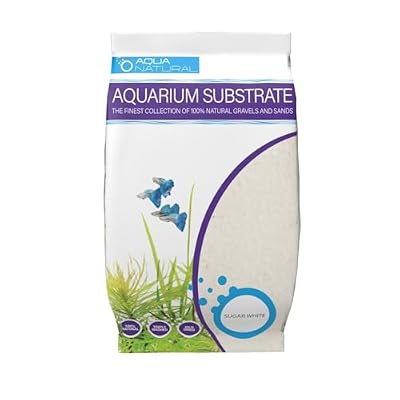
Aqua Natural Aquarium Substrate, African CICHILD Aragonite Sand, 10LB
Selected for "African Cichlid Tank Setup: How It Works and What to Watch": this listing is substrate and hardscape (Aqua Natural Aquarium Substrate, African CICHILD Aragonite Sand, 10LB), matching the equipment this article covers.
View on Amazon
CaribSea African Cichlid Mix Sahara Sand - 20 lb - Natural Substrate Buffers pH, Ideal for African Cichlids, Enhances Color & Behavior in Freshwater Aquariums
Selected for "African Cichlid Tank Setup: How It Works and What to Watch": this listing is substrate and hardscape (CaribSea African Cichlid Mix Sahara Sand - 20 lb - Natural Substrate B), matching the equipment this article covers.
View on AmazonBy David Nguyen
The Mechanics of a Rift Lake Tank and the Numbers That Decide It
An african cichlid tank setup differs from a standard freshwater build in three specific ways: the water is deliberately hard and alkaline, the stocking is deliberately dense, and the aggression is managed with rockwork rather than with space. Each of those forces a number.
The Decision Numbers: Volume, Footprint, Filled Weight and Gear
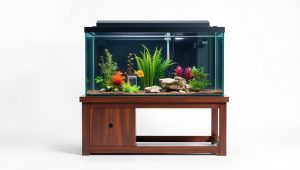
Mbuna need 55 gallons (208 L) as a floor and do far better at 75 gallons (284 L), because a 55 gallon at 48 x 13 in (122 x 33 cm) is too narrow front to back for rock caves plus swimming lanes. Peacocks and haps need 75-125 gallons (284-473 L).
Filled weight runs near 10 lb per US gallon (about 1.2 kg per litre) before rock, and rift lake tanks carry 1-1.5 lb of rock per gallon (roughly 0.5-0.7 kg per 3.8 L). A 75 gallon build therefore approaches 950 lb (431 kg) with hardscape included.
Why Water Chemistry Comes First Here
Lake Malawi and Lake Tanganyika are ancient, mineral-rich and highly buffered, so their fish evolved without exposure to falling pH. KH is the parameter that matters most: it is the buffer that stops pH dropping as nitrate accumulates between water changes.
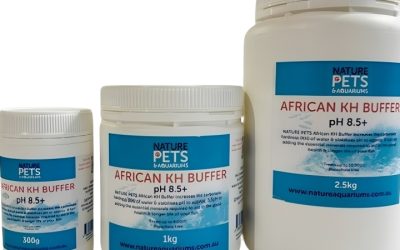
That is why crushed coral or aragonite appears in almost every rift lake build. The carbonate dissolves slowly as pH drifts down, holding KH in the 10-18 dKH (179-322 ppm) band. Chasing pH directly with additives produces swings, which harm the fish more than a slightly wrong number does.
Target Ranges and Action Thresholds
The table below covers both lakes plus the readings that trigger a response. Malawi and Tanganyika species are often sold side by side but their targets differ enough that mixing them means neither group sits in its own comfortable range.
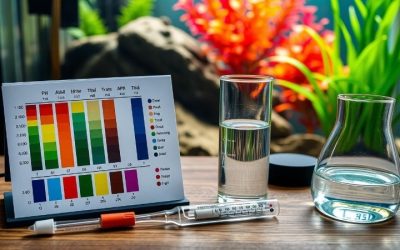
| Measurement | Lake Malawi target | Lake Tanganyika target | Action threshold |
|---|---|---|---|
| pH | 7.8-8.6 | 8.6-9.2 | Below 7.6, test KH immediately |
| KH | 10-18 dKH (179-322 ppm) | 12-20 dKH (215-358 ppm) | Under 8 dKH (143 ppm) |
| GH | 6-10 dGH (107-179 ppm) | 8-12 dGH (143-215 ppm) | Under 4 dGH (72 ppm) |
| Temperature | 76-82 °F (24-28 °C) | 76-81 °F (24-27 °C) | Daily swing over 2 °F (1 °C) |
| Ammonia | 0 ppm | 0 ppm | Above 0.25 ppm |
| Nitrite | 0 ppm | 0 ppm | Any reading above 0 ppm |
| Nitrate | Under 20 ppm | Under 20 ppm | Above 40 ppm |
| Turnover | 8-10x per hour | 8-10x per hour | Under 6x loaded |
Note that ammonia is far more toxic at pH 8.4 than at pH 7.0, because a much larger share of it exists as free NH3 rather than as the relatively benign ammonium ion. A reading that would be merely marginal in a soft-water community tank is an immediate water change in this one.
Building It in a Real Room
An african cichlid tank setup makes heavier demands on the room than a planted community tank does, mostly because of rock mass and filter noise. This section covers placement, rock loading and how the build changes across common tank sizes.
Tank Size, Placement and Fit
Measure the stand footprint against the tank base and the cabinet height against your canister before ordering anything, since rift lake builds usually need a canister rather than a hang-on-back to reach 8-10x turnover. Overhang at the corners is not acceptable at this weight.
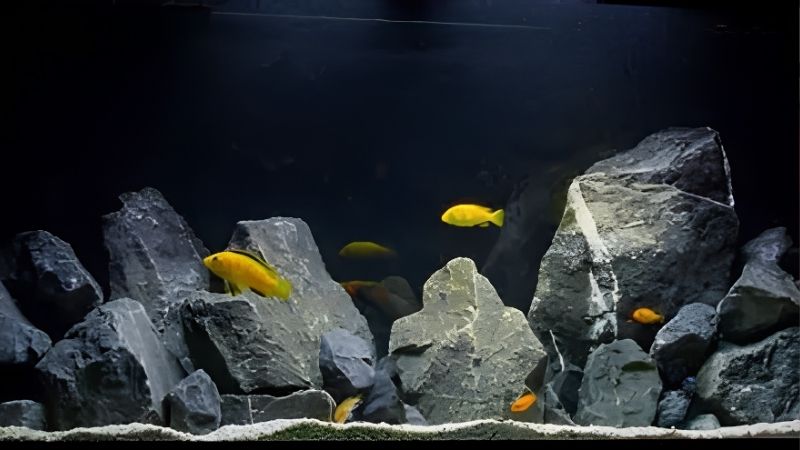
Rock goes on the bottom glass or on an eggcrate and foam base, never on top of sand. These fish dig constantly, and a rock pile resting on shifting substrate will eventually undermine itself and land on the glass. Build the structure first, then pour sand around it.
How 55, 75 and 125 Gallon Builds Differ
A 55 gallon (208 L) tank works only for smaller mbuna and only with restrained rockwork, because 13 in (33 cm) of depth forces you to choose between caves and open water. It is the size most often outgrown within eighteen months of stocking.
A 75 gallon (284 L) at 48 x 18 in (122 x 46 cm) is the practical sweet spot: same length, far more usable depth for a rock wall. At 125 gallons (473 L) you gain the option of peacocks and haps, which reach 6-8 in (15-20 cm) and need swimming length.
Stocking Density and Why It Is Deliberate
Mbuna are kept densely on purpose, because aggression that would focus on one fish gets spread across many. The trade is entirely on filtration and water changes: dense stocking only works with 8-10x turnover, weekly 30-40% changes, and nitrate held under 20 ppm.
Density is not a licence to ignore the floor. Aim for one male to three or four females of each species, avoid species with similar colour patterns, and stop adding fish once nitrate rises above 40 ppm before a change no matter how the tank looks.
Myths That Ruin Rift Lake Builds
Three ideas cause most of the failures in an african cichlid tank setup, and all three come from applying general freshwater advice to a group of fish that simply does not fit it. Each one below is paired with the measurement that should replace it in your own tank.
Myth: Chase pH With a Bottled Buffer
pH is an output, not an input. Dosing a pH-up product into water with low KH produces a rise that collapses within days, and the swing between the two states is harder on the fish than a stable pH of 7.6 would have been in the first place.
Raise KH instead and let pH follow. Aragonite sand, crushed coral in a filter bag, or a hard tap supply will hold 10-18 dKH (179-322 ppm) without daily attention. Test KH weekly and treat pH as a reading you monitor rather than a number you set.
Myth: Fewer Fish Means Less Aggression
In an mbuna tank the opposite is usually true. A dominant male with two or three tankmates will concentrate on them until one dies; the same male in a crowded tank spreads that pressure thinly across many targets, so no single fish absorbs it from morning to lights out.
The replacement is a stocking plan with numbers rather than a vague instinct to reduce. One male to three or four females per species, several species of similar size, and rockwork with more caves than fish, so that a retreating fish always has somewhere to go.
Myth: Any High-Protein Food Suits Them
Mbuna are algae grazers in the wild and their digestive tracts reflect that. Heavy feeding on high-protein foods is widely associated with digestive trouble in this group, so a spirulina or vegetable-based staple is the safer default for that section of the hobby.
Where a fish shows bloating or refuses food, test ammonia, nitrite, nitrate and temperature first, since elevated readings explain most of these cases. If the water is clean and the sign persists, take the readings to an aquatic veterinarian rather than dosing the tank.
Running It Past the First Year
An african cichlid tank setup is a high-load system, so the maintenance and failure pattern is closer to a heavily stocked goldfish tank than to a planted community. This section covers the routine, what wears out, and the recurring cost.
The Weekly and Monthly Routine
Weekly: a 30-40% water change with temperature matched to within 1-2 °F (about 1 °C), plus a KH test. Rift lake tanks run dense, so nitrate climbs fast and the change percentage here is genuinely higher than the 20-30% used in ordinary freshwater tanks.
Monthly: rinse mechanical media in old tank water, check that the buffering substrate has not been buried or exhausted, and confirm the rock structure has not shifted from digging. Quarterly, check test reagent dates, since expired KH reagent hides a slow buffer failure.
What Degrades and What It Costs You
Aragonite and crushed coral dissolve over time, which is the point, but a bed that is two years old and buried under detritus buffers far less than it did when new. Falling KH with an unchanged routine is usually the substrate telling you it needs topping up.
Canister flow drops gradually as media compacts, and in a dense tank that shows up as nitrate climbing rather than as visible dirt. Heater accuracy drifts 2-4 °F (1-2 °C) over a year, and rockwork slowly settles as the fish excavate underneath it.
The 12-Month Running Cost
Recurring spend here is higher than in a community tank: more dechlorinator because the changes are larger, replacement carbonate substrate, vegetable-based food, test reagents including a KH kit, and electricity for a canister and heater running continuously in a warm tank.
On timing, canisters and larger tanks see their deepest discounts in late June and again in late November, so a planned upgrade fits those windows. Buying on sale changes nothing about the biology, though: the tank still needs three to eight weeks of cycling, and prices move constantly.
African Cichlid Tank Setup Questions
These questions come up while the tank is still being planned but before any fish are ordered. Each answer points at a measurement rather than a rule of thumb, because the readings are what will actually decide whether a given african cichlid tank setup holds together.
Can I keep African cichlids in a 30 gallon tank?
Only shell-dwelling Tanganyikans such as the smaller Neolamprologus species, which stay under 2 in (5 cm) and use a sand bed rather than a rock wall. Mbuna in 30 gallons (114 L) cannot be stocked densely enough to spread aggression, so one fish absorbs it.
Do I need a special substrate?
Not strictly, if your tap water already runs 10 dKH (179 ppm) or higher. Where tap water is soft, aragonite sand or crushed coral is by far the simplest way to hold KH without a dosing routine, and it does that job passively in the background between water changes.
Can African cichlids live with other fish?
With a short list, mostly rift lake catfish that share the same water targets and can handle the aggression. Soft-water community fish, livebearers and shrimp do not belong here, since the pH, hardness and temperament all pull in opposite directions.
Are plants possible?
A few tough species such as anubias and java fern attached to rock survive, because they are not rooted in the substrate the fish dig through. Mbuna will graze them, so treat plants as an accent rather than as a design feature in this build.
How long does the tank take to stabilise?
Three to eight weeks for a fishless cycle, then a further two to three months for the social structure to settle as fish mature. Expect to rehome one or two individuals during that period; it is normal rather than a sign the build failed.
See More:
Conclusion
A working african cichlid tank setup comes down to four numbers: 55 gallons (208 L) as an absolute floor with 75 gallons (284 L) preferred, KH held at 10-18 dKH (179-322 ppm), turnover at 8-10x per hour, and nitrate kept under 20 ppm between weekly changes.
Get hardness and filtration right and the rest is arrangement. Build the rock on the glass, stock densely but with a written species and ratio plan, and treat the weekly 30-40% change as part of the design rather than as something you fit in when convenient.
Related Reviews & Guides
5 Best Canister Filters For Fish Tank 2026
6 Best Plants For Betta Fish Tank 2026