Last Updated: October 21, 2026
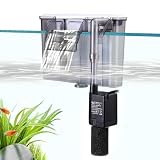
Sponge filter vs hang on back filter is not really a question of which one is better, because the two do genuinely different jobs. One provides biological filtration with almost no current, the other provides mechanical filtration as well and moves a great deal more water through the tank every hour.
As an Amazon Associate we earn from qualifying purchases.

Pawfly 6 Pack Pre-Filter Sponge, Aquarium Filter Sponge 0.8" Intake Sponge Foam Roll for Small Fish Shrimp Fry Fish Tank Covers Accessories
Included for 'Sponge Filter vs Hang on Back Filter: Compared by Numbers' as a representative aquarium product in this roundup; selection reflects the product set returned for this topic.
View on Amazon
Marina Slim Filter Intake Strainer Sponge
Included for 'Sponge Filter vs Hang on Back Filter: Compared by Numbers' as a representative aquarium product in this roundup; selection reflects the product set returned for this topic.
View on Amazon
hygger Aquarium Sponge Filter Pad, Filter Media Foam Sponges, Cut-to-Size Open Cell Foam Sheet for Fish Tanks and Ponds, S (4 Pack 5.9 * 3.9 * 1 inch)
Included for 'Sponge Filter vs Hang on Back Filter: Compared by Numbers' as a representative bed sheets in this roundup; selection reflects the product set returned for this topic.
View on Amazon
Pawfly 6 Pack Pre-Filter Sponge, Aquarium Filter Sponge 1" Intake Sponge Foam Roll for Small Fish Shrimp Fry Fish Tank Covers Accessories
Included for 'Sponge Filter vs Hang on Back Filter: Compared by Numbers' as a representative aquarium product in this roundup; selection reflects the product set returned for this topic.
View on Amazon
Aquarium Filter Accessories 5 Pieces Bio-sponges for WP-607H Hang on Back Filter Black
Included for 'Sponge Filter vs Hang on Back Filter: Compared by Numbers' as a representative aquarium product in this roundup; selection reflects the product set returned for this topic.
View on Amazon
Pawfly 4 Pack Aquarium Bio Sponge Filter Media Pad, Filter Foam Sponge Pads Cut-to-Size Foam for Fish Tank Filters Sumps Ponds Hydroponics, 6.3" x 5.5" x 0.78"
Included for 'Sponge Filter vs Hang on Back Filter: Compared by Numbers' as a representative aquarium product in this roundup; selection reflects the product set returned for this topic.
View on Amazon
QiQiWader Hang on Back Aquarium Filter,Aquarium Filter,Quiet for 5-20 Gal. | Adjustable Flow, With surface skimmer and sponge guard.Freshwater & saltwater compatible, 6W, 140 GPH.
Included for 'Sponge Filter vs Hang on Back Filter: Compared by Numbers' as a representative aquarium product in this roundup; selection reflects the product set returned for this topic.
View on AmazonBy David Nguyen
Two Filters Doing Two Different Jobs
Comparing these two properly means comparing what they actually deliver rather than their price. Sponge filter vs hang on back filter is settled by three numbers: turnover, flow strength at the fish, and the twelve-month running cost of the media system.
The Deciding Numbers: Turnover, Flow Strength and Mechanical Capacity
Turnover is the shared benchmark: 4-6 times real water volume per hour for community stocking, and 8-10 times for goldfish and cichlids. A hang-on-back is rated in GPH and can be sized against that directly, while a sponge filter is rated by air pump output and tank range instead.
Printed GPH on a hang-on-back is measured with an empty housing, and real flow drops 30-50% once media and the intake are in place. Size from that loaded figure against real volume, which for a 20 gallon (76 L) tank is nearer 17-18 gallons (64-68 L).
Mechanical capacity is where they genuinely differ. A hang-on-back pulls fine particles into floss and polishes the water visibly, while a sponge filter traps only what the sponge pore size catches, leaving water chemically clean but less clear.
The Other Criteria: Noise, Media System and Failure Behaviour
Noise differs in kind rather than degree. An air pump buzzes continuously and transmits vibration into whatever it sits on, while a hang-on-back hums and splashes increasingly as the water level drops between top-offs.
Failure behaviour matters for a first tank. A sponge filter clogs gradually and keeps working at reduced output, while a hang-on-back can lose prime after a power interruption and run dry silently with no change in sound at all.
Running cost is the third criterion and it separates them by a wide margin. A sponge filter needs an air stone roughly once a year, while a hang-on-back consumes floss continuously and a cartridge-based model adds a fixed purchase every month.
Tank Size, Placement and Fit
A hang-on-back needs 4-6 in (10-15 cm) of clearance behind the glass and a rim it can seat on, which rules it out on tanks pushed flat against a wall. A sponge filter needs only internal space and an air line over the rim.
Measure before you order: rear clearance against the unit depth, internal footprint for the sponge, and stand capacity against roughly 10 lb/gallon (about 1 kg/L) filled. Fit the air pump above the waterline or use a check valve to prevent back-siphoning.
Which One Suits Which Tank
Rather than ranking them, this section splits the sponge filter vs hang on back filter decision by what you actually keep. The sponge filter vs hang on back filter decision follows livestock and tank use more reliably than it follows volume.
Sponge Filter: For Shrimp and Fry Tanks
A sponge cannot draw in shrimplets or newly hatched fry, which is the single reason breeders use them almost exclusively. The sponge surface also grows biofilm that young shrimp graze continuously, so it feeds the tank as well as filtering it.
Who it suits: neocaridina and caridina colonies, fry grow-out and any tank where small animals would be lost to an intake. Who it does not: anyone wanting polished water, since fine particles stay suspended without mechanical media to catch them.
Sponge Filter: For Bettas and Long-Finned Fish
Flow is adjustable down to almost nothing through the air pump, which suits bettas, fancy guppies and long-finned varieties that struggle against current. In a 5-10 gallon (19-38 L) tank that gentleness matters more than filtration capacity.
Who it suits: betta keepers and anyone whose fish holds position in a corner away from the outflow. Who it does not: anyone in a bedroom without a way to isolate the air pump, since the buzz is continuous and travels through furniture.
Sponge Filter: As a Second Filter for Redundancy
Running a sponge alongside a powered filter means a colonised backup exists at all times. Cleaning or replacing the main unit never removes the whole bacterial colony, and a failure becomes an inconvenience rather than a cycle crash.
Who it suits: anyone on a single filter who wants insurance, and anyone who moves media between tanks. Who it does not: aquascapers, since the sponge is visible inside the tank and difficult to hide in an open layout.
Hang on Back: For Standard Community Tanks
A hang-on-back rated for 4-6 times real volume per hour after loading handles mechanical and biological filtration together, which is what a community tank of tetras, rasboras and corydoras actually needs from 10-55 gallons (38-208 L).
Who it suits: most community stocking with rear clearance available. Who it does not: bettas without a flow baffle, and anyone who lets the water level fall through evaporation, since the intake can end up above the waterline within a fortnight.
Hang on Back: For Clear, Polished Water
Mechanical filtration is the visible difference. A hang-on-back with fine floss clears suspended particles within a day or two, which is why substrate dust and post-maintenance haze settle far faster in a tank running one.
Who it suits: planted tanks, display tanks and anyone who cares how the water looks. Who it does not: shrimp keepers without a pre-filter sponge on the intake, since juveniles are drawn in and lost without anyone noticing they hatched.
Hang on Back: For Media Flexibility
A unit with a loose media basket lets you run mechanical, biological and chemical stages in the correct order, and add carbon temporarily to remove tannins or medication. A sponge filter offers no chemical stage at all.
Who it suits: anyone who wants control over media, or who occasionally needs carbon. Who it does not: buyers of cartridge-based models, which discard the colonised media monthly and cost considerably more across twelve months than a loose-media version.
| Criterion | Sponge filter | Hang on back |
|---|---|---|
| Biological filtration | Excellent, sponge is the media | Good, depends on media choice |
| Mechanical filtration | Limited, water stays less polished | Strong with fine floss |
| Flow strength | Adjustable to almost nothing | Often needs a baffle for bettas |
| Safe for shrimp and fry | Yes, no intake risk | Only with a pre-filter sponge |
| Recurring cost | Air stone roughly yearly | Floss, or cartridges monthly |
| Typical failure | Clogs gradually, keeps running | Loses prime, can run dry silently |
Choosing Between Them and When Both Are Wrong
The two branches above cover most tanks in the sponge filter vs hang on back filter comparison. This section settles the direct decision, names the situation where neither is the right answer, and gives the cheaper arrangement people overlook.
Choose the Sponge Filter When
Pick the sponge when you keep shrimp or fry, when you keep a betta or long-finned fish, when the tank sits flat against a wall, or when running cost over years matters more than water clarity. It is also the better choice as a second filter.
Accept the trade-off honestly: the water will not look as polished, there is no chemical media option, and an air pump runs continuously with an audible buzz that needs isolating from hard surfaces to be tolerable in a living space.
Choose the Hang on Back When
Pick the hang-on-back for standard community stocking from 10-55 gallons (38-208 L), when you want clear water, when you need the option of carbon, and when there is 4-6 in (10-15 cm) of clearance behind the tank.
Accept the trade-offs here too: it loses prime after power cuts, the intake needs a pre-filter sponge in any shrimp tank, and flow usually needs baffling for a betta. Choose a loose-media model rather than a cartridge system if you have the choice.
When Neither Is the Right Answer
Heavy bioloads outgrow both. Goldfish and larger cichlids need 8-10 times turnover with substantial media capacity, which at 55 gallons (208 L) means 380-470 GPH (1438-1779 LPH) of real flow, and that is canister or sump territory.
Long footprints are the other case. A 48 in (122 cm) tank filtered from one end leaves the far corner slow regardless of which of these two you choose, so either use two units at opposite ends or a canister with separated inflow and outflow.
Neither is a substitute for cycling either. Whichever you choose, the tank still needs three to eight weeks to establish a bacterial colony before fish go in, and seeded media from a running tank shortens that far more than the hardware choice does.
Living With Them: Failures and Twelve-Month Costs
Both run continuously for years, which is where the sponge filter vs hang on back filter difference becomes concrete rather than theoretical.
Where Each One Typically Fails
Sponge filters clog progressively, producing larger bubbles and reduced circulation, and air pump diaphragms stiffen over a few years until output drops noticeably. Neither failure is sudden, and both are easy to miss without checking.
Hang-on-back units lose prime after a power interruption and can run dry with no change in sound. Impellers wear and rattle, intake tubes fall short as the water level drops, and lids warp until water runs down the back of the tank.
What Each Costs to Keep Running
A sponge filter consumes an air stone roughly annually and an air pump every few years, with the sponge itself lasting a long time since it is rinsed rather than replaced. That is close to the lowest running cost available in the hobby.
A hang-on-back consumes floss continuously, plus occasional impellers, and a cartridge-based model adds a fixed monthly purchase. Electricity is worth including for both, since each draws power every hour of the year, and prices change constantly so check at the time of purchase.
Wattage is the part people never compare. Both device types draw modest power individually, and running continuously for twelve months turns that into a real figure, so it is worth a glance at the specification before deciding which to buy.
Warranty, Spares and Electrical Safety
Warranties on both typically exclude moving parts and consumables, treating impellers, diaphragms, air stones and sponges as wear items. Check whether spare impellers and pump rebuild kits are sold separately, since a repairable unit lasts years longer.
Electrical safety applies to both. Anything beside water should carry a UL or ETL mark, and every powered device belongs on a GFCI outlet with a drip loop. An air pump sitting below the waterline needs a check valve to prevent back-siphoning.
Frequently Asked Questions
These four come up most often when someone is choosing between these two options for a first tank.
Can I run both at the same time?
Yes, and it is a common arrangement. The hang-on-back handles mechanical filtration while the sponge provides a colonised backup, so cleaning one never removes the whole colony and a failure never leaves the tank unfiltered.
Is a sponge filter enough on its own?
For lightly stocked tanks, shrimp colonies and bettas, yes. For community tanks it depends on stocking density and on whether you mind less polished water, and for goldfish or cichlids it is not enough regardless of tank size.
Which is quieter?
Neither reliably. An air pump buzzes continuously and transmits vibration into furniture, while a hang-on-back hums and splashes more as the water level falls. Placing the pump on foam and keeping the tank topped off addresses most of it either way.
Which is better for a beginner?
The hang-on-back with loose media covers more situations and produces clearer water, which most beginners want. The sponge filter is more forgiving of mistakes, since it cannot run dry and cannot trap anything, so the sponge filter vs hang on back filter answer here depends on what you are keeping.
See More:
The Bottom Line
In the sponge filter vs hang on back filter comparison, the default for a standard community tank is the hang-on-back with a loose media basket, sized for 4-6 times real volume per hour after allowing 30-50% for loading losses. It filters mechanically as well as biologically and gives you a chemical stage when needed. The lower-cost option is the sponge filter, which is the correct answer rather than a compromise for shrimp, fry and bettas, costs an air stone a year to run, and never runs dry. Running both together is better than either alone.
Product links and buying checks
As an Amazon Associate, we earn from qualifying purchases.
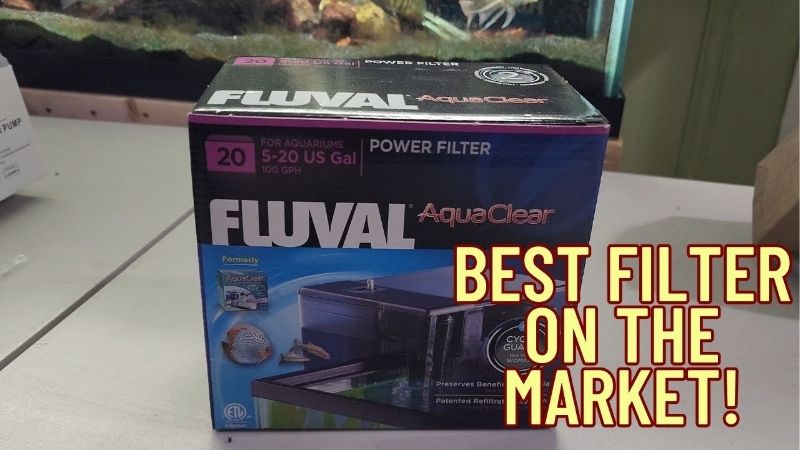
- AquaClear 20 power filter on Amazon — A small hang-on-back example for the comparison, rated for 5–20 gallon aquariums; it is not a replacement for the gentler flow of a sponge filter in every setup.
Prices, availability and included accessories can change. Review the current listing and the compatibility guidance above before purchasing.
How Often to Replace Filter Media: A Layer-by-Layer Guide

Quick Picks: Best Aquarium Inline Heaters for Canister…