Last Updated: October 21, 2026
- Top Pick: PONDFORSE Canister Filter, External Aquarium Filter Ultra-Quiet with Media
- Best Value: Fluval FX6 High Performance Aquarium Filter, up to 400 Gal.
- Premium Choice: GE Whole House Water Filtration System, Reduce Sediment, Rust & More, Install Kit & Accessories Included, Filter Not Included, Replace Filter (FXWTC, FXUSC, FXWPC, FXWSC) Every 3 Months, GXWH20T
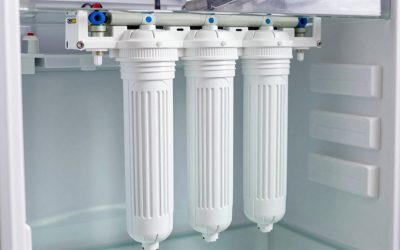
Choosing between a canister filter and sump filtration is less about picking the “stronger” option and more about matching the system to your home. A canister filter is generally a pressurized, self-contained filter used for aquariums and ponds. A whole-house sump filtration system is a larger point-of-entry water filter installed on the main supply line, where it treats water before it reaches faucets, showers, and appliances.
That distinction matters. An aquarium canister filter helps keep water clear and healthy for fish, while a household sump system reduces sediment, rust, dirt, and sometimes chlorine taste in incoming water. They are not interchangeable, and the right purchase depends on whether you are maintaining an aquatic environment or improving water throughout the house.
As an Amazon Associate we earn from qualifying purchases at no extra cost to you.


Quick Verdict
Choose a canister filter if you need quiet, powerful filtration for an aquarium or pond and want a contained unit that can sit inside a cabinet or beneath a stand. A smaller model such as the under-$80 PONDFORSE Canister Filter suits buyers who want an economical external aquarium filter with multiple media stages. Larger units, including the Fluval FX6 High Performance Aquarium Filter rated for aquariums up to 400 gallons and priced for under $450, are designed for substantially greater water volume.
Choose sump filtration if your goal is treating water for the entire home. A whole-house housing connects to the main water line and uses a replaceable cartridge. Entry-level options such as the under-$40 GE GXWH20T and the under-$50 EcoPure EPW2VC are typically more affordable to buy than a premium aquarium canister, but installation, replacement cartridges, fittings, and possible plumbing labor add to the real cost.
Side by Side
| Factor | Canister filter | Whole-house sump filtration |
|---|---|---|
| Primary use | Aquariums and ponds | Incoming household water |
| Comfort | Can improve aquarium clarity and reduce visible debris; pump noise varies by model | Provides filtered water at multiple fixtures, but filter changes may require shutting off or bypassing water |
| Durability | Usually durable plastic housing with seals, hoses, pump, and media baskets | Housing can last for years, but cartridges, O-rings, and connections need periodic attention |
| Typical price range | About $70–$450, with large-capacity models costing more | About $40–$250 for housing and basic hardware; installation and cartridges are extra |
| Maintenance | Rinse media, clean hoses and impeller, and replace media as needed | Replace cartridges, commonly every 1–3 months depending on water quality and usage |
| Space needed | Often about 10–15 inches tall and 8–12 inches wide for compact models; larger units need more room | Usually mounted vertically near the main line; allow roughly 12–24 inches of service clearance below or around the housing |
| Look | Hidden under an aquarium stand or beside a pond | May be visible in a basement, utility room, garage, or crawl-space access area |
| Energy use | Uses a pump, commonly around 10–50 watts depending on size | Generally uses no electricity because household water pressure moves water through it |
| Resale appeal | Useful to an aquarium hobbyist, but usually not a meaningful home-value feature | Can be a practical selling point if professionally installed and documented |
| Best for | Fish tanks, planted aquariums, turtle setups, and ponds | Reducing sediment, rust, dirt, and selected taste or odor issues throughout the home |
Where Canister Filter Wins
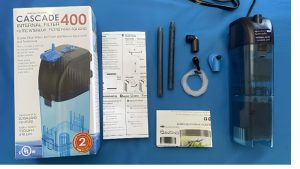
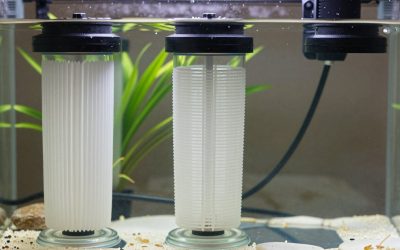
A canister filter wins when filtration needs to be concentrated in one aquarium or pond. The sealed canister sits outside the tank, pulls water through an intake hose, passes it through several media stages, and returns it through an outlet. Depending on the media, those stages can provide mechanical filtration for particles, biological filtration for beneficial bacteria, and chemical filtration for specific water-quality goals.
The external design keeps equipment out of the display area. That can make a tank look cleaner, especially when the canister is tucked inside a cabinet. It also leaves more room inside the aquarium for plants, décor, or fish. Because the unit is enclosed, it is often quieter and less visually distracting than an internal filter, although the pump and vibration still matter.
Canisters are also flexible. A small unit may serve a modest aquarium, while a high-capacity model can support a very large setup. The PONDFORSE Canister Filter is a lower-cost reference point for under $80. At the other end, the under-$450 Fluval FX6 is built for aquariums up to 400 gallons. The appropriate choice depends on actual tank volume, fish load, flow requirements, and the manufacturer’s recommended capacity—not simply the largest number on the box.
The tradeoff is hands-on maintenance. You must disconnect hoses, open the canister, rinse or replace media, inspect gaskets, and clean the impeller. Do not wash biological media with chlorinated tap water, since that can damage beneficial bacteria. A canister also adds a small ongoing electricity cost and needs a nearby outlet.
Where Sump Filtration Wins
Whole-house sump filtration wins when you want one treatment point for water entering the property. A typical system has a housing, a replaceable cartridge, shutoff valves, and sometimes a bypass valve. It is installed on the main cold-water line, often after the meter and before the branch lines split to faucets, showers, and appliances.
This setup can reduce sediment, rust, and dirt across the house instead of treating water at only one faucet. Some cartridges also target chlorine taste or odor, but performance depends on the cartridge type, contact time, flow rate, and condition of the water. A standard sediment cartridge should not be assumed to remove bacteria, dissolved minerals, lead, or every chemical contaminant. If those are concerns, start with a water-quality test and select a certified treatment method.
The GE GXWH20T, priced for under $40, is an example of a basic whole-house housing system that can use compatible replacement filters. The EcoPure EPW2VC costs under $50 and uses a valve-in-head design with a built-in bypass valve and clear sump. These low purchase prices are appealing, but neither price represents a complete installed, five-year cost. Filter cartridges, shutoff valves, adapters, a pressure gauge, and professional plumbing may cost considerably more.
Space and access are the main installation concerns. A whole-house housing needs to be mounted securely, protected from freezing, and positioned where you can remove the sump for cartridge changes. It also needs enough clearance to work a filter wrench underneath. If the main line is in a cramped crawl space, installation may be harder than the low product price suggests.
Cost Over 5 Years
The five-year cost depends heavily on maintenance frequency. A canister filter may cost $70–$450 initially. Budget roughly $20–$100 per year for replacement media, depending on whether you use inexpensive foam and biological media or specialty chemical media. Electricity is usually modest: a 20-watt pump running continuously uses about 175 kilowatt-hours per year, while a 50-watt pump uses about 438 kilowatt-hours. At $0.15 per kilowatt-hour, that is approximately $26–$66 annually.
Using those broad assumptions, a canister setup could total roughly $200–$850 over five years before aquarium-specific supplies or major pump repairs. Large or heavily stocked aquariums may cost more because media is replaced or cleaned more frequently.
A whole-house sump housing may start around $40–$250, but cartridges are the recurring expense. If a replacement cartridge costs $10–$40 and lasts one to three months, five-year cartridge costs may range from about $200 to $2,400. Add installation, fittings, and occasional O-ring replacement, and a realistic five-year total may land around $350–$3,000. High sediment loads and a large household push the cost toward the upper end.
These ranges are planning figures, not guarantees. Check cartridge life against your household’s gallons-per-minute flow, water quality, and manufacturer guidance.
Which One for Your Home
Small apartment
Choose a canister filter only if you keep an aquarium or small pond setup and have cabinet space plus a nearby outlet. A whole-house sump is usually impractical in a rental apartment because the main water line may be inaccessible and plumbing changes may require permission. For drinking water concerns, a countertop or under-sink system may be more suitable than either option.
Family with kids and pets
A whole-house sump is the better fit when the goal is reducing sediment and rust at multiple fixtures. Mount it where children cannot tamper with the housing, and choose a cartridge schedule that matches household demand. If you also keep an aquarium, use a separate canister filter for the tank; household filtration does not replace aquarium biological filtration.
Rental home
Prioritize portability and landlord approval. A canister filter is easy to remove when you move, provided it is used for an aquarium. A whole-house system may be worthwhile only if the landlord agrees to the installation and accepts responsibility for leaks, shutoff valves, and future cartridge changes.
Long-term home
Whole-house sump filtration makes the most sense when you own the property, have accessible plumbing, and want a permanent point-of-entry setup. Install a bypass and shutoff valves, leave service clearance, and keep records of cartridge changes. For an aquarium, select a canister based on tank volume and livestock rather than using the home’s water filter as a substitute.
FAQ
Is a canister filter the same as a sump filter?
No. A canister filter is a sealed, pump-driven unit commonly used for aquariums and ponds. A whole-house sump filtration system is a replaceable-cartridge housing installed on a home’s water line. Aquarium sump systems are another category entirely: they use a separate reservoir, overflow, and return pump rather than a sealed canister.
Which is cheaper to operate?
Neither has one universal answer. A canister uses electricity and aquarium media, while a whole-house sump typically uses no electricity but requires recurring cartridges. For a small aquarium, a canister’s total operating cost is usually manageable. For a large household with dirty incoming water, frequent whole-house cartridge changes can become the larger expense.
How often should filters be changed?
Clean aquarium media when flow drops or debris builds up, replacing specialty media according to its instructions. Whole-house cartridges are commonly changed every one to three months, but actual timing depends on sediment, water use, and pressure drop. A visibly dirty cartridge or noticeable reduction in flow is a sign to inspect the system.
Can whole-house filtration make water safe to drink?
Not automatically. A sump housing is only the container; the cartridge determines what it can reduce. Verify the cartridge’s certifications and claims, and test the water if you are concerned about bacteria, lead, nitrates, PFAS, or other dissolved contaminants. Use a treatment method specifically rated for the contaminant you need to address.
Best Inline Heater for Sump Systems: Safe Smart Top Picks
Aquarium Filter Making Noise: Causes, Fixes and Prevention