Last Updated: September 25, 2026
Aquarium filter making noise is rarely random, because each sound comes from a specific mechanism: air in the wrong place, a worn moving part, or vibration passing into the furniture. Learning to match the sound to the mechanism turns a vague annoyance into a short list of checks with a predictable outcome.
As an Amazon Associate we earn from qualifying purchases.
As an Amazon Associate we earn from qualifying purchases at no extra cost to you. Prices and availability are accurate as of the date shown and are subject to change.

Aquarium Filter Baffle with Suction Cups, Fish Tank Flow Controller
Selected for "Aquarium Filter Making Noise: Causes, Fixes and Prevention": this listing is filtration (Aquarium Filter Baffle with Suction Cups, Fish Tank Flow Controller), matching the equipment this article covers.
View on Amazon
Car Power Filter EMI Noise Ground Loop Isolator Suppressor for Auto Stereo Audio Radio Stereos Amplifier Amp Speaker Equalizer Subwoofer 12V
Selected for "Aquarium Filter Making Noise: Causes, Fixes and Prevention": this listing is filtration (Car Power Filter EMI Noise Ground Loop Isolator Suppressor for Auto St), matching the equipment this article covers.
View on Amazon
Tetra Whisper Bio-Bag Medium Filter Cartridges for Aquariums, 3 Count
Selected for "Aquarium Filter Making Noise: Causes, Fixes and Prevention": this listing is filtration (Tetra Whisper Bio-Bag Medium Filter Cartridges for Aquariums, 3 Count), matching the equipment this article covers.
View on Amazon
Install Bay IBNF50 Noise Filter 50 AMP Each
Selected for "Aquarium Filter Making Noise: Causes, Fixes and Prevention": this listing is filtration (Install Bay IBNF50 Noise Filter 50 AMP Each), matching the equipment this article covers.
View on AmazonBy David Nguyen
How Filter Noise Is Produced and Which Numbers Matter
An aquarium filter making noise is producing sound through one of four routes, and identifying which route you are hearing removes most of the guesswork. Before opening anything, gather the small set of numbers that separates a trapped air bubble from an impeller that has genuinely worn out.
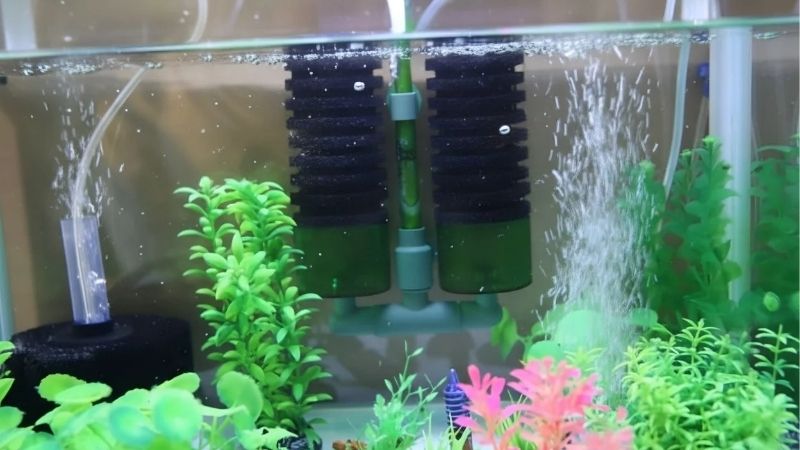
The decisive numbers behind a noisy filter
An aquarium filter making noise starts with water level. A hang-on-back intake sitting within half an inch (about 1 cm) of the surface draws air continuously, and evaporation of that depth takes only days in a heated room. Topping the tank back to its normal line resolves most sudden noise complaints outright.
Next comes flow against baseline. A unit rated 200 GPH (757 LPH) realistically delivers 120–140 GPH (454–530 LPH) once media, hose and head height are accounted for, and turnover should land at 4–6 times real tank volume for a community setup, or 8–10 times for goldfish and cichlids.
Then note the sound itself in plain terms: gurgle, hum, rattle, grind or buzz. Household background sits around 40 dB, so a filter you can hear across a quiet room at night is genuinely loud, and one that is audible only within a foot of the glass is usually running exactly as designed.
The four mechanisms behind almost every filter sound
Air entrainment is the most common. Water falling from a hang-on-back outflow, or air drawn through a low intake, creates bubbles that collapse audibly. This produces gurgling and splashing, and it is fixed by water level, outflow height and hose routing rather than by any repair.
Cavitation is different and more damaging. When a pump cannot draw enough water, low pressure at the impeller forms vapour bubbles that implode against the blades, giving a harsh crackling sound. It signals a starved intake, a blocked strainer, or an intake hose that has been throttled incorrectly.
The remaining two are mechanical. Wear in the impeller shaft or magnet produces rattling and grinding that rises with flow, while vibration transmission produces a hum that changes pitch when you press a hand on the filter body or the cabinet, because the resonance is in the furniture.
Normal ranges against thresholds that require action
Some noise is expected. A new canister gurgles for a day or two while residual air works out of the media baskets, and a sponge filter always produces bubble noise at the surface, which is simply a function of air stone pore size rather than anything actually wrong with the equipment.
Action thresholds are clearer. A grinding sound, a hum accompanied by no flow, or any noise that appears alongside falling output means the impeller assembly needs inspection now. So does crackling, since cavitation shortens pump life measurably and points at a restriction upstream.
| Sound | What you hear | Mechanism | Reading alongside it | What it means |
|---|---|---|---|---|
| Gurgling | Intermittent water and air | Air entrainment | Level near or below intake | Top off and purge trapped air |
| Splashing | Constant falling water | Outflow drop height | Level a few cm low | Raise level or fit a baffle |
| Crackling | Sharp, fine and irregular | Cavitation | Flow well below baseline | Clear intake, remove restriction |
| Rattling | Rises and falls with flow | Impeller or shaft wear | Flow slightly reduced | Inspect impeller and well |
| Low hum | Steady, felt as much as heard | Vibration transmission | Flow normal | Isolate the unit from the cabinet |
What This Looks Like in a Real Tank
The same mechanism sounds different depending on the room, the stand and the volume of water involved. An aquarium filter making noise in a bedroom is a different problem from the identical unit in a living room, and tank size changes both the noise floor and the tolerance for it.
Tank size, placement and physical fit
Hang-on-back units need 4–6 inches (10–15 cm) of clearance behind the tank, and a thick rim or tight hood stops them seating flat, which is a frequent source of buzzing. Canisters need internal cabinet height for the body plus a hose bend radius that does not press against the rear panel.
Weight and surface matter as much as clearance. A full tank runs near 10 lb per gallon (about 1 kg per L), so a 55 gallon (208 L) setup passes 600 lb (272 kg) and needs a purpose-built stand. Measure the gap behind the tank and the cabinet height with a tape before ordering any unit.
How the picture changes across 10, 20 and 55 gallon tanks
Small tanks are noisier per litre than people expect. A 10 gallon (38 L) tank has a short water column, so outflow drop height is proportionally greater and air entrainment is harder to avoid, while the filter needed for its bioload often looks oversized relative to the glass it hangs on.
Larger volumes absorb more. A 55 gallon (208 L) tank with a canister running below it is usually quieter in the room, because the pump is enclosed and the return sits under the surface. The trade-off is that any noise it does make travels through a cabinet that acts as a sounding board.
How filter type sets the underlying noise floor
Sponge filters are dominated by bubble noise, and the air pump itself is very often louder than the tank it serves. Pump noise is mostly vibration, so a foam pad and a position off the shared surface will do more than any adjustment to the airflow rate through the valve or the air stone.
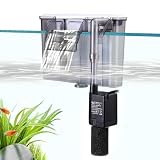
Hang-on-back units are dominated by falling water and by the impeller, both of which are accessible in seconds. They are the easiest type to quieten and the most likely to become noisy again, because the intake sits close to a water surface that drops steadily through evaporation.
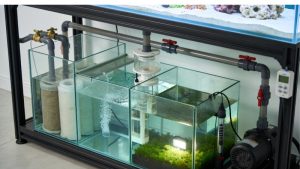
Canisters are quietest when correctly primed and worst when air remains trapped. Their noise usually tells you about the installation rather than about wear: hose routing with a high loop, a lid gasket seated badly, or media baskets packed so unevenly that water short-circuits past them.
Myths That Send People in the Wrong Direction
Three beliefs about an aquarium filter making noise persist widely, and each one of them delays the actual fix while the underlying wear continues. Replacing them with a number or a mechanism makes the diagnosis quicker and usually cheaper than the equipment purchases they tend to encourage.
The myth that a new filter is simply breaking in
Genuine break-in noise is limited to residual air clearing from a canister, and it settles within a day or two of running. Anything that persists beyond that is a mechanism, not a settling-in period, and waiting it out allows shaft wear or cavitation damage to progress unchecked.
The practical replacement for this myth is a time limit. If a sound has not gone within 48 hours of the unit being primed and running at a normal water level, treat it as a fault and check the impeller, the intake strainer and the hose routing rather than continuing to wait it out.
The myth that lubricating the impeller will quieten it
Aquarium pumps use water-lubricated ceramic shafts and are designed to run wet. Adding oil or grease contaminates the tank, harms invertebrates in particular, and does nothing about the actual cause, which is nearly always grit sitting in the well or a worn tip on the ceramic shaft itself.
The correct action is mechanical and free: unplug, remove the impeller, clean the well with a soft brush, inspect the shaft for grooves or chips, and refit. If the shaft is visibly worn, a replacement impeller assembly is a cheap spare part on most units and restores original output.
The myth that a louder filter is filtering more strongly
Noise correlates with air and vibration, not with filtration. A gurgling hang-on-back is moving less water than a silent one, because air in the impeller displaces water, and a cavitating pump is moving considerably less water while also wearing out faster than it otherwise would.
Judge filtration by turnover and by water readings instead. Ammonia and nitrite at 0 ppm with nitrate held below 20–40 ppm tells you the biological stage is working, and outflow width measured against its clean baseline tells you the mechanical stage is not yet packed with debris.
Keeping a Filter Quiet Over Years of Running
An aquarium filter making noise after two years is usually reporting accumulated wear rather than a sudden fault. Because these units run continuously, the useful frame is not what the filter sounds like today but what it will sound like at month twelve, and which parts get it there.
What to do periodically, and how often
Top the tank up weekly so the intake never approaches the surface, rinse mechanical media in used tank water every 2–4 weeks, and strip the impeller well every three months. Inspect canister lid gaskets twice a year, since a hardened seal admits air and produces persistent gurgling.
Keep a note of what the tank sounds like when everything is clean and freshly serviced. That reference is far more useful than a decibel figure, and it makes a gradual change obvious long before the sound becomes intrusive enough that somebody in the household complains about it.
Which parts degrade, and what each one sounds like
Impeller shafts wear at the tip and rattle. Magnets lose their coating and bind intermittently. Rubber feet and suction cups harden with age, which transmits vibration into the glass or the cabinet and produces a hum that has nothing to do with the pump’s internal condition at all.
Air pumps driving sponge filters change character as the diaphragm stiffens across 12–24 months, becoming buzzier while delivering less lift, and the air stone clogs first. Both are inexpensive, both are worth keeping as spares, and neither gives much warning before output drops.
The twelve month cost of keeping things quiet
The recurring items are small: filter floss, a replacement sponge, an air stone, a spare impeller assembly and foam padding to isolate the unit from the cabinet. Filters using loose media rather than proprietary cartridges cost noticeably less across a year and preserve more bacteria.
Seasonal conditions change the workload. Indoor heating through the cold months dries a room quickly and drops the water level enough to expose an intake within a fortnight, which is why midwinter reliably produces a cluster of suddenly gurgling filters in otherwise stable tanks.
Frequently Asked Questions
These are the questions that tend to follow once the sound is treated as evidence rather than as a nuisance, because in most cases an aquarium filter making noise is telling you something specific about water level, an obstruction or a part that has reached the end of its service life.
Why did my filter suddenly get loud overnight?
Check the water level first, since evaporation of half an inch (about 1 cm) is enough to expose an intake and start air entrainment. If the level is correct, unplug the unit and inspect the impeller well, because debris drawn into it during the night is the next most likely cause.
Is a gurgling canister filter dangerous to leave running?
It is not immediately harmful, but it does mean air is trapped and flow is being reduced, so the biological media is receiving less oxygenated water than it should. Purge the air by tilting the unit gently while it runs, then check the lid gasket and the hose routing for a high loop.
Can I quieten a filter by slowing the flow?
Sometimes, but only by changing the outflow direction, fitting a baffle or using a spray bar. Never restrict the intake side, because starving the impeller causes cavitation and heat, which makes the noise worse over time and shortens the working life of the pump quite considerably.
Does a noisy air pump mean the sponge filter is failing?
Usually not. Air pump noise is mostly vibration through the surface it sits on, so a foam pad and a different position often solve it entirely. A genuine decline shows itself as weaker bubble output and a stiffer diaphragm, typically somewhere between 12 and 24 months of continuous use.
Should I replace the whole filter if it rattles?
Rarely. Most rattles come from grit in the impeller well or a worn shaft tip, both of which are addressed with a cheap replacement impeller assembly. Keep the established media whatever you decide, since it carries the bacterial colony that keeps ammonia and nitrite readings at zero.
See More:
Conclusion
An aquarium filter making noise is describing its own problem if you listen for the mechanism. Gurgling and splashing point to air and water level, crackling points to a starved intake, rattling points to the impeller assembly, and a steady hum points to vibration through the cabinet.
Work through the cheap checks in order: water level, intake strainer, impeller well, gasket, then isolation padding. Keep the media wet and untouched throughout, and record what the tank sounds like when clean so that the next change in tone is obvious well before it becomes a fault.

5 Best Topfin Aquarium Filters (2026)
6 Best Fish Tank Filters For Betta 2026