Last Updated: September 25, 2026
Reef tank maintenance schedule planning works better by interval than by task. Daily takes two minutes, weekly takes forty, monthly takes an hour and annual takes an afternoon. The tables below assign every job to one of those slots, with the adjustments for tank size, coral type and export method underneath.
As an Amazon Associate we earn from qualifying purchases.
As an Amazon Associate we earn from qualifying purchases at no extra cost to you. Prices and availability are accurate as of the date shown and are subject to change.

Reef Tank & Aquarium Water Quality Logbook: Comprehensive Marine & Saltwater Maintenance Tracker Journal | Monitor Water Parameters, Nitrogen Cycle, and Dosing Schedules
Selected for "Reef Tank Maintenance Schedule: Daily to Annual Task List": this listing is stands and furniture (Reef Tank & Aquarium Water Quality Logbook: Comprehensive Marine & Sal), matching the equipment this article covers.
View on Amazon
Reef Tank Water Testing Log Book for Saltwater Aquariums: Weekly Marine Aquarium Parameter Tracker with Alkalinity, Calcium, Magnesium and Phosphate ... Milestones and Livestock Log - 110 Pages
Selected for "Reef Tank Maintenance Schedule: Daily to Annual Task List": this listing is stands and furniture (Reef Tank Water Testing Log Book for Saltwater Aquariums: Weekly Marin), matching the equipment this article covers.
View on Amazon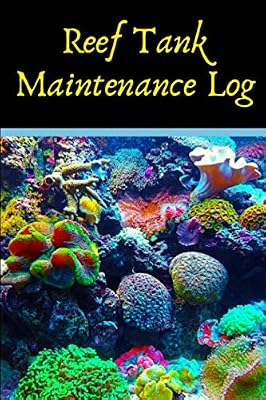
Reef Tank Maintenance Log: Marine Reef Tank Aquarium Hobbyist Record Keeping Book. Log Water Chemistry, Maintenance And Marine Fish Health, essential For Optimal Breeding Conditions
Selected for "Reef Tank Maintenance Schedule: Daily to Annual Task List": this listing is tanks (Reef Tank Maintenance Log: Marine Reef Tank Aquarium Hobbyist Record K), matching the equipment this article covers.
View on Amazon
Aquarium Maintenance Logbook: Document & Track Feeding, Tank Conditions, Water Test Readings & Other Important Information | Fish Keeping Record Book for Aquarists of All Levels
Selected for "Reef Tank Maintenance Schedule: Daily to Annual Task List": this listing is stands and furniture (Aquarium Maintenance Logbook: Document & Track Feeding, Tank Condition), matching the equipment this article covers.
View on AmazonBy David Nguyen
The Schedule and How to Use It
This is a lookup rather than an explanation. The first table lists every task by interval with the time it takes and why it exists; the second gives the adjustments for tank size, coral type and export method. Both belong here.
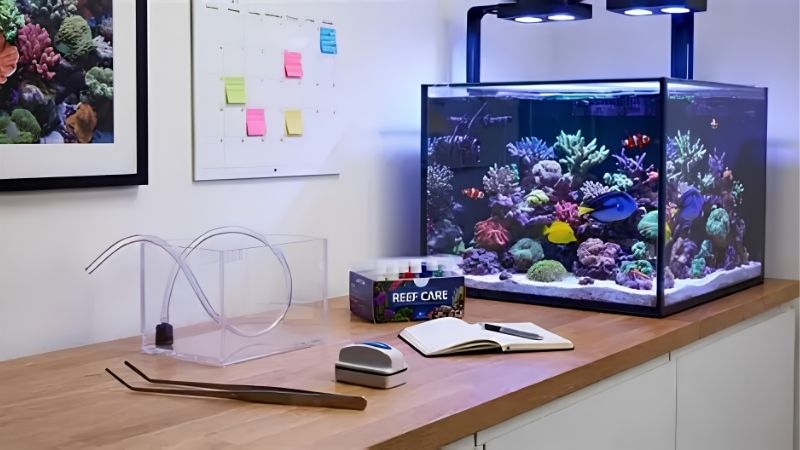
The Decision Numbers: Interval, Duration and What Each Task Protects
Time estimates matter as much as the tasks. A schedule that looks reasonable on paper and takes three hours a week does not survive contact with real life, which is why the duration column is the one to check before committing.
| Interval | Task | Time | What it protects |
|---|---|---|---|
| Daily | Check top-off reservoir and temperature | 2 minutes | Salinity and thermal stability |
| Daily | Feed and observe fish and corals | 3 minutes | Early warning on health and pests |
| Weekly | 10-20% water change with mixed saltwater | 30 minutes | Nutrients, trace elements, alkalinity |
| Weekly | Test alkalinity, nitrate, phosphate, salinity | 10 minutes | Catching drift before corals react |
| Weekly | Clean glass and empty the skimmer cup | 10 minutes | Light penetration and export capacity |
| Monthly | Test calcium and magnesium | 10 minutes | The ions that hold alkalinity |
| Monthly | Clean powerheads and return pump | 30 minutes | Flow at the 20-40x target |
| Monthly | Check top-off float for salt creep | 5 minutes | The most consequential failure point |
| Quarterly | Check RO/DI output TDS with a meter | 5 minutes | Phosphate and silicate entering the tank |
| Quarterly | Check test reagent expiry dates | 5 minutes | Dosing decisions based on real numbers |
| Annually | Replace RO/DI cartridges and check PAR | An afternoon | Source water purity and coral growth |
| Annually | Calibrate refractometer, verify heater | 20 minutes | The instruments everything else relies on |
The daily row is the one that carries the most weight for the least time. Five minutes of checking the top-off and watching the tank catches more problems than any weekly test, because it happens before readings have moved far.
The Rule Behind the Intervals
Every interval in a reef tank maintenance schedule matches how fast the thing it protects can actually change. Salinity can move within a day, which puts the top-off check on the daily list. Magnesium moves across weeks, which is why monthly testing is sufficient for it.
Anything that fails silently gets a fixed interval rather than a symptom trigger. RO/DI cartridges, test reagents and heater accuracy all degrade without any sign, so they belong on a calendar rather than on a list of things to check when something looks wrong.
Reading the Schedule, Units and Margin of Error
Weekly totals to roughly fifty minutes, which is the figure to test against your own week before committing to a reef. Monthly adds about forty-five, and the quarterly and annual tasks add a few hours spread across a year.
| Your situation | Effect on the schedule | Adjustment |
|---|---|---|
| Nano under 30 gallons (114 L) | Parameters move faster | Test alkalinity twice weekly |
| Tank over 75 gallons (284 L) | Slower drift, larger changes | Fortnightly changes are workable |
| Soft corals only | Low alkalinity consumption | Weekly testing is enough |
| LPS or SPS present | High consumption | Alkalinity twice weekly, then daily dosing |
| No skimmer | Export depends on changes | Raise change volume to 20% |
| Automatic top-off fitted | Daily task becomes a glance | Still check the float monthly |
| Dosing pumps running | Calibration drifts | Verify delivered volume quarterly |
| Going away for a week | No daily checks | Top up reservoir, reduce feeding, brief a helper |
Apply the second table after the first. The schedule gives a baseline for a mid-size mixed reef; the adjustments move that baseline toward your own tank, and the coral rows shift it considerably more than the volume rows do.
Adjusting the Schedule for Your Tank
A reef tank maintenance schedule written for a generic system needs tuning before it fits yours. Coral mass, water volume and export method each change which tasks matter most and how frequently they actually need doing.
Adjusting for Coral Type and Mass
Soft corals consume little alkalinity, so a softie tank often holds on weekly water changes alone with no dosing at all. That removes the twice-weekly testing and the dosing verification from the schedule entirely.
LPS and SPS consume considerably more, and consumption rises with mass rather than count. Watch the alkalinity trend between water changes: a fall of more than about 0.5 dKH means testing moves to twice weekly and dosing is close behind.
Adjusting for Volume and Export
Nano tanks compress every interval because the same consumption produces a larger concentration change. Larger tanks stretch them, and above 75 gallons (284 L) a fortnightly change of 15-20% often holds nutrients better than weekly changes of 10%.
Export method changes which nutrient tasks matter. A skimmed tank needs the cup emptied weekly and the neck cleaned monthly; a tank relying on water changes alone needs the change volume raised instead, usually to about 20%.
Tank Size, Placement and Fit
Measure the space beside the tank against your mixing container and top-off reservoir before committing to a schedule, since a weekly change that requires moving furniture takes twice as long and gets postponed accordingly.
Access height matters too. A tank whose surface sits above comfortable reach makes every weekly task slower, and maintenance you dread is maintenance that quietly slips from weekly to fortnightly without any decision being made.
Where This Schedule Stops Working
Any reef tank maintenance schedule is a baseline rather than a rule to follow rigidly. Three situations override it entirely, and recognising them when they arise matters considerably more than following the intervals precisely.
When Following the Schedule Is Not Enough
A tank with readings in range and corals declining has a problem the schedule does not address: lighting beyond what a coral tolerates, flow aimed at it, a pest, or a contaminant. None of those appear on a task list.
Check PAR at the coral and the flow pattern before adjusting anything chemical. Following the schedule harder does not help, and increasing water changes to fix a lighting problem introduces the parameter swing that then causes real damage.
Variables the Schedule Cannot Hold
Tank age changes everything. A six-month-old reef needs more frequent testing than a three-year-old one with a stable record, and applying the new-tank schedule indefinitely tends to produce over-dosing rather than better control.
Your own availability is the other variable. A schedule built around being home every day fails the first time you travel, so build in what happens during a week away before it happens rather than improvising at the airport.
When to Stop Following and Start Observing
Corals report conditions before test kits do. Polyp extension, colour and growth at the margins all respond within days, so a tank whose corals look better than last month is on the right trajectory whatever a single reading says.
Use that to relax intervals rather than to skip them. A mature reef with months of steady readings can move from weekly to fortnightly testing on the stable parameters while keeping alkalinity and salinity on the original schedule.
Verifying the Schedule Is Working
A reef tank maintenance schedule is only useful if the tank itself confirms it. This section covers the records worth keeping, how often to review them, and what degrades quietly across a year of otherwise diligent work.
What to Record and How Accurate It Is
Log alkalinity, salinity, nitrate and phosphate with the date, and log water changes. A single reading tells you very little; four weeks of readings tell you whether consumption is rising, which is the question the schedule exists to answer.
Bear in mind that a typical alkalinity kit reads within about 0.2-0.3 dKH, so a change of that size between tests may be measurement noise. Look at the direction across several tests rather than reacting to a single move.
How Often to Review the Schedule Itself
Every three months while the tank is young, then annually. The review question is simple: has anything moved from weekly to twice weekly, and has any task stopped happening because it takes longer than the estimate allowed for.
Re-run the review after any significant change, such as a new coral group, a filter change or a move to a different room. Each of those alters what the schedule needs to protect, sometimes by more than the intervals suggest.
What Degrades Over Time
RO/DI cartridges exhaust silently, dosing pumps drift in calibration, reef lights lose measurable PAR across two to three years, and top-off floats stick with salt creep. All four fail without any sign in the tank until livestock reacts.
Season pushes as well. Heating in winter raises evaporation and loads the top-off system, while rooms above 80 °F (27 °C) in midsummer lower dissolved oxygen. Both shift which tasks matter most at each end of the year.
Reef Tank Maintenance Schedule: Questions
These follow from the tables rather than replacing them. Every answer about a reef tank maintenance schedule stays with intervals and durations, since a schedule that does not fit the week available is not a schedule at all.
How much time does a reef actually take?
Roughly fifty minutes a week for a mid-size mixed reef, plus about forty-five minutes a month and a few hours spread across the year. Nano tanks take less time per session and more sessions, which suits some people and not others.
Can I skip water changes if I dose?
No. Dosing replaces consumed elements; water changes also remove accumulated nutrients and replenish trace elements no dosing regime covers. Reducing change volume once dosing starts is reasonable, eliminating changes is not.
What happens if I miss a week?
Usually very little in a stable tank above 40 gallons (151 L), provided the top-off kept running. In a nano, a missed week shows in salinity and alkalinity, which is why the daily check carries more weight at small volumes.
How do I handle a holiday?
Fill the top-off reservoir, reduce feeding, do a water change before leaving, and brief someone on the one task that matters, which is checking the reservoir. Avoid asking a helper to dose or test anything they have not done before.
See More:
Conclusion
A workable reef tank maintenance schedule breaks down into five minutes daily, fifty minutes weekly, forty-five minutes monthly, and a few hours spread across the year for the quarterly checks and the annual replacements.
Test alkalinity, nitrate, phosphate and salinity weekly, calcium and magnesium monthly, and RO/DI output plus reagent dates quarterly. Adjust the intervals for coral type first and volume second, and build the holiday plan before you need it.

Best Quiet Auto Top Off System: Low-Noise Smart Reef Picks
10 Best Aquarium LED Lights for Planted and Reef Tanks (2026)