Last Updated: September 25, 2026
Low light aquarium plants are a genuinely small group once the marketing is stripped away, because a great many species sold as easy are only easy under medium light with fertiliser. This guide covers the species that hold up at 10–30 PAR, how each one anchors itself, and where each of them belongs in a layout.
As an Amazon Associate we earn from qualifying purchases.
As an Amazon Associate we earn from qualifying purchases at no extra cost to you. Prices and availability are accurate as of the date shown and are subject to change.
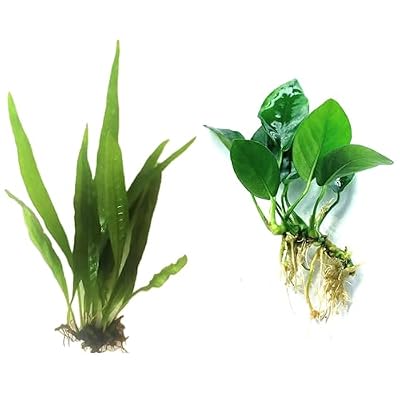
Java Fern and Anubias Aquarium Plant Bundle - Live Freshwater Plants for Aquascaping, Low Maintenance, Easy Beginner Friendly Decor for Fish Tank
Selected for "Low Light Aquarium Plants: Species, Care and Placement Tips": this listing is tanks (Java Fern and Anubias Aquarium Plant Bundle - Live Freshwater Plants f), matching the equipment this article covers.
View on Amazon
Amazon Sword - Echinodorus Bleheri x3 Plants - Live Aquarium Plant
Selected for "Low Light Aquarium Plants: Species, Care and Placement Tips": this listing is aquarium equipment (Amazon Sword - Echinodorus Bleheri x3 Plants - Live Aquarium Plant), matching the equipment this article covers.
View on Amazon
Java Fern Microsorum Pteropus Easy Low Light Live Aquarium Plant - Buy 2 Get 1
Selected for "Low Light Aquarium Plants: Species, Care and Placement Tips": this listing is lighting (Java Fern Microsorum Pteropus Easy Low Light Live Aquarium Plant - Buy), matching the equipment this article covers.
View on Amazon
Live Aquarium Plants Variety Pack – Shore Aquatic Easy Beginner 9-Bundle Package | Freshwater Tank Starter Kit, Hardy Low-Light Aquatic Plants
Selected for "Low Light Aquarium Plants: Species, Care and Placement Tips": this listing is lighting (Live Aquarium Plants Variety Pack – Shore Aquatic Easy Beginner 9-Bund), matching the equipment this article covers.
View on AmazonBy David Nguyen
What Qualifies as Low Light and the Numbers Behind It
Understanding low light aquarium plants starts with the band itself, since the term is used loosely enough to cover anything from a dim desk lamp through to a dimmed high-output fixture. In practice it describes a measurable quantity of light arriving at the substrate rather than at the surface.
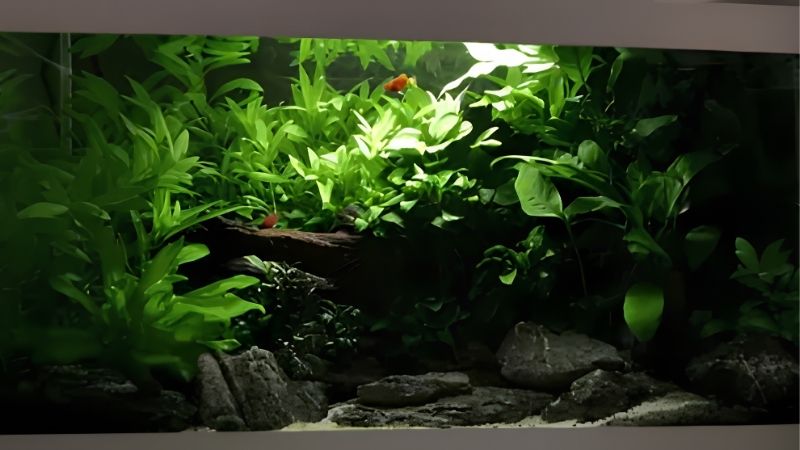
The decisive numbers for this group of plants
The working definition is roughly 10–30 PAR measured at substrate level, in micromoles per square metre per second. Medium sits at 30–50 and high above 50, and the boundary matters because carbon supply becomes the limiting factor somewhere near the top of the medium band rather than the low one.
Low light aquarium plants also need a sensible period. Six to eight hours on a timer suits this group, with six the safer starting point, and extending the hours is a poor substitute for intensity because the surplus time favours algae far more reliably than it favours the plants involved.
Depth changes which band a fixture actually delivers. A unit giving 40 PAR on a 12 inch (30 cm) tank may deliver only 20 PAR at the substrate of a 21 inch (53 cm) tank, so the same light can be medium on a shallow tank and genuinely low on a deeper one without anything else changing.
Why these species tolerate what others cannot
The plants that hold up here share a few characteristics: slow growth, tough leaves and an ability to draw nutrients from the water column rather than depending entirely on a rich substrate. Those traits reduce their demand for everything, not just for light, which is what makes them forgiving.
Slow growth in particular is the mechanism rather than a side effect. A plant producing one new leaf a fortnight needs far less carbon, nitrogen and phosphorus than a stem plant adding several inches a week, so it stays within what a low-tech tank naturally supplies without any injection.
The trade-off is the sheer speed of recovery. These same species take weeks to respond to a correction rather than days, so patience is part of keeping them, and repeated adjustment while waiting is the most common way people turn a slow recovery into a genuine and lasting failure.
Normal appearance against signs that need action
Expect older leaves to yellow and be shed while new ones appear, since that is how these plants renew themselves rather than a symptom of anything wrong. A healthy low light tank may look almost unchanged from one month to the next, which is normal rather than evidence of a problem.
Act when stems stretch with long gaps between the nodes, when lower leaves drop faster than new ones appear, or when algae returns within days of cleaning the glass. The first two point to too little light and the third to too much, and both are correctable without buying new plants.
| Plant | Attachment | Position in layout | Propagation |
|---|---|---|---|
| Java fern | Rhizome tied to hardscape | Mid to background | Plantlets on older leaves |
| Anubias | Rhizome tied to hardscape | Foreground, shaded spots | Divide the rhizome |
| Cryptocoryne | Rooted, crown above substrate | Midground | Runners under the substrate |
| Vallisneria | Rooted, crown above substrate | Background only | Runners across the substrate |
| Java moss | Tied or wedged into hardscape | Anywhere, including shade | Divide and re-attach |
Placing and Caring for Each Species
Choosing low light aquarium plants is only half the work, because placement decides whether a species thrives or slowly declines. Each of these plants has a position it suits and an anchoring method that has to be respected, and getting either wrong is the usual cause of failure.
Tank size, placement and physical fit
Mature size decides the layout here rather than pot size. Vallisneria reaches the surface in most tanks and shades whatever sits beneath it, while anubias stays compact for years, so plan positions around adult dimensions rather than around how the plants look on the day they arrive.
Weight sets the wider limits here as well: a full tank runs near 10 lb per gallon (about 1 kg per L), so a 55 gallon (208 L) setup passes 600 lb (272 kg) and needs a purpose-built stand. Measure the tank length and the light fixture span with a tape before ordering either of them.
The rhizome plants: java fern, anubias and moss
Java fern and anubias attach to wood or to rock, and must never have the rhizome buried, because burying it causes rot that takes weeks to become visible. Tie them with cotton thread or fix them with a small dot of gel glue, and remove the nursery rockwool entirely before doing so.
Java moss is the most flexible of the three, since it will attach to almost any surface and tolerates deep shade where nothing else grows. It needs occasional trimming to stop the lower layers dying back, and the trimmings re-attach elsewhere, which makes it effectively free to spread.
The rooted plants: cryptocoryne and vallisneria
Both will root in plain gravel or sand with the occasional root tab pushed in underneath, and both need the crown kept above the substrate line. Planting too deep is the equivalent mistake to burying a rhizome, and it produces the same slow decline over the following several weeks.
Crypts commonly melt back after any change and regrow from the roots across several weeks, which alarms people into removing them. Vallisneria sulks after transplanting and can look dead for a fortnight before sending out runners, so both need leaving alone rather than intervention.
Myths About This Group of Plants
Three beliefs about low light aquarium plants circulate widely, and every one of them costs people either money or plants. Replacing them with the underlying mechanism usually means changing the routine rather than buying different species or a more powerful fixture for the tank.
The myth that these plants need no fertiliser
Slow growth still consumes nutrients, and a lightly stocked tank with frequent large water changes can genuinely run short of nitrogen, phosphorus and potassium. Yellowing older leaves alongside pale new growth usually points at nutrients rather than at the light level in the tank.
The dose actually required is modest rather than absent. Start well below the label recommendation, watch across several weeks, and remember that nitrate at 20–40 ppm is a target rather than a pollutant, since a tank stripped to zero starves the plants you are trying to keep alive.
The myth that low light means any light will do
There is a floor to this band as well as a ceiling. Below roughly 10 PAR at the substrate even these species struggle, producing leggy growth and shedding lower leaves, and a fixture bought purely on price for a deep tank frequently lands below that floor without the owner realising it.
Depth is usually the culprit here rather than the fixture. The same unit that works well on a 12 inch (30 cm) tank can fall short on a 21 inch (53 cm) one, so check the mounting height and consider lowering the fixture before concluding that the plants themselves are the problem.
The myth that these species cannot look impressive
A tank built from four or five of these species can look established and deliberate, particularly once java fern and crypts reach mature size. What it will not do is look like a competition aquascape, because that style depends on carpets and red stems that need entirely different conditions.
Layout does most of the work in this respect. Attaching moss and anubias to wood at varying heights, letting crypts fill the midground and running vallisneria along the back produces depth without any species that requires injected carbon dioxide or a demanding fertiliser routine.
Long-Term Care and Propagation
The real advantage of low light aquarium plants only appears in the second year, when the initial purchases have multiplied and the tank fills itself. All five species propagate without intervention, which turns the plant list from a recurring cost into something closer to an asset.
What to do periodically, and how often
Run the light on a plug-in timer at six to eight hours and review that schedule seasonally, since ambient daylight stretches considerably from late spring into midsummer. Change 20–30 percent of the water weekly, dose a modest fertiliser, and trim only what has genuinely died back.
Thin out the vallisneria and the moss twice each year rather than waiting for them to take over. Vallisneria runners will cross an entire tank if left alone, and a moss cushion more than a couple of inches thick dies underneath where light and flow no longer reach the lower layers.
How each species multiplies on its own
Java fern produces small plantlets along its older leaves, which then detach and attach themselves elsewhere, while anubias is divided by cutting the rhizome into sections, each of which needs a few leaves and some root to establish successfully in its new position on the hardscape.
Cryptocoryne spreads by runners beneath the substrate and will fill in an entire midground over a year or two, and vallisneria does the same across the surface of the substrate. Both can be separated and moved once established, though crypts usually melt again after being disturbed.
The twelve month cost of running this plant list
The costs stay low here by design: a general liquid fertiliser, occasional root tabs for the rooted species, cotton thread or gel glue for the rhizome plants, and a timer. There is no carbon dioxide equipment involved and no ongoing replacement of plants that failed to establish.
Prices move constantly across retail, online and hobbyist sources, so check the figures at the actual time of purchase. The genuine saving here comes from propagation rather than from finding a cheap supplier, since a well-established tank supplies its own plants after the first year.
Frequently Asked Questions
These questions come up constantly during the first year, because low light aquarium plants often behave in ways that look very much like failure but are not, and melting in particular prompts far more unnecessary intervention than any genuine problem in the tank ever manages to.
How do I know if my light is genuinely low light?
Judge by the plants rather than the packaging. Leggy stems with long gaps between nodes and lower leaves dropping mean the reading is below the band, while algae returning within days of cleaning the glass means it sits above it, and both are more reliable than any specification.
Can I grow these plants in plain gravel?
Yes, and all of them will do so. Java fern, anubias and moss attach to hardscape and never touch the substrate at all, while cryptocoryne and vallisneria root perfectly well in plain gravel or sand given the occasional root tab pushed in underneath them a couple of times each year.
Why has my java fern got black spots on the leaves?
Small dark patches on older leaves are very often the beginnings of plantlets rather than disease, and those leaves eventually break down as the young plants detach. Widespread blackening with a soft rhizome is different and usually means the rhizome has been buried in substrate.
How long until the tank looks filled in?
Usually a year or more with this particular group, since slow growth is the trait that makes them tolerant in the first place. Planting heavily from the start is the only real shortcut, and it competes with algae far better than a sparse layout that fills in gradually over months.
Do these plants need a dark period?
Yes, exactly as the fish themselves do. Continuous lighting favours algae strongly and also stresses livestock, so a clear night is part of the routine, and a consistent six to eight hour period on a timer is far better for the tank than lighting driven by whoever is in the room.
See More:
Conclusion
The practical list of low light aquarium plants is a short one: java fern and anubias tied to hardscape, java moss anywhere including deep shade, cryptocoryne through the midground and vallisneria across the background, all at roughly 10–30 PAR with a six to eight hour photoperiod.
Respect the two anchoring rules, keep nitrate at 20–40 ppm rather than stripping it down to zero, and leave melted plants undisturbed while they regrow. Everything on this list propagates itself, so the second year costs almost nothing and the tank fills in without further purchases.
Honey Gourami Tank Mates: Calm Community Choices
Amano Shrimp Care Guide: The Ultimate Algae Eater for Your Tank