Last Updated: October 21, 2026
Black beard algae treatment fails more often than any other algae fix in the hobby, and the reason is remarkably consistent: people treat the tufts instead of the instability that grew them. BBA responds to steady carbon and good circulation, and the correction takes three to four weeks rather than a single weekend.
As an Amazon Associate we earn from qualifying purchases.
As an Amazon Associate we earn from qualifying purchases at no extra cost to you.




By David Nguyen
Flow, Carbon Stability and Organic Load
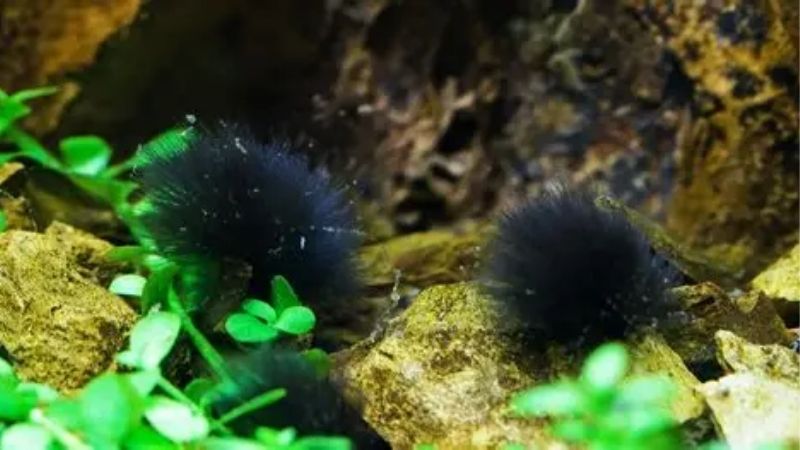
Black beard algae is a red algae that attaches firmly to hard surfaces and slow-growing leaves. Effective black beard algae treatment starts from that biology, because a growth anchored to hardscape in a low-flow corner is telling you something specific about the tank.
The Deciding Factors: Flow, Carbon Stability and Organics
Three conditions produce BBA together. Inconsistent dissolved carbon, whether from irregular CO2 injection or none at all in a high-light tank. Weak circulation leaving dead spots. And accumulated organic matter in substrate and filter that nobody has removed.
Measure flow first. A baseline turnover of 4-6 times tank volume per hour suits community stocking, and printed GPH drops 30-50% once media and hoses are loaded. Then look at where BBA is actually growing, because it colonises the exact spots water does not reach.
Test ammonia, nitrite, nitrate and temperature as well. Nitrate above 40 ppm signals the organic load contributing to it, and any ammonia reading in a young tank adds a nutrient source that no treatment will overcome until the cycle completes.
The Biology: Why It Attaches Where It Does
BBA anchors with a holdfast that grips hard surfaces, which is why it appears on driftwood, rocks, filter intakes and the tough old leaves of slow-growing plants such as anubias. Soft fast-growing stems are rarely affected because they outgrow it.
Unstable carbon is the strongest single association. Plants using CO2 efficiently outcompete algae, but when injection fluctuates, or when a high-light tank has no injection at all, plants stall periodically and BBA exploits every gap in that competition.
Flow carries both nutrients and carbon to plants. In a stagnant corner the plants receive less of both while organic matter settles, so the local balance shifts toward algae even though the tank as a whole reads perfectly acceptable.
The holdfast explains why removal is so difficult. BBA does not wipe off the way a film does, and scrubbing a rock underwater breaks the tufts up and scatters fragments that reattach elsewhere, which is why hardscape is better treated out of the tank.
Ranges Against Action Thresholds
The table sets each pattern against what it indicates and what to do. Look at where the growth sits before reading it, because location is more diagnostic here than quantity.
| Where it grows | Readings and inputs | What it indicates | First action |
|---|---|---|---|
| Filter intake and outflow | Turnover under 4x, media loaded | Organics concentrated at flow points | Clean media, restore flow |
| One corner only | Flow not reaching that area | Dead spot | Reposition outflow or add a powerhead |
| Edges of anubias and old leaves | CO2 inconsistent or absent | Plants losing the carbon competition | Stabilise CO2, trim affected leaves |
| Spreading across hardscape | Nitrate above 40 ppm | Organic load outgrowing maintenance | Change 30-40%, vacuum substrate |
| Appeared after a rescape | All four readings normal | Disturbance released organics | Hold routine steady for a month |
What This Means in a Real Tank
BBA is the algae most closely tied to how a tank is built rather than to how it is fed. Layout, flow pattern and equipment consistency explain almost all of the variation between a tank that grows it and one that never does.
Tank Size, Placement and Fit
Layout creates dead spots more often than filter capacity does. Large flat rocks, dense hardscape and tall planting all block circulation, and a filter rated well above the tank volume still leaves stagnant pockets if the outflow points the wrong way.
Tank shape matters. A long 55 gallon (208 L) tank needs flow carried the full length, which a single hang-on-back unit at one end rarely manages, while a shorter 20 gallon (76 L) tank circulates adequately from one point.
Measure before you order: powerhead or filter position against tank length, cabinet height for a CO2 cylinder and regulator, 4-6 in (10-15 cm) behind the tank for a hang-on-back filter, and stand capacity against roughly 10 lb/gallon (about 1 kg/L) filled.
How This Differs Across 10, 20 and 55 Gallon Tanks
Small tanks are easier to circulate and harder to keep chemically stable. A 10 gallon (38 L) tank with CO2 swings concentration quickly when a diffuser clogs, while a 55 gallon (208 L) tank buffers those changes but needs far more effort to move water everywhere.
Depth affects the plants that compete. PAR falls through water, so plants at the bottom of a tank 18 in (46 cm) deep may sit in low light while the fixture looks strong from above, and struggling plants are what BBA needs to establish.
Organic accumulation scales with neglect rather than size. A 55 gallon tank hides months of substrate detritus before anything is visible, and that reservoir is what feeds a BBA outbreak once flow drops or CO2 becomes inconsistent.
How Plants, CO2 and Maintenance Change the Picture
Any black beard algae treatment in a high-tech tank has to start with the injection itself. Injected CO2 tanks get BBA when injection is inconsistent rather than when it is absent. A cylinder running low, a clogged diffuser or a timer that starts injection after the lights are already on all create the fluctuation that favours it.
Low-tech tanks get it from high light without carbon to match. A strong fixture over anubias, java fern and slow stems with no CO2 gives plants more light than they can use, and the surplus goes to algae growing on the same leaves.
Plant selection compounds it. Anubias and java fern hold their leaves for years, which means any algae that establishes on them stays visible for years too, while a fast stem plant simply grows past the problem and gets trimmed away.
Spring rescaping is a common trigger. Deep cleaning, substrate changes and hardscape rearrangement all release accumulated organics and disturb plant roots at once, and BBA frequently appears two to three weeks after a major overhaul rather than during it.
Common Mistakes and Myths to Retire
Three approaches dominate the advice on black beard algae treatment, and all three fail for the same reason. Each attacks the visible growth while leaving the flow and carbon conditions exactly as they were.
Myth: Spot Dosing Alone Will Clear It
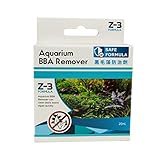
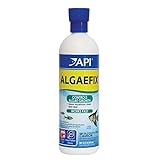
Applying a liquid carbon product directly to affected areas with the filter off does kill BBA, and the tufts turn red then white over several days. It is a removal method, not a treatment, and the growth returns wherever the conditions persist.
These products also have real limits worth stating. Several plant species including vallisneria and some mosses react badly to them, and dosing a large volume of BBA at once produces a die-off that consumes oxygen in a stocked tank.
Myth: Algae Eaters Will Handle It
Very few species eat established BBA. Siamese algae eaters have a reputation for it, and the reality is that they eat young growth inconsistently, are frequently misidentified in shops, and grow to a size that outstrips many community tanks.
The replacement expectation: no grazer clears a BBA problem. They may slow new growth in a tank that has already been corrected, which makes them a supporting measure at best rather than a black beard algae treatment in themselves.
Myth: You Need to Remove the Hardscape and Bleach It
Removing and treating hardscape does kill the growth on those pieces, and it is reasonable for a badly affected rock you can lift out. It does nothing about the tank conditions, so the same pieces are recolonised within a couple of months.
Full teardowns are worse. Replacing substrate and scrubbing everything removes the biological filter alongside the algae, and an ammonia spike afterwards feeds several algae types directly while you wait through another cycle.
Where a piece genuinely has to come out, treat it outside the tank and rinse it thoroughly before it goes back. Doing that one piece at a time, weeks apart, keeps the biological filter and the plants undisturbed while the tank conditions are corrected.
Treating and Preventing It Long Term
Successful black beard algae treatment is three changes held for a month: better flow into every corner, stable carbon, and organics removed on a schedule. None of them show a result in the first week, which is why most attempts are abandoned too early.
What to Do on a Schedule
Change 20-30% weekly adjusted by measured nitrate, vacuum a third of the substrate each time, and rinse mechanical media monthly in tank water. Trim affected leaves rather than trying to clean them, since anubias and java fern regrow from the rhizome.
Check flow every time you look at the tank. Outflows shift, media loads, and a corner that circulated well in January may be stagnant by June, which is where the first tufts reappear once maintenance slips.
Keep the light schedule fixed on a timer at six to eight hours while the correction runs. Changing light, dosing and flow in the same week leaves you unable to tell which change helped, and BBA is slow enough that guessing costs a month.
Gear That Degrades and How It Shows Up
CO2 equipment drifts invisibly. Diffusers clog and reduce dissolved concentration without any change in bubble count, regulators can creep, and a cylinder near empty delivers inconsistent output. A drop checker reading green at roughly 30 ppm is the check worth running.
Filters lose 30-50% of rated flow as media loads and impellers wear, and that decline is exactly the condition BBA exploits. Timers get reset by power interruptions, leaving CO2 and light out of sync with each other.
LED fixtures lose PAR across their life while still appearing bright, which weakens the plants competing for carbon. Every powered device beside water belongs on a GFCI outlet with a drip loop and a UL or ETL mark.
The Twelve-Month Running Cost
For a low-tech tank the list is dechlorinator, mechanical media, test reagents and continuous power. For an injected tank add CO2 refills, drop checker fluid, diffuser replacement and fertiliser, which together make stability an ongoing cost rather than a one-off purchase.
A powerhead or a larger filter is a one-off that addresses the flow half directly. Set against repeated bottles of liquid carbon over a year, moving water properly is usually both cheaper and more effective.
Filters taking loose media help here as well. Being able to rinse or replace only the mechanical layer keeps organics down without discarding colonised biological media, which is both cheaper across twelve months and safer for the nitrogen cycle.
Frequently Asked Questions
These five come up most often once the tufts are on the hardscape and nothing tried so far has shifted them.
How long does treatment take to work?
Three to four weeks after the conditions are corrected, which is the slowest of the common algae types. Existing growth needs removing by hand or spot dosing, since correcting conditions stops new growth without clearing what is already attached.
Does BBA harm my fish?
No. It is unsightly and it smothers slow-growing leaves, but it does not affect water quality or fish health directly. The conditions behind it, particularly poor flow and organic accumulation, matter more than the algae itself.
Can I get rid of it without CO2 injection?
Yes. Low-tech tanks clear BBA by reducing light to match the plants, improving flow, and keeping organics down through consistent maintenance. Adding CO2 is one route to stability rather than the only one.
Why did it appear after I upgraded my light?
A stronger fixture increases what plants could use without increasing the carbon available to them. That gap is the instability BBA exploits, so the fix is either matching carbon to the new light or reducing intensity and duration back down.
Will it spread to my other tanks?
It can travel on plants, hardscape and shared equipment. Quarantine new plants, keep separate siphons and nets per tank where practical, and remember that any black beard algae treatment in one tank means nothing if conditions in the next tank invite it.
See More:
The Bottom Line on Black Beard Algae
Black beard algae treatment comes down to stability rather than chemistry. Fix the flow so water reaches every corner at a turnover of 4-6 times volume per hour, make dissolved carbon consistent whether that means steady CO2 injection or less light, and remove organics with regular substrate vacuuming and media rinsing. Trim affected leaves, spot treat hardscape if you want the growth gone sooner, and hold all of it for three to four weeks before deciding whether it worked.
Aquarium Algae Types: How to Identify and Control Every Kind

Quick Picks: Cichlid Fish Tank Setup African