Last Updated: September 25, 2026
How to plant aquarium plants comes down to two things almost nobody checks first: what your water is reading right now, and how deep each type of plant is meant to sit. Bury a rhizome or a crown and the plant rots within a fortnight, however good the substrate underneath it happens to be. Both checks take about ten minutes.
As an Amazon Associate we earn from qualifying purchases.
As an Amazon Associate we earn from qualifying purchases at no extra cost to you. Prices and availability are accurate as of the date shown and are subject to change.
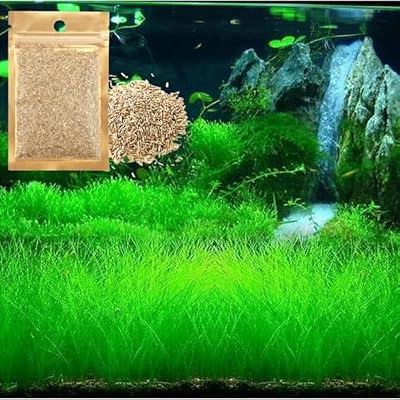
Freshwater Aquarium Decor, Easy Growing Dwarf Carpet for Fish Tank/Terrarium, Natural Aquatic Plant Growth Material – 1 Pack (Short Hair)
Selected for "How to Plant Aquarium Plants Step by Step in Any Substrate": this listing is tanks (Freshwater Aquarium Decor, Easy Growing Dwarf Carpet for Fish Tank/Ter), matching the equipment this article covers.
View on Amazon
60+ Leaves Water Spangles (Salvinia Minima) – Live Floating Aquarium Plants for Freshwater/Aquariums/Aquatic/Pond Plant/Planted Tank/Aquascaping/Paludarium by Aquarium Plant Center (12 Plants)
Selected for "How to Plant Aquarium Plants Step by Step in Any Substrate": this listing is tanks (60+ Leaves Water Spangles (Salvinia Minima) – Live Floating Aquarium P), matching the equipment this article covers.
View on Amazon
SunGrow Plastic Aquarium Plant Set, Resin Aquarium Decor, Tall Artificial Aquarium Fake Plants, Fish Tank Decorations for Tropical Fish, Plastic Plants for Goldfish, Fish Tank Accessories, 3 Pcs
Selected for "How to Plant Aquarium Plants Step by Step in Any Substrate": this listing is tanks (SunGrow Plastic Aquarium Plant Set, Resin Aquarium Decor, Tall Artific), matching the equipment this article covers.
View on Amazon
2 Pack Upgraded Aquarium Plant Holder, Adjustable Fish Tank Plant Holder
Selected for "How to Plant Aquarium Plants Step by Step in Any Substrate": this listing is tanks (2 Pack Upgraded Aquarium Plant Holder, Adjustable Fish Tank Plant Hold), matching the equipment this article covers.
View on AmazonBy David Nguyen
Quick answer: Our top pick in 2026 is the Green film on glass within days — our #1 rated choice. See the full ranked comparison, alternatives and buying advice below.
Check These Numbers Before Anything Goes in the Substrate
Planting day is a measuring job before it is a gardening job. Learning how to plant aquarium plants properly starts with a liquid test kit and a ruler, because a tank running eleven hours of light or sitting mid-cycle will undo new growth faster than any planting technique can protect it.
The Six Numbers to Read on Planting Day
Read ammonia, nitrite, nitrate and temperature before you unwrap anything at all. Ammonia and nitrite should both sit at 0 ppm in a stocked tank, nitrate somewhere under 40 ppm, and temperature inside the range your species tolerate, which for most common plants means 72-82 F (22-28 C).
The fifth number is photoperiod, and it is the one most people get wrong. New plantings do best on 6-7 hours a day rather than the 10-12 hours many timers ship with, because algae colonises bare substrate and damaged leaves far faster than plants can establish working root systems.
The sixth is bed depth, measured with a ruler pushed against the glass rather than estimated by eye from the front. You want 2 in (5 cm) as a minimum and 3-4 in (7.6-10 cm) wherever crowns and bulbs are going, since roots that reach the tank base within weeks simply circle and stall.
What Your Readings Mean Before You Plant
Use the table below to decide whether to plant today or fix something first. Plants themselves tolerate ammonia far better than fish do, so a cycling tank is no reason to delay planting, but high nitrate combined with long light hours is a reason to correct the schedule before you start.
| What you see | Reading that goes with it | Most likely cause | First action |
|---|---|---|---|
| Green film on glass within days | Nitrate over 40 ppm, light 9 h or more | Light and nutrients on bare substrate | Cut photoperiod to 6 h, change 30 percent |
| New leaves melt, roots stay white | All four water numbers normal | Emersed-to-submersed transition | Leave the plant alone, trim dead leaves |
| Plants float free repeatedly | Substrate grain over 4 mm | Roots cannot grip coarse gravel | Replant deeper with tweezers, angled |
| Rhizome plants blacken at the base | Water normal, rhizome buried | Buried rhizome rotting | Lift and tie to wood or rock |
| Bulbs never sprout | Temperature under 72 F (22 C) | Bulb buried fully or tank too cold | Expose the bulb top, raise temperature |
When the Problem Is the Plant, Not the Tank
Most nursery stock is grown emersed, above the waterline, in humid greenhouses under bright light. Those leaves are built for air and they dissolve within about two weeks of submersion, which looks like outright failure but is a normal transition provided the roots and crown stay firm and pale.
The other case is stock that is not aquatic at all. Dracaena, peace lily and several purple-leaved species are still sold in aquarium sections, survive a few weeks underwater, then rot and foul the tank. If a plant has no true aquatic form at all, then no planting technique will rescue it.
The Planting Sequence, Step by Step
How to plant aquarium plants is a sequence rather than one action, and worked in order it takes roughly 40 minutes for a 20-gallon (76 L) tank. Skipping preparation is where most problems begin, because pest snails and dead tissue introduced on day one stay with the tank for months afterwards.
Step 1: Rinse, Inspect and Trim Before Planting
Remove rock wool and lead weights completely, then rinse the roots in water matched to tank temperature within 1-2 F (about 1 C). Rock wool left wrapped around a crown holds anaerobic pockets against living tissue, and lead strips crush stems at exactly the point where they need to root.
Trim the roots back to roughly 1-1.5 in (2.5-4 cm) with clean scissors and cut away every trace of brown, soft tissue you find on them. Shortened roots branch and anchor considerably faster, while long trailing roots lie sideways across the bed and take far longer to establish any grip.
Step 2: Depth Rules by Plant Type
Stem plants go in one at a time, 1-1.5 in (2.5-4 cm) deep, angled slightly rather than driven straight down, and spaced roughly 1 in (2.5 cm) apart. Planting a whole bunch as a single clump starves the inner stems of both light and flow, and they rot from the centre outward within weeks.
Crowns and rhizomes follow the opposite rule entirely. Sword and crypt crowns sit level with the substrate surface, roots below and growing point exposed, while anubias, java fern and bucephalandra rhizomes must stay completely above the bed, tied onto wood or rock with thread or line.
Step 3: Water Level, Light and the First Fortnight
Plant with the tank filled to roughly a third of its total height. Damp substrate holds its shape under tweezers, tools reach the bed without fighting buoyancy, and fine grains stay where you put them instead of clouding the entire water column every time another stem goes into the bed.
For the first fortnight run 6-7 hours of light and hold back on heavy dosing. Roots are not taking up much yet, so surplus nutrients feed algae rather than plants. Increase afterwards one variable at a time, adding light hours or dosing separately so you can see which change did what.
Tank Size, Placement and Fit While You Work
Check that your light physically matches the tank before planting anything underneath it. A fixture 4 in (10 cm) shorter than the tank leaves dim ends where carpeting plants stretch and go leggy, and PAR reaching the bed of a 21 in (53 cm) deep tank is a different matter entirely.
Flow deserves the same attention. Aim the filter return along the back glass so water circulates rather than blasting new plantings loose overnight. Measure the real numbers before you order: light length against tank length, and the gap behind the tank against your filter’s body depth.
What Never to Do
Three habits account for most of the damage during the first month, and each one feels like helping the plants at the time. Anyone reading up on how to plant aquarium plants should treat these as harder rules than the planting depths, because two of them kill bacteria rather than leaves.
Never Bury a Rhizome or a Crown
Anubias, java fern and bucephalandra rot outward from the rhizome once it is covered, usually blackening within 10-14 days of being planted. The same applies to sword and crypt crowns: cover the growing point with substrate and the plant stops producing new leaves, then collapses entirely.
If you have already buried one, lift it out, cut it back to firm green tissue, and tie the remainder onto hardscape using cotton thread or fishing line. Roots grip the wood within four to six weeks, at which point the thread can be cut away and removed without disturbing the plant at all.
Never Strip and Replant When Old Leaves Melt
Melting emersed leaves are being replaced, not lost, and the plant is spending stored energy doing it. Pulling it up to inspect the roots breaks every new one that has formed, resets establishment completely, and often turns a two-week transition into a two-month one or kills the plant.
Trim the dead leaf at its base and leave everything else undisturbed. Crypts in particular can drop every single leaf and regrow entirely from the crown inside a month, provided the roots are left alone and nobody digs through the substrate around them looking for signs of progress.
Never Rinse Filter Media in Tap Water While You Rescape
Planting day often coincides with a filter clean, and rinsing media under the tap kills the nitrifying colony outright, because municipal supplies carry chlorine or chloramine. Standard dechlorinator does not neutralise chloramine unless the label states that specifically, so read it before relying on it.
Rinse media in a bucket of water siphoned straight out of the tank instead. Losing that colony while the substrate is freshly disturbed is exactly how a stable, established tank ends up reading 1-2 ppm ammonia three days after what looked like an entirely routine afternoon of planting.
Preventing a Repeat: Schedule, Equipment and Early Signs
Establishment is roughly a four-week job, and what happens in weeks two to four decides whether the layout holds together at all. This is also where the recurring costs of how to plant aquarium plants show up, because the tank now carries a consumable schedule for as long as it runs.
The Maintenance Schedule That Holds a New Scape
Run 20-30 percent water changes weekly for the first month, adjusting to what nitrate actually reads rather than following a fixed rule, and match replacement water to within 1-2 F (about 1 C). Trim stems once they reach the surface so the lower leaves keep receiving usable light.
Root tabs go into inert beds every three to four months, placed directly under heavy feeders rather than scattered around at random. Liquid dosing starts at half the label rate in week three and increases only when you see a deficiency sign, not because a schedule says it is time.
Equipment That Fixes the Root Cause
A timer is the single most useful purchase here, because manual light control drifts by hours across a week and inconsistent photoperiod causes more algae on new plantings than anything else. Dimmable fixtures help further, though they cost considerably more than a basic timer and a fixed light.
Summer changes the arithmetic. Sunlight reaching a tank near a window from May onward adds intensity that no timer controls, and room temperatures above 82-84 F (28-29 C) push dissolved oxygen down at exactly the point when new root systems and bacterial colonies are working hardest.
Early Signs Worth Watching
Watch new leaves rather than old ones, since old growth is being discarded anyway. Yellowing between the veins on fresh leaves points toward iron or magnesium supply, while pinholes appearing in young sword leaves usually indicate potassium, and both respond to dosing well before real damage sets in.
Watch the substrate surface too. A green dusting across bare bed within a week of planting says light hours or nutrient levels are running ahead of what the plants can currently use, and cutting the photoperiod back by two hours is the fastest correction available to you at that stage.
Frequently Asked Questions
These come up repeatedly from people setting up a first planted tank, usually during the fortnight after planting when everything looks noticeably worse than it did on the day it went in. That dip is normal, and knowing how to plant aquarium plants includes knowing when to wait it out.
Do I need to know how to plant aquarium plants differently in sand?
The technique is identical, but sand graded at 0.45-0.55 mm compacts more, so plant with tweezers at a shallow angle and expect stems to work loose more often during the first week. Keep the bed at 1.5-2 in (4-5 cm) deep and stir it gently during every water change to keep it oxygenated.
Can I plant in a tank that has not finished cycling?
Yes, and it usually helps. Plants tolerate the 1-3 ppm ammonia a cycling tank reaches, and established growth takes up ammonium directly from the water. Fish are the ones that wait, until ammonia and nitrite both read zero across a full 24 hours following a dose of ammonia into the tank.
How long before new plants start growing?
Expect two to four weeks before visible new growth in low-tech tanks, and considerably longer for slow species such as anubias, which may add only three or four leaves in a year. Rapid growth during week one usually means the plant was already grown submersed at the shop rather than above the waterline.
Should I trim the leaves when I plant?
Trim only damaged or dead tissue. Healthy leaves feed the plant while its roots establish, so removing them slows the whole process down. The exception is heavily melted emersed growth, which is decaying regardless and adds to the tank’s organic load if you leave it sitting there.
See More:
Conclusion
Knowing how to plant aquarium plants is mostly depth discipline and patience: stems 1-1.5 in (2.5-4 cm) down, crowns level with the surface, rhizomes never buried at all, and 6-7 hours of light while the root systems establish themselves across the first two weeks in the new tank.
Check your four water numbers before starting, resist every urge to replant something that melts, and give the tank a full month before judging the layout. Most failures traced back to planting day turn out to be simple depth errors rather than substrate or fertiliser problems at all.
Ready to decide? Our #1 pick for 2026 is the Green film on glass within days.
Live price & availability on Amazon.
Related Reviews & Guides


Best LED Strip Lights for Planted Aquariums (2026)

Live Moss Ball Marimo Aquarium