Last Updated: October 4, 2026
The best planted tank setup for beginners starts with light that actually suits easy plants, not marketing lumens. Fluval’s all-in-ones publish their light and pump specs, so this guide compares four current models by what low-light plants need, plus size and price for a realistic first tank.
As an Amazon Associate we earn from qualifying purchases.
By David Nguyen
How to Choose a Beginner Planted Tank
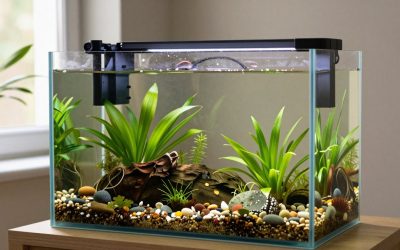
Choosing a beginner planted tank means matching light to easy plants, giving roots enough substrate, and ignoring metrics that do not measure growth. Kelvin and lumens describe color and brightness, not usable intensity, so read each spec for what it actually tells you before comparing kits on price.
Start with low-light plant requirements
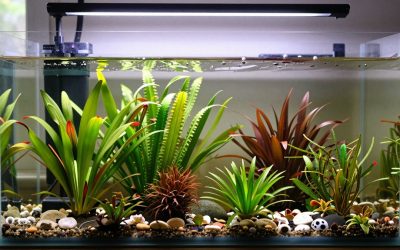
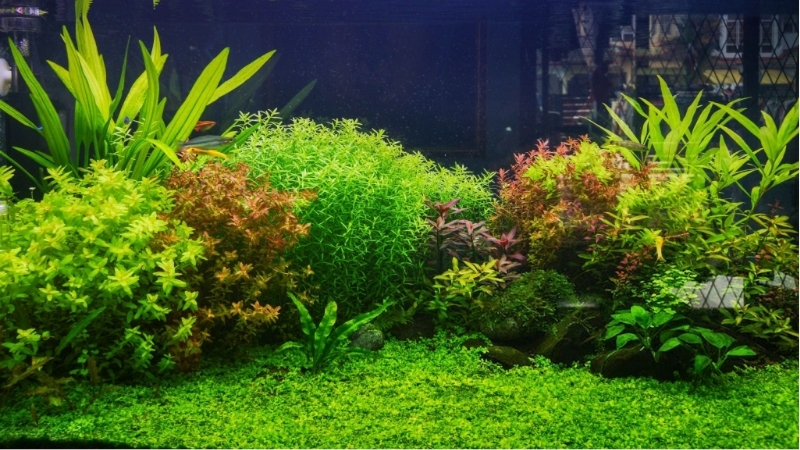
Easy plants define the target, and they sit in a low-light reference of roughly 20 to 30 PAR. That is a category for forgiving species, not a universal requirement, and it measures light intensity at the substrate rather than the wattage or brightness printed on a fixture box.
Aqueon’s planted guidance points to a spectrum around 6500 to 8000K and roughly 10 to 12 hours of light a day as a general rhythm. Start with species matched to low light, and the rest of the build gets simpler, because you are no longer fighting the fixture to keep plants alive.
Use adequate substrate depth
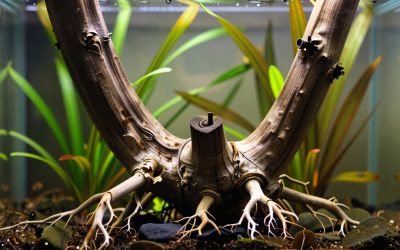
Rooted plants need something to anchor in, so substrate depth matters as much as the light above it. Aqueon suggests about 2 to 3 inches of substrate for a planted tank, which gives roots room to spread and holds plants down while they establish over the first few weeks.
Too shallow a layer lets plants float free and starves root feeders, while an even bed supports a natural layout. Plan the depth before you fill the tank, since adding substrate around established plants later disturbs roots and clouds the water you just worked to clear.
Separate Kelvin from PAR
Kelvin and PAR are not interchangeable, and confusing them is the most common beginner mistake. Kelvin describes color temperature, so a 7500K light looks a certain shade of white but tells you nothing about whether it delivers the intensity your plants need to photosynthesize.
PAR measures the usable light that actually drives growth, and no lumen or Kelvin figure substitutes for it. When comparing the Fluval kits here, treat their published lumens and color temperatures as description, not proof of plant performance, and lean on the maker’s plant-suitability language instead.
Avoid mandatory-CO2 claims
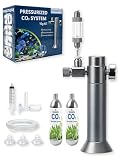
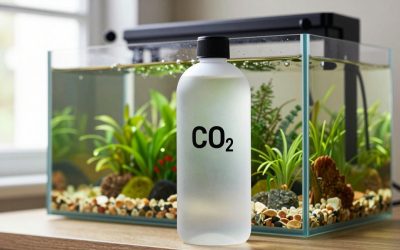
You do not need injected CO2 to start a planted tank. General guidance is that most beginner plants grow without supplemental CO2, so treat any claim that CO2 is required for all plants as a red flag rather than a rule you must follow from day one of the build.
CO2 helps demanding, high-light species, but easy low-light plants do fine on the carbon already in the water. Starting without it removes cost and complexity, and you can always add CO2 later if you move toward a high-tech scape once the basics are comfortable and stable.
Top Picks
These four Fluval all-in-ones cover the sizes most beginners consider, from a nano to a larger slim tank, and each publishes the light and pump specs that matter for a best planted tank setup for beginners. Weigh them on light suitability and size, then on price, not on lumens alone.
| Product | Best For | Key Spec | Watch Out For |
|---|---|---|---|
| Fluval Flex 15 | Best Overall | 15 gal; 2450 lm (7500K); 132 GPH pump | Lumens/Kelvin are not PAR; ~under $200 (Petco, 09/2026) |
| Fluval Flex 9 | Best Compact Flex | 9 gal; 1900 lm (7500K); 61 GPH pump | Small volume swings faster; ~under $200 (Petco, 09/2026) |
| Fluval Spec 5 | Best Nano | 5 gal; 821 lm (7000K); 55-80 GPH adjustable | Nano size, easy plants only; ~under $200 |
| Fluval Spec 16 | Best Larger Slim Tank | 16 gal; 1272 lm (7000K); 132 GPH pump | Pump ratio is not real turnover; ~under $300 |
Fluval Flex 15: Best Overall
The Flex 15 earns Best Overall because Fluval positions its light for low-to-medium-light plants and publishes the specs to back it. The 15-gallon all-in-one pairs a 2450-lumen 7500K fixture with a 132 GPH pump, giving a beginner a sealed, plant-ready system straight out of the box.
It lists around $200 at Petco as of 09/2026, roughly 28.2% above the Flex 9. Remember the lumen and Kelvin numbers describe the light, not measured PAR, so rely on the maker’s low-to-medium-light suitability rather than reading growth potential into the brightness figure alone.
Fluval Flex 9: Best Compact Flex
The Flex 9 is the compact version of the same idea, fitting a 9-gallon curved all-in-one into a smaller footprint. It runs a 1900-lumen 7500K light and a 61 GPH pump, and at about $150 from Petco it sits roughly 22.0% below the Flex 15 in price.
The trade for the lower price and size is stability: a 9-gallon tank swings in temperature and chemistry faster than a 15. It suits a desk or shelf with easy low-light plants, but keep stocking light and stay on top of water changes, since small volumes forgive less.
Fluval Spec 5: Best Nano
The Spec 5 is the nano option at 5 gallons, with an 821-lumen 7000K light and an adjustable pump rated 55 to 80 GPH. At roughly $150 it is the cheapest here, and the adjustable flow helps you dial current down for a small planted layout with delicate stems.
A 5-gallon tank is strictly for easy plants and minimal livestock, since it is about 46.5% cheaper than the Spec 16 but far less forgiving of mistakes. Treat it as a low-light planted accent or shrimp tank rather than a community build, and keep the plant list short and hardy.
Fluval Spec 16: Best Larger Slim Tank
The Spec 16 is the largest pick, a slim 16-gallon tank with a 1272-lumen 7000K light and a 132 GPH pump. Its footprint suits a longer aquascape, and the extra volume over the nano models buys more stable water chemistry for a beginner still learning the routine.
It is the priciest at about $300, roughly 87.0% above the Spec 5, and that 132 GPH figure is pump output, not real turnover once media loads. The larger tank rewards the higher price with room to grow a planted layout, provided you still match plants to the light.
Frequently Asked Questions
These are the questions new planted-tank keepers ask most, from whether CO2 is mandatory to how much PAR easy plants really need. Each answer leads with a direct response, then adds the condition that decides how it applies to your fixture, your plants and your first setup.
Do beginners need injected CO2?
No. Most easy, low-light plants grow without supplemental CO2, so a beginner can start without any pressurized gear. Injected CO2 mainly benefits demanding, high-light species, which are not where a first planted tank should begin anyway, so skip it while you learn the basics.
If you later move toward carpeting plants or a high-light scape, CO2 becomes worth adding. Until then, consistent lighting hours and light fertilization matter far more. Treat any product claim that all plants require CO2 as overselling rather than a genuine requirement for your tank.
How much PAR do easy plants need?
Easy plants sit in a low-light reference of roughly 20 to 30 PAR, which is a forgiving category rather than a precise target. It describes the usable light intensity at the substrate, so it is a better guide than lumens or Kelvin when judging whether a fixture will grow plants.
You rarely need to measure PAR yourself as a beginner; matching plant choice to a light the maker calls low-to-medium is enough. Overshooting into high light without CO2 and nutrients tends to grow algae, so more light is not automatically better for an easy planted tank.
Is 6500-8000K enough by itself?
Not on its own. A 6500 to 8000K rating describes the light’s color temperature, which is a reasonable range for plant growth, but Kelvin says nothing about intensity. A fixture in that range can still be too dim if it lacks the PAR your plants need at the substrate level.
Use Kelvin to judge appearance and PAR or manufacturer suitability to judge growth. The Fluval kits here fall in sensible color ranges, but choose among them on plant-suitability language and tank size, not on which one has a slightly higher lumen or Kelvin number on the box.
How deep should planted substrate be?
Aim for about 2 to 3 inches of substrate for a planted tank, per Aqueon’s general guidance. That depth gives roots room to anchor and spread, holds plants in place while they establish, and supports root-feeding species better than a thin decorative layer ever would.
Slope it slightly higher at the back for depth if you like, but keep at least a couple of inches throughout. Set this before filling, because adding substrate around established plants later tears roots and clouds the tank, undoing the stability you are trying to build in the first weeks.
Final Thoughts
The best planted tank setup for beginners is a Fluval all-in-one matched to easy low-light plants: the Flex 15 for a balanced start, the Flex 9 or Spec 5 for smaller spaces, and the Spec 16 for room to grow. Judge them on plant-suitability and size, not lumens, and confirm current prices before buying.
As an Amazon Associate we earn from qualifying purchases at no extra cost to you. Prices and availability are accurate as of the date shown and are subject to change.

Aquarium Co2 Regulator Planted Kit
Hornwort Aquarium Care: How It Grows and What to Watch For