Last Updated: October 4, 2026
Selecting the right illumination for your tank is one of the most critical hardware decisions you will make as an aquarist. While older technologies like metal halides and T5 fluorescent tubes once dominated the hobby, modern solid-state diodes have completely taken over. However, walking into the market today can feel overwhelming. Manufacturers bombard buyers with buzzwords, proprietary color blends, and smartphone connectivity features that often distract from the fundamental biological requirements of your aquatic ecosystem.
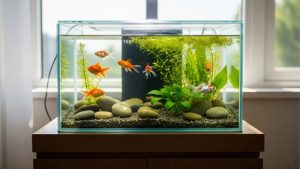
The secret to making a smart investment is learning to separate marketing fluff from the technical metrics that actually impact photosynthetic growth, fish health, and aesthetic enjoyment. Whether you are assembling a low-tech desktop planted tank or a high-energy reef system, this guide cuts through the noise to help you match the right light fixture to your tank’s specific dimensions, inhabitants, and maintenance routine in 2026.
As an Amazon Associate we earn from qualifying purchases at no extra cost to you.

PAR vs. Lumens: The Specs That Actually Matter
The most common trap for beginners is shopping for aquarium lights using standard residential metrics like lumens or wattage. Lumens measure visible brightness to the human eye, which is heavily weighted toward yellow and green spectrums. Photosynthetic organisms—such as freshwater aquatic plants, corals, and anemones—rely instead on Photosynthetically Active Radiation (PAR), which covers light wavelengths between 400 and 700 nanometers.
When evaluating a fixture, look for PAR distribution charts rather than total wattage. A low-energy planted tank might only require a PAR rating of 30 to 50 at the substrate level, whereas demanding carpet plants or shallow SPS coral tanks often need PAR values exceeding 150 to 250 at depth. Pay attention to how quickly PAR drops off through water; cheap fixtures may look intensely bright near the surface but fail to penetrate the bottom half of a standard 20-inch-deep aquarium.
Spectrum and Color Temperature: Biology vs. Aesthetics
Understanding spectrum prevents algae outbreaks and ensures your livestock displays vivid, natural coloration. Freshwater plants thrive best under broad full-spectrum white light augmented with targeted peaks in the deep red (around 660 nanometers) and royal blue (around 450 nanometers) ranges to fuel chlorophyll absorption. A color temperature between 6,500K and 7,500K delivers a clean, daylight appearance ideal for planted scapes.
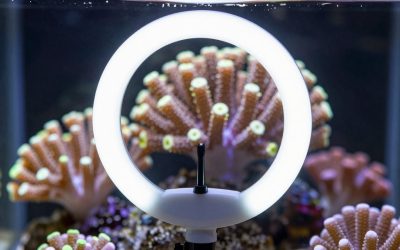
Marine environments require an entirely different approach. Because blue light penetrates deeper into ocean water, marine corals evolved to utilize heavy blue, violet, and actinic spectrums (400 to 470 nanometers) to drive the zooxanthellae algae living inside their tissues. Reef fixtures typically run at color temperatures ranging from 14,000K to 20,000K or higher, providing the characteristic fluorescent pop without fueling nuisance microalgae.
Tank Dimensions, Spread, and Mounting Geometry
A high-performance light is useless if its physical beam cannot cover your tank’s footprint. The primary factor determining light spread is the optical lens angle. Narrow optical lenses (such as 60 or 90 degrees) focus light downward to punch through deep water columns, but they create intense hotspots directly under the diodes and leave the tank corners in shadow. Wide lenses (120 degrees) or bare diffused diodes cast a wide, even spread suited for shallow, long aquariums.
Before purchasing, measure your tank’s length, width, and depth. For tanks 36 inches or longer, a single centralized light puck rarely provides adequate side-to-side coverage, resulting in shaded zones on the perimeter. In these setups, opting for a full-length strip light or running multiple modular pucks linked together ensures uniform illumination across the entire aquascape.
Smart App Controls and Scheduling Features
Modern fixtures increasingly feature Bluetooth, Wi-Fi, or direct app integration, shifting light control away from clumsy inline buttons. While app connectivity might seem like a luxury, automated ramping schedules offer significant biological benefits. Programmable sunrise, sunset, and moonlight transitions reduce sudden shock to fish, preventing stress-related jumping and erratic swimming behavior.
Furthermore, individual color channel control allows you to fine-tune your light’s intensity throughout the day. If you notice green spot algae forming on your glass, having the ability to dial down the overall intensity by 10 or 15 percent without altering your photoperiod length is an invaluable management tool that basic on/off fixtures cannot provide.
Thermal Management and Build Quality
The lifespan of a light-emitting diode is directly tied to operating temperature. Heat is the ultimate enemy of diode efficiency; poorly cooled fixtures experience rapid lumen depreciation, color spectrum shifting, and premature board failure. High-quality fixtures manage this heat through either robust passive cooling—using thick, finned aluminum heat sinks—or active cooling via quiet, internal cooling fans.
Examine the build materials before buying. Avoid fixtures housed in flimsy, all-plastic casings without adequate heat dissipation. Additionally, look for water resistance ratings such as IP65, IP67, or fully sealed splash guards. Condensation, salt creep, and accidental splashes are inevitable in aquarium environments, making moisture protection essential for long-term reliability.
When to Save vs. When to Spend More
You do not always need to purchase top-tier commercial equipment to achieve great results. If your setup consists of low-light freshwater plants like Java Fern, Anubias, and Cryptocoryne, or a simple fish-only community tank, an entry-level full-spectrum strip light will perform exceptionally well for a fraction of the cost. Spending extra on programmable multichannel controls is unnecessary for these undemanding ecosystems.
Conversely, spending more is practically mandatory if you are cultivating high-tech planted aquascapes requiring pressurized carbon dioxide, or keeping light-hungry stony corals. Premium fixtures invest heavily in custom diode clustering to prevent the “disco-ball” shimmer effect, provide uniform PAR throughout deep water columns, and feature durable aluminum housings that survive years over humid, salty water.
Related Guides
To see how these principles perform in real-world environments, explore our detailed evaluations in our tested LED fixture rankings for all tank varieties, or check out our dedicated breakdown of top-tier hardware in our companion lighting review lineup to find the ideal match for your setup.
FAQ
How many hours a day should I run my aquarium lights?
Most freshwater and marine setups thrive on a consistent photoperiod of 6 to 8 hours per day. Running your lights longer than 8 hours without balanced nutrient and carbon dioxide levels frequently triggers severe nuisance algae blooms. If you want to view your tank in the morning and evening, consider splitting the schedule into two shorter periods or utilizing an extended low-intensity ramp.
Can I use regular household LED bulbs over my aquarium?
Standard household bulbs can work for basic fish-only setups or very hardy, low-light plants if they are in the 6,500K daylight spectrum. However, they lack the water-resistant casing needed for humid environments, fail to provide optimal PAR for photosynthetic growth, and lack the targeted blue and red wavelengths needed to bring out the vibrant colors of your livestock.
Do LED aquarium lights lose strength over time?
Yes, all solid-state diodes slowly degrade in brightness and experience subtle spectral shifts as they age. While you no longer need to replace bulbs annually like old T5 tubes, most quality fixtures experience a gradual reduction in total output after 3 to 5 years of continuous use. Keeping the heat sink free of dust and preventing moisture buildup helps maximize diode longevity.
How high above the water surface should my fixture be mounted?
Most manufacturers recommend mounting fixtures between 6 and 10 inches above the water surface. This height allows the light cones from individual diodes to blend together evenly, eliminating distinct color shadows and dark spots while protecting the optical lenses from heavy moisture and mineral deposits.
Related Reviews & Guides
5 Best Floating Aquarium Plants (2026)
Sponge Filter vs Internal Aquarium Filter: Which Is Right for Your Home (2026)