Last Updated: September 27, 2026

Inkbird ITC308S Temperature Controller for Aquarium with Submersible Probe, Heating Cooling Outlets Thermostat for Heater and Cooling Fans
Included for 'Best Budget Aquarium Controller: Top Expert Buying Guide' as a relevant option in this category; details come from the product listing.
View on Amazon
Inkbird ITC-308S Aquarium Heating and Cooling Dual Stage Temperature Controller Freshwater Saltwater Aquarium Tropical Fish Ornamental Shrimp
Included for 'Best Budget Aquarium Controller: Top Expert Buying Guide' as a relevant option in this category; details come from the product listing.
View on Amazon
Inkbird Digital Outlet Heat Temperature Controller with Day Night Control for Brewing Aquarium Breeding Reptiles Hatching Heat Mat
Included for 'Best Budget Aquarium Controller: Top Expert Buying Guide' as a relevant option in this category; details come from the product listing.
View on Amazon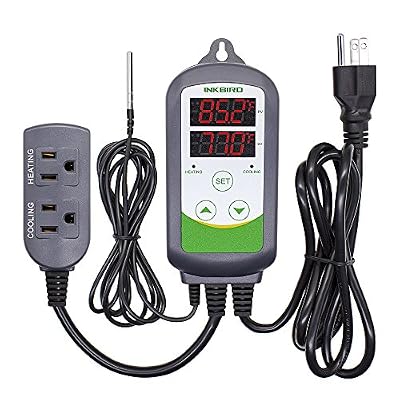
Inkbird ITC-308 Digital Temperature Controller Thermostat
Included for 'Best Budget Aquarium Controller: Top Expert Buying Guide' as a relevant option in this category; details come from the product listing.
View on AmazonSpending less on monitoring only works if the cheap option still covers the failure you fear. The best budget aquarium controller balances entry price against the hardware included in the box. Four options below, from a 49.99 USD thermostat up to a complete monitoring set.
As an Amazon Associate we earn from qualifying purchases.
By David Nguyen
How to Choose a Budget Aquarium Controller
Budget in this category is relative cost plus usable capability, not a fixed dollar line. Four things decide value at the low end: what the box actually monitors, whether a thermostat covers your risk, how controller-only and complete sets differ, and which safety basics stay non-negotiable.
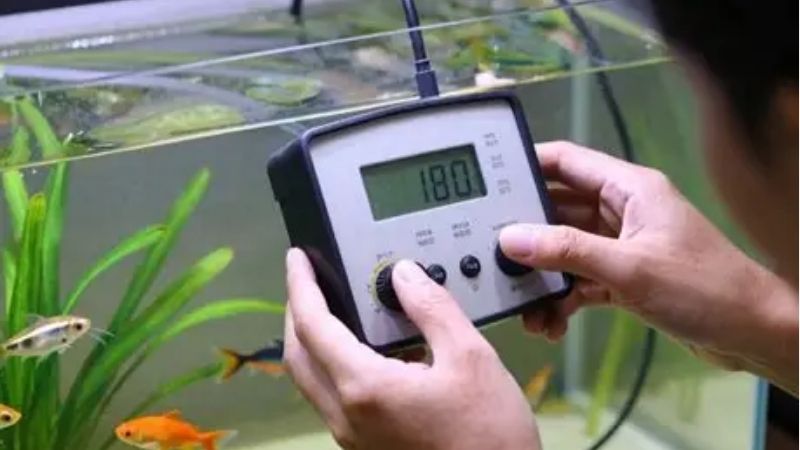
What Low-End Money Actually Buys
At 49.99 USD the Inkbird ITC-306A is a temperature device with a 10A, 1200W switching limit on 120VAC, while GHL lists the Mini WiFi controller-only at 209.90 USD with a temperature sensor and a pH input. Those are different product classes sharing a shelf and a search results page.
Work backwards from the parameter that would cost you livestock. If temperature is the only realistic failure on a freshwater tank, the cheaper device closes that gap, whereas a reef with pH swings and flood risk needs inputs that a single-parameter thermostat cannot provide at any price.
Thermostat or Full Controller
A thermostat switches one outlet against one reading, and that is the whole job. A controller logs trends, drives several devices and accepts additional inputs, which is why the 346.49 USD HYDROS Start with four switched outlets sits in a different tier than a plug-in temperature unit.
The dividing question is how many devices you expect to automate within a year. One heater today and one heater next year suits the cheap route, while planned dosing, top-off or lighting control makes a low-cost thermostat an expense you replace rather than an investment you keep.
Controller-Only Versus Complete Set
Similar names hide very different boxes. GHL prices the Mini WiFi controller-only at 209.90 USD and the Mini WiFi-Set at 409.90 USD, where the set adds temperature, pH and fluid-level monitoring plus a four-socket Powerbar, so the two figures describe different boxes, not competing prices.
Price the finished system before comparing anything. A cheaper head unit that needs a probe, a power bar and a mounting solution can land above a bundled set once every part number is in the basket, and that assembly also takes an evening of assembly you may not want to spend on setup night.
Safety Basics Worth Keeping
Certification is not the place to economise on equipment switching mains beside water, so look for UL or ETL listing and run everything behind a GFCI outlet. The U.S. Consumer Product Safety Commission (CPSC, 2026) publishes recall notices by model and year, and the listings change.
Check what an outlet does when power returns, since a heater channel defaulting to on with a cold probe is the classic overheating path on cheap hardware. Keeping a heater with its own thermostat gives a second cut-off that does not depend on the budget device or its probe still working.
Top Picks
Four options spanning roughly 50 to 410 USD as of September 2026, ordered by what each actually monitors rather than by price alone. Every entry uses manufacturer-published figures and names the limitation that decides whether the saving is real for your particular tank and equipment list.
| Product | Best For | Key Spec | Watch Out For |
|---|---|---|---|
| GHL Mini WiFi | Cheapest real controller | 209.90 USD, temp, pH input | Controller-only |
| Inkbird ITC-306A | Lowest entry price | 49.99 USD, temperature only | Not a controller substitute |
| HYDROS Start | Switching on a budget | 346.49 USD, 4 outlets, 14A total | One core parameter |
| GHL Mini WiFi-Set | Complete low-cost set | 409.90 USD, temp, pH, fluids, Powerbar | Top of the range |
GHL Mini WiFi, Best Overall Budget Pick
At 209.90 USD the Mini WiFi is the cheapest genuine controller here, shipping with a temperature sensor and a pH input rather than a single fixed function. For an owner who wants two parameters and a platform that grows, it clears the thermostat tier without reaching mid-range pricing.
It is sold controller-only, so a pH electrode, switched outlets and any fluid monitoring are separate purchases, and the completed build drifts toward the price of the full set. Budget the finished configuration first, because the attractive entry figure covers the brain rather than the body.
Inkbird ITC-306A, Best Lowest-Cost Entry
Rated for 32 to 113 degrees Fahrenheit with plus or minus 2 degrees Fahrenheit accuracy and a 10A, 1200W load on 120VAC, the ITC-306A costs 49.99 USD in its US variant. It puts a monitored cut-off on a heater faster and cheaper than anything else here, usually within an hour of unboxing.
It is no substitute for a full aquarium controller: there is no pH, no leak detection and no expansion path, and the accuracy band exceeds what tuned reef systems want. Read it as a safety layer for a quarantine, grow-out or freshwater community tank, or as a backup beside a larger controller.
HYDROS Start, Best for Switching on a Budget
Start costs 346.49 USD and pairs a temperature sensor with four switched AC outlets rated 8A each under a 14A ceiling for the unit. That combination automates a heater, a fan and a light together, which is where a single-outlet thermostat runs out of usefulness within a single season.
The scope stays temperature-centred, so pH, salinity and leak detection remain future spending, and the 14A total fills faster than expected once cooling equipment joins in warm weather. Four outlets also means a second power bar arrives sooner on equipment-heavy tanks than the price first suggests.
GHL Mini WiFi-Set, Best Complete Low-Cost Set
The Mini WiFi-Set at 409.90 USD bundles temperature, pH and fluid-level monitoring with a four-socket Powerbar, which is the most monitored parameters per dollar in this group. It suits a first reef build where buying parts one by one costs more in time and shipping than the bundle saves.
It sits at the ceiling of any sensible budget bracket, and leak or optical inputs are not included, so flood protection needs separate planning. Anyone comparing it against the 209.90 USD controller-only version should confirm the exact part number before assuming the cheaper listing is equivalent.
Frequently Asked Questions
Four questions dominate the budget end: whether an inexpensive thermostat suits a reef tank, what the least expensive real controller costs, whether used hardware makes sense, and what to add first. Straight answers below, with the situations that change each one for a specific build.
Is a 50 Dollar Thermostat Enough for a Reef Tank?
Usually not as the only protection. A 49.99 USD unit monitors temperature and switches one outlet, while reef losses frequently begin with pH swings, salinity drift or a leak that no temperature device can see. It works as a backup layer rather than the primary layer of protection on a reef.
On a nano reef with daily manual testing and an owner at home most days, the calculation shifts and cheap hardware can be reasonable. Match the spend to how long the tank runs unattended, because an eight-hour workday is where single-parameter monitoring starts to show real gaps.
What Is the Cheapest Real Aquarium Controller?
Among current options, GHL’s Mini WiFi at 209.90 USD is the lowest entry into genuine controller territory, with a temperature sensor and a pH input as published. Anything materially cheaper tends to be a single-function thermostat, a smart plug, or a used unit of uncertain generation.
Remember the figure covers a controller-only package, so a realistic finished cost includes an electrode and switched outlets. Owners who want everything in one carton usually find the complete set at 409.90 USD closer to what they actually imagined when they started shopping for one.
Should You Buy a Used Controller to Save Money?
It can work, with two checks. Confirm the hardware generation and current firmware support, since brands refresh boards regularly, and verify that probes are included and reasonably fresh, because electrodes age whether or not they were used in a tank, and storage conditions matter.
Factor a new probe into any used purchase, along with the cost of calibration solutions. A saving that disappears into replacement parts is not a saving, and second-hand listings around major sale weekends often price close to discounted new stock anyway, so compare both at the same moment.
What Should You Add First After the Controller?
Switched outlets, if the unit did not include them, because monitoring without switching only tells you about a problem you must fix by hand. After that, the second monitored parameter matters most, which is pH on a reef and often fluid level on any system running automatic top-off.
Calibration solutions belong in that first order too, since an uncalibrated probe produces confident numbers that are wrong. Neptune’s calibration kit at 13.99 USD shows the scale of the expense, and adding it early prevents a month of dosing decisions based on quietly drifting readings.
Final Thoughts
Match the spend to the failure you actually face and to the switching you really need. The best budget aquarium controller is the GHL Mini WiFi for a real platform at 209.90 USD, HYDROS Start for outlets, and the ITC-306A at 49.99 USD when a single heater is genuinely the whole job.
Related Reviews & Guides

Best Aquarium Light for Goldfish Tank: Bright Smart Picks
Best Pond Filter System Maintenance Kit: Useful Smart Picks