Last Updated: September 27, 2026

Neptune Systems A3 Apex Jr. Aquarium Controller - Temperature, pH, Leak Detection & Level Sensor Monitoring System for Freshwater and Saltwater Aquariums
Included for 'Best Aquarium Controller for the Money: Top Expert Picks' because the listing specifies Temperature, details this guide uses to compare options.
View on Amazon
AvidAqua Insight Pro Aquarium Controller Display
Included for 'Best Aquarium Controller for the Money: Top Expert Picks' as a relevant option in this category; details come from the product listing.
View on Amazon
AvidAqua Insight Standard Aquarium Controller Display
Included for 'Best Aquarium Controller for the Money: Top Expert Picks' as a relevant option in this category; details come from the product listing.
View on AmazonHead-unit prices flatter the cheap options. Add a probe, a power bar and a pH input, and the ranking changes completely. The best aquarium controller for the money is the bundle that arrives ready to run. Four kits below, compared on what is actually in the box.
As an Amazon Associate we earn from qualifying purchases.
By David Nguyen
How to Judge Aquarium Controller Value
Value here is included hardware divided by price, not the sticker on a bare head unit. Four factors decide it: which probes ship in the box, how many switched outlets you get and their amp ceiling, which parameters you can add later, and the consumables each ecosystem expects you to rebuy.
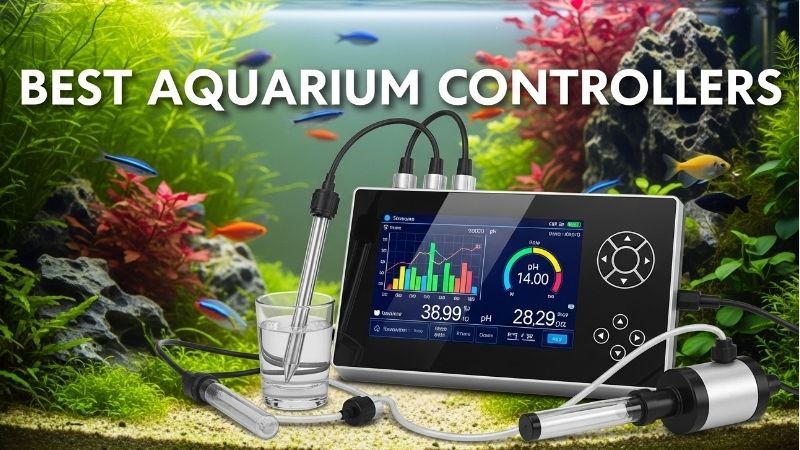
Count the Bundle, Not the Head Unit
GHL lists the Mini WiFi controller-only at 209.90 USD and the Mini WiFi-Set at 409.90 USD, and the difference is hardware: the set adds temperature, pH, fluid-level monitoring and a four-socket Powerbar. Both prices were current in September 2026, and both describe the same controller family.
Compare completed systems or the comparison means nothing. Neptune lists the A3 Apex bundle at 791.99 USD with temperature, pH, leak and optical inputs plus the EB832 energy bar, so a head-only price from another brand is not a competitor to that figure until you add equivalent parts.
Cost Per Monitored Parameter
Divide price by the parameters a kit actually monitors out of the box. HYDROS Start covers temperature with four switched outlets at 346.49 USD, while the GHL Mini WiFi-Set covers temperature, pH and fluid level at 409.90 USD, so roughly 63 USD buys two additional monitored inputs here.
That GHL set at 409.90 USD sits about 48.2 percent below the 791.99 USD Apex A3 bundle, using the Apex price as the denominator, as of September 2026. The Apex bundle adds leak and optical inputs plus the EB832, so the gap reflects scope rather than one product being overpriced at either end.
Switched Outlets and Amp Headroom
Outlets you do not have to buy separately are real value. HYDROS Start and HYDROS Launch each publish four AC outlets rated 8A apiece with a 14A ceiling for the unit, while the Apex bundle includes the EB832 energy bar, which brings eight AC outlets into the package price rather than a later purchase.
Read device counts carefully, because HYDROS lists Launch as supporting up to eight WiFi devices, and wireless devices are not switched AC outlets. A kit with fewer outlets needs a second power bar later, and that purchase belongs in your value math now, not in a vague upgrade plan.
Consumables and Expansion After Checkout
Ongoing spend separates a cheap kit from a cheap year. Calibration solutions, replacement pH probes and expansion modules all recur, and Neptune sells a calibration kit with pH 7, pH 10 and salinity solutions at 13.99 USD, so budget a full twelve months rather than one invoice when ranking these kits.
Timing helps on the expensive tiers, since controllers are among the items that see deeper cuts during the mid-year and late-November Amazon sale events rather than at random. Check which hardware generation a discounted listing ships, because brands refresh boards and firmware regularly.
Top Picks
Four complete kits, ordered by what they include rather than by sticker price alone. Each entry lists manufacturer-published contents and September 2026 pricing, the buyer it suits, and the drawback that shows up after the first month, because no bundle in this range covers everything.
| Product | Best For | Key Spec | Watch Out For |
|---|---|---|---|
| GHL Mini WiFi-Set | Inputs per dollar | Temp, pH, fluids, Powerbar | No leak input |
| HYDROS Start | Entry value | Temp sensor, 4 outlets, 14A | Temperature-centric |
| HYDROS Launch | Mid-tier expansion | pH, temp, 4 AC, 8 WiFi devices | Devices are not outlets |
| Neptune A3 Apex | Full platforms | Temp, pH, leak, optical, EB832 | Highest entry |
GHL Mini WiFi-Set, Best Overall Value
At 409.90 USD, the Mini WiFi-Set ships with temperature, pH and fluid-level monitoring plus a four-socket Powerbar, which is unusual density for the price as of September 2026. It suits an owner who wants two or three parameters watched without assembling a system from separate part numbers.
The drawback is scope at the edges: leak and optical inputs are not part of this set, so flood protection needs planning elsewhere. GHL packaging also rewards attention, since the controller-only version at 209.90 USD carries a similar name, a similar listing photo and a very different box.
HYDROS Start, Best Entry Value
HYDROS Start lands at 346.49 USD with a temperature sensor and four switched AC outlets rated 8A each, sharing a 14A ceiling for the unit. For a tank where temperature is the real risk and everything else is manual, it removes the most common failure without a modular shopping list.
Its weakness is breadth rather than build: one core parameter means pH, salinity or leak detection arrive as separate spend later. That 14A total also fills quickly once a heater, a return pump and any cooling gear share the same unit during a warm spell, which is when cooling gear joins.
HYDROS Launch, Best Mid-Tier Pick
Launch is listed at 635.24 USD with pH and temperature monitoring, four AC outlets and support for up to eight WiFi devices, which suits owners running wireless pumps and lights already. The step up from Start buys a second monitored parameter and a much larger wireless device ecosystem to grow into.
Weigh that step carefully, because roughly 289 USD separates it from Start at September 2026 pricing, and wireless device support does not add AC outlets. If your gear is mostly corded, the money may do more sitting in a second power bar, a spare probe and a year of calibration fluid.
Neptune A3 Apex, Best for Full Platforms
The A3 bundle at 791.99 USD includes temperature, pH, leak and optical inputs with the EB832 energy bar and its eight outlets, which explains the gap to the GHL set. It fits a reef that will keep growing toward dosing, automatic top-off, leak sensors and multi-pump control over several seasons.
The cost ladder continues after the box, since extra modules, probes and energy bars are priced individually, so the working system exceeds the bundle figure. Confirm the hardware generation of any discounted listing, because platform refreshes make older stock look like a bargain.
Frequently Asked Questions
Four questions decide most purchases at this price level: whether cheapest equals best, what a sensible first budget looks like, whether extra money improves readings, and which costs arrive after checkout. Direct answers first, then the cases that change the recommendation for a specific tank.
Is the Cheapest Controller Always the Best Value?
No, because capability sets the denominator. A single-outlet thermostat under 60 USD switches one heater and monitors one parameter, while the 346.49 USD HYDROS Start adds four switched outlets and app access, so the cheaper device is only better value if one outlet is genuinely enough.
The exception runs the other way for small tanks and quarantine systems, where a second controller is overkill and a thermostat is the right tool. Judge the purchase against the equipment you actually plan to switch this year, not against a system you might build two or three seasons later.
How Much Should a First Complete Kit Cost?
Complete entry kits clustered between roughly 346 and 410 USD in September 2026, which is where bundled probes and a power bar stop being optional extras. Below that range you are usually buying a controller head, a thermostat, or a set missing the hardware that makes it useful on day one.
Budget is relative to the system underneath it. A controller protecting a large reef with expensive livestock earns a larger share of the build, while a freshwater community tank may sensibly cap the spend and put the difference toward filtration, a better heater or a battery air pump.
Does Paying More Buy a Better Reading?
Mostly it buys more inputs, more outlets and a deeper ecosystem rather than a categorically better number, and published accuracy figures differ in scale and test conditions between brands. Compare stated specifications only when both manufacturers publish the same measurement under matched conditions.
What higher tiers reliably add is redundancy: leak and optical inputs, more switched channels and expansion paths that do not require replacing the head unit. That matters more on a system where a single failure costs hundreds of dollars in livestock within a few unattended hours, not days.
What Costs Show Up After the Purchase?
Calibration solutions, replacement probes, additional energy bars and expansion modules are the usual four, and Neptune’s calibration kit at 13.99 USD shows how modest the recurring items look individually. Added over a year alongside a probe replacement, they still reshape the value ranking.
Plan the twelve-month figure before choosing, including whether a brand allows third-party probes or requires proprietary parts. An ecosystem that accepts standard connectors usually keeps long-term costs flatter than one where every replacement carries a single proprietary part number and a fixed price.
Final Thoughts
Judge kits on parameters monitored, outlets included and the consumables they demand each year. The best aquarium controller for the money is usually the densest complete bundle you will actually use, which points to the GHL set for inputs and to HYDROS Start for a first monitored system.
Related Reviews & Guides

Best pH and ORP Monitor for Monitoring Temperature: Top Pick

Aquarium Driftwood Pre Soaked