Last Updated: October 4, 2026
Quick answer: Our top pick in 2026 is the 1 gallon — our #1 rated choice. See the full ranked comparison, alternatives and buying advice below.
The Short Answer
For most indoor freshwater aquariums, plan on 3 to 5 watts of heater power per gallon. That is the dependable starting point when the tank sits in a normally heated room and needs to run about 5°F to 10°F warmer than the surrounding air.
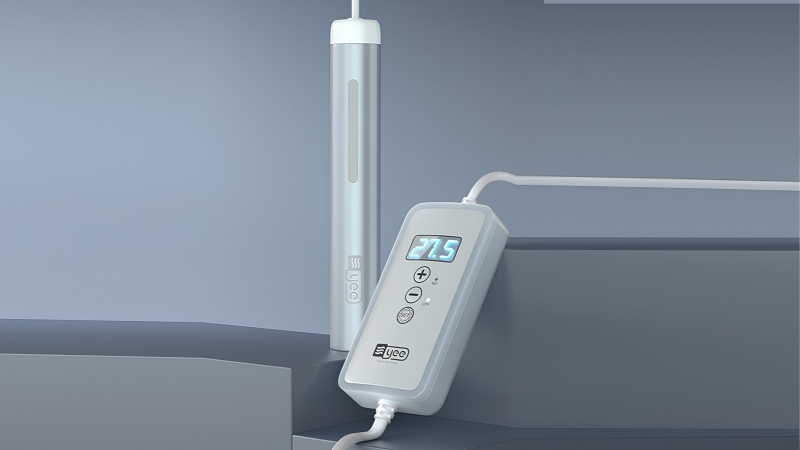
Use the lower end of the range for a warm, stable room and the higher end for a cool room, an open-top aquarium, a drafty location, or a tank that needs a larger temperature increase. For example, a 10-gallon aquarium usually needs a 25- to 50-watt heater, while a 20-gallon tank commonly needs 75 to 100 watts.
As an Amazon Associate we earn from qualifying purchases at no extra cost to you.


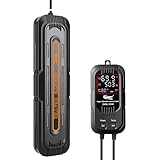

- 1 gallon: 5 to 10 watts
- 2 to 5 gallons: 10 to 25 watts
- 5 to 10 gallons: 25 to 50 watts
- 10 to 20 gallons: 50 to 100 watts
- 20 to 40 gallons: 100 to 200 watts
- 40 to 75 gallons: 200 to 300 watts
- 75 to 125 gallons: 300 to 500 watts
- Over 125 gallons: Use two heaters totaling about 3 to 5 watts per gallon
A thermostat-controlled heater does not run at full power continuously. Its wattage describes its heating capacity: a larger wattage heater can bring water up to temperature more effectively, then cycles on and off to maintain the setting. Still, avoid oversizing a tiny aquarium dramatically. A properly sized heater with a reliable thermostat is easier to manage and safer if equipment malfunctions.
Standard Sizes
Tank capacity is important, but physical dimensions matter when choosing a heater. You need enough vertical or horizontal space to mount it according to the manufacturer’s minimum-water-line instructions, while keeping it near water circulation. The table below lists common aquarium dimensions and practical heater ranges for typical indoor conditions.
| Tank Capacity | Common Tank Dimensions (L × W × H) | Recommended Heater Wattage | Best Starting Choice |
|---|---|---|---|
| 1 gallon | 8 × 6 × 6 in. / 20.3 × 15.2 × 15.2 cm | 5–10W | 10W mini heater |
| 2.5 gallons | 12 × 6 × 8 in. / 30.5 × 15.2 × 20.3 cm | 10–15W | 10W or 15W heater |
| 5.5 gallons | 16 × 8 × 10 in. / 40.6 × 20.3 × 25.4 cm | 15–25W | 25W heater |
| 10 gallons | 20 × 10 × 12 in. / 50.8 × 25.4 × 30.5 cm | 25–50W | 50W heater |
| 20 gallons long | 30 × 12 × 12 in. / 76.2 × 30.5 × 30.5 cm | 75–100W | 100W heater |
| 20 gallons high | 24 × 12 × 16 in. / 61 × 30.5 × 40.6 cm | 75–100W | 100W heater |
| 29 gallons | 30 × 12 × 18 in. / 76.2 × 30.5 × 45.7 cm | 100–150W | 100W or 150W heater |
| 40 gallons breeder | 36 × 18 × 16 in. / 91.4 × 45.7 × 40.6 cm | 150–200W | 200W heater |
| 55 gallons | 48 × 13 × 21 in. / 121.9 × 33 × 53.3 cm | 200–300W | Two 150W heaters or one 300W heater |
| 75 gallons | 48 × 18 × 21 in. / 121.9 × 45.7 × 53.3 cm | 250–375W | Two 200W heaters |
| 125 gallons | 72 × 18 × 21 in. / 182.9 × 45.7 × 53.3 cm | 400–600W | Two 300W heaters |
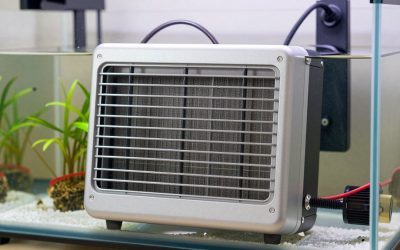
For nano tanks, a small fixed-temperature heater can be suitable when the room remains steady. A 10-watt USB mini heater, for example, is intended for tanks up to 1 gallon and may cost around $15. For 2- to 10-gallon aquariums, compact 25- and 50-watt adjustable heaters are widely available in the roughly $14 to $16 range. Larger adjustable 500-watt units with an external controller may start around $30, but large aquariums are often better served by two separate heaters.
How to Measure Your Space
- Confirm the aquarium’s actual water volume. A tank labeled 20 gallons may hold less after substrate, rocks, wood, and a safe gap below the rim are added. For heater selection, use the listed tank size unless the aquarium is heavily hardscaped or substantially underfilled.
- Measure the inside height and length. Use a tape measure inside the glass, from the substrate level to the normal water line. Compare this with the heater’s listed length, especially in shallow tanks such as 20-gallon longs and 40-gallon breeders.
- Choose the mounting direction. Many fully submersible heaters can be mounted horizontally, vertically, or at an angle. Horizontal placement low on the back wall is often useful in shallow tanks because it keeps the heater fully submerged and out of sight.
- Leave clearance around the heater. Keep the heating tube away from gravel, decorations, the filter body, and acrylic surfaces. Follow the heater maker’s clearance and water-line requirements rather than pressing the unit behind hardscape.
- Find a high-flow location. Place the heater near the filter outflow, intake, circulation pump, or air stone. Moving water distributes heat evenly and reduces warm and cool zones within the aquarium.
- Measure room temperature. Check the room during its coldest normal period, not only during the afternoon. If the room drops to 62°F and the aquarium needs to stay at 78°F, select toward the high end of the watts-per-gallon range.
- Account for the lid. A fitted glass or plastic lid reduces heat loss and evaporation. An open-top aquarium, especially one beneath a ceiling fan or near an exterior door, may need more wattage.
By Room or Use Case
Warm, Climate-Controlled Living Room
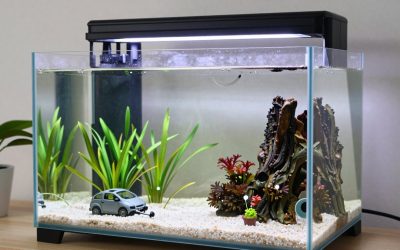
In a room that stays around 70°F to 74°F, use approximately 3 watts per gallon for a tropical tank kept near 76°F to 78°F. A 10-gallon aquarium can often do well with a 25-watt heater, although a 50-watt adjustable model provides more reserve capacity. Keep the tank away from direct sun, fireplaces, HVAC registers, and exterior doors; these locations create temperature swings that a heater cannot solve neatly.
Cool Basement, Bedroom, or Drafty Apartment
Choose 5 watts per gallon when the room is regularly below 68°F or has noticeable overnight dips. A 20-gallon tank may need a 100-watt heater instead of a 75-watt model. For a 55-gallon aquarium in a cool basement, two 150-watt heaters are generally a more resilient choice than relying on one 300-watt unit. Put the heaters at opposite ends of the tank or position one near the filter flow and one farther away for more even coverage.
Betta, Shrimp, and Nano Aquariums
Small water volumes change temperature quickly, so accuracy is often more important than raw wattage. For a 2.5- to 5.5-gallon betta tank, use a 10- to 25-watt heater sized for the aquarium and verify the water temperature with a separate thermometer. A 25-watt adjustable heater is a common choice for a 5-gallon tank. Avoid placing a large 50-watt or 100-watt heater in a very small aquarium unless its manufacturer specifically rates it for that volume.
Large Community, Cichlid, and Marine Tanks
For tanks above 55 gallons, use two heaters rather than one whenever practical. Splitting the required wattage improves heat distribution and reduces the risk of a complete temperature loss if one unit fails. A 75-gallon aquarium may use two 200-watt heaters, while a 125-gallon tank may use two 300-watt heaters. Saltwater systems with sumps should be sized based on the combined water volume of the display, sump, and connected equipment.
Common Sizing Mistakes
- Buying by gallons alone: A 20-gallon long and a 20-gallon high hold similar water volume, but their layout changes where the heater can fit and how heat circulates.
- Ignoring the room’s lowest temperature: Heater ratings assume a limited difference between room and water temperature. A tank in a 60°F room needs more capacity than the same tank in a 72°F room.
- Using one oversized heater in a large tank: Two appropriately sized heaters offer better redundancy and can prevent one end of a long aquarium from running cooler.
- Hiding the heater where water does not move: A heater tucked behind dense plants or décor can create uneven temperatures. Place it near flow, not merely where it is least visible.
- Relying on the built-in dial alone: Use an independent aquarium thermometer. Digital or glass thermometers let you confirm that the actual water temperature matches the setting.
- Plugging in a heater before it is submerged: Most submersible models must be installed underwater and allowed to acclimate before powering on. Turn off and cool the heater before water changes expose it to air.
FAQ
Is 5 watts per gallon always necessary?
No. Five watts per gallon is a useful upper-end rule for cool rooms or larger temperature increases. In a warm, stable home, 3 watts per gallon may be enough. Start with the aquarium’s desired temperature, the room’s coldest typical temperature, and the heater manufacturer’s stated tank-size rating.
What watt heater should I use for a 10-gallon aquarium?
A 25- to 50-watt heater is appropriate for most 10-gallon tanks. Choose 25 watts in a consistently warm room and 50 watts when the room is cooler, the tank is open-top, or you need to maintain tropical temperatures through winter.
Can a heater be too powerful for an aquarium?
Yes. A heater with much more power than a small aquarium needs can raise the temperature quickly if its thermostat sticks or is inaccurate. Select a heater rated close to your tank size, use a separate thermometer, and consider a temperature controller for added oversight on sensitive setups.
Should I use one heater or two?
One heater is usually fine for nano and small aquariums. For tanks of 55 gallons or more, two heaters are often the better choice. Divide the wattage between them, place them in separate high-flow areas, and set both to the same target temperature. This approach gives the aquarium a backup if one heater stops working.
Ready to decide? Our #1 pick for 2026 is the 1 gallon.
Live price & availability on Amazon.
Related Reviews & Guides


Aquarium Filter Buying Guide Media Capacity in 2026: What Actually Matters
What Size Led Light for Aquarium? Size Guide With Measurements (2026)