Last Updated: September 27, 2026

Inkbird ITC308S Temperature Controller for Aquarium with Submersible Probe, Heating Cooling Outlets Thermostat for Heater and Cooling Fans
Included for 'Common Mistakes When Buying an Aquarium Controller: Best' as a relevant option in this category; details come from the product listing.
View on Amazon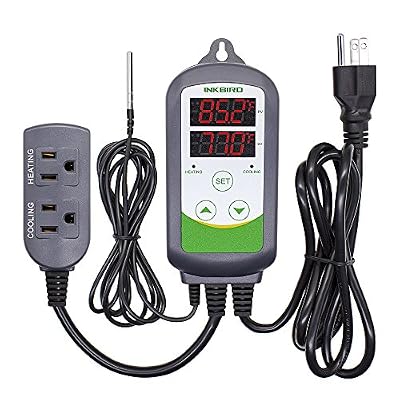
Inkbird ITC-308 Digital Temperature Controller Thermostat
Included for 'Common Mistakes When Buying an Aquarium Controller: Best' as a relevant option in this category; details come from the product listing.
View on Amazon
Inkbird ITC-308S Aquarium Heating and Cooling Dual Stage Temperature Controller Freshwater Saltwater Aquarium Tropical Fish Ornamental Shrimp
Included for 'Common Mistakes When Buying an Aquarium Controller: Best' as a relevant option in this category; details come from the product listing.
View on Amazon
Neptune Systems A3 Apex Jr. Aquarium Controller - Temperature, pH, Leak Detection & Level Sensor Monitoring System for Freshwater and Saltwater Aquariums
Included for 'Common Mistakes When Buying an Aquarium Controller: Best' because the listing specifies Temperature, details this guide uses to compare options.
View on AmazonFour errors account for most regret here: multiplying outlet amps into a total that does not exist, assuming power bars share ratings across regions, comparing a head unit against a full kit, and ignoring DC accessory budget. The common mistakes when buying an aquarium controller are all arithmetic.
As an Amazon Associate we earn from qualifying purchases.
By David Nguyen
How Aquarium Controller Buying Mistakes Happen
Each mistake starts with a published number read out of context. Per-outlet ratings get multiplied, regional model numbers get treated as one product, package scope gets ignored in a price comparison, and DC supply limits stay invisible until an accessory refuses to run reliably.
Multiplying Outlet Amps Into a Total That Is Not There
HYDROS publishes Launch at 8A per outlet across four outlets with a 14A ceiling for the whole unit. Per-outlet figures describe what one socket tolerates, while the unit total describes what the internal wiring and relay board can carry together, and those are two separate limits.
The watch-out threshold is any plan whose running total approaches the unit figure rather than the socket figure. A 300W heater at 120V draws roughly 2.5A and a return pump adds more, so budget against 14A on Launch and treat 32A as a number that exists only in multiplication, not in the wiring.
Treating Regional Power Bars as One Product
GHL lists the 6E-PAB in a USA and Canada version rated 15A per socket with a 15A total, and regional variants of the same family carry their own figures. A specification read from another market’s listing can differ from the unit that actually arrives at your door in another market.
The threshold to watch is any spec sheet you found without checking the regional suffix in the model name. Match the part number to your mains voltage and market before planning loads, because a bar sized for one grid standard does not simply convert to another grid standard with a simple adapter.
Comparing a Controller Head Against a Complete Kit
GHL prices the Mini controller head at 209.90 USD and the corresponding set at 409.90 USD, and the gap is hardware rather than margin. A price comparison between a head from one brand and a bundle from another measures packaging scope, not value, and usually flatters the wrong product.
The practical threshold is any difference above roughly 100 USD between similar-sounding listings, which almost always signals different box contents. Write down the probes, outlets and cables each option includes, then compare the completed systems you would actually own after checkout.
Ignoring the DC Supply Behind the Outlets
Neptune’s EB832 publishes eight AC outlets alongside a 100W DC supply, and those two numbers serve different equipment. Sensors, modules and low-voltage accessories draw from the DC budget, so a build can have spare AC sockets while running short of the supply those accessories need.
Watch the point where accessory count grows faster than outlet count, which is usually when dosing, top-off and leak detection arrive together. Add up published accessory draw before ordering, since discovering the limit afterwards means buying another supply rather than reorganising cables.
What It Looks Like in Practice
These four situations show the same arithmetic failing in different rooms: a summer load that trips a bar, an import with the wrong rating, a budget build that doubles, and an accessory chain that runs out of low-voltage headroom before it ever runs out of AC sockets to plug into.
| Factor | Normal Range | Watch-out Threshold | What to Do |
|---|---|---|---|
| Unit amp ceiling | Under the published total | Load near 14A on Launch | Split across two bars |
| Regional rating | Suffix matches your market | Spec from another region | Confirm the part number |
| Package scope | Like-for-like comparison | Head 209.90 versus set 409.90 | List box contents |
| DC supply | Accessories inside the budget | Modules on a 100W supply | Total accessory draw |
A Reef Trips Its Power Bar During a Heat Spell
The setup ran fine through spring with a heater, a return pump and lights on four outlets. In July a fan and a small chiller joined the same unit, and the combined running current moved toward the published 14A ceiling instead of the comfortable 8A figure printed beside each socket.
The fix is division rather than replacement: cooling equipment moves to a separate circuit and the controller keeps heater, lights and pump. Summer is when this surfaces, because cooling gear is the load most owners add after the original electrical plan was drawn in cooler weather.
An Imported Bar Arrives With the Wrong Rating
A buyer compares GHL power bar specifications found online, orders from a marketplace listing, and receives a variant whose ratings differ from the USA and Canada model published at 15A per socket and 15A total. Nothing is faulty; the listing simply described a different regional product.
Verification takes a minute and saves a return: match the full model designation, the market suffix and the mains voltage before ordering. Marketplace listings frequently merge regional variants under one product page, which is how a specification screenshot ends up describing something else entirely.
A Budget Build Doubles After Checkout
Someone budgets 209.90 USD for a GHL Mini head, then discovers that probes, switched outlets and cabling are separate purchases, arriving closer to the 409.90 USD set price. Nothing was misrepresented, but the comparison that drove the decision was never between equivalent systems.
Build the shopping list before choosing the brand. Writing down every part number, including a spare probe and calibration fluid, converts a head price into a system price, and the ranking between brands often changes once those extra lines are added to both columns of the comparison.
Accessories Outrun the Low-Voltage Supply
An Apex owner with the EB832 adds a dosing container, leak sensors and an optical switch, then finds that free AC outlets do not guarantee capacity on the 100W DC side. The AC count stayed reassuring while the supply feeding low-voltage accessories quietly approached its published limit.
Count accessories against the supply rather than the sockets when planning expansion. Ordering an additional supply at the same time as the modules costs one shipping charge instead of two, and it avoids a half-configured system waiting for missing parts during a water change weekend.
Frequently Asked Questions
Four questions follow naturally from these errors: whether outlet amps ever add up, whether regional differences matter for a home tank, how to compare prices fairly, and how much electrical headroom to leave. Direct answers first, then the cases where that guidance shifts on a bigger system.
Can You Ever Add Up Per-Outlet Amp Ratings?
No, treat the unit total as the only planning figure. HYDROS publishes 8A per outlet and 14A total on Launch precisely because the shared internal path carries less than four sockets suggest, and the same pattern appears across brands with their own published totals and socket ratings.
The socket figure still matters for a single heavy device, since one appliance drawing above the per-outlet rating is a problem even on a lightly loaded unit. Read both numbers as a pair, with the total capping the system and the socket rating capping any individual appliance on the bar.
Do Regional Model Differences Matter at Home?
They do, because ratings and plug standards are specified per market. GHL’s 6E-PAB for the USA and Canada publishes 15A per socket and 15A total, and a listing sourced from a different region may describe different figures even when the product photograph on the listing looks identical.
The exception is accessories with no mains connection, where regional variants are less consequential. Anything switching household power deserves the full check, including whether the unit carries UL or ETL listing for your market, and whether it belongs behind a GFCI outlet in a damp room.
How Do You Compare Prices Without Being Misled?
Price the finished system, not the box on the shelf. List every component you will own after setup, including probes, outlets, cabling and calibration fluid, then apply that list to each candidate so a 209.90 USD head and a 409.90 USD set are never compared directly as though they matched.
Sale periods complicate this further, since discounts often apply to heads and bundles unevenly. Recording your system total before the sale window gives you a reference figure, which is more useful than a percentage that may be measured against an inflated list price you never saw.
How Much Electrical Headroom Should You Leave?
Plan to stay clearly below the published unit total rather than filling it, because motors and compressors draw a startup surge above their running figures. On a unit rated 14A overall, a running total in the single digits leaves room for that surge and for equipment added later.
Seasonal load is the usual reason headroom disappears. A build that sits comfortably in March gains a fan and cooling equipment by July, so leave electrical space for the warmest month of the year rather than the mild month in which you happen to be configuring the system for the first time.
Final Thoughts
Read every published figure with its condition attached and the arithmetic stops betraying you. The common mistakes when buying an aquarium controller come down to totals that were never additive, regional specs, unequal packages and a DC supply that nobody counted before ordering.

Best Aquarium Controller With Leak Detection: Expert Pick

Summer Heat: How to Keep Your Aquarium Cool (Chillers, Fans and Tips)