Last Updated: October 4, 2026
A heater left running as the water level drops during a change is a classic way to crack a tube or worse. The best aquarium heater with leaving water protection adds a backup that cuts power when the unit is exposed to air or loses flow, but that feature is insurance, not permission to work on a live heater.
As an Amazon Associate we earn from qualifying purchases.
By David Nguyen
Quick answer: For most people in 2026, the best aquarium heater with leaving water protection is the Finnex HPC-300 — our #1 rated choice. See the full ranked comparison, alternatives and buying advice below.
How to Choose Out-of-Water Heater Protection
Leaving-water protection means dry-run or out-of-water shutoff: the heater stops when it senses air instead of water, or, on an inline unit, when flow stops. Sort the choice by exactly what triggers the cutoff, why it is a backup rather than a shortcut, the wattage you need and whether the design is submersible or inline.
Understand What Triggers the Shutoff
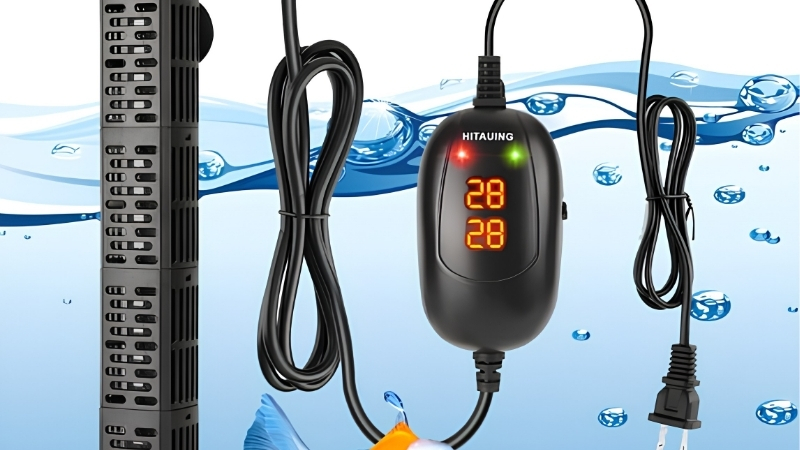
The trigger differs by model, which matters. The Finnex HPC-300 cuts power when its remote temperature sensor is exposed to air, while the hygger HG060 stops and shows an L1 code when the heater itself is out of water and restarts after immersion.
Because the HPC follows its remote sensor, do not assume any part of the heater leaving the water instantly triggers a shutdown. Know what each unit actually senses, so you place the sensor correctly and understand when protection will and will not fire. Mount the sensor near the normal low-water line so a real drop reaches it before the element runs dry.
Do Not Treat Auto Shutoff as a Maintenance Shortcut
This protection is a backup, not a reason to leave the heater powered during a water change. The HG060 manual still says to unplug and wait about 15 minutes before removing the heater or changing water, since a hot element can crack when suddenly exposed or re-submerged.
Rely on the shutoff for accidents, not routine maintenance. Unplugging first protects both the heater and you, and it avoids testing the cutoff under conditions the manufacturer already tells you to avoid. Treat every safety feature as a backup for accidents, never as a reason to skip unplugging first.
Match Wattage and Tank Volume
Protection does not change sizing. The HG060 is 200 watts for about 20-52 gallons, the EHEIM thermocontrol+ e 250 is 250 watts rated for 400-600 liters, roughly 105.7-158.5 US gallons, and the Finnex HPC-300 is 300 watts for about 81-100 gallons.
Match wattage and range to your tank and room before weighing the safety feature. A well-protected heater that is undersized still fails to hold temperature, so size it correctly first, then confirm the cutoff you want. A protected heater that cannot hold temperature in a cold room is still the wrong heater for the tank.
Separate Submersible and Inline Protection
Submersible and inline protection are not interchangeable. A rod heater like the HPC or HG060 protects against air exposure, while the Aquael Flow is an inline unit that shuts off on no-flow or dry operation using three sensors.
These are different failure modes, so an inline no-flow cutoff is not comparable one-to-one with a rod heater’s air-exposure sensor. Choose the architecture that matches how your heater is plumbed, not the label alone. A submersible rod suits an in-tank setup, while an inline unit fits a canister or sump return line.
Top Picks
These picks lead with automatic out-of-water protection, then sort by architecture and features. The Finnex HPC-300 earns the overall nod for a documented sensor-based cutoff, while the others fit explicit air-exposure, premium smart and inline needs.
| Product | Best For | Key Spec | Watch Out For |
|---|---|---|---|
| Finnex HPC-300 | Best Overall | sensor-based cutoff; 300 W | Trigger follows the remote sensor |
| hygger HG060-200W | Best Explicit Air-Exposure Protection | L1 code + automatic stop | Observed retailer out of stock |
| EHEIM thermocontrol+ e 250 | Best Premium Smart Option | dry-run; 250 W; Wi-Fi | Around $85 |
| Aquael Flow Heater 300W | Best Inline System | dry/no-flow; 3 sensors | Backordered; needs external flow |
Finnex HPC-300
The HPC-300 is the overall pick, a 300-watt heater that cuts power when its remote temperature sensor is exposed to air, rated for about 81-100 gallons across roughly 68-92 Fahrenheit at 2.70 amps, priced around $35 as of September 2026.
The key nuance is that the trigger follows the remote sensor, not the heater body, so place the sensor where it will detect a dropping level. It is a strong, self-contained choice where sensor-based out-of-water protection is the priority. At about $35 it is also the most affordable of these protected heaters, which helps its value case.
hygger HG060-200W
The HG060 gives explicit air-exposure protection, stopping and showing an L1 code when the heater is out of water and restarting after immersion, a 200-watt unit for about 20-52 gallons, priced around $40 as of September 2026.
Availability is the catch, since this listing was observed out of stock. Even with the cutoff, its manual still says to unplug and wait about 15 minutes before maintenance, so treat the feature as a backup rather than a shortcut. Confirm stock before ordering, since another protected heater can fill the role if it is unavailable.
EHEIM thermocontrol+ e 250
The EHEIM thermocontrol+ e 250 is the premium smart pick, a 250-watt heater with Thermo Safety Control dry-run protection and Wi-Fi, set across 18-32 degrees Celsius and rated 400-600 liters, priced around $85 as of September 2026.
That 400-600 liter rating is roughly 105.7-158.5 US gallons by conversion. The price is the highest among the submersible options, so it suits buyers who want app control and documented dry-run protection together. The Wi-Fi link also lets you watch temperature remotely, useful on a large tank you cannot check often.
Aquael Flow Heater 300W
The Aquael Flow 300W is the inline choice, a plumbed heater with automatic dry and no-flow shutoff using three sensors, rated for about 26.4-158.5 gallons, priced around $125 as of September 2026. It heats water moving through a line rather than sitting in the tank.
Two cautions: it was backordered at the source and needs external flow to work, and its no-flow protection is a different mechanism from a rod heater’s air-exposure sensor. Confirm the 300-watt variant rather than the 500-watt, since the two are not interchangeable. An inline heater also depends on your pump running, so pair it only with reliable, continuous flow.
Frequently Asked Questions
Buyers of leaving-water protection usually ask when each model stops, what the trigger senses and whether the mechanisms are equivalent. The answers stay inside the documented behavior.
When Does HG060 Stop?
The HG060 stops on air exposure, when the heater is out of the water, and shows an L1 code, then restarts once re-submerged. That is its documented behavior.
Even so, the manual says to unplug for maintenance rather than lean on the cutoff. Use the shutoff for accidents, not as a way to work on a powered heater. Waiting the stated fifteen minutes also lets the element cool enough to avoid thermal shock on re-immersion.
Does HPC Detect Tube or Sensor?
The documented trigger is remote-sensor exposure, so the HPC-300 responds when its sensor reaches air, not necessarily the tube itself. Sensor placement therefore matters.
Position the sensor where a falling level will reach it, and do not assume the whole heater must be exposed for the cutoff to fire. Know the trigger before relying on it. A sensor mounted too high will not catch a slow leak until much of the water is already gone.
Does EHEIM Have Dry-Run Protection?
Yes; the EHEIM thermocontrol+ e 250 includes Thermo Safety Control, a dry-run protection feature, alongside its Wi-Fi control. It is built into this model.
As with the others, treat it as a backup, not a maintenance pass. Its 250-watt rating and 400-600 liter range still need to match your tank.
Is Aquael Flow the Same?
No; the Aquael Flow is an inline heater whose no-flow and dry-work mechanism differs from a submersible rod heater’s air-exposure sensor. The failure modes are not the same.
Because the triggers differ, do not treat the two as equivalent protection. Choose based on whether your heater sits in the tank or in a flow line.
Final Thoughts
The best aquarium heater with leaving water protection is chosen by the failure mode you actually need to catch: a dropping water level, a remote sensor reaching air, or lost flow in an inline unit. Match the trigger and wattage to your setup, keep the different mechanisms straight rather than treating them as equivalent, and remember the feature is a backup, so still unplug the heater before every water change.
As an Amazon Associate we earn from qualifying purchases at no extra cost to you. Prices and availability are accurate as of the date shown and are subject to change.
Ready to decide? Our #1 pick for 2026 is the Finnex HPC-300.
Live price & availability on Amazon.
Related Reviews & Guides

How to Choose the Right Aquarium Heater Size for Your Tank
Best Aquarium Light Controller Multi Channel: Smart Picks