Last Updated: October 4, 2026
- Top Pick: hygger 802 Aquarium Titanium Heater Rod Fish Tank Heating Element Replacement Heater Tube (Controller Excluded) 500W
- Best Value: hygger 802 Aquarium Titanium Heater Rod Fish Tank Heating Element Replacement Heater Tube (Controller Excluded) 200W
- Premium Choice: HiTauing Aquarium Heater, 300W Fish Tank Heater with LED Digital Display & 5 Safety Protection, Submersible Aquarium Heater with 2 Suction Cup and 8.2Ft Cord for 40-75 Gallon Fish Tank.
Choosing between a titanium heater and a glass aquarium heater is less about finding the “strongest” material and more about matching the heater to your aquarium, household, and maintenance habits. Both can keep water at a stable temperature, but they differ in durability, installation, controls, replacement cost, and how much protection they offer against accidental damage.
The real decision is straightforward: do you want a rugged heating element paired with a separate controller, or a simpler all-in-one heater that is ready to install? For many freshwater community tanks, glass remains the practical choice. Titanium becomes more attractive for saltwater aquariums, larger setups, sumps, turtle tanks, and homes where cracked equipment would be a serious concern.
As an Amazon Associate we earn from qualifying purchases at no extra cost to you.


Quick Verdict
Choose a titanium heater if durability, saltwater compatibility, and resistance to accidental impact matter most. Titanium heating tubes are generally harder to break than glass and are often available in higher wattages, making them useful for larger aquariums. The tradeoff is that many titanium rods require a separate temperature controller, which increases the total cost and adds another device to install.
Choose a glass aquarium heater if you want an affordable, compact, ready-to-use solution. Most modern glass heaters include a built-in thermostat, indicator light or digital display, suction cups, and automatic shutoff features. They are easy to replace, but the tube can crack if it is struck, installed dry, or exposed to a sudden temperature change.
Side by Side
| Factor | Titanium Heater | Glass Aquarium Heater |
|---|---|---|
| Comfort of setup | Usually requires a separate controller and probe | Typically plug in, set the temperature, and mount |
| Durability | High resistance to impact and corrosion | Good in normal use, but vulnerable to cracking |
| Typical price range | About $30–$70 for the element; $50–$150 or more with a controller | About $20–$60 for common 50W–300W models |
| Maintenance | Wipe mineral buildup from the element and check the controller | Clean the tube, suction cups, and thermostat housing |
| Space needed | Often 8–14 inches long, plus room for a controller probe | Commonly about 8–16 inches long, depending on wattage |
| Appearance | Industrial-looking metal tube, often without built-in controls | Usually a cleaner black or glass-and-plastic profile |
| Saltwater use | Very well suited when rated for aquarium use | Many models work in saltwater, but inspect seals and specifications |
| Resale and replacement | Long-lasting systems may retain value, but controllers can limit compatibility | Easy to replace, though used heaters have limited appeal for safety reasons |
| Best for | Large, marine, high-risk, or heavily stocked aquariums | Small and medium freshwater tanks, beginners, and budget setups |
Where Titanium Heater Wins
Impact resistance is the primary advantage. A titanium tube is far less likely to shatter if a decoration, rock, net, or animal bumps into it. That matters in aquariums with large cichlids, turtles, plecos, or active invertebrates that regularly disturb equipment. It can also be reassuring in a busy household where aquarium maintenance is performed around children or pets.
Titanium is also a strong choice for saltwater environments. A properly rated titanium aquarium element resists corrosion better than many ordinary metals, although the connections, controller probe, and mounting hardware still require inspection. Titanium does not make a heater maintenance-free: salt creep and mineral deposits should be removed, and electrical connections should be kept dry.
Higher-wattage options are another benefit. A 500W titanium element can be useful for a large aquarium or a cool room, provided the controller, wiring, and aquarium size are appropriate. For example, the hygger 802 replacement rod is listed in both a 200W version priced for under $30 and a 500W version priced for under $40. These are heating elements rather than complete plug-and-play heaters, so the controller is excluded and must be budgeted separately.
That modular design can be beneficial over time. If the heating element eventually fails but the controller remains functional, replacing only the rod may cost less than replacing an entire integrated heater. However, buyers must confirm that the replacement element matches the controller and that the combined system has suitable over-temperature protection.
Where Glass Aquarium Heater Wins
Simplicity is the glass heater’s strongest advantage. A typical submersible glass heater combines the heating element, thermostat, housing, and power cord in one unit. Many also include a temperature display, status light, automatic shutoff, or protection against running dry. That makes installation easier for first-time aquarium owners and reduces the number of components that need to be mounted.
Glass heaters also tend to be less expensive at the point of purchase. A common 50W or 100W model may cost roughly $20–$35, while 200W–300W models often fall around $25–$50. The HiTauing 300W heater with an LED digital display, two suction cups, and an 8.2-foot cord is listed for under $40. Another HiTauing submersible line, available in 50W, 100W, 200W, 300W, and 500W sizes, is listed for under $30. Prices can change, but these examples illustrate the typical affordability of integrated glass-style heaters.
The main caution is physical handling. Never power a glass heater outside the water unless the manufacturer specifically permits it. Unplug it before removing it, allow it to cool in the aquarium for about 15–30 minutes, and avoid placing cold water directly onto a hot tube. Mount it where fish, decorations, and cleaning tools are unlikely to strike it. A heater guard can add another layer of protection.
Cost Over 5 Years
A glass heater usually has the lower initial cost. Assuming one replacement during five years, a small or medium aquarium might spend approximately $40–$120 on two heaters, depending on wattage and features. Add a few dollars for replacement suction cups or a protective guard if needed.
A titanium system requires a broader calculation. The element may cost about $30–$70, while a compatible controller can add approximately $20–$80 for a basic unit or more for advanced monitoring. With one replacement element over five years, a realistic total is about $80–$220. If the controller lasts the full period and only the rod is replaced, the long-term cost can be competitive with repeatedly replacing complete glass heaters.
Electricity is generally similar when wattage and operating time are the same. A 300W heater running continuously would use 7.2 kilowatt-hours per day in a theoretical maximum, though thermostatic cycling means real consumption is usually lower. The tank’s room temperature, lid, insulation, target temperature, and water movement have a greater effect than whether the element is titanium or glass.
Which One for Your Home
Small apartment
A glass heater is usually the better fit for a 5–30 gallon aquarium. It takes up little room, costs less, and avoids adding a separate controller to a limited cabinet or shelf. Choose the correct wattage rather than buying the largest option: common guidance is approximately 3–5 watts per gallon, adjusted for the room’s temperature and the manufacturer’s rating. A 50W heater may suit a small tank, while a 100W heater is more typical for a larger nano or medium aquarium.
Family with kids or pets
Titanium offers extra peace of mind if the aquarium is frequently bumped or if large fish move decorations. The element itself is more resistant to breakage, but the system still needs a secure mount and a protected power connection. For a smaller family aquarium, a glass heater inside a heater guard can also work well and may be easier to replace.
Rental home
Prioritize a simple setup that is easy to inspect and unlikely to create water or electrical problems. A glass heater with automatic shutoff and over-temperature protection is often sufficient for a modest freshwater tank. Use a drip loop on the power cord, keep the outlet above the aquarium’s waterline, and avoid overloading a power strip. Titanium is worthwhile if the tank is large, marine, or difficult to access.
Long-term home
If you expect to keep aquariums for years or plan to upgrade to a larger marine system, titanium can be a smart investment. A separate controller gives you a replaceable heating element and may provide more flexible monitoring. For a stable, uncomplicated freshwater setup, however, a quality glass heater remains the better value and does not need to be upgraded simply because titanium exists.
FAQ
Is titanium safer than glass for an aquarium?
Titanium is safer against physical breakage, but overall safety depends on the thermostat, controller, installation, and electrical protection. A titanium rod without a suitable controller should not be used as a standalone heater. Glass can be safe when fully submerged, properly mounted, and unplugged before handling.
Can a titanium heater be used in freshwater?
Yes. A titanium aquarium heating element can be used in freshwater when the product and controller are rated for aquarium use. The material is not limited to saltwater. Verify the wattage, controller compatibility, and recommended tank volume before installation.
What wattage aquarium heater do I need?
A common starting point is 3–5 watts per gallon, but that is only a guideline. A 50W heater may suit a small tank in a warm room; a 200W or 300W heater may be more appropriate for a medium or large aquarium in a cooler room. Follow the manufacturer’s tank-size chart and avoid using one oversized heater without reliable temperature control.
How often should an aquarium heater be replaced?
There is no universal replacement schedule. Inspect the heater whenever you clean the aquarium and replace it if the tube is cracked, the cord is damaged, the temperature fluctuates, or the thermostat behaves unpredictably. Some owners replace heaters proactively after several years, especially when a failure could harm valuable fish. Keeping a spare correctly sized heater can prevent an emergency.
Ready to decide? Our #1 pick for 2026 is the Comfort of setup.
Live price & availability on Amazon.
Related Reviews & Guides

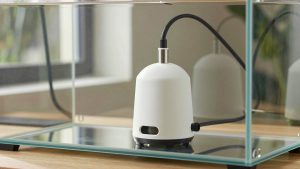
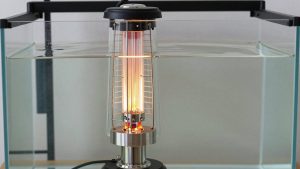
Glass Heater vs Titanium Aquarium Heater: Which Is Right for Your Home (2026)
6 Best Aquarium Posters Backgrounds 2026