Last Updated: September 25, 2026
How many fish in a 10 gallon tank resolves to one shoal, not a community. Eight to ten fish under 1 in (2.5 cm), or one betta, or six to eight pygmy corydoras over sand. The tank holds roughly 8.5-9 gallons (32-34 L) of actual water once furnished, and nitrate measured before the weekly change is what confirms whichever option you pick.
As an Amazon Associate we earn from qualifying purchases.
As an Amazon Associate we earn from qualifying purchases at no extra cost to you. Prices and availability are accurate as of the date shown and are subject to change.

Aqueon Aquarium Starter Kit with Smart Clean Filtration and LED Lighting, Freshwater and Saltwater Fish, Perfect for Tetras, Guppies, Platies, 10-Gallon
Selected for "How Many Fish in a 10 Gallon Tank: Chart and Real Limits": this listing is lighting (Aqueon Aquarium Starter Kit with Smart Clean Filtration and LED Lighti), matching the equipment this article covers.
View on Amazon
Vimvins 10 Gallon Glass Small Fish Tank with Filter Light and Lid, Aquarium Starter Kit
Selected for "How Many Fish in a 10 Gallon Tank: Chart and Real Limits": this listing is filtration (Vimvins 10 Gallon Glass Small Fish Tank with Filter Light and Lid, Aqu), matching the equipment this article covers.
View on Amazon
10 Gallon Aquarium Set Glass Fish Tank, Heater Self Cleaning System Filter with Media Bright Light Cleaning Tool, Leak-Proof Clear Rimless Betta Tropical Freshwater Fish
Selected for "How Many Fish in a 10 Gallon Tank: Chart and Real Limits": this listing is filtration (10 Gallon Aquarium Set Glass Fish Tank, Heater Self Cleaning System Fi), matching the equipment this article covers.
View on Amazon
10 Gallon Glass Fish Tank Open-Back Lid, Aquarium Fish Bowl Cube for Betta Goldfish Snails Shrimp Aquatic Planting, Ultra Clear Rimless Low Iron
Selected for "How Many Fish in a 10 Gallon Tank: Chart and Real Limits": this listing is tanks (10 Gallon Glass Fish Tank Open-Back Lid, Aquarium Fish Bowl Cube for B), matching the equipment this article covers.
View on AmazonBy David Nguyen
Quick answer: Our top pick in 2026 is the Nano shoaling, chili rasbora type — our #1 rated choice. See the full ranked comparison, alternatives and buying advice below.
The 10 Gallon Chart and How to Use It
This is a lookup. The first table gives counts by species for a standard 10 gallon; the second gives the adjustments that decide whether your particular tank can carry them. Both belong here rather than buried further down the page.

The Decision Numbers: Actual Water, Surface Area and Group Size
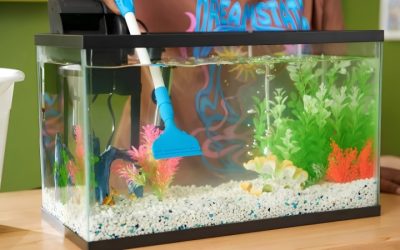
A standard 10 gallon measures 20 x 10 x 12 in (51 x 25 x 30 cm), holds around 8.5-9 gallons (32-34 L) once substrate and hardscape are subtracted, and offers 200 sq in (1290 sq cm) of surface area for gas exchange with the room above it.
| Species type | Adult size | Count in a 10 gallon | Group minimum | Notes |
|---|---|---|---|---|
| Nano shoaling, chili rasbora type | Under 0.8 in (2 cm) | 10-12 | 8 | Soft water, heavily planted |
| Small tetra or rasbora | 1-1.2 in (2.5-3 cm) | 8-10 | 6 | One species only, not two |
| Betta, single | 2.5-3 in (6-7.6 cm) | 1 | Kept alone | Diffused flow, 78-80 °F |
| Pygmy corydoras | 1-1.4 in (2.5-3.5 cm) | 6-8 | 8 preferred | Fine sand, not gravel |
| Endler’s livebearer, males | 1-1.4 in (2.5-3.5 cm) | 5-6 | Males only | Hard water, avoids breeding |
| Shrimp colony | 1-1.5 in (2.5-3.8 cm) | 20 plus | 10-15 to start | Negligible bioload |
| Nerite snails | 0.8-1 in (2-2.5 cm) | 2-3 | Not applicable | Will not breed in fresh water |
| Common mistakes | 2-18 in (5-45 cm) adult | 0 | Not applicable | Goldfish, plecos, most barbs |
Read these as alternatives rather than as a list to combine. A 10 gallon carries one shoal plus invertebrates, and the frequent mistake is treating each row as available headroom stacked on top of the row above it.
The Rule Behind the Counts
Two limits set every figure for how many fish in a 10 gallon tank. Group minimum comes first, because a shoaling species needs six to ten individuals to behave normally, so the tank must carry the whole group or it cannot carry that species at all.
Nitrate sets the second limit. Test immediately before the weekly water change: under 20 ppm means headroom, 20-40 ppm is a working level, and anything above 40 ppm means the tank is overstocked whatever the chart appears to permit.
Reading the Chart, Units and Margin of Error
Counts assume 4-6 times turnover per hour, which for 8.5 gallons (32 L) of actual water means 34-51 GPH (129-193 LPH) loaded. Kit filters rated 100-150 GPH (379-568 LPH) land correctly once loaded flow drops the usual 30-50%.
| Variable | Effect | Adjustment |
|---|---|---|
| Loaded turnover under 3x | Nitrate climbs between changes | Reduce count by 2-3, or upsize the filter |
| Water change under 20% weekly | Nitrate accumulates steadily | Reduce count by 2-3 fish |
| Heavily planted | Nitrate exported continuously | Roughly one extra small fish of headroom |
| Bare tank, no plants | No nitrate export at all | Stay at the lower end of each range |
| Adding a bottom group | Bioload rises, not just floor use | Drop the shoal above by 3-4 fish |
| Room above 80 °F (27 °C) | Lower dissolved oxygen | Add surface agitation, hold the count |
| Fish still juvenile | Bioload rises for 12-24 months | Stock for adult size from the start |
| Nitrate above 40 ppm weekly | Tank already at its ceiling | Stop adding fish regardless of the chart |
Apply the second table after the first. The chart says what a well-equipped 10 gallon can hold; the adjustments say whether yours qualifies this month, and that second question decides what the tank looks like a year from now.
Adjusting for Your Actual Tank
Working out how many fish in a 10 gallon tank you can keep depends on filtration, planting and honest maintenance rather than on volume alone. All three move the answer by two or three fish in either direction, which is a large share of the total.
Adjusting for Species and Bioload
Swapping a 1 in (2.5 cm) species for a 1.5 in (3.8 cm) one does not cost you one fish, it costs three or four. Body mass scales roughly with the cube of length, and waste output follows mass rather than length, so the penalty compounds quickly.
Invertebrates barely register. A shrimp colony of twenty adds a negligible load compared with fish of similar visible mass, which is why a 10 gallon at its fish ceiling can still carry shrimp without nitrate moving noticeably.
Adjusting for Planting and Layout
Heavy planting exports nitrate continuously and buys roughly one extra small fish of headroom, which is useful but far smaller than the effect of the weekly change. Treat it as margin rather than as licence to add another species.
Layout matters for behaviour rather than chemistry. A 20 in (51 cm) tank with dense planting at both ends and open water in the middle suits a shoal far better than a fully planted one, since shoaling fish need a lane to use.
Tank Size, Placement and Fit
Measure the surface against the 20 x 10 in (51 x 25 cm) footprint and confirm it carries 110 lb (50 kg) before ordering, since a filled 10 gallon concentrates real load onto a small area and many desks and shelves flex under it.
Keep the tank out of direct sun and away from vents. A small volume tracks room temperature closely, and a room moving 6 °F (3 °C) across a day moves the tank almost the same amount, which stresses fish more than the stocking level does.
Where This Chart Stops Working
Any answer to how many fish in a 10 gallon tank is an average taken across many tanks. Three situations override the chart entirely, and spotting them early matters considerably more than another row of counts ever would.
When the Numbers Are Right and It Still Fails
Territorial behaviour is invisible to a stocking count. Two male fish of a species that holds territory will conflict in a 20 in (51 cm) tank regardless of how comfortable the bioload figure looks, because the limit there is floor space rather than filtration.
Individual temperament varies as well. A single unusually aggressive fish can make a textbook-correct group unworkable, and the practical answer is a rehoming route agreed before stocking rather than a further reduction in numbers.
Variables the Chart Cannot Hold
Feeding volume changes bioload directly and appears nowhere in a stocking count. Two identically stocked 10 gallon tanks can differ by a factor of two in nitrate production purely through how much food goes into each of them daily.
Order of introduction matters too. Fish added to an established group face residents that a simultaneous stocking would not have created, so adding the whole shoal at once, after cycling, produces a calmer tank than adding two at a time.
When to Stop Counting and Start Watching
Once stocked, nitrate and behaviour outrank the table. A reading under 20 ppm before the weekly change with fish using the whole tank is a working stocking level, whatever the chart happened to say about the theoretical maximum.
Act within days on warning signs rather than weeks. Fish holding position in corners, gasping at the surface, or fins damaged in a repeating pattern all indicate the stocking is failing before the chemistry looks alarming on a test card.
Verifying the Count and Re-Checking It
Any figure for how many fish in a 10 gallon tank is a prediction that needs testing against readings rather than appearances. This section covers what to measure, how often to repeat it, and what drifts quietly across a year at this size.
What to Measure and How Accurate It Is
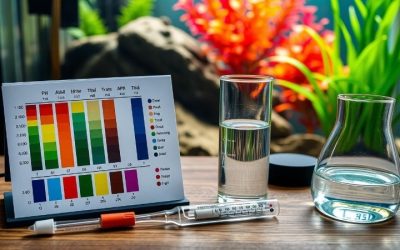
Nitrate before the weekly change is the reading that settles it, because it integrates seven days of feeding and filtration into one figure. Use a liquid kit, since strips read nitrate worst and drift quickly once the container is opened.
Measure loaded turnover once by timing the outflow into a container of known volume. That two-minute exercise usually explains the gap between a stocking plan that should work on paper and a tank whose nitrate keeps climbing anyway.
How Often to Re-Check
Nitrate weekly, turnover annually, and the whole count once a year while fish are still growing. A tank stocked with juveniles reaches its true bioload somewhere between month twelve and month twenty-four rather than on setup day.
Re-check after any change: a new species, a filter swap, a substrate change or a move to another room. Each resets an assumption the previous count depended on, sometimes by more than the margin the chart was working within.
What Drifts Over Time
Filter flow falls as media compacts and the impeller collects grit, so turnover drops below target with no audible change. Feeding portions creep upward almost universally, and both drifts push nitrate in the same direction at the same time.
Evaporation is the drift specific to this size. A 10 gallon in a heated room loses an inch of water in a week, which concentrates everything dissolved and can expose a filter intake, stalling the pump overnight without any warning.
How Many Fish in a 10 Gallon Tank: Questions
These follow from the chart rather than replacing it. Every answer to how many fish in a 10 gallon tank stays with counts, group minimums and readings, since those decide the outcome more reliably than an impression through the glass.
Can I keep two species together?
Usually not well. A 10 gallon carries one shoal, and splitting the count between two species leaves both below their group minimum. The workable exception is one shoal plus invertebrates, which add almost nothing to the bioload.
Are guppies or neon tetras suitable?
Neon tetras reach 1.5 in (3.8 cm) and want 20 gallons (76 L) for a proper shoal. Guppies reach 2 in (5 cm) and breed continuously, so a mixed group outgrows a 10 gallon within months. Males only, at five or six, is the workable version.
How many fish can I add at once?
After a full fishless cycle, the whole shoal at once is better than adding pairs, since it spreads aggression and avoids residents establishing territory first. In an uncycled tank the answer is none, regardless of the count.
Does a bigger filter allow more fish?
Only up to a point. Filtration converts ammonia to nitrate rather than removing it, so the ceiling is set by your water change routine instead. A larger filter buys stability between changes rather than extra capacity for fish.
See More:
Conclusion
How many fish in a 10 gallon tank comes to one shoal: eight to ten small tetras or rasboras, ten to twelve nano species, one betta, or six to eight pygmy corydoras over fine sand, plus shrimp or a couple of nerite snails.
Treat those counts as conditional on 34-51 GPH (129-193 LPH) loaded turnover, a weekly 20-30% change, and nitrate holding under 20 ppm before that change. Where any of those is missing, take two or three fish off the number rather than hoping.
Ready to decide? Our #1 pick for 2026 is the Nano shoaling, chili rasbora type.
Live price & availability on Amazon.
Related Reviews & Guides

Best Dog Treats in 2026: Compared and Ranked

Best Microsoft Chromebook in 2026: Buying Guide