Last Updated: September 25, 2026
Best substrate for planted aquarium choices come down to three measurable things: grain size in millimetres, bed depth in inches, and whether your plants feed through roots or through the water column. Everything else printed on the bag is packaging, and matching those numbers to your tap water matters far more than the brand.
As an Amazon Associate we earn from qualifying purchases.
As an Amazon Associate we earn from qualifying purchases at no extra cost to you. Prices and availability are accurate as of the date shown and are subject to change.

Aqueon Plant and Shrimp Aquarium Substrate, Aqua Soil for Fish Tanks, 5 Pounds
Selected for "Best Substrate for Planted Aquarium: What Actually Matters": this listing is tanks (Aqueon Plant and Shrimp Aquarium Substrate, Aqua Soil for Fish Tanks, ), matching the equipment this article covers.
View on Amazon
Fluval 12696 Volcanic Soil Bio Stratum for Planted Tanks, 4.4 lbs.
Selected for "Best Substrate for Planted Aquarium: What Actually Matters": this listing is tanks (Fluval 12696 Volcanic Soil Bio Stratum for Planted Tanks, 4.4 lbs.), matching the equipment this article covers.
View on Amazon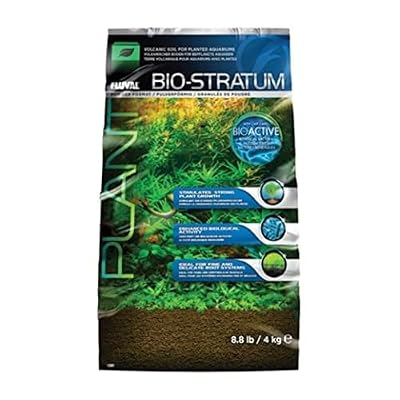
Fluval 12697 Volcanic Soil Bio Stratum for Planted Tanks, 8.8 lbs.
Selected for "Best Substrate for Planted Aquarium: What Actually Matters": this listing is tanks (Fluval 12697 Volcanic Soil Bio Stratum for Planted Tanks, 8.8 lbs.), matching the equipment this article covers.
View on Amazon
Aqua Natural Aquarium Substrate, Diamond Black Fine Gravel, 10lb
Selected for "Best Substrate for Planted Aquarium: What Actually Matters": this listing is substrate and hardscape (Aqua Natural Aquarium Substrate, Diamond Black Fine Gravel, 10lb), matching the equipment this article covers.
View on AmazonBy David Nguyen
Quick answer: For most people in 2026, the best substrate for planted aquarium is the Aquasoil — our #1 rated choice. See the full ranked comparison, alternatives and buying advice below.
Grain Size, Depth and the Numbers That Decide
Picking the best substrate for planted aquarium builds starts with numbers rather than a brand shortlist. Grain size decides whether roots can spread through the bed, depth decides how much root mass the tank supports, and the feeding route decides whether you buy fertiliser once or every single month for years.
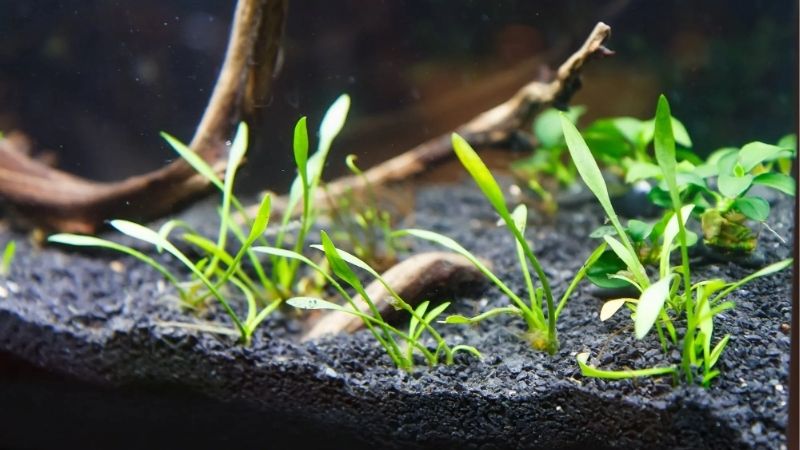
The Deciding Numbers: Grain Size, Depth and Feeding Route
Grain size between 1 mm and 3 mm (0.04-0.12 in) is the working range for rooted plants. Finer than that and the bed compacts into anaerobic pockets; coarser than 4 mm (0.16 in) and fine roots lose their grip, so stem plants float free after every water change or gravel vacuum pass.
Bed depth is the second number. Aim for 2 in (5 cm) at the front and 3-4 in (7.6-10 cm) at the back, which gives crypts and sword plants room for root mass while keeping the front shallow enough to siphon without cutting channels through it every week. Deeper than 4 in (10 cm) in fine sand needs regular stirring.
The third number is the feeding route, and it is the one that decides your annual spend. Anubias, java fern and floating plants draw nutrients from the water column, while swords, crypts and dwarf lilies pull most of theirs through roots, which is what makes an enriched bed worth its higher upfront cost.
Buffering, pH and What the Bag Does to Your Water
Aquasoil is not inert, and that surprises people who bought it purely for plant growth. Its ion exchange pulls carbonate hardness down, typically settling a tank near pH 6.0-6.8 and KH 0-3 dKH (0-54 ppm), and most soils leach ammonia at 1-3 ppm during the first two to four weeks after flooding.
That matters if your tap water is hard. Test GH and KH before buying anything, remembering that 1 dGH is roughly 17.9 ppm CaCO3, and that KH is the buffer holding pH steady while GH is the mineral content your fish and shrimp actually use. A bed that strips KH under a fish load is a poor trade.
Tank Size, Placement and Fit
Substrate volume follows footprint, not gallons, so two tanks of identical capacity can need very different amounts. A 20-gallon (76 L) long tank has a 30 x 12 in (76 x 30 cm) base, so a 2.5 in (6.4 cm) bed needs roughly 900 cubic inches (14.7 L), about 25-30 lb (11-14 kg) of dry gravel.
Add that to water at roughly 10 lb per US gallon (1 kg per litre) and a filled 20-gallon tank clears 230 lb (104 kg), which rules out most flat-pack furniture. Measure the real numbers before you order: cabinet top length against tank length, and floor loading against the weight of a full tank.
Five Substrate Types Matched to Real Tanks
These five cover nearly every planted build under 75 gallons (284 L). Each is tied to a user group rather than a rank, because the best substrate for planted aquarium setups running pressurised CO2 and a carpet is the wrong answer for a shrimp tank sitting on hard municipal tap water.
| Option | Deciding number | Tank it suits | Recurring cost | Who it fits |
|---|---|---|---|---|
| Aquasoil | 1-3 mm grain, drops KH to 0-3 dKH | High-light, CO2, carpeting | Rebed at 18-24 months | Root feeders, soft-water scapes |
| Inert fine gravel | 2-3 mm grain, no chemistry change | Any low-tech tank | Root tabs every 3-4 months | Beginners, hard tap water |
| Baked clay | 1-3 mm porous grain, neutral KH | Community and shrimp tanks | Root tabs plus light dosing | Keepers wanting stable parameters |
| Pool filter sand | 0.45-0.55 mm grain, inert | Corydoras, loaches, vallisneria | Root tabs only | Bottom dwellers, tight budgets |
| Capped dirt | 1 in (2.5 cm) soil under 1.5 in (4 cm) cap | Long-term low-tech scapes | Almost none for 3 years | Patient keepers who rarely rescape |
Aquasoil for Heavy Root Feeders and CO2 Tanks
Granular aquasoil sits at 1-3 mm (0.04-0.12 in) with high cation exchange capacity, so it holds ammonium and potassium against the roots instead of releasing everything into the water column. Useful nutrient loading runs roughly 18-24 months before liquid dosing has to take over the job completely.
It does not suit everyone, and the drawbacks are structural rather than cosmetic. The first-month ammonia release means fish wait, hard-water shrimp keepers lose the stable KH their moults depend on, and the granules break down into mud once rescaped or vacuumed hard, clouding the tank for days.
Inert Fine Gravel for Low-Tech Tanks Run on Root Tabs
Inert quartz gravel at 2-3 mm (0.08-0.12 in) changes nothing about your water chemistry, releases no ammonia, and lasts indefinitely without ever needing replacement. Nutrients arrive through root tabs pushed under heavy feeders every three to four months, so the cost is predictable and spread across the year.
The limitation is genuine rather than cosmetic. Carpeting plants such as dwarf hairgrass root poorly in it, and you are committed to buying tabs for as long as the tank runs. Skip a round and sword plants show it first, yellowing between the leaf veins while new growth stays undersized.
Baked Clay Substrate for Stable Shrimp and Community Tanks
Porous baked clay at 1-3 mm (0.04-0.12 in) gives roots grip and gives nitrifying bacteria a large surface area without touching GH or KH at all. That neutrality is the entire point for neocaridina shrimp, which want GH held steady near 6-8 dGH (107-143 ppm) rather than pushed around week to week.
Its weakness is mass, or the lack of it. The light grains shift under a return flow above roughly eight to ten times turnover per hour, and several products arrive dusty enough to need 20-30 minutes of rinsing before they go anywhere near a filter intake or an impeller housing on a pump.
Pool Filter Sand for Bottom Dwellers and Vallisneria
Pool filter sand is graded near 0.45-0.55 mm, smooth enough for corydoras barbels and dense enough that vallisneria and sagittaria runners travel well beneath the surface. Measured per litre it is the cheapest option here by a wide margin, usually sold in 50 lb (23 kg) bags at pool suppliers.
Keep the bed at 1.5-2 in (4-5 cm) and stir it during water changes, because sand compacts and traps gas pockets that release a sulphur smell when disturbed. It carries no nutrients whatsoever, so every root feeder in the tank depends entirely on tabs pushed directly under the crown.
Capped Dirt for Long-Term Budget Builds
A capped dirt bed is 1 in (2.5 cm) of mineralised topsoil sitting under 1-1.5 in (2.5-4 cm) of sand or gravel. Measured across 36 months it is comfortably the lowest running cost of any option here, and it feeds swords, crypts and dwarf lilies for years without a single root tab going in.
It punishes impatience in ways the other four do not. Expect tannins staining the water, cloudiness whenever the cap is breached, and ammonia readings for several weeks, which is why this build belongs to keepers who plan one layout and leave it alone rather than rescaping every season.
Head-to-Head and Who Should Not Buy
Most people researching the best substrate for planted aquarium tanks are really choosing between two products, and often the honest answer is that neither is needed. This section covers the comparison that produces the most regret, plus the cases where keeping your existing bed is the better call.
Aquasoil vs Inert Gravel: The Comparison People Get Wrong
The usual framing is nutrients versus no nutrients, but the deciding difference is water chemistry. Aquasoil actively lowers KH toward 0-3 dKH (0-54 ppm), and a tank with almost no carbonate buffer swings pH considerably faster whenever CO2 injection switches on in the morning and off at night.
Anyone shortlisting the best substrate for planted aquarium tanks should start from their tap water, because inert gravel leaves it exactly as it arrives. Choose soil when root feeders dominate the plant list and you inject CO2; choose gravel when stability matters more than raw growth rate.
When a Plant Substrate Is the Wrong Purchase
Tanks stocked with anubias, java fern, bucephalandra and moss need nothing at all from the bed, because every one of those plants is an epiphyte that feeds from the water column and rots when its rhizome is buried. In that tank, expensive soil is money spent on a decorative layer.
Goldfish and larger cichlids are the second case worth naming here. They excavate constantly, so fine soil ends up drawn into the filter intake and through the impeller housing, where it scores the shaft and drags real flow well below the rated GPH inside a few months of continuous running.
Cheaper Routes That Hold Up
If your current gravel is 2-4 mm (0.08-0.16 in) and inert, you almost certainly do not need to tear it out. Pushing root tabs under the heavy feeders every three to four months turns an existing bed into a working planted substrate for a small fraction of the outlay and none of the downtime.
Capped dirt is the other genuine saving, at roughly a tenth of the cost per litre compared with branded soil. The trade is labour during setup and a tank that stays cloudy for a while, and the layout cannot be rearranged casually once the cap has settled into place over the soil layer beneath it.
Twelve-Month Running Costs, Failure Points and Replacement
Substrate looks like a one-time purchase, which is exactly why the best substrate for planted aquarium builds should be judged across a full year of running rather than at checkout. Beds compact, nutrient loading exhausts, and how you maintain the tank decides how long any of it lasts.
How Each Bed Degrades Over 12 to 36 Months
Aquasoil granules soften and compact under their own weight, and long-term owners commonly report noticeably weaker nutrient supply somewhere around 18-24 months, at which point dosing carries the tank. Rescaping accelerates that breakdown, because crushed granules never regain their original structure.
Inert gravel and pool filter sand do not degrade chemically at all, but sand still compacts over time. Left unstirred at depths past 2 in (5 cm) it develops anaerobic pockets that release a sulphur smell when disturbed, which is a maintenance habit problem rather than a fault in the product.
Consumables and the Real 12-Month Cost
Count consumables before comparing prices at all. A 20-gallon (76 L) tank with six root feeders needs roughly 18-24 tabs a year, plus liquid dosing for epiphytes and floaters, and prices move constantly, so check them at the moment of purchase rather than trusting a figure quoted months ago.
Late November is one of the few points in the year when larger aquascaping gear is discounted meaningfully, and buying a bed then is perfectly reasonable planning. It changes nothing biologically, though: a fresh soil tank still needs three to eight weeks of cycling before any fish go into it.
Rescaping, Equipment Contact and Warranty Limits
Sand and fine soil are the main threat to pumps in any planted tank. Grains drawn through an unguarded intake score the impeller shaft, and long-term owners routinely find real flow has dropped 30-50 percent below the rated figure well before the pump ever makes an audible noise about it.
Spring is when most of this damage happens, since deep cleans and full rescapes cluster into March and April. Tearing up an established bed releases trapped organics and often triggers a short ammonia spike, so test daily for a week afterwards instead of assuming the biology came through unchanged.
Frequently Asked Questions
These are the questions that come up most often once someone has narrowed a shortlist to two or three products and is trying to avoid paying for a second attempt at the same tank six months later. Each answer sticks to numbers you can check for yourself with a ruler or a liquid test kit.
How deep should a planted substrate be?
Between 2 in (5 cm) at the front and 3-4 in (7.6-10 cm) at the back. Shallower than 2 in and swords and crypts run out of rooting room within a few months; deeper than 4 in in fine sand, and the lower layer needs regular stirring to stay oxygenated and free of trapped gas pockets.
Can I mix sand and gravel in the same tank?
You can, but they separate over time. Sand at 0.5 mm migrates downward through 3 mm gravel within a few months, so use a physical divider or simply accept the layering that results. A soil base under a gravel cap works precisely because the cap grain size stays uniform throughout.
Does the best substrate for planted aquarium tanks ever need replacing?
Inert gravel, baked clay and sand never need replacing at all. Aquasoil is the exception, since its nutrient loading and granule structure fade around 18-24 months, although plenty of low-light tanks keep running on exhausted soil for years using root tabs and water column dosing instead.
Will a new substrate cause an ammonia spike?
Soil-based beds release ammonia in the 1-3 ppm range for two to four weeks after flooding, while inert gravel, baked clay and sand release none at all. Test ammonia and nitrite before adding livestock, and expect zero readings on both across a full 24 hours before you stock any fish.
See More:
Conclusion
The best substrate for planted aquarium builds is the one matching your plant list, your tap water and how often you expect to rearrange the layout. Grain size of 1-3 mm, depth of 2-4 in (5-10 cm) and a clear feeding route settle most of the decision before brands enter the conversation.
If you want a default, inert fine gravel dosed with root tabs is the option that fails least often across both hard and soft water. Choose aquasoil only when root feeders dominate the layout, you inject CO2, and you accept a rebed on roughly a two-year horizon rather than a permanent bed.
Ready to decide? Our #1 pick for 2026 is the Aquasoil.
Live price & availability on Amazon.
Related Reviews & Guides

Artificial vs Live Plants for Aquarium: Expert Trusted Guide

Quick Picks: Best Liquid Fertilizers for Planted Tanks