Last Updated: October 9, 2026
Best nano reef tank kit comparisons should begin with the omissions. No kit at this size includes a refractometer, an RO/DI unit, salt, test kits or an automatic top-off, and those five items decide whether the tank holds corals at all. Budget all five before comparing one box against another on headline price.
As an Amazon Associate we earn from qualifying purchases.
As an Amazon Associate we earn from qualifying purchases at no extra cost to you. Prices and availability are accurate as of the date shown and are subject to change.

Coralife BioCube, Aquarium Kit, Integrated 24-hour Timer, Customizable LED Lighting, for Saltwater and Freshwater Environments, 32 Gallon
Selected for "Best Nano Reef Tank Kit: Options Compared by the Numbers": this listing is lighting (Coralife BioCube, Aquarium Kit, Integrated 24-hour Timer, Customizable), matching the equipment this article covers.
View on Amazon
Fluval Evo XII Saltwater Aquarium Kit, 13.5 Gal.
Selected for "Best Nano Reef Tank Kit: Options Compared by the Numbers": this listing is tanks (Fluval Evo XII Saltwater Aquarium Kit, 13.5 Gal.), matching the equipment this article covers.
View on Amazon
Innovative Marine Starter Kit Aquariums (25 Gallon Lagoon)
Selected for "Best Nano Reef Tank Kit: Options Compared by the Numbers": this listing is aquarium equipment (Innovative Marine Starter Kit Aquariums (25 Gallon Lagoon)), matching the equipment this article covers.
View on Amazon
Coralife LED Biocube Aquarium Starter Kit, 16 Gallon Tank for Beginners
Selected for "Best Nano Reef Tank Kit: Options Compared by the Numbers": this listing is lighting (Coralife LED Biocube Aquarium Starter Kit, 16 Gallon Tank for Beginner), matching the equipment this article covers.
View on AmazonBy David Nguyen
Pricing the Whole System, Not the Kit
Judging the best nano reef tank kit means costing the finished system rather than the box. Four figures matter: real water volume, rear chamber dimensions, light output as PAR at coral depth, and the total spend to reach a working reef.
The Deciding Numbers: Real Volume, Chamber Space and PAR
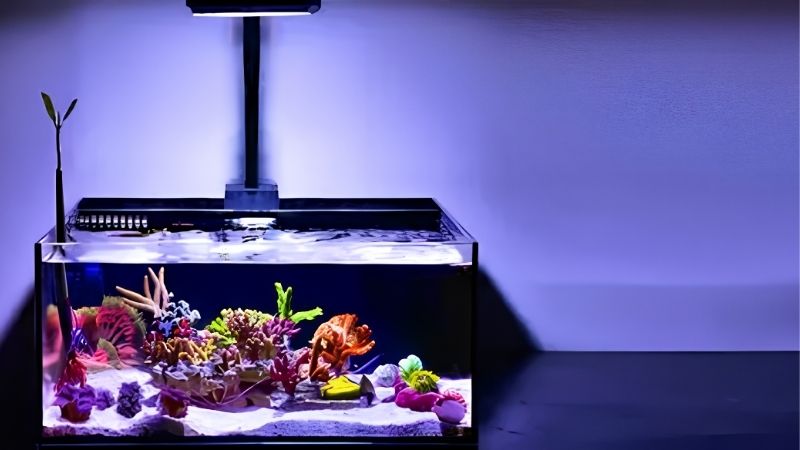
A 20 gallon (76 L) all-in-one holds roughly 15-16 gallons (57-61 L) once rock, sand and the rear chamber are subtracted. Every parameter calculation, salt mix quantity and water change percentage should use that figure rather than the label.
Chamber width is the constraint nobody checks. Most rear chambers give 3-4 in (7.6-10 cm), which fits a return pump and a heater but rules out many nano skimmers and some media reactors, so measure before buying anything to go inside.
Two More Criteria With Numbers Attached
Light output decides what you can keep. A fixture delivering 50-100 µmol at coral depth supports soft corals, 100-200 supports LPS, and 200-400 is needed for SPS. Kit lights vary enormously and the specification is rarely published in PAR.
Flow is the other figure. A reef wants 20-40 times total turnover per hour, so a 20 gallon (76 L) tank needs 300-600 GPH (1136-2271 LPH) combined. Most kit return pumps deliver a fraction of that, which means adding a powerhead.
Tank Size, Placement and Fit
Measure the desk or stand against the footprint and confirm it carries the load before ordering, since saltwater runs about 8.5 lb per gallon (1 kg per litre) and rock adds 1-1.5 lb per gallon on top of that.
Leave clearance above the tank for the light and for getting a hand inside, and leave floor space nearby for a salt mixing container and a top-off reservoir. Nano reefs need more surrounding space than their footprint suggests.
The Options by Configuration
Nano reef kits fall into four configurations. Each is matched below to a use, because the best nano reef tank kit depends on whether you want a finished display, the cheapest entry, maximum chamber space, or full control of every component.
All-in-One Rimless With Integrated Chamber and Light
Main numbers: 10-20 gallons (38-76 L), rear chamber of 3-4 in (7.6-10 cm) holding 1-2 gallons (3.8-7.6 L), and a bundled light usually adequate for soft corals and LPS. Low-iron rimless glass and a matched fixture make this the tidiest option.
It suits a desk or living room display where equipment should be invisible. It does not suit SPS keepers, since bundled lights rarely reach 200-400 µmol, and the chamber often cannot house a skimmer alongside the heater and return pump.
All-in-One Without a Light: For Choosing Your Own Fixture
Main numbers: same tank and chamber geometry, with the light budget moved to a fixture you select on published PAR. This is usually the better value once the intended coral type is known, since kit lights are the component most often outgrown.
It suits anyone planning LPS or SPS within the first year. It does not suit a first marine tank where the buyer has no view yet on coral type, because choosing a fixture without that decision made tends to mean buying twice.
Larger Chamber or Sump-Ready Nano
Main numbers: 20-30 gallons (76-114 L) with a wider rear section or a small external sump, giving room for a skimmer, a media reactor and a heater without crowding. Total system water rises, which slows every parameter swing.
It suits anyone who expects to add equipment as the reef matures. It does not suit tight spaces, since the sump or wider chamber consumes cabinet depth, and the extra plumbing is a genuine project rather than an unboxing.
Bare Tank Plus Chosen Equipment
Main numbers: the same 10-20 gallon (38-76 L) tank with light, pump, heater and top-off selected individually, usually for a similar total to a mid-range kit. Nothing is spent on components you would replace within the first year.
It suits a second tank or anyone who already knows their preferred light and pump. It does not suit a first marine build, since matching components is exactly the work a kit removes and a mismatched light costs more than the saving.
| Option | Real water volume | Chamber space | Light suits | Usually missing |
|---|---|---|---|---|
| All-in-one with light | 7-16 gallons (26-61 L) | 3-4 in (7.6-10 cm) | Softies and LPS | Top-off, RO/DI, salt, test kits |
| All-in-one, no light | 7-16 gallons (26-61 L) | 3-4 in (7.6-10 cm) | Your choice by PAR | Light, top-off, RO/DI, test kits |
| Larger chamber or sump-ready | 16-25 gallons (61-95 L) | Skimmer and reactor fit | Softies to LPS | Skimmer, top-off, RO/DI, test kits |
| Bare tank plus parts | Your choice | Your choice | Your choice | Nothing, you select it all |
| Any kit, as supplied | Label minus 20-25% | Measure before buying | Check PAR, not watts | Refractometer, powerhead |
Head to Head, and What Every Kit Leaves Out
Two configurations get compared constantly, and all of them share the same omissions. Assessing the best nano reef tank kit honestly means adding those items to the price before setting one box against another.
Bundled Light Versus Choosing Your Own
The bundled light wins on convenience and on matching the tank visually, and it is generally adequate for the soft corals a first nano should hold anyway. It loses on published data, since PAR figures are rarely given.
Choosing your own wins as soon as LPS or SPS enter the plan, because you can buy against a PAR figure at a stated depth. It loses on cost at the point of purchase, which is why it suits a second tank better than a first.
What Every Nano Reef Kit Leaves Out
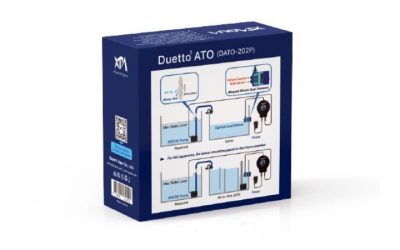
Five items are missing from essentially every kit: a refractometer, an RO/DI unit, salt mix, a test kit set covering alkalinity, calcium, magnesium, nitrate and phosphate, and an automatic top-off. None is optional in a reef.
Add a powerhead as a sixth, since kit return pumps rarely reach the 20-40 times total turnover a reef needs. Those six items together usually cost more than the kit itself, which is the single most useful figure to establish before comparing boxes.
The Cheaper Route That Works
Buy the simplest all-in-one and spend the difference on the refractometer, the top-off and the test kits. Those three affect whether corals survive far more than any difference between one kit tank and another at this size.
RO/DI is the item most often deferred and the one most worth buying early. Shop-bought RO water works short term, but the cost adds up quickly and the TDS is rarely verified, which reintroduces the nutrients the unit exists to remove.
Buying a used tank is the other saving worth considering, provided it has never held a copper-based treatment. Residue persists in silicone and plastics, so ask directly, and treat an unknown history as a reason to keep the tank fish-only.
Running It and the 12-Month Cost
The best nano reef tank kit is a starting point rather than a finished system, so what matters is how it behaves after six months rather than on day one. This section covers what fails, what you keep buying, and the electrical safety points applying to every configuration above.
What Fails First
Return pumps in rear chambers clog with detritus that is awkward to reach, and flow falls before any noise changes. Small heaters fail in both directions, and at 15 gallons (57 L) of water the tank responds within hours either way.
Kit lights lose measurable PAR across two to three years without appearing dimmer, which shows up as corals slowly losing colour. Automatic top-off floats stick with salt creep, which is the failure with the fastest consequences in a nano.
Consumables and Recurring Spend
Salt mix, RO/DI cartridges and test reagents form the bulk of the annual cost, and reagents are a larger share here than in a bigger reef because nano testing frequency is higher. Budget them alongside the kit rather than afterwards.
Reagents expire, and an out-of-date alkalinity kit returns a plausible figure that leads directly to a dosing error. Check dates quarterly and replace on schedule rather than when a result finally looks obviously wrong.
Electrical Safety and Timing
Every powered device beside saltwater should carry a recognised certification such as UL or ETL, sit on a GFCI outlet, and have a drip loop in its cable. Salt creep is conductive, so cable routing matters more here than in freshwater.
On timing, nano kits, lights and top-off units see their deepest discounts in late June and again in late November. A sale never shortens the three to eight weeks of cycling plus months of stability corals need, and prices move constantly.
Best Nano Reef Tank Kit Questions
These arrive while the kit is still in the basket. Every answer about the best nano reef tank kit stays with real volume, chamber space and PAR, since those three decide the outcome more than any feature list on the box.
Is 10 gallons enough for a reef?
It works with soft corals, an automatic top-off and daily attention, holding around 7-8 gallons (26-30 L) of actual water. Twenty gallons (76 L) roughly halves the rate at which salinity and alkalinity move, which is worth the difference.
Does the kit light grow corals?
Bundled lights generally support soft corals and many LPS at 50-200 µmol, and rarely reach the 200-400 µmol SPS need. Check the PAR figure at your intended coral depth rather than the wattage printed on the fixture.
Do I need a skimmer in a nano?
Often not. Frequent small water changes export enough dissolved organics at this volume, and many nano skimmers fit rear chambers poorly. Watch nitrate and phosphate and add export only if those readings actually demand it.
What should I buy alongside the kit?
A refractometer, an RO/DI unit, salt mix, an automatic top-off, a powerhead, and test kits for alkalinity, calcium, magnesium, nitrate and phosphate. Budget those six before comparing kit prices, since they usually exceed the kit itself.
See More:
Conclusion
The best nano reef tank kit for most first reefs is a 20 gallon (76 L) all-in-one with a bundled light suited to soft corals and LPS, giving 15-16 gallons (57-61 L) of real water and a chamber wide enough for a heater and return pump.
Where LPS or SPS are the plan, buy the same tank without a light and choose a fixture on published PAR instead. Either way, add the refractometer, RO/DI, top-off, powerhead and test kits to the price before deciding which box is cheaper.
Best Hang On Back Protein Skimmer for Reef: How to Pick

Common Mistakes When Buying an All in One Saltwater Tank