Last Updated: October 4, 2026
A best dual outlet rodi for drinking and aquarium setup is not two separate systems in one box. It is a single filtration train with a branch: drinking water is taken after the membrane but before deionisation, while reef water continues through the DI stages.
As an Amazon Associate we earn from qualifying purchases.
As an Amazon Associate we earn from qualifying purchases at no extra cost to you. Prices and availability are accurate as of the date shown and are subject to change.
By David Nguyen
Quick answer: For most people in 2026, the best dual outlet rodi for drinking and aquarium is the BRS 6 Stage Drinking & Reef — our #1 rated choice. See the full ranked comparison, alternatives and buying advice below.
How to Choose a Dual Outlet RO/DI System
The plumbing logic matters more than the feature list. Confirm the drinking branch bypasses DI, check daily production against both uses, size the pressure tank sensibly, and decide how much automation you want included. Get the branch point wrong and the system fails at its one distinguishing job.
The Drinking Branch Must Bypass DI
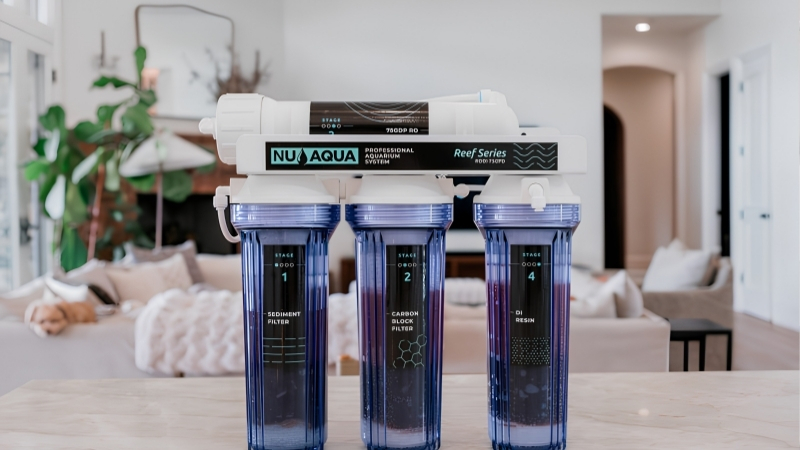
This is the defining feature. Deionised water is stripped of minerals and is not intended as drinking water, so a properly designed dual system takes the drinking line after the RO membrane and before the DI cartridges. Mineral content is part of what makes water taste normal, which is why RO water is preferred at the tap. Remineralisation cartridges exist for RO drinking water if taste matters to you.
The BRS 6 Stage Drinking and Reef system is built around exactly that takeoff point. If a listing is vague about where the branch sits, ask before buying, because the plumbing order is the entire point of this category. A six-stage count means little if the branch sits in the wrong place.
Match Production to Both Demands
You are now supplying two consumers from one membrane. The BRS system uses a 75 GPD Dow membrane, the AirWaterIce Dual Home Reef starts with a 50 GPD membrane producing roughly 2 gallons per hour, and the Hurricane Dual offers 50, 75 or 100 GPD options. Those three membrane options span a meaningful range of daily output.
Add your weekly water change volume, daily top-off and household drinking consumption before choosing. A 50 GPD base membrane is comfortable for a nano reef and a couple of people, but it struggles once a larger display shares the same system. Household drinking demand is steadier than reef demand, so plan around the combined weekly total.
Size the Pressure Tank
The pressure tank stores drinking water so a glass fills immediately rather than trickling. BRS pairs its system with a 3.2 gallon tank, while AirWaterIce offers tank choices ranging from 3.2 up to 20 gallons depending on configuration. Tank choice also affects how quickly the drinking line recovers after heavy use.
Bigger tanks mean fewer refill cycles but take more under-sink space and hold water longer between uses. Match the tank to household drinking habits rather than reef demand, since reservoir filling for the tank draws from the DI branch instead. Check under-sink clearance before choosing a larger tank, since these are bulkier than they appear online.
Check Pressure and Automation
The BRS system is rated for 50 to 90 psi with a waste ratio around 3:1 at rated conditions. The AirWaterIce Hurricane Dual includes a permeate pump, which improves efficiency where pressure is marginal. Waste figures shift with temperature and feed chemistry as well.
Measure inlet pressure before ordering either system. Low pressure reduces production on both branches at once, so the drinking tank refills slowly at exactly the same time your reservoir is filling more slowly than expected. A permeate pump also reduces waste water in many installations, which lowers running cost on metered supply.
Top Picks
Three systems plus one alternative approach cover this category. Each entry lists manufacturer specifications, a relative price position as of 09/2026, and one genuine drawback. Plumbing order matters as much as the hardware in every case below.
| Product | Best For | Key Spec | Watch Out For |
|---|---|---|---|
| BRS 6 Stage Drinking & Reef | Best overall | 75 GPD Dow membrane; 6 stages; 3.2 gal tank | Waste around 3:1 at rated conditions |
| AWI Dual Home Reef | Best value | 50 GPD base; 6 stages; 3.2-20 gal tank options | Base membrane is the slowest here |
| AWI Hurricane Dual | Best efficiency options | 50/75/100 GPD choices; permeate pump included | Price varies widely by configuration |
| Separate systems | When dual is wrong | Dedicated reef RO/DI plus drinking RO | Two installs, two sets of filters |
BRS 6 Stage Drinking and Reef: Best Overall
At roughly $325 as of 09/2026 this system pairs a 75 GPD Dow membrane with six stages, a 3.2 gallon pressure tank and a drinking takeoff placed before the DI cartridges. It is rated for 50 to 90 psi with waste around 3:1. Six stages plus a documented branch point make it the safest default recommendation.
That waste ratio is the main running cost, meaning roughly three gallons to drain for each gallon produced at rated conditions. It also carries the highest price of the three, about 25.0% above the AWI Dual, a gap near under $70. BRS cartridge availability is strong, which keeps replacement sourcing simple over several years.
AirWaterIce Dual Home Reef: Best Value
Around $250 as of 09/2026 in base configuration, this is the cheapest entry, roughly 20.0% below the BRS system. It uses a 50 GPD membrane producing about 2 gallons per hour across six stages, with pressure tank options from 3.2 to 20 gallons. For a modest reef and a small household that combination is genuinely sufficient.
AirWaterIce quotes a 99.9% rejection claim, but without matched test conditions that figure cannot be compared against other brands. The 50 GPD base membrane is also the slowest option here, which shows when a larger reef shares the system. Larger tank options do give this system flexibility that the BRS package does not offer.
AirWaterIce Hurricane Dual: Best Efficiency Options
Starting near under $350 as of 09/2026, within about $3 of the BRS system, the Hurricane Dual offers 50, 75 or 100 GPD membrane choices and includes a permeate pump. That pump improves efficiency where household pressure is marginal. The 100 GPD option is the one worth considering if your reef consumption is heavy.
Pricing shifts substantially with configuration, so the base figure is only a starting point. Waste ratio is not published consistently across every configuration either, which makes direct efficiency comparisons against BRS difficult to verify. Confirm the exact membrane and tank included in the configuration you are quoted before ordering.
When Separate Systems Make More Sense
If your reef consumption is heavy, a dedicated RO/DI unit sized for the tank plus a simple drinking RO system often works better. Each can be sized independently and serviced without interrupting the other. Fish rooms usually end up on separate systems for this reason.
The cost is duplicated hardware, two sets of prefilters and two installations to maintain. Choose the dual approach for convenience and space, and separate systems when reef demand alone would monopolise a shared membrane. Two systems also mean two sets of prefilters to replace on separate schedules.
Frequently Asked Questions
Four questions decide most purchases: whether DI water is safe to drink, what production figures mean in practice, what the pressure tank actually holds, and how these systems cope with heavier reef use.
Can I drink water from the DI branch?
That is not the intended use, which is why these systems branch the drinking line before deionisation. DI water has been stripped of remaining ions and is produced for aquarium mixing rather than consumption. The branch exists specifically to keep those two purposes apart.
Keep the plumbing order as designed and take drinking water from the RO branch. If a system does not clearly document where that takeoff sits, treat it as unsuitable for dual-use duty regardless of stage count. Label the two lines clearly at installation so nobody reconnects them incorrectly during maintenance.
Will a 75 GPD system make 3 gallons an hour?
In theory 75 GPD divides to roughly 3.125 gallons per hour, but that assumes rated pressure and temperature with a fresh membrane. Two branches now share that same membrane output, which lowers what each one sees.
Real production falls with cold feed water, lower pressure and membrane age, and now two branches draw on it. Measure your own rate over a few hours rather than planning reservoir fills around the arithmetic figure. Track it across a full week to see the real average.
What does the pressure tank actually store?
Drinking water from the RO branch only. A 3.2 gallon tank holds less than its nominal rating once air charge is accounted for, which is normal for this style of tank. Drawdown volume typically falls below the tank’s label figure.
Reef water is not stored there; it goes through DI into your own reservoir. Size the tank for household drinking patterns, and remember larger tanks hold water longer between uses, which some people prefer to avoid.
What if my reef uses most of the water?
Then a shared membrane becomes the bottleneck, and the drinking tank refills slowly whenever the reservoir is filling. This is the most common complaint with dual systems on larger tanks. Weekly change volume is usually the deciding number.
Either step up membrane output, such as the 100 GPD Hurricane option, or run separate systems. Sizing generously at purchase is cheaper than discovering the limitation after the plumbing is already installed under a sink. RO/DI hardware discounts around Prime Day and Black Friday, which helps when sizing up.
Final Thoughts
The best dual outlet rodi for drinking and aquarium use comes down to branch plumbing done properly, membrane output that covers both demands, and pressure your household can supply. The BRS 6 Stage near under $350 is the straightforward choice, while AirWaterIce offers cheaper entry and more configuration options.
Ready to decide? Our #1 pick for 2026 is the BRS 6 Stage Drinking & Reef.
Live price & availability on Amazon.
Related Reviews & Guides




Best Aquarium Stand That Fits A Sump Underneath: Top Compared
Best Adjustable Flow Aquarium Air Pump: Careful Buyer Guide