Last Updated: October 4, 2026
Tap water needs its disinfectants removed before it meets fish, and not every bottle does it the same way. The best dechlorinator for fish tank water neutralizes both chlorine and chloramine at the correct label dose, and the differences that matter are the chloramine dose, the real cost per treated gallon, and not confusing it with cycling.
As an Amazon Associate we earn from qualifying purchases.
By David Nguyen
Quick answer: For most people in 2026, the best dechlorinator for fish tank is the Seachem Prime — our #1 rated choice. See the full ranked comparison, alternatives and buying advice below.
How to Choose a Dechlorinator
A dechlorinator has to remove the right disinfectants at the right dose, and it is not a cycling product. Knowing what it must neutralize, using the chloramine-specific dose, understanding that dechlorination is not cycling, and dosing carefully in small tanks are the four things that keep tap water safe without wasted product.
What It Must Remove
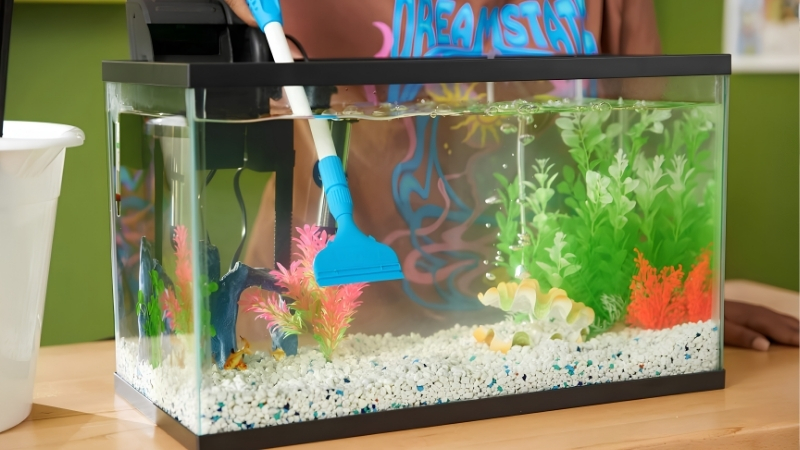
The core job is neutralizing chlorine and chloramine, and those are not the same chemical, so a dechlorinator must handle both. Chloramine is more stable than chlorine and is common in municipal water now, so confirm your chosen product treats chloramine rather than only plain chlorine.
Seachem Prime and Fritz Complete both treat chlorine and chloramine at 5 mL per 50 gallons, while API Tap Water Conditioner treats chloramine at 5 mL per 30 gallons. Check what your water utility actually uses, then match the product and dose to that rather than assuming any conditioner covers everything.
The Chloramine-Specific Dose
Dose by the specific label, because doses differ sharply between products and even between disinfectants within one product. API is the clearest example: its chloramine dose is 5 mL per 30 gallons, while 1 mL per 10 gallons is only for chlorine and heavy metals, so the smaller figure is not the chloramine dose.
Getting this wrong under-treats chloraminated water, leaving fish exposed, so read which line applies to your supply. Do not assume all conditioners share one dose, and use the concentrated products’ small volumes precisely, since Prime and Fritz treat far more water per milliliter than the standard-strength options.
Dechlorination Is Not Cycling
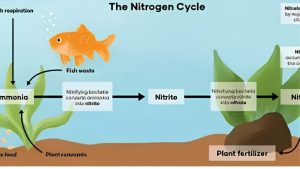
A dechlorinator makes tap water safe to add, but it does not seed nitrifying bacteria or cycle the tank. These are separate steps, so removing chlorine protects fish and bacteria from the disinfectant, while a working biofilter is what processes ammonia into nitrite and then nitrate over time.
So use a dechlorinator on every water change, and rely on cycling and, if needed, a bacteria starter for biological filtration. Note too that when a product temporarily binds ammonia, that ammonia is not gone, only detoxified for a window, so the biofilter still has to process it.
Careful Dosing in Small Tanks
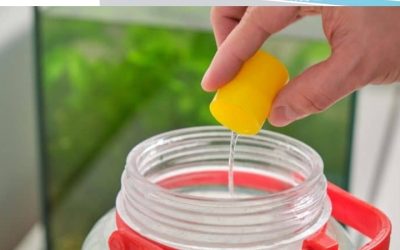
Concentrated dechlorinators are easy to over-pour in a small tank, where a few extra drops represent a large overdose. More conditioner is not always safer, and heavy overdosing of some products can affect oxygen, so measure carefully rather than eyeballing into a nano.
Use a dropper or syringe for small volumes, and dose for the actual water being changed rather than rounding up. The concentrated options stretch a long way, which is economical, but that same concentration is why precise measuring matters most in the smallest tanks.
Top Picks
Three verified dechlorinators plus a standard-dose alternative cover the range from ultra-concentrated to easy-measuring, with the overall pick going to the most concentrated. Prices are relative and current as of 09/2026, and because concentrations differ so much, compare by chloramine dose and cost per treated gallon rather than bottle size.
| Option | Best For | Key Spec | Watch Out For |
|---|---|---|---|
| Seachem Prime | Best overall concentrated | 5 mL/50 gal; ~$0.0033/gal | Very concentrated; measure carefully |
| API Tap Water Conditioner | Best cost per chloramine gallon | 5 mL/30 gal chloramine; ~$0.0030/gal | 1 mL/10 gal is chlorine, not chloramine |
| Fritz Complete | Best Prime alternative | 5 mL/50 gal; ~$0.0040/gal | Pricier bottle than API |
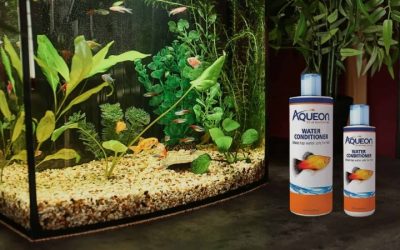
| Aqueon Water Conditioner | Simple standard-dose option | 5 mL/10 gal; easy measuring | Less concentrated; higher cost per gal |
Seachem Prime – Best Overall Concentrated Dechlorinator
Prime is the concentrated all-rounder, treating chlorine and chloramine at 5 mL per 50 gallons with additional detox functions, around $15 for 500 mL as of 09/2026. That 500 mL bottle covers roughly 5,000 gallons of chloramine, landing near $0.0033 per treated gallon, so it stretches a very long way.
Its extra detox functions are a temporary snapshot rather than permanent removal, so bound ammonia still needs biological processing. The main caution is measuring, since the high concentration makes over-pouring easy in small tanks, so use a syringe and dose for the actual water changed.
API Tap Water Conditioner – Best Cost per Chloramine Gallon
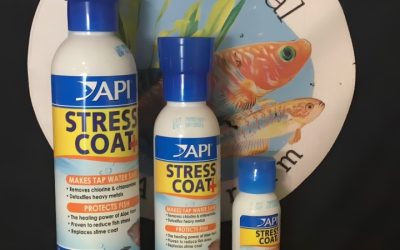
API Tap Water Conditioner is the value leader on chloramine economics at roughly $0.0030 per treated gallon, with a 16 oz bottle covering about 2,838 gallons of chloramine at around $10 as of 09/2026. It is also markedly cheaper per bottle than Fritz, at roughly 55% less.
The catch is its split dosing: 5 mL per 30 gallons for chloramine, but 1 mL per 10 gallons only for chlorine and heavy metals, so follow the correct line for your water. Get the dose right and it is the most economical way here to condition chloraminated tap water at volume.
Fritz Complete – Best Prime Alternative
Fritz Complete is the strongest Prime alternative, treating chlorine and chloramine plus nitrogen compounds and heavy metals at 5 mL per 50 gallons, around $20 for 16 oz as of 09/2026. Its 473 mL covers roughly 4,730 gallons of chloramine, near $0.0040 per treated gallon.
It matches Prime’s concentrated 5 mL per 50 gallons dosing, so it is similarly economical to use if pricier per bottle. Choose it if you prefer its formula or brand, and measure with the same care Prime demands, since the concentration and small dose volume are comparable.
Aqueon Water Conditioner – Simple Standard-Dose Option
Aqueon Water Conditioner is the easy-measuring alternative, treating chlorine, chloramine, ammonia, and heavy metals at a round 5 mL per 10 gallons, around $10 for 16 oz as of 09/2026. Its straightforward dose suits keepers who dislike the tiny volumes of the concentrated bottles.
That convenience comes at a higher cost per treated gallon, since it is far less concentrated than Prime or Fritz. It is a reasonable pick for smaller tanks or infrequent changes where easy measuring matters more than stretching the bottle, but the concentrated options win for high-volume water changers.
Frequently Asked Questions
Dechlorinator questions focus on chloramine, water-change dosing, the dechlorinator-versus-bacteria distinction, and overdosing and oxygen. Each answer leads with the direct call, then the mechanism that changes it for your particular tap water and tank size.
Does My Dechlorinator Handle Chloramine?
It depends on the product and the dose, because chlorine and chloramine are not the same and chloramine is more stable. Prime and Fritz Complete treat both at 5 mL per 50 gallons, while API uses a distinct 5 mL per 30 gallons for chloramine, separate from its chlorine dose.
Confirm what your utility uses, since many now use chloramine, and pick a product plus dose that covers it. Do not assume the smallest number on the label is the chloramine dose, as with API, where 1 mL per 10 gallons is only for chlorine and heavy metals rather than chloramine.
How Much Do I Dose for a Water Change?
Dose for the volume of new tap water you are adding, since that untreated water carries the chlorine or chloramine. Measure the dechlorinator for the replacement water using the product’s specific rate, not the whole tank, because the existing water is already treated.
With concentrated products the volume is small, so use a syringe for accuracy rather than estimating. Some keepers dose to full tank volume as a margin during large changes, which most products tolerate, but the key is that no untreated water reaches the fish. In a nano tank especially, dose the new water before it goes in, so the fish never meet an uneven pocket of concentrated conditioner.
Is a Dechlorinator the Same as a Bacteria Starter?
No, a dechlorinator neutralizes chlorine and chloramine so tap water is safe, while a bacteria starter seeds the nitrifiers that cycle the tank. They do different jobs, so a dechlorinator does not cycle the aquarium and cannot replace establishing a biofilter.
You generally need both: the dechlorinator on every water change, and cycling plus a starter for a new tank. Do not expect removing chlorine to handle ammonia long-term, since that is the biofilter’s role, and any temporary ammonia binding by a conditioner is a short window, not permanent removal.
Can I Overdose a Dechlorinator?
You can, and while a modest margin is usually tolerated, heavy overdosing of some products can affect oxygen levels, so more is not always safer. This matters most in small tanks, where a few extra drops of a concentrated product represent a large overdose relative to the water volume.
So measure for the actual water being treated rather than pouring freely, especially with concentrated bottles. Use a dropper or syringe in nano tanks, follow the label rate, and keep aeration adequate, rather than assuming a bigger dose gives better protection when it can do the opposite.
Final Thoughts
The best dechlorinator for fish tank water neutralizes chlorine and chloramine at the right dose, so concentrated Prime leads overall, API wins on cost per chloramine-treated gallon, Fritz Complete is the strong Prime alternative, and Aqueon offers easy standard-dose measuring. Dose by the specific chloramine line, remember dechlorination is not cycling, and measure carefully in small tanks where concentrated products overdose easily.
As an Amazon Associate we earn from qualifying purchases at no extra cost to you. Prices and availability are accurate as of the date shown and are subject to change.
Ready to decide? Our #1 pick for 2026 is the Seachem Prime.
Live price & availability on Amazon.
Related Reviews & Guides
How to Increase Aquarium Hardness: Safe Step-by-Step Fix
How to Choose Led Light for Plants in 2026: What Actually Matters