Last Updated: October 21, 2026
For a first sump build, the best aquarium overflow box for beginners is the one whose total burden you can live with — judged on installation commitment, long-term operating architecture, the install hardware included, and the return-flow capacity your tank actually needs.
As an Amazon Associate we earn from qualifying purchases.
By David Nguyen
How to Choose an Aquarium Overflow Box as a Beginner
Beginners often optimize for the easiest install and forget the years of operation that follow. Weigh the one-time installation commitment first, then the ongoing operating architecture, the install hardware included in the box, and the return-flow capacity your tank genuinely needs.
Installation Commitment
Installation is the first fork in the road. The Eshopps PF-300 hangs on the back and needs no drilling, an approachable start for a nervous beginner, while the Eshopps Eclipse S, Fiji Cube EOF-4 and Xaqua INOUT all require boring a hole in the tank first.
Drilling sounds daunting but is a one-time task, whereas a hang-on avoids it entirely. Decide honestly whether you will drill a tank; the answer narrows the field fast, and it should be an informed choice rather than a default driven purely by first-day nerves.
Operating Architecture
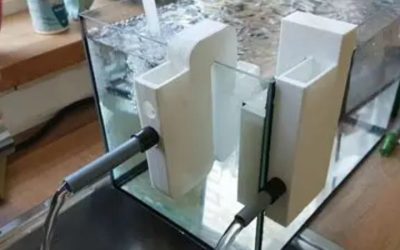
The quieter cost is how the box behaves for years, not the day you install it. A hang-on siphon like the PF-300 avoids drilling but relies on a U-tube that must stay primed, so its ongoing operating burden is higher than a well-plumbed drilled overflow’s.
Drilled boxes such as the Eclipse S run on gravity through bulkheads once set, which is simpler to trust over time. Easiest to install today is not always simplest to own long-term, so weigh the operating architecture as heavily as the initial installation step itself.
Included Install Hardware
What ships in the box changes the real effort. The drilled Fiji EOF-4 includes an install template and a diamond holesaw, and drilled Eshopps boxes come with their drilling hardware, so the drilling path is less intimidating than a beginner might first assume.
The hang-on PF-300 needs no such tools but expects you to manage a siphon instead. Read what each box provides, since included template and holesaw hardware can make a drilled unit more beginner-friendly than its architecture alone would suggest at a first glance.
Actual Return-Flow Capacity
Capacity should still match your pump, and price rarely settles it. In a prior 09/2026 snapshot the Fiji sale sat only about $0.99 from the PF-300, so a near-identical price meant the choice came down to architecture, not a trivial dollar difference between the two.
Size the box to delivered flow with modest headroom: the PF-300 passes 300 GPH, the Fiji 400, the Eclipse S 600, and the Xaqua up to 660. A beginner rarely needs the top of that range, so choose the smallest class your tank’s return actually calls for and no more.
Top Picks
These four overflows map to different beginner priorities rather than a single crown, since no standard score combines drilling, siphon upkeep and plumbing. Each lists verified specs, a relative price tier, and the drawback that matters most when you weigh install day against years of operation.
| Product | Best For | Key Spec | Watch Out For |
|---|---|---|---|
| Eshopps PF-300 | Best for a no-drill start | 300 GPH HOB U-tube; up to 75 gal | Siphon/U-tube upkeep over time |
| Eshopps Eclipse S | Best for simple operation | 600 GPH drilled; dual 1-in drains | Requires drilling the tank |
| Fiji Cube EOF-4 | Best for guided drilling | 400 GPH drilled; template + holesaw | Drilling; sale price varies |
| Xaqua INOUT | Best for a combined unit | Up to 660 GPH; overflow + return | Different architecture; drilling |
Eshopps PF-300
The Eshopps PF-300 is the friendliest starting point for a beginner set on avoiding drilling, a 300-GPH hang-on U-tube with a one-inch bulkhead and guidance up to 75 gallons. There is no hole to bore, which removes the single scariest step for many first-timers.
Around $125 retail or under $150 from the maker as of 09/2026, its trade-off is ongoing siphon and U-tube maintenance to stay primed. Easiest on day one, it asks a little more attention every week, so weigh that long-term chore against the comfort of skipping the drill.
Eshopps Eclipse S
The Eshopps Eclipse S rewards a beginner willing to drill with the simplest long-term operation, a 600-GPH drilled box running on dual one-inch drains. Once set, gravity does the work through the bulkheads, with no siphon to monitor or re-prime over the months ahead.
At about $150 retail or under $150 from the maker as of 09/2026, the barrier is boring a panel, so confirm the tank is drillable first. For a beginner who clears that one-time hurdle, it trades install-day effort for years of the most trustworthy operation in this group.
Fiji Cube EOF-4
The Fiji Cube EOF-4 makes drilling approachable, shipping an install template and a diamond holesaw with a 400-GPH low-profile external design. For a beginner intimidated by boring a tank, that guided hardware turns a scary step into a measured, repeatable one.
At about $125 on sale or under $150 regular as of 09/2026, its sale price is time-sensitive and drilling is still required. The included template and holesaw are the point for a newcomer, giving drilled reliability with more hand-holding than most boxes provide out of the box.
Xaqua INOUT
The Xaqua INOUT is the combined-unit option, a drilled design rated up to 660 GPH that merges overflow and directional return. For a beginner who wants fewer separate parts to plumb, consolidating overflow and return into one unit can simplify the build conceptually.
Around $100 to under $100 currently as of 09/2026, it requires drilling and works differently from a dedicated multi-drain overflow. That different architecture is a learning curve of its own, so weigh the appeal of one combined part against the unfamiliarity for a first build.
Frequently Asked Questions
Beginners ask a consistent set of questions before their first overflow, usually about difficulty. Each answer opens with the practical call, then the condition that changes it, so you can weigh install day against years of operation rather than a single scary step.
What spec should decide this purchase?
Installation commitment should decide it first, because it splits the field into drill and no-drill. Decide honestly whether you will bore a tank; a hang-on like the PF-300 avoids it, while the quieter, more reliable drilled boxes ask for that one-time step up front.
But do not stop at install day. Weigh the operating architecture too, since a no-drill siphon trades easy setup for ongoing upkeep, and the easiest box to install is not always the simplest to live with once the tank has been up and running for months and years on end.
Which numbers are hard facts and which are heuristics?
The GPH ratings, dimensions, included hardware and September 2026 prices are hard facts, including the near-identical Fiji-and-PF-300 pricing from the prior snapshot. Those figures are concrete, though prices shift, so re-check them and note the roughly $0.99 gap was a moment in time.
Difficulty itself is the heuristic. No standardized score combines drilling, siphon maintenance and plumbing into one beginner rating, so weigh install commitment and operating burden yourself rather than trusting any single easiness claim printed on a box or a listing.
Is the highest headline number always better?
No, and for a beginner the biggest capacity often just complicates things. A 660-GPH unit adds nothing over a right-sized box if your return is modest, and ratings measured under ideal conditions do not map directly to your plumbing anyway on a first build.
The better question is total burden, install plus operation, at a capacity your tank needs. A simple no-drill box or a guided drilled one that matches your flow beats a larger, more complex unit bought for a number a beginner setup will never actually use.
When might the reader not need this?
If your first tank runs without a sump — an all-in-one or canister-filtered setup — you do not need an overflow yet, since a box exists only to feed a sump. Many beginners are better served mastering simpler filtration before adding drilled or siphon plumbing.
An overflow becomes worthwhile once you commit to a sump the tank cannot house internally. Until that plan is real, skipping the box avoids a whole class of leaks and priming errors, letting a newcomer build confidence before taking on the added plumbing.
Final Thoughts
For a first sump, the best aquarium overflow box for beginners is the one whose total burden fits you: an easy no-drill hang-on you will maintain, or a drilled box you bore once and then trust for years. Weigh install day against long-term operation, and skip an overflow until a sump is truly part of the plan.
Best Quiet Aquarium Air Pump for Bedroom: Buyer’s Guide
Best Dual Outlet Aquarium Air Pump: A Careful Buyer’s Guide