Last Updated: October 21, 2026
For a 75, the question is whether more capacity earns its keep, so the best aquarium overflow box for a 75 gallon tank is chosen on your actual delivered return flow, sensible capacity headroom, the drain configuration, and whether you can or want to drill the tank.
As an Amazon Associate we earn from qualifying purchases.
By David Nguyen
How to Choose an Overflow Box for a 75 Gallon Tank
A 75 sits right where buyers agonize over 600 versus 800 GPH, but bigger is not automatically better. Rank your actual delivered return flow first, then sensible capacity headroom, the drain configuration, and finally the drilled or hang-on constraint your particular tank imposes.
Actual Delivered Return Flow
Start with the flow your pump truly delivers after head, not a box rating. A three-to-five-times turnover guideline puts a 75 between about 225 and 375 GPH, so even the smaller 600-GPH class already sits well above a realistic return for most 75-gallon sump builds.
That gap is the whole point of this decision. Because a typical 75 return lands near 225 to 375 GPH, a 600-GPH overflow usually clears it comfortably, and the case for stepping up to 800 GPH rests on specific plans rather than the tank’s nominal size alone.
Capacity Headroom
Headroom is where the 600-versus-800 debate actually lives. The Eshopps Eclipse S is rated 600 GPH, while the Eshopps PF-800 and Fiji Cube EOF-8 reach 800 GPH — and 800 GPH is 33.3% above 600 GPH using 600 as the base, a capacity difference, not a safety rating.
Read that the other way and 600 GPH is 25% below 800 using 800 as the base. Neither figure means the bigger box is a third safer; it simply has more ceiling. Match headroom to your delivered flow, since capacity above what you use adds cost without protecting anything.
Drain Configuration
Drain design shapes noise and reliability more than the top rating. The Eshopps Eclipse S runs dual one-inch drains, and the Fiji Cube EOF-8 is a dual-drain design suitable for a Herbie setup, which can run quiet and more fail-safe when plumbed and tuned correctly.
The Eshopps PF-800 uses a single one-inch bulkhead on a hang-on U-tube, a simpler path that trades some redundancy for no drilling. Choose the drain configuration that fits your noise tolerance and your willingness to tune, not merely the highest GPH number printed on the label.
Drilled or Hang-On Constraint
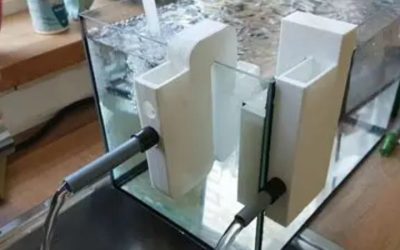
The practical gate is whether the tank can be drilled. The Eclipse S and Fiji EOF-8 are drilled designs that need a borable panel and a sump below, running quieter in return, while the PF-800 and Lifereef Single hang on the back and avoid drilling entirely.
Pricing does not settle it either: the PF-800 is around $125 while the drilled Fiji EOF-8 runs about $150 on sale, so the choice is architecture, not a few dollars. Confirm your tank’s drillability and rear clearance before the capacity number even enters the decision at all.
Top Picks
These four overflows are ranked for a 75 by whether added capacity earns its cost, then by drain and install fit. Each lists verified specs, a relative price tier, and the drawback that matters most when deciding between a 600 and an 800 GPH class box for the tank.
| Product | Best For | Key Spec | Watch Out For |
|---|---|---|---|
| Eshopps Eclipse S | Best overall | 600 GPH drilled; dual 1-in drains | Requires a drillable panel |
| Eshopps PF-800 | Best for no-drill capacity | 800 GPH HOB U-tube; 75–125 gal | Max rating is not forced flow |
| Fiji Cube EOF-8 | Best for a quiet drilled build | 800 GPH; dual-drain/Herbie-ready | Drilling; sale price varies |
| Lifereef Single Prefilter | Best for premium no-drill | Up to 600+ GPH HOB; slim option | Premium; plan rear clearance |
Eshopps Eclipse S
The Eshopps Eclipse S is the 75-gallon overall pick because its 600-GPH drilled design already clears a realistic return flow while running quiet on dual one-inch drains. For a tank whose delivered flow lands near 225 to 375 GPH, that capacity is ample without overshooting the need.
At about $150 retail or under $150 from the maker as of 09/2026, it requires drilling, so confirm the panel is borable and a sump sits below. In exchange you get a compact 6-by-3-by-6-inch box and reliable dual-drain operation right in the range a 75 actually needs.
Eshopps PF-800
The Eshopps PF-800 is the no-drill capacity pick, an 800-GPH hang-on U-tube with a single one-inch bulkhead and guidance for 75 to 125 gallons. It brings the higher ceiling to a tank that cannot be drilled, useful if you plan future flow beyond a standard 75.
Around $125 retail or under $150 from the maker as of 09/2026, it is the value entry here. Remember its 800-GPH maximum is not forced sump flow; your pump still sets the real rate, so the extra ceiling is optional headroom rather than a benefit you automatically receive.
Fiji Cube EOF-8
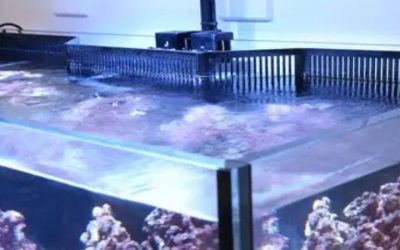
The Fiji Cube EOF-8 is the quiet drilled option, a low-profile external overflow rated 800 GPH with a dual-drain design suitable for a Herbie configuration and a slim roughly 1.25-inch wet-side profile. For a keeper who will drill and tune, it offers calm, capable operation.
At about $150 on sale or under $200 regular as of 09/2026, its sale price is time-sensitive and drilling is required. Do not equate its 800-GPH capacity with required return flow; it is a ceiling, so pair it with a pump sized to your 75, not to the box.
Lifereef Single Prefilter
The Lifereef Single Prefilter is the premium no-drill choice, a hang-on rated up to 600-plus GPH with a slim 6.5-inch outer width and a Slimline clearance option. For a 75 owner wanting strong build and no drilling, it leads that niche of the overflow field.
At about $159 as of 09/2026 it is the priciest here, and rear clearance must be planned at 4.25 inches standard or 3.25 for the Slimline. Its capacity suits a 75 well; the trade-offs are the premium price and the footprint a tight stand may not allow behind the tank.
Frequently Asked Questions
Buyers weighing 600 against 800 GPH for a 75 ask a familiar set of questions. Each answer opens with the practical call, then the condition that changes it, so you can match capacity and architecture to your delivered return flow rather than the tank’s nominal size.
What spec should decide this purchase?
Actual delivered return flow should decide it, because that is what the overflow must handle. On a 75 returning roughly 225 to 375 GPH, a 600-GPH box already clears the load, so the number to size against is your pump after head, not the tank’s gallon rating.
Once that flow is known, weigh headroom, drain design and drillability. A quiet drilled box that matches your flow beats a larger hang-on you do not need, and the extra 200 GPH of an 800-class unit only helps if a concrete plan will actually put it to use down the line.
Which numbers are hard facts and which are heuristics?
The GPH ratings, bulkhead counts, dimensions and September 2026 prices are hard facts, and the 33.3% capacity gap between 600 and 800 GPH is arithmetic on those ratings. The three-to-five-times turnover range, by contrast, is a planning heuristic for sizing your return pump.
Keep those separate, and never turn a capacity gap into a safety claim. Saying an 800-GPH box is a third safer than a 600 misreads the math; it has more ceiling, not more protection, so size to delivered flow and treat the multipliers as rough guides only.
Is the highest headline number always better?
No. On a 75 the 800-GPH class rarely does more real work than a well-set 600, since your pump, not the box, sets the flow. Ratings measured under ideal conditions do not translate directly to your plumbing, so the bigger number often just adds cost and noise.
The exception is a genuine plan for higher future flow or a specific drain scheme that benefits from the extra ceiling. Absent that, match capacity to delivered flow and let drain design and drillability, not the top rating, decide between these four boxes for the tank.
When might the reader not need this?
If the 75 runs without a sump — an all-in-one or canister-filtered build — an overflow is unnecessary, since a box exists only to feed a sump safely. Confirm the sump plan first, because the tank’s size alone does not require an overflow at all here.
And even with a sump, an 800-GPH box is not needed for a standard 75; 800 GPH is not inherently better here. Size to your delivered flow, and reserve the higher class for a build whose pump and plumbing genuinely call for that extra capacity down the line.
Final Thoughts
For a 75, the best aquarium overflow box for a 75 gallon tank is the one whose capacity clears your delivered return flow with sensible headroom and whose drain and install fit the tank. Size to real flow after head, treat the 600-to-800 gap as capacity rather than safety, and confirm drillability before you buy.
Best Aquarium Air Pump for 55 Gallon Tank: Buyer’s Guide
Best Aquarium Overflow Box for Beginners: Easy Starter Picks