Last Updated: October 21, 2026
Tank volume alone does not size an overflow, so the best aquarium overflow box for a 125 gallon tank is chosen on your return pump’s delivered flow after head, the overflow’s rated capacity, whether it is drilled or hang-on, and how it physically fits your specific tank.
As an Amazon Associate we earn from qualifying purchases.
By David Nguyen
How to Choose an Overflow Box for a 125 Gallon Tank
A 125-gallon label is a starting point, not a spec, so weigh these overflows by what your plumbing actually moves. Rank delivered return-pump flow after head first, then the overflow’s rated capacity, the drilled or hang-on architecture, and finally how the box fits your tank and stand.
Delivered Return-Pump Flow After Head
The number that matters is the flow your pump delivers after head loss, not its box rating. A common planning range of two to five times tank volume puts a 125 between about 250 and 625 GPH, though that is a guideline for turnover, not a hard overflow requirement for the tank.
Size the overflow to that delivered figure. At 625 GPH the 1000-GPH Eshopps Eclipse L and PF-1000 have nominal headroom, and the 1200-GPH Fiji Cube EOF-12 and Lifereef have more, but treat these as capacity comparisons rather than measured safety margins for your particular build.
Overflow Capacity
Rated capacity is a ceiling under ideal conditions, so leave sensible room. The Fiji Cube EOF-12 and Lifereef Double Prefilter are rated up to 1200 GPH, while the Eshopps Eclipse L and PF-1000 sit at 1000 GPH, which is enough for most realistic 125-gallon return flows.
Do not chase a literal ten-times rule: at 1,250 GPH even the 1200-class boxes fall about 50 GPH short, which shows why ten times is not a mandatory overflow standard. Match capacity to delivered flow with headroom, not to a slogan that quietly oversizes the whole system.
Drilled or Hang-On Architecture
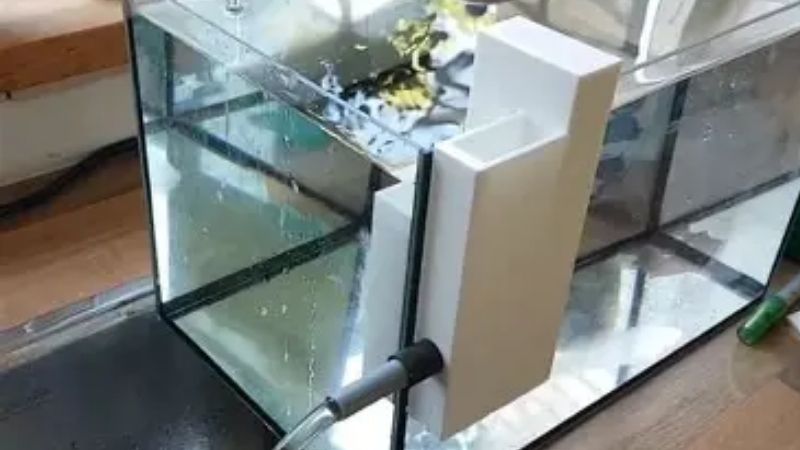
Architecture shapes both safety and install effort. The Fiji Cube EOF-12 and Eshopps Eclipse L are drilled designs that need a hole in the tank but run quietly and reliably, and the Fiji supports Herbie and BeanAnimal drain configurations for near-silent, more fail-safe operation.
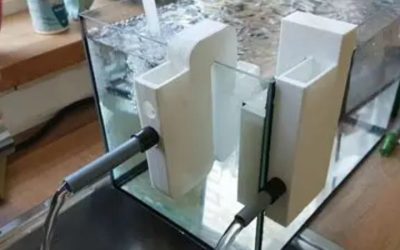
The Eshopps PF-1000 and Lifereef Double Prefilter hang on the back with U-tube or siphon designs, avoiding drilling but adding a siphon to monitor and maintain. Choose drilled for reliability if the tank can be bored, or hang-on if drilling is simply not an option for your setup.
Installation Fit
Fit is where a good spec fails on the actual tank. The Lifereef Double Prefilter uses a 14-by-11-inch outer box and needs 4.25 or 3.25 inches of rear clearance, so measure the gap to the wall before committing to a large hang-on unit behind a 125 on a tight stand.
Drilled boxes demand a drillable panel and a sump below, while hang-on units need rim and brace clearance. Confirm your tank’s construction and the space around it, since installation fit rules out otherwise-capable overflows more often than raw flow numbers ever actually do.
Top Picks
These four overflows are ranked for a 125 by delivered-flow headroom and installation architecture, not by the biggest rating alone. Each lists verified specs, a relative price tier, and the drawback that matters most when a box has to move real water reliably under your stand.
| Product | Best For | Key Spec | Watch Out For |
|---|---|---|---|
| Fiji Cube EOF-12 | Best overall | 1200 GPH drilled; Herbie/BeanAnimal-ready | Drilling required; sale price varies |
| Eshopps Eclipse L | Best for a drilled build | 1000 GPH; dual 1-in drains; 100–150 gal | Capacity is a ceiling |
| Eshopps PF-1000 | Best for no-drill flow | 1000 GPH HOB; dual 1-in bulkheads | Siphon needs monitoring |
| Lifereef Double Prefilter | Best for premium HOB | Up to 1200 GPH; dual 1-in outputs | Large rear footprint; premium |
Fiji Cube EOF-12
The Fiji Cube EOF-12 is the 125-gallon overall pick because its 1200-GPH drilled design carries the most headroom over a realistic return flow, and its family supports Herbie and BeanAnimal drains for quiet, more fail-safe operation. That combination suits a tank moving serious water reliably.
Plan on about $150 on sale or under $200 regular as of 09/2026, noting the sale price varies over time. Drilling is required, so confirm the panel can be bored and a sump sits below; in return you get the most capacity and the calmest drain options in this whole group.
Eshopps Eclipse L
The Eshopps Eclipse L is the drilled alternative, rated 1000 GPH with three one-inch drain bulkheads and guidance for 100 to 150 gallon tanks. Its 12-by-3-by-6-inch body and slim wet side make it a clean internal box for a standard 125 with a moderate return pump.
At about $150 as of 09/2026 it still requires drilling, and its rating is a ceiling rather than a promised throughput. For a 125 whose delivered flow lands comfortably under 1000 GPH, it is a straightforward, reliable drilled choice without stepping up to the full 1200 class.
Eshopps PF-1000
The Eshopps PF-1000 is the no-drill flow pick, a hang-on box using a dual U-tube design rated 1000 GPH with dual one-inch bulkheads and guidance for 125 to 150 gallons. It brings serious capacity to a tank that cannot or should not be drilled for its return.
Around $150 as of 09/2026, it is the value entry here, but its siphon architecture needs monitoring and maintenance to stay primed safely. If drilling is off the table, it delivers real flow; just accept the ongoing attention a U-tube siphon requires to keep running reliably.
Lifereef Double Prefilter
The Lifereef Double Prefilter is the premium hang-on option, rated up to 1200 GPH with dual one-inch outputs and a reputation for robust build. For a keeper who wants high no-drill capacity and long-term reliability, it sits at the top of the hang-on field for a 125.
At about $279 as of 09/2026 it is the priciest here and uses a large 14-by-11-inch outer box needing several inches of rear clearance. Measure the gap behind the tank first, since its footprint and premium price are the trade-offs for that high hang-on capacity and build.
Frequently Asked Questions
Buyers sizing an overflow for a 125 ask a familiar set of questions. Each answer opens with the practical call, then the condition that changes it, so you can match capacity and architecture to your delivered return flow rather than the tank’s nominal volume alone on the label.
What spec should decide this purchase?
Delivered return-pump flow after head should decide it, because that is the water the overflow must actually handle. The tank’s 125-gallon label does not select a box; the pump’s real output, measured after the head it must overcome, is what sets the capacity you genuinely need.
Once that flow is known, weigh capacity headroom and architecture. A drilled box runs quieter and more reliably, a hang-on avoids boring the tank, and the right rated capacity sits comfortably above your delivered flow without chasing an arbitrary multiple of the tank’s volume.
Which numbers are hard facts and which are heuristics?
The GPH ratings, bulkhead counts, dimensions and September 2026 prices are hard manufacturer or retailer facts. The two-to-five-times turnover range and the resulting headroom figures are planning heuristics, useful for sizing but not measured safety margins for your particular plumbing setup.
That distinction matters most with the ten-times myth: at 1,250 GPH even a 1200-class box falls short, proving the rule is not mandatory. Use the ratings as facts and the multipliers as rough guides, then size to your actual delivered flow with sensible headroom above it.
Is the highest headline number always better?
No. A 1200-GPH rating helps only if your return approaches it, and a box rated far above your flow adds cost and noise without any benefit. Ratings measured under ideal conditions do not translate directly to your plumbing, so match capacity to delivered flow instead of the top number.
Architecture often matters more than the top figure: a well-set drilled box at 1000 GPH can outperform a larger hang-on that needs constant siphon attention. Buy the capacity and design your 125 actually needs, not the biggest number sitting on the shelf at the store.
When might the reader not need this?
If the 125 is a closed system with no sump — an all-in-one or a canister-filtered setup — an overflow box may not be needed at all. Overflows exist to feed a sump safely, so without one the whole category can simply be skipped for that particular tank.
A box also makes little sense if the return flow is very low and a smaller class would serve. Match the overflow to a real sump-and-return plan; nominal 125 gallons does not require one by itself, and delivered flow is what actually justifies the purchase in the end.
Final Thoughts
For a 125, the best aquarium overflow box for a 125 gallon tank is the one whose capacity clears your delivered return flow with sensible headroom and whose drilled or hang-on design fits the tank you own. Size to real flow after head, not a ten-times myth, and confirm drilling or rear clearance before you buy.

Best Nano Air Bubble Strip for Small Tanks: Buyer Guide
Best Auto Top Off System for a 125 Gallon Tank: Top Picks