Last Updated: September 25, 2026
Best aquarium light for planted tank decisions are usually made on watts or lumens, neither of which tells you what reaches the plants. The number that actually matters is PAR at the substrate, and it depends as much on tank depth and on mounting height as on the fixture itself, so this comparison starts there.
As an Amazon Associate we earn from qualifying purchases.
As an Amazon Associate we earn from qualifying purchases at no extra cost to you. Prices and availability are accurate as of the date shown and are subject to change.

hygger Clip On 24/7 Lighting Aquarium LED Light,Sunrise-Daylight-Moonlight and DIY Mode, Adjustable Timer/Brightness Fish Tank Light with 7 Colors for Planted Tank (14W for 12~20in Tank)
Selected for "Best Aquarium Light for Planted Tank: PAR, Depth and Cost": this listing is lighting (hygger Clip On 24/7 Lighting Aquarium LED Light,Sunrise-Daylight-Moonl), matching the equipment this article covers.
View on Amazon
hygger 18W 24/7 Lighting Aquarium LED Light, Sunrise-Daylight-Moonlight Mode and DIY Mode, Adjustable Timer Adjustable Brightness Fish Tank Light with Extendable Bracket 7 Colors for Planted Tank
Selected for "Best Aquarium Light for Planted Tank: PAR, Depth and Cost": this listing is lighting (hygger 18W 24/7 Lighting Aquarium LED Light, Sunrise-Daylight-Moonligh), matching the equipment this article covers.
View on Amazon
hygger 42W 24/7 Lighting Aquarium LED Light, Sunrise-Daylight-Moonlight Mode and DIY Mode, Timer Adjustable Brightness Fish Tank Light with Extendable Bracket 7 Colors for Planted Tank
Selected for "Best Aquarium Light for Planted Tank: PAR, Depth and Cost": this listing is lighting (hygger 42W 24/7 Lighting Aquarium LED Light, Sunrise-Daylight-Moonligh), matching the equipment this article covers.
View on Amazon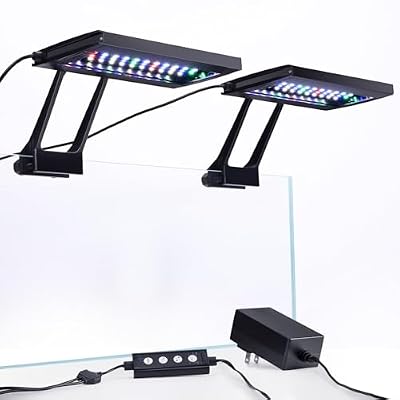
hygger Clip On Aquarium LED Light with Multi-Channel Controller, Fish Tank Light 24/7 Lighting Sunrise-Daylight-Moonlight and DIY Mode, Adjustable Timer/Brightness Light 7 Colors for Freshwater (2)
Selected for "Best Aquarium Light for Planted Tank: PAR, Depth and Cost": this listing is lighting (hygger Clip On Aquarium LED Light with Multi-Channel Controller, Fish ), matching the equipment this article covers.
View on AmazonBy David Nguyen
Quick answer: For most people in 2026, the best aquarium light for planted tank is the Low-output LED bar — our #1 rated choice. See the full ranked comparison, alternatives and buying advice below.
PAR at the Substrate Rather Than Lumens on the Box
Choosing the best aquarium light for planted tank use is really a question of matching light intensity to your carbon supply. Too little and plants stall, too much without injected carbon dioxide and algae takes the surplus, which is why intensity and CO2 have to be decided together.
The decisive number: PAR at the substrate
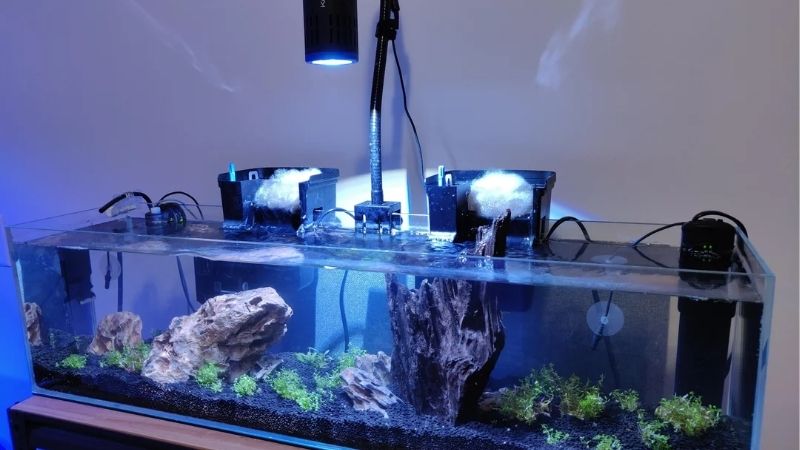
PAR measures the light that plants can actually use, in micromoles per square metre per second. The working bands are roughly 10–30 for low light, 30–50 for medium and above 50 for high light, all measured at substrate level rather than up at the surface where the fixture actually sits.
Depth changes everything about that figure. Light falls off sharply through water, so the same fixture that delivers medium light on a 12 inch (30 cm) deep tank may only manage low light at the bottom of a 21 inch (53 cm) tank, which is why depth belongs in the decision before brand does.
Why lumens and watts mislead, and what else to check
The best aquarium light for planted tank use is not chosen on lumens. Lumens describe brightness as human eyes perceive it, weighted heavily towards green where plants use relatively little. Watts describe consumption, which meant something in the fluorescent era and says little across modern LED fixtures.
Manufacturer PAR figures need treating with care too. They are measured at a stated distance in air or in a specific tank, rarely with directly comparable methods, so treat them as an indication rather than a specification and expect real substrate readings to sit below the published number.
Tank size, placement and physical fit
Fixture length should cover most of the tank length, since a short unit leaves dim ends where plants thin out. Mounting height changes intensity substantially, so a fixture on tall legs sits further from the substrate and delivers noticeably less light than the same unit resting on the rim.
Weight and access set the wider limits: a full tank runs near 10 lb per gallon (about 1 kg per L), so a 55 gallon (208 L) setup passes 600 lb (272 kg) and needs a purpose-built stand. Measure the rim width and the tank length with a tape before ordering any fixture or mounting bracket.
| Option | Main number | Tank it suits | Recurring cost | Who it fits |
|---|---|---|---|---|
| Low-output LED bar | PAR roughly 10–30 | Under 16 in (41 cm) deep | None, no bulbs | Low-tech tanks without CO2 |
| Mid-range adjustable LED | PAR roughly 30–50 | Most community depths | None | Medium-light planted tanks |
| High-output LED, controller | PAR above 50 | Deep or high-tech tanks | None, higher power draw | CO2-injected aquascapes |
| Clip-on nano fixture | Short fixture, close mount | Under 10 gal (38 L) | None | Nano and shrimp tanks |
| High light, no CO2 | PAR above 50, no carbon | None | Algae control effort | Nobody, avoid this pairing |
The Options, Grouped by Who They Suit
There is no single best aquarium light for planted tank setups anywhere, because the correct intensity depends on your plant list, your tank depth and whether carbon dioxide is injected. Each option below is tied to a group of keepers, with its limitation stated plainly alongside.
Low-output LED bars, for low-tech tanks without CO2
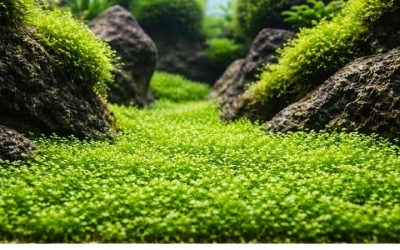
A low-output fixture delivering roughly 10–30 PAR at the substrate suits exactly the plants most beginners actually buy: java fern, anubias, cryptocoryne, vallisneria and mosses. These grow steadily without injected carbon, and the modest intensity keeps algae far easier to manage.
The limitation is simply what you cannot grow with it. Carpeting plants and most red stems need more light than this band provides, and adding fertiliser will not compensate. On tanks deeper than about 16 inches (41 cm) even the shade-tolerant species can look leggy at the bottom.
Mid-range adjustable LEDs, for most planted community tanks
An adjustable fixture sitting at around 30–50 PAR at the substrate is the practical default here. Dimming matters more than peak output here, because it lets you start low while the tank matures and raise intensity gradually as plant mass builds and takes up the available nutrients.
The trade-off is that this band sits near the threshold where carbon becomes limiting. Without injected CO2, running the upper end of the range invites algae, so many tanks in this category do best held at the lower end or paired with a liquid carbon supplement and heavy planting.
High-output LEDs with controllers, for injected tanks
Above roughly 50 PAR you are into high-tech territory, which means injected carbon dioxide, a proper fertiliser routine and regular trimming. Controllers that ramp intensity and shorten the peak period are genuinely useful here, since they allow fine adjustment when algae appears.
The limitation is that the light itself is the easy part. High output without matching carbon and nutrients simply produces algae rather than growth, and the running commitment in trimming and water changes is considerably higher than most people expect when they buy the fixture.
Clip-on nano fixtures, for small and shallow tanks
On tanks under 10 gallons (38 L), a clip-on fixture is often the only thing that will physically fit, and the short water column means that even a modest unit delivers useful light down at the substrate. These suit shrimp tanks, nano aquascapes and desktop setups without any complication.
The limitation is coverage and the mounting itself. A single clip fixture lights a circle rather than a rectangle, leaving corners dim, and the clip needs rim thickness it can grip. Check the rim before ordering, since many rimless tanks need a different mounting arrangement entirely.
Direct Comparison and Who Should Not Buy
Most of the confusion around the best aquarium light for planted tank use comes down to one single comparison, and to a further question about whether a new fixture is needed at all. Answering both saves money and prevents the most common cause of an algae problem in a new setup.
Low light against medium light
Low light is slower, far more forgiving and cheaper to run, and it supports a plant list that covers the majority of community aquascapes. Medium light grows a wider range faster, but it narrows the margin for error in fertilisation and increases the amount of trimming the tank demands.
The deciding question here is carbon supply rather than ambition. Without injected CO2, the honest answer for most keepers is the lower band paired with a dimmable fixture, because a light that can be turned down is far more useful than one that only ever runs at a single fixed intensity.
When a new fixture is the wrong purchase
If plants are struggling in a tank with adequate light, the limiting factor is usually carbon or nutrients rather than intensity. Check that ammonia and nitrite read 0 ppm and nitrate sits at 20–40 ppm, since a tank stripped of nitrate by heavy water changes starves plants directly.
Algae is the other case in which more light is exactly the wrong response. Increasing intensity in order to outcompete algae almost always makes it worse, and the correct first move is a shorter photoperiod, reduced intensity and better nutrient balance rather than a different fixture.
Cheaper approaches that genuinely work
Raising or lowering the existing fixture changes PAR at the substrate substantially, and it costs you nothing at all. Adding a few inches (several cm) of mounting height cuts the intensity noticeably, which is often exactly what an algae-prone tank needs without any purchase being made at all.
A simple plug-in timer is the other inexpensive fix. Holding the photoperiod at a consistent 6–8 hours, rather than switching lights on when someone walks past, removes the single most common cause of algae in tanks that already have a perfectly adequate fixture installed above them.
Running Costs, Failure Points and Twelve Month Ownership
LED fixtures usually outlast the tanks they sit on, so the true cost of the best aquarium light for planted tank use is mostly electricity and the supporting routine. There are no bulbs to replace, which changes the ownership picture considerably compared with older fluorescent setups.
How LED fixtures fail over time
Output declines gradually rather than failing outright, and the change is slow enough that most people never notice until plant growth slows. Individual diodes can fail, leaving a dim patch, and driver failure is the usual reason a fixture stops working entirely rather than dimming.
Moisture is the practical enemy of these fixtures. Condensation reaches the housing on open-top tanks and corrodes connections over months, so a fixture rated for aquarium use, mounted with clearance above the water and paired with a drip loop, lasts considerably longer than one that is not.
What you will actually spend money on
The recurring items here are not lighting parts at all: fertiliser, a timer, and the extra water changes and trimming that faster growth demands. A high-output fixture commits you to that routine, which is the real ongoing cost rather than anything printed on the fixture’s own price tag.
Electricity is modest but not zero, and a high-output unit running eight hours daily across a year is a genuine line item. Price levels move constantly across budget, mid and premium ranges, so check current figures at the time of purchase rather than relying on remembered prices.
Certification, safety and buying at the right time
Any powered device sitting above the water should carry recognised safety certification such as UL or ETL, run through a residual current device or GFCI outlet, and have a drip loop in the cable. Splash exposure is constant on open-top tanks, so this is not a theoretical concern.
Lighting discounts cluster into a few events, with late November the deepest of the year. Buying then is sensible, but it changes nothing biologically: a new planted tank still needs weeks to establish, and starting with a shorter photoperiod remains the safer approach regardless.
Frequently Asked Questions
These questions come up repeatedly once people stop shopping by lumens alone, because choosing the best aquarium light for planted tank use is really about matching the intensity to carbon supply and to the depth of water the light has to travel through before it reaches the plants.
How many hours should the light run each day?
Six to eight hours suits most planted tanks, and starting at six hours while the tank establishes is the safer approach. Longer photoperiods rarely improve growth once light is adequate, and they reliably favour algae, which is why a timer matters more than an extra hour of light.
Do I need CO2 for a planted tank?
Not for a low-light tank stocked with undemanding species, since those grow perfectly well without any injected carbon. Injected carbon becomes necessary once intensity rises into the medium and high bands, because the light then outruns the carbon available and algae takes the difference.
Is a higher Kelvin rating better for plants?
Not directly, no. Around 6500 K is a common choice because it renders plants and fish naturally, but colour temperature describes appearance rather than usable energy. Intensity at the substrate and the presence of red and blue output matter far more than the Kelvin number alone.
Can one fixture work for a deep tank?
Sometimes, but check the water depth honestly first. A fixture delivering medium light on a 12 inch (30 cm) tank may give only low light at the bottom of a 21 inch (53 cm) tank, so either choose a higher-output unit or plan the planting around species that tolerate lower intensity.
See More:
Conclusion
For most keepers the sensible default among the best aquarium light for planted tank options is a dimmable mid-range LED run at the lower end of its range, paired with a timer and a 6–8 hour photoperiod. The budget choice is a low-output bar with shade-tolerant plants and no CO2.
Ready to decide? Our #1 pick for 2026 is the Low-output LED bar.
Live price & availability on Amazon.
Related Reviews & Guides

Best Aquarium Soil for Carpeting Plants: Proven Top Pick
Brown Algae in New Aquarium Tanks: Diatoms and Patience