Last Updated: October 21, 2026
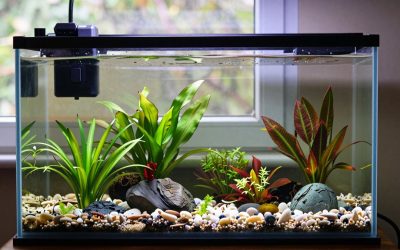
If you have ever admired a lush, carpeted planted tank and wondered why yours looks leggy and pale, the answer is often carbon dioxide. Aquatic plants pull carbon from CO2 to build tissue, and injecting it, then dissolving it efficiently, is what separates ordinary tanks from the vivid aquascapes that fill competition galleries.
The diffuser is the unsung hero of that process, breaking CO2 into a mist of tiny bubbles that dissolve before they reach the surface. This roundup reviews the best aquarium CO2 diffusers of 2026 for lush growth, spanning glass ceramic diffusers, acrylic atomizers, and liquid carbon alternatives for anyone not ready to run pressurized gas.
As an Amazon Associate we earn from qualifying purchases at no extra cost to you.



⚡ Save on Your Next PC — Amazon Prime
Prime members get fast free shipping on the systems above, plus early access to Prime Day & Black Friday PC deals. New members get a 30-day free trial.
Watch: Best Aquarium CO2 Diffusers for Lush Plant Growth — Video Review
How to Choose
- Match diffuser to tank size: Small ceramic diffusers suit nano tanks, while larger tanks over 75 gallons need higher-output units to disperse enough CO2.
- Prioritize bubble size: A fine mist dissolves far better than large bubbles, so ceramic and atomizer diffusers outperform simple ladders.
- Consider pressure needs: Some atomizers require higher working pressure, so confirm your regulator can drive the diffuser you choose.
- Decide gas or liquid: Pressurized CO2 gives the best growth, but liquid carbon products are a simpler entry point for low-tech tanks.
- Plan placement: Position the diffuser low and near flow so the CO2 mist circulates through the whole tank before rising.
The Best Picks Reviewed
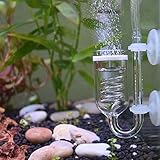
Clscea U-Shaped Mini CO2 Diffuser
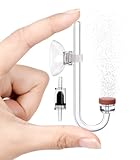
This $10 U-shaped ceramic atomizer produces an ultra-fine mist ideal for nano and small planted tanks. Its compact design tucks discreetly against the glass while delivering the tiny bubbles that dissolve efficiently for strong growth.
JARDLI Music Glass CO2 Diffuser
At $30 this large glass ceramic diffuser is built for tanks beyond 75 gallons, where lesser units cannot keep up. The elegant glass construction is as much a display piece as a functional atomizer for serious aquascapers.
Pawfly Clear Acrylic CO2 Atomizer
This $10 acrylic atomizer resists the shattering that plagues glass diffusers, making it a durable choice for busy or family tanks. It delivers a fine mist while shrugging off the accidental knocks that break delicate glassware.
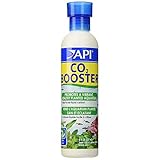
API CO2 Booster Liquid (8 oz)
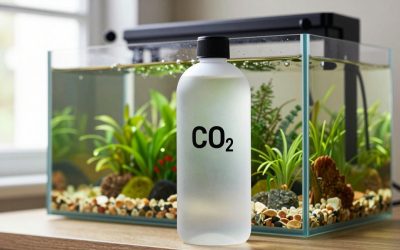
For $11 this liquid carbon supplement is the no-pressure entry point, feeding plants a usable carbon source without a gas system. It will not match pressurized CO2 for demanding carpets, but it noticeably boosts low-tech tanks.
Yagote 3-Spiro Glass CO2 Reactor
This $10 spiral glass diffuser increases contact time by routing gas through three coils, improving dissolution for tanks up to about 100 gallons. The extra path length squeezes more CO2 into the water before bubbles escape.
Frequently Asked Questions
Do all planted tanks need CO2 injection?
No. Low-light, hardy plants grow without it, but demanding carpets and vivid red plants usually require pressurized CO2 for their best appearance.
Why do smaller bubbles matter?
Fine bubbles have more surface area and stay suspended longer, so far more CO2 dissolves into the water instead of escaping at the surface.
Is liquid carbon as good as gas?
Liquid carbon helps low-tech tanks and controls some algae, but it cannot deliver the dense, fast growth that pressurized CO2 provides.
How do I avoid gassing my fish?
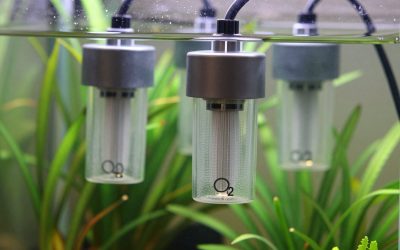
Use a drop checker to monitor CO2 levels, aim for a green reading, and run CO2 on a timer that shuts off before lights out.
Final Thoughts
The right diffuser turns CO2 injection from wasteful bubbling into efficient plant fuel. Choose a fine-mist ceramic or atomizer sized to your tank, confirm your regulator can drive it, and monitor levels with a drop checker for fish safety. If pressurized gas feels like too much, start with liquid carbon and upgrade later. Either way, better CO2 delivery is the fastest path to the lush growth planted-tank keepers chase.

4 Best Aquarium LED Lights for Planted Tanks 2026
Hornwort Aquarium Care: How It Grows and What to Watch For