Last Updated: October 21, 2026
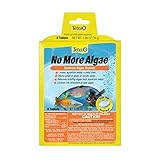
- Top Pick: Tetra No More Algae Tablets for Aquariums, 8 Count
- Best Value: Crystal Plex – Lake and Pond Algaecide Treatment – Liquid Copper Algaecide Kills and Prevents Various Types of Algae (Planktonic, Filamentous, Chara) – 1 Gallon Treats up to 1 Acre
- Premium Choice: MICROBE-LIFT Algaway 5.4 Algae Remover for Aquariums, Algaecide for Freshwater and Saltwater Tanks, Aquarium Algae Control and Fish Tank Cleaner, Safe for Fish and Plants, 8 Ounces (ALGAA08)
Aquarium algae types are worth learning to tell apart for one entirely practical reason: each one points to a different underlying cause in the tank. Green spot algae and black beard algae need opposite responses, so identifying what you are actually looking at is the step that decides everything that follows it.
As an Amazon Associate we earn from qualifying purchases.
As an Amazon Associate we earn from qualifying purchases at no extra cost to you.




By David Nguyen
Each Type Points to a Different Cause
Algae is always a symptom of a surplus or an instability rather than a contaminant that arrived from outside. Working through aquarium algae types systematically means naming the growth, tracing it to its driver, and accepting a one to four week timeline for any correction to show.
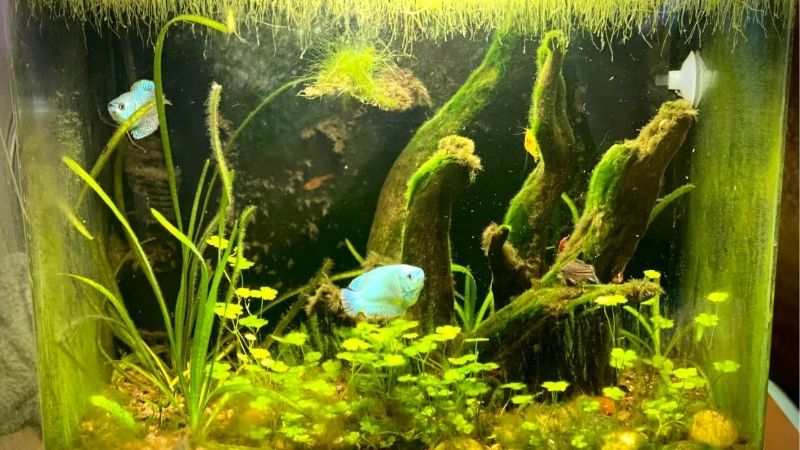
The Three Things to Establish Before Anything Else
First, name the type from its appearance and where it grows. Second, identify the root cause behind that type: photoperiod, excess nutrients, unstable CO2 or inadequate flow. Third, accept the timeline, because algae responds over one to four weeks rather than days.
Alongside that, record the measurable inputs. Light hours per day against a reference of six to eight, nitrate against a ceiling of 40 ppm, and whether any direct daylight reaches the glass. Those three numbers explain most cases before you look at anything else.
Test ammonia, nitrite, nitrate and temperature as well. Ammonia above 0 ppm in a young tank feeds algae directly, so a tank still cycling has a nutrient source that no lighting change will address until the cycle finishes.
The Biology: What Every Type Actually Needs
All algae needs light, carbon and nutrients. What separates the types is which of those it exploits best, which is why one tank grows green spot on the glass while another grows black beard on the hardscape under seemingly similar conditions.
Instability matters as much as excess. Black beard algae in particular is associated with fluctuating CO2 and organic build-up rather than with high nutrients, so a tank with injected CO2 running inconsistently grows it while a stable low-tech tank does not.
Plants are the competition. Healthy fast-growing plants consume the same nitrogen, phosphorus and carbon that algae uses, so a planted tank with vigorous growth suppresses algae continuously. When plants stall, that competition disappears and algae fills the gap within weeks.
Spores are always present and cannot be excluded. They arrive on plants, on hardscape and in tap water, so the goal is never sterility. A balanced tank contains the same spores as an algae-covered one and simply gives them nothing to exploit.
The Identification Table
This table covers the types most freshwater keepers encounter. Match on appearance and location first, then read across to the cause, because the same green film on glass and on leaves can mean two different things.
| Type | Appearance and location | Usual root cause | Time to see results |
|---|---|---|---|
| Green spot algae | Hard green dots on glass and slow-growing leaves | Low phosphate, high light | 2-4 weeks |
| Green dust algae | Soft green film across the glass | Young tank, excess light | 1-3 weeks |
| Hair or thread algae | Long green strands on plants and hardscape | Excess nutrients with weak plant growth | 2-4 weeks |
| Black beard algae | Dark tufts on hardscape and leaf edges | Unstable CO2, low flow, organics | 3-4 weeks |
| Brown diatoms | Brown dusty coating, tanks under 3 months | Silicates and immature tank | Fades as tank matures |
| Blue-green film | Slimy sheets, distinctive smell | Poor flow, organic build-up | 1-2 weeks |
| Staghorn algae | Grey-green branching strands | Ammonia present, unstable CO2 | 2-4 weeks |
| Green water | Suspended cells, whole tank tinted | Excess light and nutrients | 3-7 days with treatment |
What This Means in a Real Tank
Which of the aquarium algae types appears in a given setup is largely predictable from three things: how much light reaches the substrate, how much nutrient is circulating, and how well the plants are actually growing.
Tank Size, Placement and Fit
Placement is the strongest single predictor. A tank receiving direct daylight through a window grows algae regardless of the schedule on its timer, and moving it two metres into the room does more than any equipment purchase.
Depth decides how much light reaches the substrate. PAR falls with distance through water, so a fixture producing 50 µmol at the surface may deliver only low-light levels at the bottom of a tank 18 in (46 cm) deep. Watts and lumens tell you nothing useful about this.
Measure before you order: fixture length against tank length, mounting clearance above the rim, 4-6 in (10-15 cm) behind the tank for a hang-on-back filter, and stand capacity against roughly 10 lb/gallon (about 1 kg/L) filled.
How This Differs Across 10, 20 and 55 Gallon Tanks
Nutrients concentrate faster in small volumes. A 10 gallon (38 L) tank climbs past 40 ppm nitrate on the same feeding that leaves a 55 gallon (208 L) tank under 20 ppm, so nano tanks show nutrient-driven types sooner.
Deeper tanks favour different types. A tall 55 gallon (208 L) tank with a fixture sized for its footprint often delivers plenty of light at the top and very little at the bottom, which produces strong growth above and algae on struggling plants below.
Flow determines where algae settles. A baseline turnover of 4-6 times tank volume per hour suits community stocking, and printed GPH drops 30-50% once media and hoses load. Dead spots are where blue-green and black beard establish first.
Layout affects circulation as much as the filter does. Dense planting, large flat rocks and tall hardscape all create pockets where water barely moves, and those pockets grow different algae from the open areas a few inches away.
How Plants, Light and Stocking Change the Picture
Plant demand has to match the light. Low-light species want roughly 15-30 µmol PAR at substrate level, medium 30-50, and high-demand plants more. Strong light over slow-growing plants without CO2 is the single most reliable way to grow algae instead.
Stocking supplies the nutrients. Heavily stocked or overfed tanks push nitrate and phosphate up continuously, and in a tank without enough plant mass to consume them, that surplus goes somewhere visible within a few weeks.
Newly set up tanks are a special case. Diatoms and green dust appear in almost every tank during the first three months regardless of how carefully it was planned, because the biological and chemical balance is still settling and no plant mass is established yet.
The aquascaping boom on social media has driven a lot of people into high-light, high-tech setups quickly. Worth stating plainly: those photographs show tanks running for months with CO2, dosing and heavy plant mass, and reproducing the light without the rest produces algae rather than the image.
Common Mistakes and Myths to Retire
Three assumptions about aquarium algae types send people after the wrong fix. Each one treats algae as a contaminant to be removed rather than as a report on the tank’s balance.
Myth: Algae Means a Dirty Tank
Algae grows in tanks with pristine readings all the time. Ammonia and nitrite at 0 ppm with nitrate under 40 ppm describes clean water, and green spot algae can still cover the glass because it responds to light and phosphate rather than to cleanliness.
The replacement question: which surplus or instability is present? Answer that, and the algae becomes information rather than an accusation. Cleaning harder without changing the driver produces the same growth on the same schedule.
Myth: Algae Eaters Solve the Problem
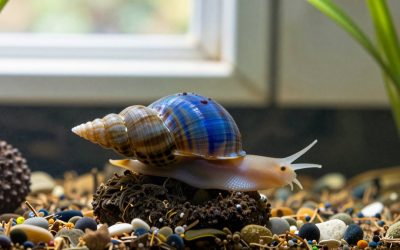
Grazers help with specific types. Otocinclus and nerite snails handle green dust and diatoms well, amano shrimp work on soft hair algae, and none of them reliably eat black beard or blue-green growth.
They also add bioload, which adds nutrients, which is the driver you were trying to reduce. Treat grazers as maintenance staff in a balanced tank rather than as a correction for a tank that is out of balance.
Species requirements matter too. Otocinclus need an established tank with biofilm to graze and often starve in a freshly scrubbed one, so adding them at the height of an algae problem is both ineffective and hard on the fish.
Myth: Cutting Light Always Fixes It
Reducing an eight or ten hour photoperiod to six often helps considerably. Cutting further starves the plants that were competing for the same nutrients, and a tank with weak plant growth and low light frequently ends up with more algae rather than less.
The replacement approach: match light duration and intensity to the plants you actually have, then fix nutrients and flow separately. Six to eight hours at an intensity your plants can use is the target, not the shortest possible day.
Managing Algae Long Term
Every one of the aquarium algae types responds to the same underlying discipline: stable light, controlled nutrients, adequate flow and healthy plants. What changes between types is which of those four needs the most attention.
What to Do on a Schedule
Run the light on a timer at six to eight hours, keep water changes at 20-30% weekly adjusted by measured nitrate, and remove visible algae manually during each change. Manual removal matters because it stops growth reseeding while the driver is corrected.
Trim and replant regularly. Fast-growing stems only compete effectively while they are actually growing, and a tank left untrimmed until it shades itself loses the plant competition that was suppressing algae in the first place.
Spring is when this shifts. Plants come into stronger growth as daylight lengthens and rooms warm, which increases both their nutrient demand and their trimming frequency, so a dosing routine that worked through winter often needs revisiting around March.
Gear That Degrades and How It Shows Up
LED fixtures lose PAR gradually across their life, which is invisible because the light still looks bright. A fixture that grew plants well in year one may be delivering low-light levels at substrate by year three, and struggling plants mean algae.
Timers fail or get reset by power interruptions, leaving lights running far longer than intended. Filter flow drops 30-50% as media loads and impellers wear, creating the dead spots where blue-green and black beard establish.
Test reagents expire and read low with age, which matters because nitrate is a key input here. Every powered device beside water belongs on a GFCI outlet with a drip loop and a UL or ETL mark.
CO2 equipment drifts in its own way. Regulators can creep, diffusers clog and reduce dissolved CO2 without any visible change, and a cylinder running low delivers inconsistent output near the end, which is exactly the instability black beard algae exploits.
The Twelve-Month Running Cost
Budget for continuous light, filter and heater power, replacement mechanical media, test reagents, dechlorinator and plant fertiliser if the tank is planted. A timer is a one-off cost that prevents more algae than any consumable in the list.
High-tech planted tanks add a longer list: CO2 refills, drop checker fluid, liquid fertiliser and root tabs on a rotation. Knowing that twelve-month figure before committing is better than discovering it after the light and regulator are already bought.
Frequently Asked Questions
These five come up most often once someone has worked out which of the aquarium algae types they have and wants to know what happens next.
Can I have more than one type at once?
Frequently, and it usually means more than one driver is active. A tank with excess light and excess nutrients commonly grows green dust on the glass and hair algae on the plants at the same time, and both need addressing.
How long before I see improvement?
One to four weeks for most types once the driver is corrected. Green water responds fastest to a blackout, diatoms fade on their own as a tank matures, and black beard is the slowest at three to four weeks.
Do I need to remove algae by hand as well?
Yes. Correcting the cause stops new growth, but existing algae persists and keeps producing spores. Scrape glass, trim affected leaves and siphon what you can loosen during each water change while the correction takes effect.
Will an algaecide save time?
It removes the appearance without removing the cause, and a large die-off releases nutrients while consuming oxygen. Many products contain copper, which is lethal to shrimp and snails at very low concentrations, so the category is unavailable in most planted tanks.
Which type is the most serious?
Blue-green film deserves the fastest response, since it spreads quickly, smothers plants and indicates poor flow with organic build-up. Among aquarium algae types it is the one where waiting a fortnight makes the situation materially worse.
See More:
The Bottom Line on Identifying Algae
Learning the aquarium algae types is diagnostic work rather than trivia. Green spot points to low phosphate with high light, hair algae to excess nutrients with weak plant growth, black beard to unstable CO2 and poor flow, and diatoms to a tank that simply has not matured yet. Identify the growth, name the driver, then correct light duration, nutrient load or circulation and give it one to four weeks. Remove what you can by hand throughout, and treat algae eaters as maintenance rather than as a cure.
Zebra Danio Tank Mates: Match Speed and Temperature
White Fuzz in a Fish Tank: Algae, Fungus or Bacteria? How to Tell