Last Updated: September 25, 2026
African cichlid tank mates come down to four matching conditions: same lake, overlapping pH and hardness, similar adult size, and a tank large enough for the whole group rather than for each fish separately. The chart below applies all four at once, because getting any one of them wrong makes the other three stop mattering.
As an Amazon Associate we earn from qualifying purchases.
As an Amazon Associate we earn from qualifying purchases at no extra cost to you. Prices and availability are accurate as of the date shown and are subject to change.

AFRICAN CICHLID HANDBOOK: A detailed guide to raising and caring for your African Cichlids with tips on breeding, health, behavior, socialization, tank mates, nutrition, and more.
Selected for "African Cichlid Tank Mates: Chart, Numbers and How to Use It": this listing is lighting (AFRICAN CICHLID HANDBOOK: A detailed guide to raising and caring for y), matching the equipment this article covers.
View on Amazon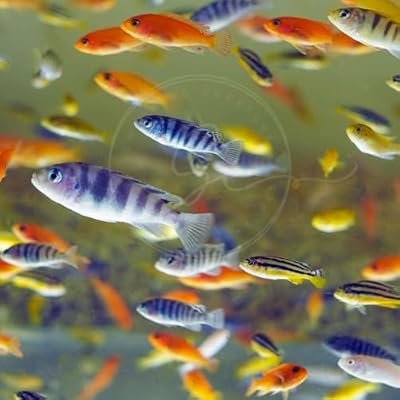
Swimming Creatures™ 12 Assorted Color Mbuna African Cichlids – Exotic Freshwater Aquarium Fish (Size Approx: 1-1.5")
Selected for "African Cichlid Tank Mates: Chart, Numbers and How to Use It": this listing is aquarium equipment (Swimming Creatures™ 12 Assorted Color Mbuna African Cichlids – Exotic ), matching the equipment this article covers.
View on Amazon
4-Pack Assorted OB Peacock African Cichlid Live Freshwater Fish 2 Inch Juvenile African Lake Malawi Cichlids Colorful Community Aquarium Fish for Cichlid Tanks Freshwater Aquariums
Selected for "African Cichlid Tank Mates: Chart, Numbers and How to Use It": this listing is tanks (4-Pack Assorted OB Peacock African Cichlid Live Freshwater Fish 2 Inch), matching the equipment this article covers.
View on Amazon
CaribSea Aquatics Eco-Complete African Cichlid Zack Sand, 20-Pound, Black
Selected for "African Cichlid Tank Mates: Chart, Numbers and How to Use It": this listing is substrate and hardscape (CaribSea Aquatics Eco-Complete African Cichlid Zack Sand, 20-Pound, Bl), matching the equipment this article covers.
View on AmazonBy David Nguyen
Quick answer: Our top pick in 2026 is the Mbuna, general — our #1 rated choice. See the full ranked comparison, alternatives and buying advice below.
The Compatibility Chart and How to Read It
This is a lookup rather than an essay. The first table lists the african cichlid tank mates that work together and the minimum tank each group needs; the second lists the adjustments to apply once you know your own tank size, layout and water. Both sit in this section deliberately.

The Deciding Numbers: Lake, Adult Size, Temperament and Minimum Tank
Every row combines the same four figures, because no single one of them is sufficient on its own. A fish can share your water chemistry perfectly and still be eaten, or share the same temperament and still need double the tank length you have available.
| Group | Lake or origin | Adult size | Temperament | Minimum tank | Combines with |
|---|---|---|---|---|---|
| Mbuna, general | Malawi | 3-5 in (7.6-13 cm) | High, territorial | 55 gallons (208 L) | Other mbuna, rift lake catfish |
| Yellow lab, Labidochromis | Malawi | 4 in (10 cm) | Moderate | 55 gallons (208 L) | Mbuna, peacocks at a stretch |
| Peacocks, Aulonocara | Malawi | 4-6 in (10-15 cm) | Moderate | 75 gallons (284 L) | Other peacocks, smaller haps |
| Haps, open water | Malawi | 6-8 in (15-20 cm) | Predatory on small fish | 125 gallons (473 L) | Peacocks, larger haps |
| Synodontis catfish | Tanganyika | 4-6 in (10-15 cm) | Low, nocturnal | 55 gallons (208 L) | Malawi and Tanganyika both |
| Julidochromis, brichardi | Tanganyika | 3-4 in (7.6-10 cm) | Moderate, pair bonding | 40 gallons (151 L) | Other Tanganyikans only |
| Shell dwellers | Tanganyika | 1-2 in (2.5-5 cm) | Low, but bold | 20 gallons (76 L) | Species tank preferred |
| Frontosa | Tanganyika | 12-14 in (30-36 cm) | Calm but predatory | 125 gallons (473 L) | Large Tanganyikans only |
| Bristlenose pleco | South America | 4-5 in (10-13 cm) | Low | 40 gallons (151 L) | Tolerates hard alkaline water |
Minimum tank in this chart means the tank for the whole group, not for one fish. A 55 gallon (208 L) row does not mean that a 55 gallon holds that group plus another one alongside it, and stacking two rows together almost always means moving up a tank size.
The Rule the Chart Is Built On
Rule one is mouth size against body size. Anything that fits in a cichlid’s mouth is food, and open-water haps routinely take fish up to roughly a third of their own length. That single condition removes tetras, small rasboras, fry and adult shrimp immediately.
Rule two is chemistry. Rift lake fish need pH 7.8-9.2 and KH 10-20 dKH (179-358 ppm) depending on lake, while soft-water community fish sit at pH 6.0-7.5. There is no overlap worth using, so any species outside the rift lakes has to be independently tolerant of hard alkaline water.
Reading the Chart, Units and Margin of Error
Sizes given are adult sizes, not the size in the shop tank, and temperament labels describe the species average rather than the individual. Both carry real variance, so treat the chart as a filter that removes bad combinations rather than a guarantee for the ones left.
| Your situation | Adjustment to apply |
|---|---|
| Tank under the listed minimum | Drop the group entirely, do not reduce the count |
| Tank 25% above the minimum | Add one more species of similar size, not larger |
| Mixing two Malawi groups | Move up one tank size and match diets first |
| Malawi plus Tanganyika | Rift lake catfish only, no other crossovers |
| Fewer caves than fish | Add rockwork before adding any species |
| Nitrate above 40 ppm before a change | Stop adding fish regardless of the chart |
| One male dominating the tank | Raise females to 3-4 per male, or rehome the male |
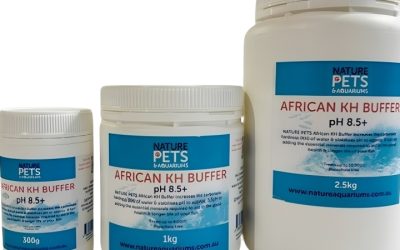
| Tap water under 8 dKH (143 ppm) | Fix buffering before stocking anything |
Work the second table after the first, in that order. The chart tells you what could go in; the adjustments tell you whether your particular tank can carry it this month, which is a different question and the one most stocking plans skip entirely.
Adjusting for Your Actual Tank
A chart of african cichlid tank mates describes species. Your tank has a specific length, a specific rock layout and a specific set of individuals in it, and all three change the answer enough to be worth working through before ordering anything.
Adjusting for Species Mix and Bioload
Mbuna are grazers and peacocks take more protein, so mixing the two means feeding a compromise diet that suits neither perfectly. Where the mix is attempted, feed a vegetable-based staple and accept that the peacocks grow more slowly than they would in their own tank.
Bioload rises faster than fish count suggests, because these fish are fed heavily and kept densely. Every added species needs its share of the 8-10x turnover target, and nitrate under 20 ppm between weekly changes is the reading that tells you whether the mix fits.
Adjusting for Rockwork and Layout
Caves are the currency of aggression here. A tank with more caves than fish gives a pursued individual somewhere to break line of sight, which is what actually stops a chase; open water and a single rock pile concentrate every dispute in the same corner.
Line of sight matters as much as cave count. A rock wall running the tank length, broken into two or three separate territories, works better than one central mound, because it divides the floor into zones rather than creating a single prize worth defending.
Tank Size, Placement and Fit
Measure the tank length and front-to-back depth before committing to a group, since a 55 gallon at 48 x 13 in (122 x 33 cm) cannot hold both a rock wall and open swimming lanes. A 75 gallon at 48 x 18 in (122 x 46 cm) holds the same length with usable depth.
Rock mass adds 1-1.5 lb per gallon (roughly 0.5-0.7 kg per 3.8 L) on top of water weight, so a heavily aquascaped 75 gallon approaches 950 lb (431 kg). Build the structure on the bottom glass or on eggcrate, never on sand these fish will excavate.
Where This Chart Stops Working
Every stocking chart is a generalisation, and this one is no exception. Three situations override it entirely, and recognising them early is worth considerably more than any additional row of african cichlid tank mates would ever be.
When Individual Temperament Beats the Species Average
A single unusually aggressive male can make a textbook-correct combination unworkable. The species label predicts the average outcome across many tanks; it does not predict the individual in yours, and no amount of rearranging fixes a fish that will not stop.
The practical answer is a rehoming plan agreed before stocking. Expect to remove one or two individuals in the first six months, and have a local club or shop lined up, because the alternative is watching a tank slowly reduce itself to one survivor.
Variables the Chart Cannot Hold
Order of introduction changes outcomes substantially, since a fish added to an established territory faces a resident that a simultaneous introduction would not have created. Stocking a group at once, or rearranging rock when adding fish, both reduce that effect measurably.
Sex ratio is the other missing variable. Two males of one species in a 55 gallon (208 L) tank is a different tank from one male and four females, even though a species chart cannot distinguish them. Ratios belong in the plan alongside species names.
When to Stop Using the Chart and Watch Instead
Once fish are in, observation outranks any table. Persistent chasing that continues after lights out, one fish held in a corner, or fins damaged in the same pattern each week all mean the combination is failing regardless of what the chart permitted.
Act on those signs within days rather than weeks. Rearranging rockwork resets territories and often resolves it; where it does not, removing the aggressor is the reliable fix and is far cheaper than replacing the fish that would otherwise be lost.
Verifying the Plan and Re-Checking It
A plan for african cichlid tank mates is a prediction, so it needs checking against readings rather than against how the tank looks on a good evening. This section covers what to measure, how often to repeat it, and what drifts without anyone noticing.
What to Measure and How Accurate It Is
Four readings decide whether the mix is working: ammonia, nitrite, nitrate and KH. Liquid kits hold accuracy better than strips, which drift within weeks of the container being opened in a warm room, and a KH kit is the one most rift lake keepers omit.
Measure loaded filter turnover too, at least once. Rated GPH is taken with an empty housing, and real delivery drops 30-50% with media and hoses fitted, which is often the gap between a plan that should work on paper and a tank with climbing nitrate.
How Often to Re-Check
Weekly for nitrate, taken immediately before the water change, and monthly for KH. Rising nitrate at an unchanged routine means the group has outgrown the plan, which happens naturally as juveniles reach adult size somewhere between month eight and month eighteen.
Re-run the chart itself once a year. Fish that were compatible at 2 in (5 cm) are a different proposition at 5 in (13 cm), and the minimum tank column applies to the adult fish rather than to whatever size happened to come home in the bag.
What Drifts Over Time
Buffering substrate dissolves as it works, so KH falls slowly across a year and takes pH with it. Canister flow drops as media compacts, cutting turnover below the 8-10x target. Heater accuracy moves 2-4 °F (1-2 °C), and rockwork settles as the fish dig beneath it.
Season adds a push in one direction. Rooms above 80 °F (27 °C) in midsummer raise the tank temperature, which increases both metabolism and aggression in a group already stocked densely, so summer is when a marginal combination usually reveals itself.
African Cichlid Tank Mates: Common Questions
These questions follow from the chart rather than replacing it. Every answer about african cichlid tank mates stays with size, chemistry and minimum tank, because those three conditions decide almost every combination people ask about.
Can I mix mbuna with peacocks?
It is done, but it is a compromise. Diets differ, mbuna are more aggressive, and the mix needs at least 75 gallons (284 L) with heavy rockwork. Yellow labs are the usual bridge species because they sit at the mild end of the mbuna range.
Can I mix Malawi and Tanganyika fish?
Only through rift lake catfish such as the smaller Synodontis species, which tolerate both. The chemistry targets differ, Tanganyikans generally being more sensitive to nitrate, and the behavioural styles do not combine well beyond that single exception.
What about plecos or other catfish?
Bristlenose plecos tolerate hard alkaline water and stay under 5 in (13 cm), so they are a workable exception from outside the rift lakes. Larger common plecos outgrow most tanks here and add a bioload the filtration was not sized for.
Can shrimp or snails go in?
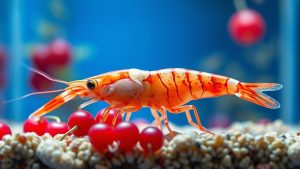
No. Both are food to fish of this size, and copper-containing treatments sometimes used in cichlid tanks are lethal to invertebrates anyway. Where algae control is the goal, the answer here is light duration and feeding volume rather than a clean-up crew.
See More:
Conclusion
Choosing african cichlid tank mates means applying four filters in order: same lake, overlapping pH and KH, adult sizes within roughly a third of each other, and a tank meeting the minimum for the entire group rather than for any single species in it.
Run the first table to build the shortlist and the second to test it against your own tank, then confirm with readings after stocking. Nitrate under 20 ppm before the weekly change, KH holding steady, and no fish held in a corner is what a working plan looks like.
Ready to decide? Our #1 pick for 2026 is the Mbuna, general.
Live price & availability on Amazon.
Related Reviews & Guides

How to Speed Up Aquarium Cycling: What Works and What Fails

Best Juice Maker Machines in 2026: Top Picks for Every Budget