Last Updated: October 4, 2026
- Top Pick: Leviton 20-Amp, 125-Volt, Narrow Body Single Receptacle, Straight Blade, Commercial Grade, Grounding, 5801-W, White
- Best Value: Leviton 15 Amp, 125 Volt, Decora Plus Single Receptacle, Straight Blade, Commercial Grade, Self-Grounding, 16241-W, White
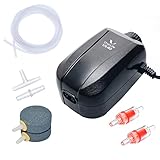
- Premium Choice: Uniclife 64 GPH Aquarium Air Pump with Dual Outlets Adjustable Quiet Fish Tank Air Pump with Air Stone Airline Tubing Check Valve and Connector Accessories for 10-100 Gallon Fish Tank
Choosing between a single outlet vs dual outlet air pump is less about buying the “stronger” machine and more about matching the pump to your setup. A single-outlet model sends air through one airline, which is often all a small aquarium, indoor fountain, or compact aeration project needs. A dual-outlet model can run two air stones, sponge filters, or decorative features at the same time, but it may cost slightly more and take up more room.
The real decision is whether you need simplicity or flexibility. If one airline will do the job for the next several years, a single outlet keeps the equipment compact and easy to adjust. If you expect to divide airflow between two locations—or want backup capacity for a growing aquarium—a dual-outlet air pump can be the more practical choice. Here is how the two options compare for a typical home purchase in 2026.
As an Amazon Associate we earn from qualifying purchases at no extra cost to you.


Quick Verdict
Choose a single-outlet air pump for a small aquarium, one air stone, a tabletop fountain, or any setup where you want the fewest parts and the smallest footprint. These pumps are usually easier to position, simpler to maintain, and less expensive.
Choose a dual-outlet air pump when you need to aerate two areas, operate two accessories, or maintain more even circulation in a medium or larger aquarium. It is also a sensible option if you may add a second air stone later and want to avoid replacing the pump.
For reference, compact aquarium pumps commonly draw about 2 to 5 watts, while larger or higher-output household models may use roughly 5 to 10 watts. Typical units measure around 4 to 7 inches long, 2 to 4 inches wide, and 2 to 4 inches high, with weights commonly between 1 and 2 pounds. Always check the manufacturer’s rated tank size and airflow rather than judging performance by outlet count alone.
Side by Side
| Factor | Single Outlet | Dual Outlet |
|---|---|---|
| Comfort | Usually quieter to live with because there is one airline and one accessory to position | Can provide more balanced aeration, but two lines may create more bubbling noise |
| Durability | Fewer valves, connectors, and hoses mean fewer parts to wear or loosen | Still durable, but has additional outlet hardware that may eventually need replacement |
| Price range | About $10 to $30 for common home and aquarium models | About $15 to $45 for common adjustable aquarium models |
| Maintenance | One airline, check valve, and air stone are quick to inspect | Two lines and accessories require more frequent visual checks |
| Space needed | Often about 4 to 6 inches wide or less, plus room for one hose | Often about 5 to 7 inches wide, plus room to route two hoses |
| Look | Cleaner around a small tank or visible fountain | More equipment can be concealed, but the installation is busier |
| Resale | Easy to sell to buyers with basic, small setups | May attract more buyers because of its extra capacity and flexibility |
| Best for | Small tanks, one air stone, simple fountains, and budget buyers | Medium tanks, two accessories, divided aeration, and future expansion |
Where Single Outlet Wins
A single outlet is the better choice when your equipment plan is straightforward. One airline runs from the pump to one diffuser, air stone, sponge filter, or ornament. There is less tubing to hide behind furniture, fewer connections to check, and less chance of accidentally pinching one line while cleaning the tank.
This design is particularly useful for small aquariums of approximately 5 to 20 gallons, although the correct pump depends on the depth of the water and the accessory being used. A single outlet can also suit a quarantine tank, betta setup, shrimp aquarium, or small indoor water feature where excessive current would be undesirable.
Single-outlet pumps generally have a smaller physical footprint and a lower purchase price. You may find basic models for around $10 to $20, with quieter adjustable models often reaching $25 to $30. They can be a good fit for a narrow shelf where every inch matters. If the pump will sit beside a bed, desk, or living room display, fewer air lines may also make the setup look more intentional.
There is another advantage: troubleshooting is simple. If the bubbles stop, you have one line, one check valve, and one air stone to inspect. Replaceable air stones and airline tubing are usually inexpensive, often costing a few dollars per item. Keeping a spare check valve on hand is worthwhile because it helps prevent water from flowing backward into the pump during a power outage.
The limitation is reduced flexibility. A single outlet cannot independently aerate two tanks or run two widely separated accessories without adding a splitter. A splitter can work, but it divides the available airflow and introduces another connection that may leak, clog, or require adjustment.
Where Dual Outlet Air Pump Wins
A dual outlet air pump earns its space when you have two jobs to do. You can run two air stones at opposite ends of an aquarium, power a sponge filter and an air stone, or supply separate tanks from one pump. Independent outlet controls are especially useful because they let you balance the bubbles rather than accepting equal flow from both sides.
Dual outlets are often most useful in aquariums from about 20 to 100 gallons, provided the pump’s published airflow and maximum depth support the setup. The outlet count alone does not establish capacity. A small dual-outlet pump may be appropriate for two modest accessories, while a larger tank may need a higher-output model or multiple pumps.
Two lines can improve circulation. In a long aquarium, placing one diffuser near each end may reduce stagnant areas and distribute oxygen more evenly. This can also make a large air stone unnecessary. However, stronger bubbling is not automatically better: fish that prefer calm water may need lower airflow, and delicate plants or small livestock can be disturbed by excessive movement.
Current retail examples show that the price difference is not always large. The Uniclife 64 GPH Aquarium Air Pump with Dual Outlets is listed for under $20, while the HITOP Dual Outlet Aquarium Electric Air Pump is listed for under $20. Those products illustrate why comparing the rated tank range, included tubing, control method, and noise specifications matters more than assuming dual outlet always means expensive. A dual-outlet pump in this category may still fit a modest budget, though premium low-noise models can cost $30 to $45 or more.
The tradeoff is a slightly more involved installation. Two hoses need room behind the tank, and each should have its own check valve when recommended by the manufacturer. Extra connections also create more opportunities for kinks or loose fittings. If you use only one outlet, cap or otherwise manage the unused outlet according to the instructions; do not assume every pump should run with an outlet blocked.
Cost Over 5 Years
Purchase price is only part of the five-year cost. A basic single-outlet setup may cost $10 to $30 for the pump, $3 to $8 for airline tubing, $2 to $6 for a check valve, and $3 to $10 for an air stone. A reasonable starting total is about $18 to $54, before electricity and replacements.
A dual-outlet setup commonly costs $15 to $45 for the pump. Because it needs two lines and often two diffusers or filters, initial accessories may add $8 to $25. That puts a typical starting total around $25 to $70.
Electricity is usually a minor expense. A 3-watt pump running continuously uses about 26.3 kilowatt-hours per year, or 131.4 kilowatt-hours over five years. At $0.16 per kilowatt-hour, that is approximately $21 over five years. A 6-watt pump would cost about $42 over the same period at that rate. Actual utility costs vary, and a dual-outlet model is not necessarily twice as power-hungry.
Plan on replacing air stones when they become clogged or produce noticeably weaker bubbles. Tubing may last several years, but it should be replaced if it becomes brittle, cloudy, or kinked. Over five years, accessories may add roughly $10 to $35 for a single outlet or $20 to $60 for a dual outlet, depending on water quality and cleaning habits.
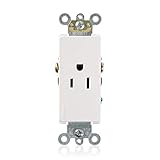
Do not confuse an air pump with an electrical wall receptacle. A Leviton 20-Amp, 125-Volt Narrow Body Single Receptacle, 5801-W, is listed at $3.69, and the Leviton 15-Amp, 125-Volt Decora Plus Single Receptacle, 16241-W, for under $10. Those are electrical outlets used to power equipment; they do not describe the number of air outlets on an aquarium pump.
Which One for Your Home
Small Apartment
Pick a single outlet if you have one small aquarium or tabletop feature. Its smaller footprint, simpler hose routing, and lower starting cost are valuable when the setup sits on a compact cabinet. Look for adjustable airflow and rubber feet or a cushioned base to limit vibration.
Family With Kids or Pets
A dual outlet is useful when you have multiple tanks or want separate aeration zones. It can reduce the number of pumps and power cords in the room. Secure the pump where children and pets cannot pull the tubing, and use drip loops on electrical cords to help keep water away from the receptacle.
Rental
Choose the simplest pump that meets the equipment’s needs. A single outlet is generally easier to conceal and move without modifying the room. If you rent and cannot add shelving or wall storage, measure the cabinet before buying; a dual outlet needs extra rear clearance for two hoses.
Long-Term Home
A dual outlet often offers better future value if you expect a larger aquarium, a second tank, or additional filtration. Buy based on the manufacturer’s airflow range and noise information, not just the number of outlets. If your setup is unlikely to change, a quality single outlet may remain the more efficient purchase.
FAQ
Is a dual outlet air pump more powerful than a single outlet?
Not necessarily. Dual outlets provide two connections, but total airflow varies by motor, depth rating, and control design. Compare the published gallons-per-hour rating, maximum water depth, and recommended tank size.
Can I use a single outlet for two air stones?
Yes, with a compatible splitter, but the airflow will be divided. The result may be adequate for two small stones, though independent adjustment is usually easier with a true dual-outlet pump.
Does a dual outlet pump use twice as much electricity?
No. Power use depends on the motor and operating setting. Many dual-outlet pumps use only somewhat more electricity than comparable single-outlet models, but check the wattage printed on the product specifications.
Which air pump is quieter?
Outlet count alone does not determine noise. Look for adjustable output, vibration-reducing feet, a suspended diaphragm design, and a stated noise rating when available. Properly sized air stones and soft tubing can also reduce bubbling and vibration.
Ready to decide? Our #1 pick for 2026 is the Comfort.
Live price & availability on Amazon.
Related Reviews & Guides




Signs of a Healthy Betta Fish and What to Check Each Week

Freshwater Crayfish Care Guide: Setup, Feeding, and Tank Mate Tips