Last Updated: September 25, 2026
Saltwater aquarium equipment checklist items divide into three groups: what the tank cannot run without, what it needs once corals arrive, and what is genuinely optional. The tables below sort every item by that test, give the sizing figure for each, and set out the order to buy them in for a first marine tank.
As an Amazon Associate we earn from qualifying purchases.
As an Amazon Associate we earn from qualifying purchases at no extra cost to you. Prices and availability are accurate as of the date shown and are subject to change.

API Saltwater Master Test Kit 550-Test Saltwater Aquarium Water Test Kit
Selected for "Saltwater Aquarium Equipment Checklist: Numbers and Cost": this listing is testing and monitoring (API Saltwater Master Test Kit 550-Test Saltwater Aquarium Water Test K), matching the equipment this article covers.
View on Amazon
Aquarium Maintenance Logbook: Document & Track Feeding, Tank Conditions, Water Test Readings & Other Important Information | Fish Keeping Record Book for Aquarists of All Levels
Selected for "Saltwater Aquarium Equipment Checklist: Numbers and Cost": this listing is stands and furniture (Aquarium Maintenance Logbook: Document & Track Feeding, Tank Condition), matching the equipment this article covers.
View on Amazon
API CALCIUM TEST KIT Saltwater Aquarium Water 1-Count Test Kit
Selected for "Saltwater Aquarium Equipment Checklist: Numbers and Cost": this listing is testing and monitoring (API CALCIUM TEST KIT Saltwater Aquarium Water 1-Count Test Kit), matching the equipment this article covers.
View on Amazon
Saltwater Aquarium Book: Detailed checklist to record parameters for your aquarium to maintain it| gift for fish lover|Reef Tank Aquarium Hobbyist ... Maintenance Journal| Aquarium logbook
Selected for "Saltwater Aquarium Equipment Checklist: Numbers and Cost": this listing is lighting (Saltwater Aquarium Book: Detailed checklist to record parameters for y), matching the equipment this article covers.
View on AmazonBy David Nguyen
The Checklist and How to Use It
This is a lookup rather than a discussion. The first table lists every item with the number that sizes it and whether it is essential; the second gives the buying order and what each stage unlocks. Both sit here rather than further down.

The Decision Numbers: What Sizes Each Item
Every item on a saltwater aquarium equipment checklist is sized by one figure, and it is rarely the tank label. Skimmers scale to actual water volume, heaters to wattage per gallon, powerheads to total turnover, and lights to PAR at the depth corals sit.
| Item | Sizing figure | Essential for fish-only | Essential for reef |
|---|---|---|---|
| Tank and stand | 8.5 lb per gallon water, plus rock | Yes | Yes |
| Refractometer | Calibrated to 35 ppt solution | Yes | Yes |
| RO/DI unit | Output TDS 0 ppm, 40-60 psi feed | Yes | Yes |
| Salt mix | Mixed to 1.024-1.026 SG | Yes | Yes |
| Heater | 3-5 W per gallon | Yes | Yes |
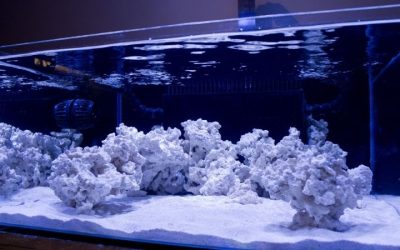
| Rock | 1-1.5 lb per gallon (0.45-0.7 kg per 3.8 L) | Yes | Yes |
| Return pump or filter | 10-20x turnover fish-only | Yes | Yes |
| Powerheads | 20-40x total turnover | Helpful | Yes |
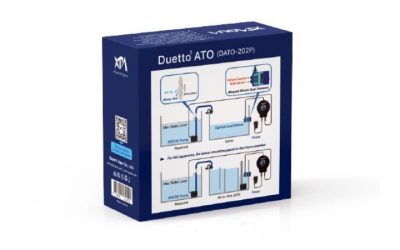
| Automatic top-off | Replaces 1-2% volume daily | Helpful | Yes |
| Protein skimmer | Rated by actual water volume | Optional under 40 gallons | Yes above 40 gallons |
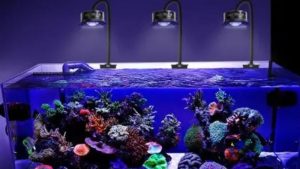
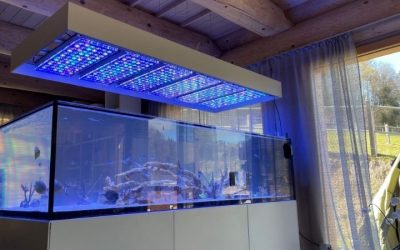
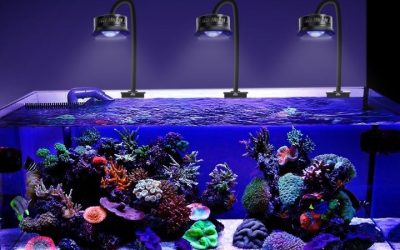
| Reef light | 50-400 PAR by coral type | No | Yes |
| Test kits | Ammonia, nitrite, nitrate, alkalinity | Yes | Plus calcium, magnesium, phosphate |
| TDS meter | Checks RO/DI output | Yes | Yes |
| Quarantine tank | 10-20 gallons (38-76 L) | Strongly advised | Strongly advised |
The quarantine row is the one most often skipped and the one with the highest consequences. Any treatment containing copper is lethal to invertebrates and corals, so treating fish in the display is not an option once a reef is established.
The Rule Behind the Order of Purchase
Buy in the order that each item unlocks the next stage rather than by price. A refractometer and an RO/DI unit come before any livestock, because they determine whether the water is correct at all, and correct water is what everything downstream depends on.
Lighting and dosing gear come last, because they only matter once corals are in and the parameters have proven stable across weeks. Buying a reef light for a tank that is still cycling ties up money that a test kit set would use better.
Reading the Checklist, Units and Margin of Error
Actual water volume is the recurring unit here, and it runs roughly 20-25% below the tank label once rock, sand and chamber space are subtracted. Size the skimmer, salt quantity and water change percentage against that figure.
| Stage | Buy at this point | What it unlocks |
|---|---|---|
| Before water goes in | Tank, stand, heater, pump, rock, sand | A system that can hold and circulate |
| Before mixing salt | RO/DI unit, TDS meter, refractometer, salt | Water at the correct salinity and purity |
| During cycling | Ammonia, nitrite and nitrate test kits | Knowing when cycling has finished |
| Before the first fish | Quarantine tank, powerhead | Safe introduction and adequate flow |
| Before the first coral | Reef light, alkalinity and calcium kits | Conditions corals can actually hold in |
| Once corals are growing | Automatic top-off, magnesium kit | Stability as consumption rises |
| Above 40 gallons of reef | Protein skimmer | Nutrient export beyond water changes |
| When consumption outpaces changes | Dosing equipment | Holding alkalinity between changes |
Work the second table after the first. The checklist says what each item is and how to size it; the staging table says when spending on it is justified, which matters when the full list costs more than most people budget.
Adjusting the List for Your Own Tank
A saltwater aquarium equipment checklist describes a generic build. Your volume, your intended livestock and your room all move which items are essential and which can wait, sometimes by several hundred pounds of spending.
Adjusting for Fish-Only Versus Reef
A fish-only system with live rock needs no reef light, no calcium or magnesium testing and usually no dosing equipment, which removes a substantial share of the total. Turnover also drops from 20-40 times to 10-20 times per hour.
Adding corals adds the light, three more test kits, a powerhead upgrade and eventually dosing gear. That is the honest cost difference between the two paths, and it is worth deciding before buying rather than discovering item by item.
Adjusting for Volume
Under 30 gallons (114 L), an automatic top-off moves from helpful to essential, since 1-2% daily evaporation shifts salinity within days. A skimmer moves the other way, becoming optional because frequent small changes handle export adequately.
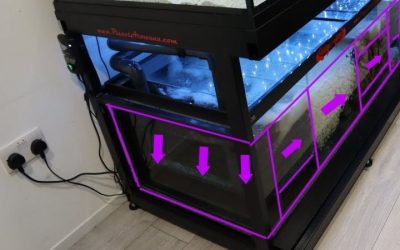
Above 75 gallons (284 L), a sump becomes worth the plumbing, since it adds water volume, houses equipment out of the display and simplifies top-off. Below that, an all-in-one with a rear chamber usually does the same job with less complication.
Tank Size, Placement and Fit
Measure the rear chamber or cabinet against every item before ordering, since most nano chambers give 3-4 in (7.6-10 cm) and many skimmers will not fit. Check heater length against water depth and return pump height against chamber height.
Leave space beside the tank for a salt mixing container, a top-off reservoir and dry salt storage. Marine keeping needs bench space as much as tank space, and adding it after the tank is running is considerably more awkward.
Where This Checklist Stops Working
Any equipment list is a generalisation taken across many builds. Three situations override this saltwater aquarium equipment checklist entirely, and recognising them early saves considerably more money than optimising individual purchases ever will.
When Buying the Item Is the Wrong Answer
Nuisance algae is usually a source water or feeding problem rather than an equipment shortfall. Check RO/DI output TDS with a meter and measure the feeding portion before buying a reactor, since neither purchase fixes a nutrient input.
Unstable alkalinity in a young tank is often a test error rather than a dosing requirement. Test twice with in-date reagents before buying dosing equipment, because a confident wrong reading leads directly to a correction that causes real damage.
Variables the List Cannot Hold
Room conditions change what you need. A tank in a consistently hot room may need a fan or a chiller that appears on no standard list, and a cold room raises heater wattage above the usual 3-5 W per gallon rule of thumb.
Livestock choice matters too. Some fish require a larger quarantine setup, some corals demand lighting well beyond a general figure, and a few species need flow patterns that a standard powerhead arrangement does not produce.
When to Stop Buying and Start Measuring
Once the essential list is complete, readings should drive every further purchase. Nitrate above 20 ppm, phosphate above 0.15 ppm or alkalinity falling between changes each point at a specific addition rather than at a general upgrade.
Where all readings sit in range and the tank still looks wrong, the missing item is usually time rather than equipment. Marine systems mature across months, and a six-week-old tank rarely looks like a two-year-old one whatever is plumbed into it.
Verifying the Setup and Re-Checking It
Equipment drifts out of specification quietly, so a saltwater aquarium equipment checklist needs revisiting rather than completing once. This section covers what to check, how often, and what degrades across a year of normal running.
What to Measure and How Accurate It Is
Check RO/DI output TDS with a meter quarterly, since cartridges exhaust with no visible sign and the first symptom is usually algae. Calibrate the refractometer against a 35 ppt standard twice a year rather than trusting the factory setting.
Verify the heater against an independent thermometer, and measure loaded turnover once by timing the return into a container of known volume. Both figures drift, and neither announces itself in any way you would notice day to day.
How Often to Re-Check
Check salinity and temperature weekly at minimum, and test reagent dates quarterly. Verify powerhead and return pump flow annually, since calcium deposits build on shafts and impellers in saltwater considerably faster than scale does in fresh water.
Re-run the whole checklist once a year, because the tank itself changes. A reef that needed no dosing equipment at all in year one commonly needs it by year two, as coral mass and alkalinity consumption both rise together.
What Degrades Over Time
RO/DI cartridges exhaust silently, reef lights lose measurable PAR across two to three years, and automatic top-off floats stick with salt creep. All three fail in ways that show up in livestock before they show up in the equipment.
On timing, marine equipment sees its deepest discounts in late June and again in late November, which suits planned replacements. A sale changes nothing biological: a new tank still needs three to eight weeks of cycling, and prices move constantly.
Saltwater Aquarium Equipment Checklist: Questions
These follow from the tables rather than replacing them. Every answer about this saltwater aquarium equipment checklist stays with a sizing figure, since the same item is right or wrong depending entirely on the number behind it.
What can I skip on a first tank?
A skimmer under 40 gallons (151 L), a sump under 75 gallons (284 L), dosing gear until consumption outpaces water changes, and a reef light entirely if the tank is fish-only. Nothing else on the essential column is safely skipped.
Do I really need an RO/DI unit?
Yes, or a reliable source of water verified at 0 ppm TDS. Tap water carries phosphate, silicate, nitrate and sometimes copper, and dechlorinator addresses none of them. Under the US EPA Lead and Copper Rule, first set in 1991, the drinking water action level for copper is 1.3 mg/L, far above what invertebrates tolerate.
Is a quarantine tank worth the space?
In a reef, yes. Copper-based treatments cannot be used in a display holding corals or invertebrates, so a separate 10-20 gallon (38-76 L) tank is the only route to treating a fish without risking everything else.
How much does the full list cost?
More than the tank by a wide margin, which is the point of the staging table. Budget the essential column first, spread the reef column across the first year, and treat the optional items as later improvements rather than launch purchases.
See More:
Conclusion
A working saltwater aquarium equipment checklist starts with the six items no marine tank runs without: tank and stand, refractometer, RO/DI with a TDS meter, salt mix, heater at 3-5 W per gallon, and rock at 1-1.5 lb per gallon.
Add powerheads for 20-40 times turnover, an automatic top-off, reef lighting matched by PAR and the extra test kits only when corals are the plan. Buy in the staged order, size everything against actual water volume, and add a quarantine tank before the first fish.
11 Best Protein Skimmers: Top Picks Reviewed and Compared (2026)
Best Rimless Aquarium for Saltwater: Reef Ready Top Picks