Last Updated: October 21, 2026
- Top Pick: MICROBE-LIFT Nite-Out II Aquarium Bacteria for Start-up, Instantly Cycle Aquariums, Add Fish on Day 1, Rapid Ammonia and Nitrite Reducer for Freshwater & Saltwater Fish Tank, 16 Ounces (NITEH16)
- Best Value: MICROBE-LIFT Nite-Out II Aquarium Bacteria for Start-up, Instantly Cycle Aquariums, Add Fish on Day 1, Rapid Ammonia and Nitrite Reducer for Freshwater & Saltwater Fish Tank, 8 Ounces (NITEH08)
- Premium Choice: Seachem Stability – 250ml/ 8.5 fl. oz.
Nitrite spike in new aquarium tanks is not a fault, it is the middle of the process working exactly as expected. It is also the longest stage of cycling and the one most likely to be misread as a failure. This guide covers why the readings climb, how long they persist, and what each situation requires.
As an Amazon Associate we earn from qualifying purchases.
As an Amazon Associate we earn from qualifying purchases at no extra cost to you.




By David Nguyen
Why a Nitrite Spike in New Aquarium Tanks Happens
Nitrite appears only after the first bacterial group is established, which makes its arrival a milestone rather than a setback. A nitrite spike in new aquarium tanks marks the handover between the two stages, and the numbers behind it explain why it lasts so long.
The numbers that define the stage
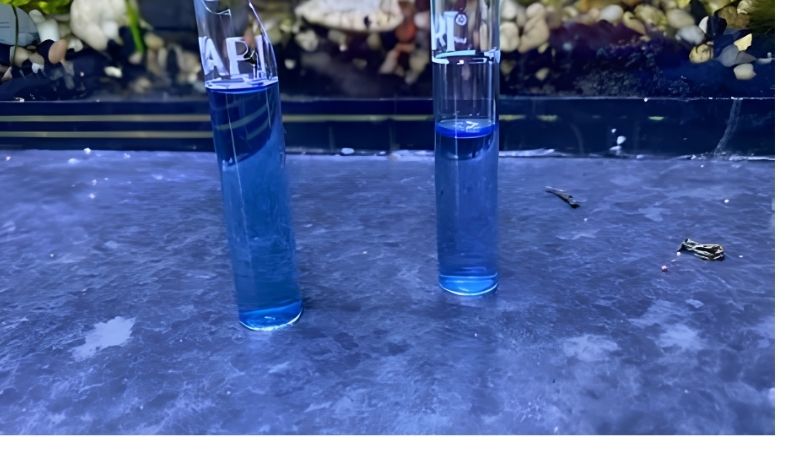
Three numbers describe this stage: when nitrite appears, how long it persists, and what reading matters in a tank that already holds fish. The first two are predictions drawn from experience, and the third is a hard threshold to act on immediately.
Nitrite usually appears between days seven and fourteen and then persists for two to four weeks, which is longer than the ammonia stage that preceded it. Readings frequently run off the top of the test chart, above 5 ppm, and that is normal in a fishless tank.
The target is zero, and the threshold with fish present is any reading at all. In a stocked tank, nitrite above 0 ppm calls for a 25 to 50 percent water change, reduced feeding and daily testing until it clears, because there is no safe level for livestock.
The stage ends quickly once it ends. Nitrite-oxidising bacteria reproduce more slowly than the first group but catch up abruptly, so a reading that has been high for a fortnight can fall to zero within two or three days as nitrate begins appearing.
What nitrite does and why the stage drags
Nitrite crosses the gills and interferes with the blood’s ability to carry oxygen, which is why affected fish may gasp at the surface even in well-aerated water. The damage is not visible early, and behaviour changes well after exposure has begun.
The delay itself has two causes. Nitrite-oxidising bacteria simply divide more slowly, and they are inhibited by high ammonia, so a tank dosed above 5 ppm holds its nitrite reading for considerably longer than one held carefully at 2 to 4 ppm.
Chloride competes with nitrite for uptake at the gill, which is the mechanism behind a common recommendation to add salt during this stage. It is worth knowing the limitation as well: salt harms many aquatic plants and several catfish and loach species.
| Nitrite reading | Fishless cycle | Tank with fish | First action |
|---|---|---|---|
| 0 ppm, no nitrate | Stage has not started | Normal if cycled | Check ammonia is being processed |
| 0 ppm, nitrate present | Stage complete | Cycled and stable | Run the 24-hour confirmation |
| 0.25-1 ppm | Stage beginning | Act now | Change 25-50%, feed less |
| 2-5 ppm | Normal mid-stage | Serious, act immediately | Change 50%, add aeration |
| Off the chart | Normal, may slow bacteria | Emergency | Repeated changes, no new fish |
| Static for 14 days | Check pH, ammonia, temperature | Same checks apply | Correct conditions, keep testing |
Normal ranges and action thresholds
In a finished tank nitrite reads 0 ppm permanently, alongside 0 ppm ammonia and nitrate below 20 to 40 ppm. Any nitrite in an established tank means the colony has fallen behind its load, which is a different situation from the cycling stage entirely.
During a fishless cycle, high nitrite needs no correction until it appears to be stalling progress. Very high concentrations inhibit the bacteria doing the work, so a partial change to bring the reading back on-chart occasionally shortens the stage rather than delaying it.
Managing the Stage in a Real Tank
What to do about a nitrite spike in new aquarium tanks depends almost entirely on whether fish are already present in the tank. The chemistry is identical in both cases, while the readings that count as acceptable are not remotely similar between them.
Tank size, placement and fit
Measure the stand top, the gap behind the tank and the water line against the heater before ordering equipment, since none of it can be adjusted once filled. During this stage in particular, a filter losing prime overnight costs days of bacterial growth.
Temperature drives the pace. Hold 78 to 80 °F (26 to 27 °C) and verify against a separate thermometer, because this stage stretches noticeably in a cold room and is the phase where an underpowered heater shows up as an apparently endless plateau.
When fish are already in the tank
This is the situation where the stage stops being a curiosity in a test tube and becomes a welfare problem to manage daily. The aim is simply to hold the reading as close to zero as repeated water changes allow, until the colony finally catches up.
Test daily and change 25 to 50 percent whenever any nitrite registers, matching temperature to within 1 to 2 °F (about 1 °C) and treating for chlorine and chloramine. Feed lightly, skip a day if needed, and add no further fish until readings hold at zero.
Increase aeration at the same time. Since nitrite impairs oxygen transport in the blood, raising dissolved oxygen with an air stone or a rippled surface reduces the load on the fish while the water changes deal with the concentration in the tank itself.
Summer makes this harder in a way that catches people out. Warm water holds less dissolved oxygen, so the same nitrite reading in July stresses fish more than it does in March, and a heatwave during this stage is worth answering with extra surface agitation.
When the tank is fishless
With nothing living in the tank, the readings carry no consequence at all and the correct response is very often to do nothing whatever. The temptation to intervene anyway is precisely what turns a three week stage into a six week one in practice.
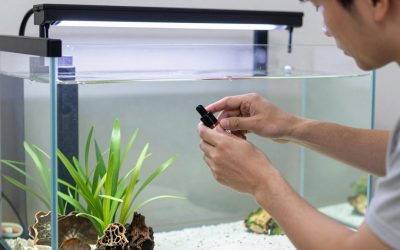
High nitrite is expected and needs no response. Keep dosing ammonia to 2 to 4 ppm whenever it reaches zero, hold the temperature steady, and keep testing daily so the eventual fall is caught on the day it happens rather than days afterwards.
Resist changing water to make the numbers look better. The only reasons to change during this stage are ammonia above 5 ppm, a pH that has dropped below 6.5, or nitrite so high it appears to be inhibiting the colony that is meant to consume it.
Misreadings That Prolong the Stage
Three responses to a nitrite spike in new aquarium tanks make the situation worse rather than better, and all three come from treating the reading as damage rather than as one stage in a longer process. Each one has a specific mechanism behind it.
Myth: a big water change resets the problem
In a fishless tank, a large change removes the ammonia feeding the colony and dilutes the nitrite the second group needs, which extends the stage. With fish present the calculation reverses entirely, and frequent changes are the correct response.
Myth: the cycle has stalled after ten days
Two to four weeks of high nitrite is the normal duration, not a stall. A genuine stall shows as no movement in any reading for a fortnight combined with a specific cause: ammonia above 5 ppm, pH below 6.5, cold water or chlorinated top-ups.
Myth: adding more bacteria will clear it faster
Bottled products can seed a colony at the start and do little once the stage is already running, since the limiting factor is reproduction time rather than the initial population. Dosing repeatedly through this stage rarely changes the timeline.
After the Spike Clears
The end of this stage is abrupt, and what happens over the following week decides whether it returns at all. A nitrite spike in new aquarium tanks that clears properly should never recur unless the colony is knocked back by something specific.
Confirming and stocking
Once nitrite reaches zero and nitrate appears, run the confirmation: dose ammonia to 2 to 4 ppm, wait 24 hours, and expect zero ammonia and zero nitrite in the result. Then change enough water to bring nitrate below 20 ppm before any fish are bought.
Stock in small groups a fortnight apart rather than all at once. Adding a full stocking list in one afternoon produces more waste than the colony can handle and brings back a smaller version of the same reading, which is entirely avoidable.
What brings nitrite back
Nitrite appearing in an established tank always means the second bacterial group has lost ground somewhere, and there is normally a specific event behind it somewhere within the previous week or so rather than any gradual decline over months.
Deep filter cleaning is the main cause, especially rinsing media under the tap where chlorine kills bacteria directly. Rinse mechanical floss in removed tank water, leave biological media alone, and never clean filter and substrate thoroughly in the same week.
Power cuts are the other. Storm season runs June through November in the Atlantic and winter outages do the same job, and a filter that stops moving water loses colony to oxygen shortage within hours, which returns as nitrite a day or two later.
The cost of monitoring it
Nitrite reagents are cheap and expire whether used or not, which makes an out-of-date kit the most expensive item in this list. Note the purchase date, and be sceptical of a sudden zero reading that arrives without nitrate appearing alongside it.
Keep dechlorinator stocked in quantity during this stage. A tank holding fish through a nitrite spike may need several large changes in a single week, and running out halfway through a change turns a manageable reading into an avoidable loss.
Frequently Asked Questions
These come up around week three, when nitrite has been reading high for days on end, the ammonia stage is clearly finished, and nothing at all appears to be moving forward in the daily tests being carried out on the tank each morning.
How long does a nitrite spike in new aquarium tanks last?
Typically two to four weeks, considerably longer than the ammonia stage. It ends quickly once the second bacterial group catches up, often falling from off the chart to zero within two or three days as nitrate finally starts to appear in the results.
Is any nitrite safe for fish?
No. Treat any reading above 0 ppm as requiring action, since nitrite interferes with oxygen transport in the blood and the effect is cumulative over days. Change 25 to 50 percent, feed less, increase aeration and test daily until it clears.
Why is nitrite still high after ammonia hit zero?
That is the expected sequence. Zero ammonia means the first group is established and the second is still building, which takes another two to four weeks. Check that ammonia is not being dosed above 5 ppm, since that inhibits the second group.
My fish are gasping. Is nitrite the cause?
Test ammonia, nitrite, nitrate and temperature before assuming anything. Nitrite is a plausible cause because it impairs oxygen transport, and so are high temperature and low oxygen. If the water tests clean and the behaviour continues, consult an aquatic vet.
See More:
Getting Through the Middle Stage
A nitrite spike in new aquarium tanks is the longest and most misread part of cycling: two to four weeks, readings often off the chart, and an abrupt ending once the second bacterial group catches up and nitrate starts to register in the tests.
With no fish present, leave it alone and keep dosing ammonia to 2 to 4 ppm. With fish present, change 25 to 50 percent whenever any nitrite registers, feed lightly and increase aeration, then confirm with the 24 hour clearance test before stocking further.

Goldfish Tank Size Guide: Real Minimum Gallons Explained
Freshwater Shrimp Tank Setup: How It Works and What to Watch