Last Updated: October 21, 2026
How to increase aquarium hardness is really two jobs, not one: raising GH feeds your livestock, raising KH protects your pH, and the methods are different. This guide covers target ranges in dGH and ppm, dosing math worked through with real tank volumes, a diagnostic table, and the shortcuts that crash a tank overnight.
As an Amazon Associate we earn from qualifying purchases.
As an Amazon Associate we earn from qualifying purchases at no extra cost to you.



By David Nguyen
Measure Before You Add Any Minerals
Adding minerals to a tank you have not tested is guesswork with live animals. Getting how to increase aquarium hardness right starts with separating GH from KH on paper, because a tank can be low in one and adequate in the other, and the fix is not the same product.
The Numbers That Decide Everything: GH, KH, pH and TDS
General hardness (GH) counts calcium and magnesium, the minerals fish, shrimp and snails use for bone, shell and molting. Carbonate hardness (KH) is the buffer holding pH steady. Record both in dGH/dKH and ppm, since 1 dGH is about 17.9 ppm CaCO3.
Also record TDS in ppm and the tank temperature. Then confirm the biology is sound: ammonia 0 ppm, nitrite 0 ppm, nitrate below 40 ppm. Mineral dosing on an uncycled tank adds a second variable to a problem you have not solved yet.
Reading Your Results: Which Number Is Actually Low
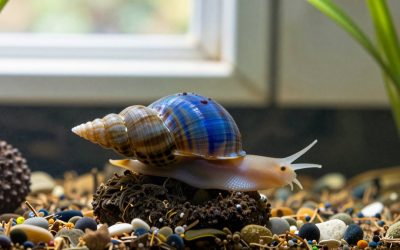
Low GH with adequate KH shows up as shrimp failing to molt and snails with pitted, thinning shells while pH stays stable. That case needs calcium and magnesium, not carbonate. Adding baking soda here raises KH further and leaves the real deficiency untouched.
Low KH with any GH is the urgent case. Below roughly 3 dKH (54 ppm) a stocked tank loses buffering, and pH can drop several tenths overnight before rebounding at the next water change. The table below maps what you see to the reading behind it.
| What you see | Readings that go with it | Most likely cause | First action |
|---|---|---|---|
| Shrimp die during or just after molting | GH under 4 dGH (72 ppm) | Calcium and magnesium too low | Raise GH with a mineral supplement |
| Snail shells pitted, thin at the edge | GH under 5 dGH (90 ppm), pH below 7.0 | Shell erosion in soft, acidic water | Raise GH, then stabilise KH |
| pH falls between water changes | KH under 3 dKH (54 ppm) | Buffer exhausted by the nitrogen cycle | Raise KH separately from GH |
| pH swings after every water change | Tap KH far above tank KH | Source water mismatch | Match new water before adding it |
| Fish gasping, hardness reads normal | Ammonia above 0.25 ppm, temp above 84 °F (29 °C) | Not a hardness problem | Fix water quality and oxygen first |
When Low Hardness Is Not Your Real Problem
Plenty of soft-water tanks run for years without incident. If your fish are eating, coloured up and breathing normally at 4 dGH (72 ppm), you have a working tank, not a deficiency. Hardness only needs raising when livestock shows a specific symptom or a species demands it.
Behavioural signs such as clamped fins, flashing and hiding are not hardness signatures. Test the four core numbers, check daily light hours and how much food goes in, then look at the environment. If the readings stay clean and behaviour continues, ask an aquatic veterinarian or an experienced fish store.
How to Increase Aquarium Hardness Step by Step
Work through these in order, testing between each stage. Every step below assumes the tank is cycled and that you have written down GH and KH separately, because dosing blind is how a stable soft-water tank becomes an unstable hard one in a weekend.
Step 1: Set a Target Range for Your Livestock
Neocaridina shrimp do well at 6-10 dGH (107-179 ppm) with 2-5 dKH (36-90 ppm). Livebearers such as guppies and mollies prefer 10-20 dGH (179-358 ppm) and 6-12 dKH. African rift lake cichlids sit higher again, commonly 10-20 dGH with 10-18 dKH.
Choose the range that covers everything in the tank and aim for the middle. If two species have no overlap, run two tanks instead of splitting the difference. Where your tap water already sits inside a species range, the cheapest answer is to stock to the water you have.
Step 2: Pick the Right Material for GH or KH
Material choice is where how to increase aquarium hardness splits in two. Commercial GH boosters supply calcium and magnesium in a fixed ratio and move GH without touching KH much. Crushed coral and aragonite dissolve slowly in the filter or substrate and raise both GH and KH together, which suits rift lake and livebearer tanks.
Baking soda raises KH alone and leaves GH unchanged, so it is a buffer fix rather than a mineral fix. Every one of these has a limit worth stating: crushed coral is slow and hard to dial back once the tank stabilises above your target.
Step 3: Dose Slowly, With the Math Written Down
Work from actual water volume, not the box rating. A 20 gallon (76 L) tank holds roughly 17-18 gallons (64-68 L) after substrate, rock and the gap at the surface, so dosing to the printed volume overshoots by about 12% every single time.
Cap movement at 1-2 dGH (18-36 ppm) per week. Mix any supplement into the new water in a bucket, test the bucket, then add it during a normal 20-30% water change with the temperature matched to within 1-2 °F (about 1 °C) of the tank.
Crushed coral works differently: start with a small measured quantity in a filter bag, then retest after seven days rather than adding more on day two. It dissolves faster in acidic water and slows as pH rises, so the effect is self-limiting but never instant.
Step 4: Tank Size, Placement and Fit
Crushed coral needs somewhere to live. A hang-on-back filter needs 4-6 in (10-15 cm) of clearance behind the tank, and a canister needs cabinet height for the housing plus the hose bend above it. Media bags take space you may already have filled.
Weight decides the stand. Water runs about 10 lb/gallon (roughly 1 kg/L), so a filled 55 gallon (208 L) tank passes 600 lb (272 kg) with substrate and rock. Measure before you order: cabinet length against tank footprint, and interior height against your filter housing.
What Never to Do When Raising Hardness
Three actions cause most of the damage here. Knowing how to increase aquarium hardness is largely knowing which shortcuts to refuse, because each one converts a slow, controllable adjustment into a fast one that fish experience as a shock.
Never Pour Baking Soda Straight Into the Tank
Dry sodium bicarbonate dropped into a display tank creates a local pH spike around the point where it lands, and moves whole-tank KH in a single step. Dissolve it in a bucket of new water, test that bucket, and let a water change carry it in gradually.
It also raises only KH. If your actual deficiency was calcium and magnesium, you now have a well-buffered tank that still cannot support shrimp molting or snail shells, plus a sodium level nobody measured.
Never Use Marine Salt or Table Salt as a Mineral Source
Marine salt mix is formulated for seawater and adds sodium chloride along with everything else, which is not what a freshwater tank needs. It raises TDS sharply while doing little for the calcium and magnesium your livestock actually consumes.
Table salt is worse: it adds no useful hardness at all, and many plants and scaleless fish such as corydoras react badly to sustained salt in the water column. Neither belongs in a freshwater hardness routine.
Never Move Hardness Faster Than One Or Two Degrees a Week
Osmotic shock is a genuine failure mode, and it runs in both directions. Fish taken from 4 dGH to 14 dGH in a day are measurably stressed even when they survive the first night, and shrimp are less forgiving than fish about sudden mineral changes.
Gradual dosing across normal water changes keeps control in your hands. You can stop at any point, retest, and hold the value. A single large correction removes that option and gives you nothing to fall back on when the readings overshoot.
Keeping Hardness Stable for Twelve Months
Hardness drifts in both directions once you stop watching, which is why tanks that got how to increase aquarium hardness right in week one still read out of range by month five. Nitrification consumes KH continuously while evaporation pushes GH the other way.
A Testing and Water-Change Routine You Can Keep
A baseline of 20-30% weekly, adjusted by measured nitrate, suits most freshwater tanks. Prepare and test new water in a bucket every time rather than dosing the display, and record the ratio that worked so you are not recalculating from scratch each week.
Test GH and KH monthly once stable, and again after any change to source water, hardscape or stocking. KH is the one to watch most closely, because it falls quietly as nitrification produces acid, and the first visible sign is usually a pH reading that has already moved.
Winter changes the arithmetic. Indoor heating drops humidity and speeds evaporation, and since evaporation removes water while leaving minerals behind, GH and TDS climb steadily through the cold months. Top off with pure water only, and check your readings when the heating goes on.
Materials and Gear That Drift Over Time
Crushed coral exhausts. It dissolves from the outside in, and a bag that held KH steady in month one may contribute very little by month eight, leaving you with a slow decline nobody notices until pH moves. Plan on replacing or topping it up annually.
Liquid reagents expire, and old nitrate reagent reads low unless the second bottle is shaken hard. Heaters drift too, often ±2-4 °F (±1-2 °C) off the dial on budget units. Every powered device beside water belongs on a GFCI outlet with a drip loop and a UL or ETL mark.
Early Signals That Your Numbers Are Moving
A pH reading that changes between two consecutive tests is usually a KH problem showing itself late. Treat any downward pH drift as a prompt to test KH the same day rather than adjusting pH directly, which only consumes what buffer remains.
On the GH side, watch molting shrimp and the growing edge of snail shells. White crust at the waterline and on heater glass points the opposite way, meaning minerals are concentrating and you should be topping off with pure water instead of tap.
Frequently Asked Questions
These four come up most often once the first dose has gone in and the readings start to move.
Can I raise GH and KH at the same time?
Yes, and crushed coral or aragonite does exactly that, which suits rift lake cichlid and livebearer tanks. Where a species needs high GH with low KH, such as some caridina setups, use a dedicated mineral supplement instead so the two numbers stay independent.
Will raising hardness also raise my pH?
Usually yes, because carbonate-based materials add buffering and let pH settle higher. A GH-only booster moves pH much less. Watch both numbers for a week after any change, and treat a rising pH as a consequence to monitor rather than a problem to counteract.
How long before crushed coral shows a result?
Expect days rather than hours, and a further one to four weeks before the tank settles at a stable value. It dissolves faster in acidic water and slows as pH climbs, so retest after seven days rather than adding more when nothing has happened yet.
Do plants suffer when I increase hardness?
Most common aquarium plants tolerate 3-15 dGH (54-268 ppm) without trouble. Very high KH can limit carbon availability for demanding species, so understanding how to increase aquarium hardness in a planted tank means moving in small steps and watching new growth for a few weeks.
The Bottom Line on Raising Aquarium Hardness
The short answer to how to increase aquarium hardness: test GH and KH separately, decide which is actually low, then use a mineral supplement for GH, baking soda for KH, or crushed coral when you want both. Dose into a bucket of new water rather than the display, cap movement at 1-2 dGH per week, and work from real water volume. Retest monthly and replace crushed coral before it exhausts.

Safe Nitrite Level in Aquarium Water: Why It Has to Be 0
Kuhli Loach Care Guide: A Peaceful Bottom-Dweller for Community Tanks