Last Updated: October 4, 2026
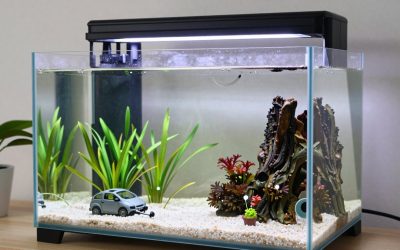
Choosing the right amount of substrate affects plant growth, waste management, aquascaping, and how much usable water remains in your aquarium. For a 20-gallon tank, the correct amount depends less on the tank’s advertised capacity and more on its interior footprint, substrate type, and desired depth.
The Short Answer
For most 20-gallon aquariums, plan on 15 to 30 pounds of substrate:
As an Amazon Associate we earn from qualifying purchases at no extra cost to you.


- 1-inch layer: approximately 12 to 20 pounds
- 2-inch layer: approximately 25 to 35 pounds
- 3-inch planted-tank layer: approximately 35 to 50 pounds
A standard 20-gallon long tank usually measures about 30 x 12 inches at the base. That means one 10-pound bag will generally provide a thin layer, while two to three 10-pound bags are more appropriate for a medium-depth aquascape.
For a 20-gallon high tank, the footprint is typically smaller—about 24 x 12 inches—so it requires less substrate to reach the same depth. As a practical starting point, buy two 10-pound bags for a basic gravel or sand bed, or three bags if you want a deeper planted layout with a sloped foreground and background.
Standard Sizes
“20 gallon” describes water capacity, not one universal set of outside dimensions. The two common formats have different footprints, which directly changes the amount of substrate required.
| Tank style | Approximate dimensions in inches | Approximate dimensions in centimeters | Typical substrate amount |
|---|---|---|---|
| 20-gallon long | 30 x 12 x 12 in | 76.2 x 30.5 x 30.5 cm | 15–20 lb for 1 in; 25–40 lb for 2–3 in |
| 20-gallon high | 24 x 12 x 16 in | 61.0 x 30.5 x 40.6 cm | 12–18 lb for 1 in; 20–35 lb for 2–3 in |
These are approximate exterior dimensions. The glass, trim, rounded corners, and interior equipment reduce the usable area slightly. Substrate also varies considerably by material. Large gravel leaves more open space between pieces, while fine sand packs more tightly. A porous planted-tank substrate may weigh less than ordinary gravel for the same volume.
For a level 1-inch bed, a 20-gallon long tank has about 360 square inches of floor area. A 2-inch bed doubles the volume, and a 3-inch bed triples it. The 20-gallon high has about 288 square inches of floor area, so it needs roughly 20% less substrate than a 20-gallon long for the same depth.
Common 10-pound bags make shopping simple. Aqua Natural Diamond Black Fine Gravel, Midnight Pearl Gravel, and Delta Sand are examples of products sold in 10-pound quantities, with listed prices around $14 to $16 per bag. Two bags usually create a functional shallow-to-medium bed, while three bags provide more flexibility for slopes or deep-rooted plants.
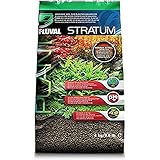
A specialized planted substrate can cost more per pound. Fluval Plant and Shrimp Stratum is commonly sold in an 8.8-pound bag, with prices around $25 to $32 per bag. Because it is lighter and intended for planted layouts, use the manufacturer’s coverage guidance when available rather than comparing it pound-for-pound with gravel.
How to Measure Your Space
- Measure the inside length and width. Use a tape measure along the bottom of the aquarium, not the outside frame. Record the measurements in inches or centimeters.
- Choose the target depth. A 1-inch bed works for a simple decorative setup. Use 2 inches for most planted tanks, and 3 inches toward the rear when creating a sloped aquascape.
- Calculate the volume. Multiply length by width by average substrate depth. For example, a 30 x 12-inch tank with a 2-inch bed equals 720 cubic inches.
- Account for the slope. If the front is 1 inch deep and the back is 3 inches deep, use an average depth of about 2 inches for estimating the total.
- Convert the estimate into bags. Divide your desired total weight by the bag size. For a 30-pound target, you would need three 10-pound bags or four 8.8-pound bags.
- Add a small buffer. Buy approximately 10% more than the exact estimate if you expect to create hills, cover a pre-filter, or replace displaced substrate during planting.
Do not fill the aquarium to the desired depth before installing décor. Rocks, driftwood, and filled plant pots take up space and may displace several pounds of substrate. Set heavy décor on the tank bottom or on a protective support according to the aquarium manufacturer’s guidance, then add substrate around it.
By Room or Use Case
Community Fish Tank
For a standard community aquarium with tetras, rasboras, livebearers, or similar fish, a 1- to 2-inch layer is usually practical. Plan on about 20 to 30 pounds for a 20-gallon long and roughly 15 to 25 pounds for a 20-gallon high. Medium or fine gravel is easy to vacuum, while sand creates a smooth appearance but may require careful cleaning to avoid disturbing the surface.
Freshwater Planted Tank
Most rooted plants benefit from at least 2 inches of substrate, with 3 inches or more toward the back. A 20-gallon long planted tank often needs 30 to 40 pounds for a substantial slope. You can use an active planted substrate by itself or combine a nutrient-rich base with a decorative cap, provided the total depth remains stable.
Shrimp Aquarium
Shrimp tanks typically use a shallower bed, often 1 to 2 inches, unless the layout includes dense plants and deep rooting zones. Expect about 15 to 25 pounds in a 20-gallon tank. Dark gravel or active substrate can make shrimp colors stand out, but check how the substrate affects water chemistry before adding sensitive species.
Sand-Focused Aquascape
For a mostly sandy layout, use about 15 to 25 pounds for a 1- to 2-inch layer. Fine sand can compact, so avoid creating excessively deep, stagnant areas. A shallow foreground with deeper gravel or planted substrate in the back can provide visual contrast while reducing the total amount of sand needed.
Minimal or Bare-Bottom Setup
A quarantine, hospital, or breeding tank may need little or no substrate. A bare bottom is easier to monitor and clean, but it does not provide the natural appearance or rooting area of a covered floor. If you add only a decorative strip or thin layer, one 10-pound bag may be sufficient.
Common Sizing Mistakes
- Buying for gallons instead of floor area: A 20-gallon high and a 20-gallon long hold similar water volumes but need different substrate quantities.
- Assuming one 10-pound bag covers the entire tank: One bag is often a shallow layer, not a full 2- or 3-inch bed.
- Ignoring slopes: A level 2-inch calculation will underestimate the amount needed for a 3- to 4-inch background.
- Mixing weight and volume: Ten pounds of sand does not occupy exactly the same volume as 10 pounds of gravel or planted substrate.
- Using too much fine material: Deep, tightly packed sand can be difficult to clean and may limit circulation near the bottom.
- Forgetting hardscape displacement: Large rocks and driftwood reduce the space that substrate must fill.
FAQ
Is 20 pounds of substrate enough for a 20-gallon tank?
Usually, yes, for a shallow 1-inch layer or a modest 2-inch layer in a 20-gallon high tank. A 20-gallon long with a full 2-inch bed may need closer to 25 to 35 pounds, especially if you want a slope or have large rooted plants.
How deep should aquarium substrate be in a 20-gallon tank?
Use about 1 inch for a simple decorative setup, 1.5 to 2 inches for most community tanks, and 2 to 3 inches for planted aquariums. A sloped bed can be shallower in front and deeper in back, creating planting depth without filling the entire tank with 3 inches of material.
How many 10-pound bags do I need?
Plan on two bags for a basic setup and three bags for a deeper or planted layout. For a 20-gallon long, three 10-pound bags provide a useful cushion for a 2-inch bed with some slope. For a 20-gallon high, two bags may be enough unless you are building a substantial aquascape.
Can I mix gravel, sand, and planted substrate?
Yes, but use each material intentionally. Planted substrate works best where roots will grow, while gravel can provide structure and sand can create a decorative foreground. Avoid mixing very fine sand throughout coarse gravel, because the sand may settle into the gaps and reduce the texture and flow you intended.
Ready to decide? Our #1 pick for 2026 is the 20-gallon long.
Live price & availability on Amazon.
Related Reviews & Guides
Aquarium Sand Substrate Pros and Cons: An Honest Answer (2026)
Best All in One Saltwater Tank with a Built in Sump: Top