Last Updated: October 21, 2026
A sump can work on a planted tank, but the concern that stops most people is gas exchange, and it is a real trade-off to manage rather than a dealbreaker. The best aquarium sump for a planted tank is one with maker-confirmed freshwater use and a layout you can tune so CO2 loss stays controlled.
As an Amazon Associate we earn from qualifying purchases.
By David Nguyen
How a Sump Fits a Planted Tank
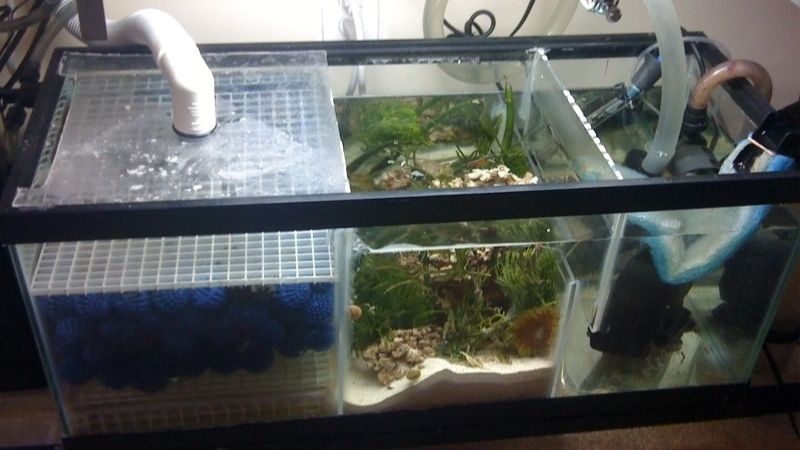
Two things decide fit for a planted system: manufacturer-confirmed freshwater compatibility and a water path you can control for gas exchange. A sump increases surface movement, which in a CO2-injected tank can raise CO2 loss, yet suppressing exchange too far lowers oxygen, so the goal is management, not elimination.
Verify Manufacturer Freshwater Compatibility
Compatibility should come from the maker, not an assumption. The Bashsea SS-30 is listed for fresh, salt, and reef use up to 120 gallons, and the SS-Cube carries the same fresh, salt, and reef wording up to 150 gallons, so both are confirmed for a freshwater planted build rather than merely presumed.
A reef sump is not automatically freshwater-safe just because water is water, so look for explicit maker wording. Where a listing does not state freshwater use, treat it as unconfirmed, since materials, coatings, and intended use are the manufacturer’s call, not something to infer from a saltwater product page.
Manage Gas Exchange for CO2 Tanks
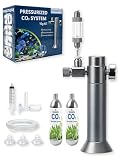
Surface movement in a sump increases gas exchange, which is the mechanism behind CO2 loss in injected tanks. According to planted-tank sources such as Aquarium Co-Op and Green Leaf Aquariums, that effect is condition-bound, so a high-tech CO2 tank must account for it rather than assume a sump rules the setup out.
The fix is control, not suppression. You can reduce turbulence at the return and adjust injection to hold target CO2, but choking gas exchange entirely lowers oxygen, which harms fish and plants, so tune surface movement to a balance rather than chasing zero exchange, which is neither achievable nor healthy here.
Match Main-Section Space to Your System
Media and return space live in the main section, so its floor area guides capacity. The SS-30 gives a 14.5-by-14.5-inch main of about 210 square inches, the SS-Cube about 244, and the SS-36 roughly 294, so the SS-36 holds about 39.7% more main-section floor area than the SS-30 does in usable staging terms.
More area is not automatically better filtration, though. That 39.7% larger main section on the SS-36 buys arranging room, not a proportional jump in performance, so size the main to the media and equipment you actually plan to run rather than assuming the biggest chamber filters a planted tank noticeably better.
Fit the Cabinet and Plan the Return
Footprint and plumbing still gate the choice on a planted build. The compact SS-Mano covers up to 60 gallons at 14 by 14 by 15 inches, while the SS-30 needs a 30-inch stand, and stepping from the Mano up to the SS-30 adds about $170, roughly a 44.7% price rise for the larger unit as of 09/2026.
Plan the return pump for delivered flow, not a maximum rating, since head and plumbing reduce output. A gentler, well-placed return also helps keep CO2 in a planted tank, so choose flow you can dial down, and confirm your cabinet interior and door opening before committing to a 30-inch or larger sump body.
Best Sumps for Planted Aquariums
No single sump wins for every planted tank, since display size, CO2 use, and cabinet space differ. The four below are all maker-confirmed for freshwater, so each is eligible on the primary axis, and the right pick depends on your tank size, main-section needs, and how you plan to manage gas exchange.
| Product | Best For | Key Spec | Watch Out For |
|---|---|---|---|
| Bashsea SS-30 | Confirmed freshwater on a mid-size planted tank | Fresh/salt/reef; up to 120 gal; 30x15x16 | Needs a 30-inch stand; tune return for CO2 |
| Bashsea SS-Mano | Compact planted nano | Fresh/salt/reef; up to 60 gal; 14x14x15 | Small main section for heavy media loads |
| Bashsea SS-Cube | Large capacity in a square footprint | Fresh/salt/reef; up to 150 gal; 20x20x16 | 20×20 footprint needs a matching cabinet |
| Bashsea SS-36 | Largest main section for arranging media | Fresh/salt/reef; up to 180 gal; 36x15x16 | Highest price; area is not proportional filtration |
Bashsea SS-30 – Confirmed Freshwater Mid-Size
The SS-30 suits a mid-size planted keeper who wants confirmed freshwater use. It is listed for fresh, salt, and reef up to 120 gallons, measures 30 by 15 by 16 inches with a 14.5-by-14.5-inch main of about 210 square inches, and runs a 5-to-9-inch operating depth. It sits around $500 as of 09/2026.
The strength is maker-confirmed freshwater compatibility plus a solid main section for media and return. The trade-off is that a planted CO2 tank must tune surface movement to limit CO2 loss, and the 30-inch footprint needs a matching cabinet, so confirm both fit and your injection plan before running it.
Bashsea SS-Mano – Compact Planted Nano
The SS-Mano fits a small planted tank on a tight stand. Listed for fresh, salt, and reef up to 60 gallons, it measures 14 by 14 by 15 inches with a compact 114.75-square-inch main and a 4-to-8-inch operating depth. Expect around $375 as of 09/2026 at current retail pricing for the unit today.
Its strength is confirmed freshwater use in the smallest footprint here, ideal where a larger sump will not fit. The catch is the modest main section, which limits how much media you can stage, so it suits a lightly filtered planted nano more than a heavily stocked or high-tech CO2 build that you plan to run.
Bashsea SS-Cube – Large Capacity, Square Footprint
The SS-Cube suits a planted keeper wanting capacity without a long sump. Listed for fresh, salt, and reef up to 150 gallons, it measures 20 by 20 by 16 inches with a 19.5-by-12.5-inch main of about 244 square inches, and runs around $500 as of 09/2026, matching the SS-30 on price at current retail.
The appeal is high capacity in a compact square shape that fits some cabinets a long sump cannot. The trade-off is that a 20-by-20-inch footprint needs a cabinet built for that square shape, so measure the stand interior carefully, since the cube form is only an advantage where the depth is available.
Bashsea SS-36 – Largest Main Section
The SS-36 targets a larger planted system needing room to arrange media. Listed for fresh, salt, and reef up to 180 gallons, it measures 36 by 15 by 16 inches with a 20.25-by-14.5-inch main of about 294 square inches, roughly 39.7% more than the SS-30. It runs around $600 as of 09/2026 at current retail.
Its strength is the most main-section room here for staging media and equipment. The trade-offs are cost and a mistaken expectation: it is the priciest option, and that 39.7% larger main is arranging space, not proportionally better filtration, so size it to your media plan and confirm a 36-inch cabinet before buying.
Frequently Asked Questions
Planted keepers weighing a sump ask the same core questions about CO2 and compatibility. Each answer gives the direct call, then the condition that changes it, so you can decide for your own tank and injection setup rather than treating gas exchange as a simple yes-or-no against running a sump.
Does a Sump Ruin CO2 in a Planted Tank?
No, though it does raise gas exchange, which can increase CO2 loss in an injected tank. According to planted-tank sources, that effect is condition-bound and manageable by reducing turbulence at the return and adjusting injection, so a sump makes CO2 harder to hold rather than impossible to run in a planted tank.
The balance matters because suppressing gas exchange too far lowers oxygen. Aim to control surface movement to a level that holds your target CO2 while keeping oxygen healthy, rather than chasing zero exchange, which harms fish and plants and is not achievable in a real sump-equipped planted system anyway.
Do I Need a Special Freshwater Sump?
You need one the maker confirms for freshwater, which several Bashsea models state directly. A protein skimmer chamber is not required on freshwater, so you can run mechanical and biological media, a heater, probes, and a return pump instead, using the space a skimmer would take for other equipment.
Do not assume a saltwater-marketed sump is freshwater-safe by default. Materials and intended use are the manufacturer’s call, so look for explicit freshwater wording, and treat any unit without it as unconfirmed on this axis rather than inferring compatibility from the fact that it holds water.
How Big Should a Planted Tank Sump Be?
Size the main section to your media and equipment, not to a gallon rule. The SS-30’s roughly 210-square-inch main suits many mid-size tanks, while the SS-36’s 294 buys arranging room rather than proportionally better filtration, so choose capacity by what you will actually stage inside it over time here.
Fit and reserve still gate the size. Confirm the sump clears your cabinet and door and holds drain-back at power-off, then pick the main-section area that matches your filtration plan, since a bigger chamber you cannot fit or fill usefully is not an upgrade over a right-sized one on a planted build.
Will a Sump Add Too Much Surface Movement?
It can if the return is left wide open, but you control that. Directing the return below the surface and choosing a pump you can dial down reduces turbulence, which keeps CO2 more stable while still moving water, so surface agitation is a setting to tune rather than a fixed property of the sump.
Watch oxygen as you reduce movement, since going too far starves the tank. The aim is a middle setting that holds CO2 and keeps fish and plants oxygenated, confirmed by drop-checker color and livestock behavior rather than by eliminating agitation, which would trade one problem for a worse one.
Final Thoughts
Confirm freshwater use from the maker first, then plan how you will manage gas exchange, because that trade-off, not the sump itself, decides success on a planted build. The best aquarium sump for a planted tank is a maker-confirmed freshwater model sized to your media and cabinet and run with a tuned, gentle return.
Is Active Substrate Worth It Planted Tank? An Honest Answer (2026)

Quick Picks: Best Natural Driftwood for Aquarium Decoration