Last Updated: September 25, 2026
Cichlid aquarium filtration guide starts from one figure that separates these tanks from community builds: turnover of 8-10 times the water volume per hour, measured loaded rather than off the box. Dense stocking and high pH make that number a safety margin rather than a preference, and almost every other equipment decision here follows from it.
As an Amazon Associate we earn from qualifying purchases.
As an Amazon Associate we earn from qualifying purchases at no extra cost to you. Prices and availability are accurate as of the date shown and are subject to change.

Marineland Bio-Wheel Penguin 200 GPH Power Aquarium Filter
Selected for "Cichlid Aquarium Filtration Guide: How It Works in Practice": this listing is filtration (Marineland Bio-Wheel Penguin 200 GPH Power Aquarium Filter), matching the equipment this article covers.
View on Amazon
hygger Hang-On-Back Aquarium Canister Filter, with 4-Stage Filtration
Selected for "Cichlid Aquarium Filtration Guide: How It Works in Practice": this listing is filtration (hygger Hang-On-Back Aquarium Canister Filter, with 4-Stage Filtration), matching the equipment this article covers.
View on Amazon
4-Pack Assorted OB Peacock African Cichlid Live Freshwater Fish 2 Inch Juvenile African Lake Malawi Cichlids Colorful Community Aquarium Fish for Cichlid Tanks Freshwater Aquariums
Selected for "Cichlid Aquarium Filtration Guide: How It Works in Practice": this listing is tanks (4-Pack Assorted OB Peacock African Cichlid Live Freshwater Fish 2 Inch), matching the equipment this article covers.
View on Amazon
AQUANEAT 3 Pack Aquarium Bio Sponge Filter Breeding Fry Betta Shrimp Nano Fish Tank(M Large up to 50Gal)
Selected for "Cichlid Aquarium Filtration Guide: How It Works in Practice": this listing is filtration (AQUANEAT 3 Pack Aquarium Bio Sponge Filter Breeding Fry Betta Shrimp N), matching the equipment this article covers.
View on AmazonBy David Nguyen
Quick answer: Our top pick in 2026 is the 40 gallons (151 L) — our #1 rated choice. See the full ranked comparison, alternatives and buying advice below.
How Filtration Works in a Rift Lake Tank
A cichlid aquarium filtration guide has to account for two conditions at once: a bioload far above a normal community tank, and water chemistry that makes ammonia considerably more dangerous at the same measured concentration. Both push the filtration target upward.
The Deciding Numbers: Turnover, Loaded GPH and Media Volume
Target 8-10x turnover per hour against actual water volume, not the number on the tank label. A 55 gallon (208 L) holds roughly 48 gallons (182 L) once substrate and rock are subtracted, so the real target is 384-480 GPH (1454-1817 LPH) arriving in the tank.
Rated GPH is measured with an empty housing and no plumbing, and delivery drops 30-50% once media, hoses and head height are added. Media volume decides biological capacity, so a filter housing 1-2 gallons (3.8-7.6 L) of media outperforms a faster unit with one thin cartridge.
Why High pH Changes the Safety Margin
Total ammonia splits between ammonium, which is relatively benign, and free NH3, which is not. That split is governed by pH and temperature, and it shifts sharply upward across the rift lake range rather than gradually, which is the part most keepers are never told.
At around 77 °F (25 °C) roughly 1% of total ammonia exists as free NH3 at pH 7.0, near 5% at pH 8.0, and around 15% at pH 8.5. A reading of 0.25 ppm that would be merely marginal in a soft-water community tank is therefore a far more serious number at pH 8.4.
Normal Ranges and Action Thresholds by Tank Size
The table below converts the turnover rule into equipment figures for the tank sizes most rift lake keepers actually own. Read the loaded GPH column rather than the rated column, because loaded delivery is the number the fish actually experience once media and hoses are in place.
| Tank | Actual water | Loaded GPH needed | Rated GPH to buy | Suitable classes | Service interval |
|---|---|---|---|---|---|
| 40 gallons (151 L) | ~35 gallons (132 L) | 280-350 GPH (1060-1325 LPH) | 450-600 GPH | Canister, or two hang-on-backs | 8-10 weeks |
| 55 gallons (208 L) | ~48 gallons (182 L) | 384-480 GPH (1454-1817 LPH) | 600-900 GPH | Canister plus hang-on-back | 8-10 weeks |
| 75 gallons (284 L) | ~65 gallons (246 L) | 520-650 GPH (1968-2460 LPH) | 800-1200 GPH | Large canister, or two canisters | 8-10 weeks |
| 125 gallons (473 L) | ~110 gallons (416 L) | 880-1100 GPH (3331-4164 LPH) | Sump sized to match | Sump, or twin canisters | 10-12 weeks |
| Any size, ammonia | – | – | – | Action above 0.25 ppm | Test weekly |
| Any size, nitrate | – | – | – | Action above 40 ppm | Test before each change |
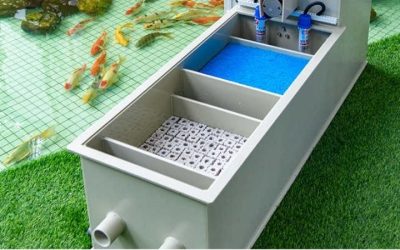
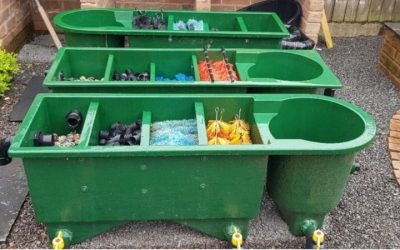
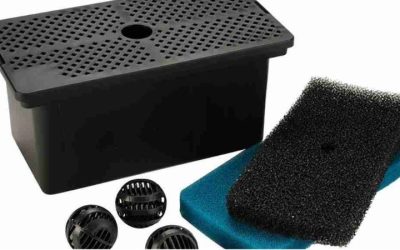
Media order inside whichever unit you choose is always the same: mechanical first so solids never reach the biological layer, biological second and never replaced wholesale, chemical last and only when there is a specific reason for it to be in the tank.
Applying the Numbers to a Real Build
Any cichlid aquarium filtration guide has to survive contact with a cabinet, a wall and a rock wall. This section covers placement, how the answer changes by tank size, and how species group affects what the filter actually has to handle.
Tank Size, Placement and Fit
Measure the cabinet internal height against the canister and the wall clearance against any hang-on-back before ordering, since a canister needs its full height plus hose bend room and a hang-on-back needs 4-6 in (10-15 cm) behind the glass. Neither fits by luck.
Intake placement matters more here than in a planted tank, because these fish move sand constantly. Keep the intake clear of the substrate line by at least 2 in (5 cm), and fit a coarse sponge prefilter so grain does not reach the impeller.
How 55, 75 and 125 Gallon Builds Differ
At 55 gallons (208 L) a single mid-range canister rarely reaches the loaded target alone, so most working builds pair a canister with a hang-on-back. That combination also gives redundancy, which matters in a tank stocked densely enough that a dead filter shows within hours.
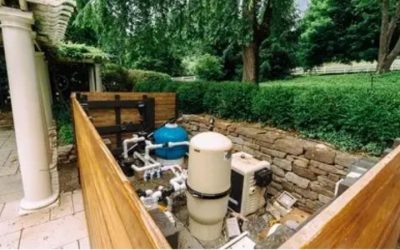
At 75 gallons (284 L) a large canister handles it, and at 125 gallons (473 L) a sump becomes the sensible answer because it moves heaters and media out of the display, protects them from fish that rearrange the tank, and provides the media volume this bioload actually needs.
How Species Group Changes the Load
Mbuna are grazers fed frequently and kept densely, which produces a steady, high waste stream and puts the emphasis on biological capacity and water change volume rather than on flow alone. Nitrate under 20 ppm before the weekly change is the reading to hold.
Open-water haps and peacocks are fed less often but individually larger, and they use swimming length rather than caves. Shell dwellers sit at the opposite extreme: low bioload, but the filter intake must not disturb a sand bed they are constantly excavating.
Myths That Undersize Cichlid Filters
Three beliefs cause most of the underfiltered rift lake tanks in this hobby, and each one has a number in this cichlid aquarium filtration guide that replaces it. All three come from applying general aquarium advice to a stocking density that general advice never contemplated.
Myth: The Rated GPH Is What You Get
Manufacturers measure flow with an empty housing and no hoses, which is a legitimate test of the pump and a poor guide to delivery. Real output falls 30-50% once media baskets, tubing and lift height are in place, and it keeps falling as media compacts.
Replace the assumption with a measurement. Time how long the filter takes to fill a container of known volume at the outflow, once when new and once each year. That single figure tells you whether the tank still meets the 8-10x target it was built around.
Myth: Enough Filtration Replaces Water Changes
Biological filtration converts ammonia to nitrate; it does not remove nitrate. In a densely stocked rift lake tank nitrate is the accumulating end product, and no filter class removes it at any meaningful rate without a dedicated method beyond ordinary media.
The replacement is a fixed weekly 30-40% change with temperature matched to within 1-2 °F (about 1 °C). Larger filters buy stability between changes and a bigger safety margin, but the change volume is what actually holds nitrate under 20 ppm.
Myth: Clean the Filter Thoroughly
Scrubbing biological media, or replacing all of it at once, removes the colony that the whole system depends on. In a tank at this stocking density the resulting ammonia rise is not academic, and at pH 8.4 the free NH3 fraction makes it worse.
Rinse mechanical media in old tank water, replace floss when it clogs, and leave biological media alone. Where media must be replaced, swap no more than a third at a time and leave at least a month between stages so the colony can recolonise.
Running the Filter Past the First Year
Filtration in a rift lake tank runs continuously against a heavy load, so this cichlid aquarium filtration guide would be incomplete without the maintenance pattern, the components that fail, and what the whole arrangement costs to keep running.
The Service Routine That Holds Turnover
Every eight to ten weeks: strip the canister, rinse mechanical layers in old tank water, clear the impeller housing of sand and grit, and check hose internal diameter for the film that quietly reduces flow. Hang-on-back units need the same attention every two to four weeks.
Weekly, alongside the water change, check that the intake sponge is clear and that the outflow is still moving surface water. Surface agitation is how gas exchange happens, and a warm tank at 80 °F (27 °C) has less dissolved oxygen to begin with.
What Fails and What It Does
Canister seals are the serious failure, since a gasket that gives way puts water on the floor rather than in the tank. Hoses stiffen over years and lose internal diameter, quick-disconnect collars crack, and priming becomes harder each service as the seals age.
Impellers are the common one here because of sand. Grain drawn past an unprotected intake wears the shaft and the housing, so flow falls gradually with no change in noise until it is already well below target. A prefilter sponge prevents most of that.
The 12-Month Running Cost
Recurring spend is mechanical floss, occasional biological media top-ups, replacement impellers and hoses, and electricity for a canister running continuously alongside a heater in a warm tank. Filters using proprietary cartridges cost more across a year and discard bacteria every time.
On timing, canisters and sump components see their deepest discounts in late June and again in late November, which suits a planned upgrade. A sale changes nothing biological: a new filter still needs seeded media moved across, and a new tank still needs three to eight weeks of cycling.
Cichlid Aquarium Filtration Guide: Questions
These come up once the turnover target is understood but before the order is placed. Every answer in this cichlid aquarium filtration guide stays with loaded flow, media and failure behaviour, since those decide the outcome far more than the class printed on the box.
Can I use two smaller filters instead of one large one?
Yes, and in a densely stocked tank it is often better. Add the loaded flow figures to reach the same 8-10x target, and stagger the service dates so that one unit always holds an established bacterial colony while the other one is being stripped and cleaned.
Do cichlids need a powerhead as well?
Often useful rather than essential. A powerhead breaks up dead spots behind rockwork where detritus settles, and it raises surface movement in a warm tank. Aim it along the glass rather than into the open water so the fish are not swimming against it constantly.
Is carbon necessary?
No. Carbon is a targeted tool for removing medication residue or tannins, it exhausts within three to four weeks, and it occupies space that biological media would use better. Run it when there is a reason and remove it when that reason has passed.
How do I know turnover has dropped?
Nitrate climbing at an unchanged routine is the usual first sign, ahead of anything visible. Confirm by timing the outflow into a container of known volume and comparing it against the figure you recorded when the filter was new and freshly serviced.
Does a sump make sense on a 75 gallon?
It can, if the tank is drilled and there is cabinet space. A sump adds media volume, moves the heater out of the display where these fish sometimes damage it, and simplifies top-ups. On an undrilled tank the complication rarely repays itself.
See More:
Conclusion
This cichlid aquarium filtration guide reduces to four figures: 8-10x loaded turnover against actual water volume, media staged mechanical then biological then chemical, service every eight to ten weeks, and ammonia treated as urgent above 0.25 ppm because of rift lake pH.
Buy rated flow well above the target to survive the 30-50% loaded drop, prefer loose media over cartridges, and pair two units where one cannot reach the number. Filtration buys stability between water changes; it never replaces the weekly 30-40% change itself.
Ready to decide? Our #1 pick for 2026 is the 40 gallons (151 L).
Live price & availability on Amazon.
Related Reviews & Guides
Metal vs Wood Aquarium Stand Pros and Cons: Top Expert Guide
JBJ Arctica vs Hailea Aquarium Chiller: Best Compared Guide