Last Updated: September 25, 2026
For a large reef that can be drilled and plumbed, a sump is usually the more flexible choice, but it is not mandatory. The canister vs sump for a large reef tank decision comes down to space for a skimmer, reactors and heaters, not just gallons per hour, since the two are different filtration architectures rather than interchangeable boxes.
As an Amazon Associate we earn from qualifying purchases.
As an Amazon Associate we earn from qualifying purchases at no extra cost to you. Prices and availability are accurate as of the date shown and are subject to change.

LYL LEYOULAND Adjustable Sump Baffle Kit - Refugium Kit for 20 Gallon Long Tank - Reef Aquarium - Saltwater Aquarium Filter System- Protein Skimmer Sump
Selected for "Canister vs Sump for a Large Reef Tank: Best Expert Guide": this listing is protein skimmers (LYL LEYOULAND Adjustable Sump Baffle Kit - Refugium Kit for 20 Gallon ), matching the equipment this article covers.
View on Amazon
Reefing Art Ceramic Bio Filter Media Vast Surface Area for Aquarium Sump Canister (1 Box / 24 pcs)
Selected for "Canister vs Sump for a Large Reef Tank: Best Expert Guide": this listing is filtration (Reefing Art Ceramic Bio Filter Media Vast Surface Area for Aquarium Su), matching the equipment this article covers.
View on Amazon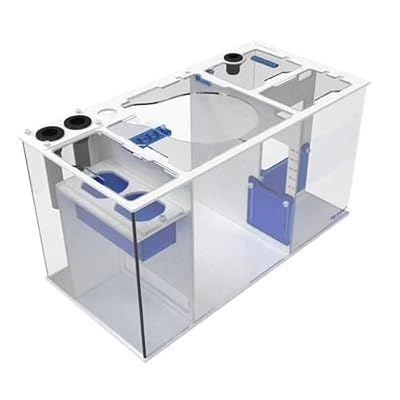
Fiji Cube Advanced Reef Sump 30
Selected for "Canister vs Sump for a Large Reef Tank: Best Expert Guide": this listing is aquarium equipment (Fiji Cube Advanced Reef Sump 30), matching the equipment this article covers.
View on Amazon
LYL LEYOULAND Adjustable Sump Baffle Kit - Refugium Kit for 10 Gallon Tank - Reef Aquarium - Saltwater Aquarium Filter System- Protein Skimmer Sump
Selected for "Canister vs Sump for a Large Reef Tank: Best Expert Guide": this listing is protein skimmers (LYL LEYOULAND Adjustable Sump Baffle Kit - Refugium Kit for 10 Gallon ), matching the equipment this article covers.
View on AmazonBy David Nguyen
Quick answer: For most people in 2026, the best canister vs sump for a large reef tank is the 120-gal reef — our #1 rated choice. See the full ranked comparison, alternatives and buying advice below.
How Canister and Sump Filtration Work
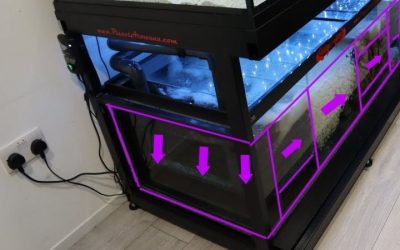
A canister is a sealed pressurized loop, while a sump is an open lower tank that adds water volume and equipment space. Understanding how each moves water, and why display circulation differs from sump turnover, explains why a large reef often leans toward a sump without ruling a canister out entirely.
How a Canister Moves and Filters Water
A canister draws water through an intake, pushes it through sealed media and returns it. Fluval lists two figures for the FX6, 925 GPH pump output and 563 GPH filter circulation, and those are different columns; the 563 figure is the one to use when discussing manufacturer circulation through the media.
Because the loop is closed, a canister excels at mechanical and chemical polishing in a contained space. It does not, however, add display water volume or open room for a skimmer, so its role in a reef is defined by that sealed architecture rather than by the higher pump-output number alone.
How a Reef Sump Moves Water
A sump is fed by an overflow and returned by a pump, and a common modern starting range is around 2 to 5 times system volume per hour after head pressure, per Bulk Reef Supply. That range is a practical guideline shaped by plumbing and filtration, not a fixed biological law for every reef.
The open design lets you place a skimmer, reactors, heaters and dosing gear below the display and raise total water volume. Size the return around that 2 to 5 times starting point, adjusting for head loss and equipment, rather than treating a single turnover multiple as a universal target.
Why Display Flow Is Different From Sump Turnover
Sump turnover and in-display circulation are separate numbers. On a 120-gallon reef, a 3 to 5 times sump return is only about 360 to 600 GPH through the sump, while most coral circulation comes from separate powerheads or wavemakers placed inside the display.
Confusing the two leads people to oversize a return pump to chase flow that belongs to wavemakers. Keep sump turnover for filtration and gas exchange, and handle coral flow with in-tank devices, since a large return pump is not a substitute for correct wavemaker placement in a reef.
How Filtration Volume Changes
A canister’s media volume is fixed by its body; the FX6 lists 20 L of canister volume and 5.9 L of biological volume. A sump’s capacity, by contrast, depends on the actual sump size and operating water depth, so there is no single default figure to quote for it.
That difference matters for expandability. A canister gives a known, contained media volume, while a sump can be built larger and reconfigured over time, so the choice partly reflects whether you want a fixed sealed capacity or an open bay you can grow into as the reef matures.
What It Looks Like in Practice
The right architecture depends on your build: whether the tank has an overflow, how much equipment you run, and whether you want mechanical polishing or expandable capacity. The table below maps common situations to each approach with a key number, so you can see where a canister or a sump fits your reef.
| Situation | Canister | Sump | Key Number |
|---|---|---|---|
| 120-gal reef | Possible | Highly expandable architecture | 360-600 GPH at 3-5x sump return |
| No drilled overflow | Simpler installation | Requires overflow/plumbing solution | – |
| Heavy equipment load | Limited enclosed space | Skimmer/reactors/heaters sit remotely | – |
| Mechanical polishing | Strong use case | Socks/rollers also possible | FX6 563 GPH circulation example |
A Large Reef Without an Overflow
If the display has no drilled overflow, a canister avoids building a drain and return system, which is the simpler installation. The FX6 provides 563 GPH manufacturer circulation through its media, giving mechanical and chemical filtration without cutting the tank or plumbing a sump underneath it.
That simplicity is the canister’s real advantage in this case. It will not add water volume or open equipment space the way a sump does, so it fits a reef where drilling is not an option, provided coral flow is handled separately by in-tank wavemakers.
A Reef With Skimmer, Reactors and Dosing Gear
When you run a protein skimmer, media reactors, a heater and dosing gear, a sump adds the physical space to house them below the display. Size the plumbing around roughly 2 to 5 times actual turnover as a starting framework, adjusting for head loss and the equipment in the water path.
That open bay is hard to replicate in a sealed canister. A sump also raises total system volume, which can steady parameters, so a heavily equipped reef is the clearest case where the sump’s flexibility outweighs the canister’s simpler install for a large tank.
A System Focused on Mechanical Polishing
A canister can be genuinely useful for particulate and carbon duties, running polishing media in a contained loop. Just avoid equating the 925 GPH pump-output figure with actual filtered circulation; the 563 GPH circulation number is the one that describes water passing through the FX6’s media.
So for mechanical polishing, a canister is a strong tool, and a sump can also run socks or roller mats for the same job. Choose based on whether you want a sealed polishing loop or an open sump that handles polishing alongside skimming and other equipment.
A High-Flow Coral Tank
Do not try to push all required coral flow through the sump. On a 120-gallon system, even a 5 times sump return is only about 600 GPH through the sump, while corals may need far more in-display movement supplied by wavemakers rather than the return pump.
This is why sump turnover and coral flow are budgeted separately. Keep the return sized for filtration and gas exchange around the 2 to 5 times range, and meet coral flow demand with dedicated powerheads, since overspinning the return to chase flow strains the sump without helping corals.
Frequently Asked Questions
Reef keepers ask how much flow a sump needs, whether a specific return is enough, whether an FX6 really filters its pump-output figure, and whether 10 times flow is required. The answers below stay with Bulk Reef Supply guidance and Fluval specs, and keep sump turnover distinct from display circulation throughout.
How Much Flow Should Go Through a Reef Sump?
A common modern starting range is around 2 to 5 times water volume per hour after head pressure, according to Bulk Reef Supply. That is a practical guideline shaped by plumbing and filtration goals rather than a fixed rule that applies identically to every reef system.
Adjust within that range for head loss, the equipment in the loop and your maintenance strategy. Treat it as a sizing framework for the return pump, and remember that coral circulation is handled separately, so the sump figure is only part of a reef’s total water movement.
Would 600 GPH Be Enough for a 120-Gallon Sump Return?
On a 120-gallon system, 600 GPH divided by 120 is about 5 times per hour, which sits at the upper end of that practical 2 to 5 times range. So it is a reasonable sump return figure rather than an excessive or insufficient one for that volume.
Whether it is right for you depends on head loss and the equipment in the path, which reduce delivered flow. Confirm the pump’s rated flow at your actual head height, since the 600 GPH figure must survive real plumbing to land in that 2 to 5 times window.
Does an FX6 Really Filter 925 GPH?
Fluval lists 925 GPH as pump output but 563 GPH as filter circulation, and those are different figures. When discussing how much water passes through the media, the 563 GPH circulation number is the appropriate one, not the higher pump-output value.
So the FX6 does not filter 925 GPH in the media sense. Use the circulation figure when comparing it to a sump return, and keep in mind that installed flow drops further with media loading and head, so real throughput sits below even the 563 GPH figure.
Does a Reef Tank Need 10x Flow Through the Sump?
Not universally. Bulk Reef Supply describes 2 to 5 times as common with modern systems and around 10 times as the upper end of normal sump or filter throughput, not a required target for every reef. A 120-gallon reef at 10 times would be about 1,200 GPH through the sump.
Most reefs do their coral flow with wavemakers and keep the sump return more moderate. So 10 times is an available ceiling rather than a mandate, and the practical starting point stays in the 2 to 5 times range after head pressure for a large tank.
Final Thoughts
The canister vs sump for a large reef tank question rarely has a universal answer: a sump is usually more flexible for equipment and volume, while a canister stays practical where drilling is not an option or mechanical polishing is the goal. Keep sump turnover separate from display circulation, size the return around 2 to 5 times, and let plumbing and equipment decide.
Ready to decide? Our #1 pick for 2026 is the 120-gal reef.
Live price & availability on Amazon.
Related Reviews & Guides



Landen EzCube 60P AIO Reef Kit Review Worth It: Best Compared
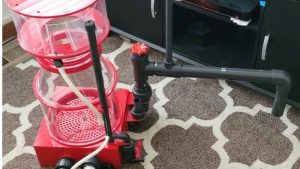
Best Protein Skimmer Under 500 Dollars: Top Picks Guide