Last Updated: October 21, 2026
Knowing how to choose an all in one saltwater tank is a short sequence rather than a guess: decide fish or reef, size by the display volume you actually stock, check the light against the corals you want, and list the gear the tank does not include before you spend.
As an Amazon Associate we earn from qualifying purchases.
By David Nguyen
Start With Your Goal and the Right Volume
A good choice starts with your goal and the tank’s real volume, since those decide everything that follows. Fish-only and reef setups ask for different light and stability, and an all-in-one’s display volume is less than its headline gallons. Settle the goal and the usable volume first, and the rest of the decision narrows quickly.
Decide Fish-Only or Reef First
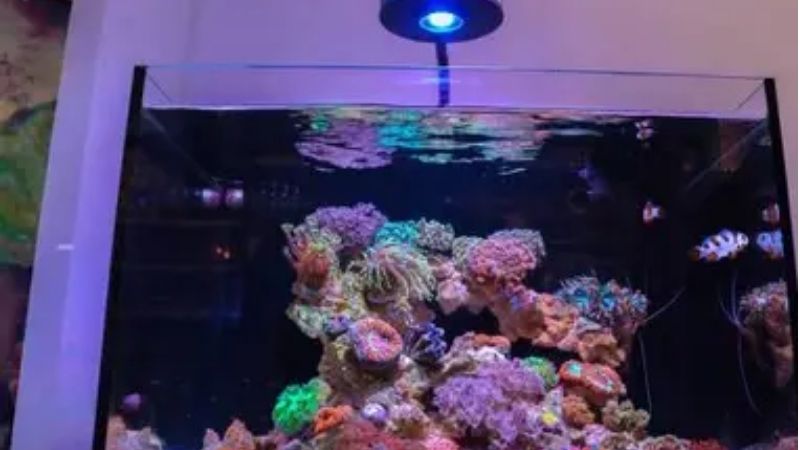
Before comparing tanks, decide whether you want fish only or a reef, because that single choice drives the light, flow and stability you need. A fish-only tank is forgiving and needs little beyond stable water, while a reef demands the right light and steadier parameters. Naming the goal first stops you overbuying or underbuying later.
If corals are the goal, decide roughly which type, since softies, LPS and SPS ask for progressively more light and flow. That informs whether a stock light will do or an upgrade is needed. Fixing the ambition early turns the rest of the choice into matching a tank to a clear target rather than guessing.
Size by Display, Not System Volume
An all-in-one stores water in rear chambers, so the headline gallons are system volume, more than the display volume you actually stock. Judge capacity by the display figure, since that governs how many fish and corals the tank truly holds. Reading the total as swimming space is the common way a tank ends up overstocked.
A steadier, larger volume also forgives mistakes, so weigh stability against footprint and budget. For most goals a little more display volume eases the swings a nano suffers. Sizing by the real display figure, with an eye on stability, is the second step after fixing your goal.
Check the Light Against Your Corals
If you want corals, the light decides what is possible, and specs mislead here, since watts, lumens and Kelvin are not PAR. A bright-looking stock fixture can still fall short of the usable light corals need at their depth. Judge the light by the PAR it delivers where corals sit, not by the numbers on the box.
Match the light to the coral goal set earlier, since softies accept modest light while LPS and SPS need more. If the stock light falls short, budget an upgrade rather than assuming it covers corals. For a fish-only tank, by contrast, the stock light is rarely a limiting factor at all.
List What You Must Add
An all-in-one bundles filtration, not a complete kit, so list what the tank omits before buying. A heater, RODI water, salt and often an auto top-off are separate, and contents vary by model, so read the exact SKU. Knowing the gaps turns a surprise into a budget line you plan for in advance.
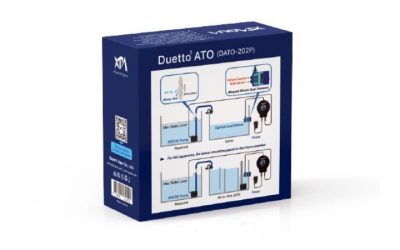
Add a powerhead if corals need more flow than the return pump provides, and an auto top-off to steady salinity in a nano. These additions complete the system the tank only starts. Listing them up front ensures the setup is ready at launch rather than stalling for want of a missing essential.
Match the Tank to Your Reef and Fix Common Gaps
With the goal, volume, light and add-ons settled, matching is straightforward, and most poor choices show up as one of a few fixable gaps. The table pairs each symptom with what it appears alongside, the likely cause and the first action, so you can correct a mismatch quickly or avoid it at purchase.
| Symptom | Sign Alongside | Likely Cause | First Action |
|---|---|---|---|
| Overstocked tank | Water quality struggles | Stocked to system, not display | Restock to display volume |
| Corals not thriving | Poor color or growth | Light short of the needed PAR | Upgrade the light for corals |
| Stalled setup | Missing heater or salt | Assumed AIO included all | Read the SKU; buy the gaps |
| Detritus in corners | Weak circulation | Return pump alone for flow | Add a sized powerhead |
Match Volume to Your Stocking
Once you know the display volume, stock to it rather than to the headline gallons, keeping the bioload modest for the real space. A tank stocked to its system volume crowds quickly, straining water quality in a small tank. Matching livestock to the display figure is what keeps a nano stable and healthy.
If a tank already struggles with water quality, overstocking on the wrong figure is a common cause. Restocking to the display volume, or stepping up to more volume, resolves it. Sizing the stock to the real space, not the box’s number, prevents the problem before it starts.
Match Light to the Coral Goal
Pick a light that delivers the PAR your chosen corals need at their depth, upgrading from the stock fixture if it falls short. Softies suit a modest light, while LPS and SPS need more, so match the fixture to the goal rather than the wattage. Air on the side of a capable light if corals matter.
If corals fail to thrive despite good water, a light short of the needed PAR is the usual cause. Upgrading the light, rather than adjusting other factors, is the fix that addresses it. Judging light by PAR at placement keeps a reef’s lighting matched to what you actually keep.
Add Flow and Stability Gear
Add a small powerhead if corals need more circulation than the return pump provides, since its rated flow is filtration flow, not total reef movement. Size it to the tank so the flow stays gentle and even. An auto top-off then steadies salinity, holding conditions constant as a nano evaporates.
If detritus collects in corners, weak circulation is the likely cause, and a sized powerhead spreads movement to clear it. Adding stability gear early, rather than reacting to problems, keeps the tank calm. These additions turn the tank’s filtration base into a complete, stable reef system.
Budget the Complete Setup
Total the tank plus the gear it omits, since the true cost to run as you intend is more than the sticker. A heater, RODI water, salt, an auto top-off and any light upgrade all belong in the budget. Counting the complete setup prevents both surprise costs and a stalled launch.
If a setup stalls at launch for a missing essential, an incomplete budget is the cause. Listing what the SKU omits and buying the gaps first avoids it. Budgeting the whole system, not just the tank, is the final step that turns a good choice into a working reef.
Frequently Asked Questions
Common questions cover how to approach the choice, what size to pick, whether the stock light suffices, and what to buy beyond the tank. Each answer gives the practical rule first, then the condition that adjusts it for your goal. Read each rule, apply the exception, and the choice resolves itself.
How do I choose an all-in-one tank?
Start by deciding fish-only or reef, since that drives the light and stability you need. Then size by the display volume, check the light against your corals if any, and list the gear the tank omits. Working through those steps in order turns a broad choice into a clear match to your goal.
Avoid choosing on looks or headline gallons alone, which skips the factors that decide success. A short sequence of goal, volume, light and add-ons covers the essentials. Following it keeps the decision grounded in what the tank must actually do for you. That order keeps the decision grounded in the tank’s actual job.
What size all-in-one do I need?
Judge by the display volume you actually stock, not the system total, since rear chambers hold water that adds no swimming space. Match that display figure to your intended livestock, keeping the bioload modest. A steadier, larger volume also forgives mistakes, so weigh stability against footprint and budget.
For most goals a little more display volume eases the swings a nano suffers, which helps beginners especially. If you may add corals or fish later, a little headroom saves an early upgrade. Sizing by the real display figure keeps stocking realistic and the tank stable.
Is the stock light good enough?
For fish or hardy softies, often yes, but for demanding corals, frequently not, and specs will not tell you. Watts and Kelvin are not PAR, so a stock light that looks bright can still fall short for LPS or SPS. Judge it by the PAR it delivers where corals sit, not by the fixture’s numbers.
Match the light to the coral goal, upgrading if the stock fixture is weak for what you want to keep. For a fish-only tank the stock light is rarely a limit. Deciding by your corals’ PAR needs, rather than assuming, is the reliable way to judge the light. Err on the side of a capable light whenever corals are the aim.
What do I need beyond the tank?
Commonly a heater, RODI water, salt and an auto top-off, plus a powerhead for coral flow and a light upgrade if the stock one is weak. These are separate from the tank whatever the AIO label implies. Reading the SKU and listing the gaps reveals the full setup you must budget.
An auto top-off is easy to overlook yet valuable in a nano, where evaporation swings salinity. Buying the essentials alongside the tank means the system is complete at launch. Treating the tank as the core and the add-ons as part of the plan avoids a stalled start.
Final Thoughts
In short, how to choose an all in one saltwater tank is a sequence: decide fish or reef, size by display volume, match the light to your corals by PAR, and budget the gear the tank omits. Work through it in order, fix the common gaps as they appear, and the right tank and setup become clear.

Aquarium Powerhead Surface Skimmer Nano Review
Best High Volume Recirculation Pump for Skimmers: Compared