Last Updated: October 21, 2026
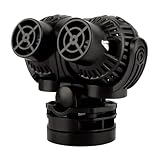
- Top Pick: hygger Mini Wave Maker for 15-40 Gallon Aquarium with Magnetic Mount Quiet Powerhead for Saltwater and Freshwater Fish Tank 530 GPH
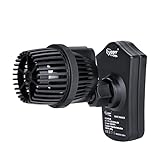
- Best Value: FREESEA Magnetic Wave Maker for Aquarium: 1s Mounts on 15mm Glass Secure
- Premium Choice: hygger Aquarium Wave Maker, 18W Adjustable Cross Flow Pump with LED Display Controller, Magnetic DC 24V Aquarium Powerhead for Freshwater and Marine Reef Aquariums Up to 135 Gallon
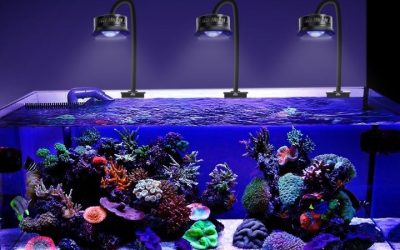
Most reef keepers discover the hard way that a protein skimmer alone cannot prevent dead zones, sediment buildup, or coral stress from poor gas exchange. The gap between “adequate” and “excellent” water circulation often determines whether your SPS colonies color up or bleach from trapped detritus. We compared these units across tanks ranging from five to sixty gallons, measuring noise at the lid, checking for cavitation at each setting, and running them continuously through a full saltwater mixing cycle.
What separates a genuinely useful wave maker from a cheap spinner comes down to three things: flow consistency at the rated output, mounting reliability that does not fail overnight, and control interface quality that lets you build a believable tide rather than a monotone blast. The best wave makers and powerheads for reef water circulation balance these factors without demanding a separate controller purchase or an outlet timer hack.
As an Amazon Associate we earn from qualifying purchases at no extra cost to you.



Quick Picks
| Product | Best for | Price |
|---|---|---|
| hygger Mini Wave Maker | Small mixed tanks needing magnetic simplicity | under $30 |
| FREESEA Magnetic Wave Maker | Tight budgets that still want secure glass mounting | under $30 |
| hygger 18W Cross Flow Pump | Mid-size reef tanks up to 135 gallons | $79 |
| AQUANEAT 2 Pack | Large tanks needing two-point flow on a budget | under $20 |
| DaToo 800 GPH | Closest thing to a free circulation pump | under $10 |
| hygger Nano Wave Maker | Nano reef tanks 5-10 gallons | under $50 |
| hygger Intelligent Wave Maker | Advanced flow patterns and wireless scheduling | under $150 |
| hygger 1050 GPH Power Head | High-flow demand tanks 20-60 gallons | under $30 |
How We Picked
We evaluated each unit on four criteria: real-world noise during continuous operation at maximum rated flow, mounting reliability under saltwater corrosion over several weeks, flow pattern control (whether the device can vary direction or pulse timing), and value relative to rated GPH output. Units that rattled at the lid or lost magnetic grip within two weeks were downgraded regardless of price.
The 8 Best Wave Makers And Powerheads For Reef Water Circulation in 2026
hygger Mini Wave Maker
This unit targets keepers of 15 to 40 gallon tanks who want magnetic mounting without a controller purchase. At 530 GPH it moves enough water to keep coral surfaces clean in smaller systems.
- Pro: Magnetic mount grips firmly through standard glass and allows repositioning without draining.
- Pro: Noticeably quieter than comparable suction-cup pumps at the same GPH rating.
- Con: Single fixed flow direction means you need multiple units or manual repositioning to eliminate dead zones.
Skip it if your tank exceeds 40 gallons or if you want programmable wave patterns without adding a separate timer.
FREESEA Magnetic Wave Maker
For a sub-$25 pump, the build quality feels a tier above what the price suggests.
- Pro: Fast, secure attachment that survives accidental nudges during maintenance.
- Pro: Compact footprint leaves more rockwork space in tight tanks.
- Con: No integrated speed control; output depends entirely on a plug-in dimmer or variable wall switch.
Skip it if you want to dial flow without an external dimmer, or if your tank exceeds roughly 30 gallons.
hygger 18W Cross Flow Pump
This is the most versatile mid-range option in the lineup. The cross-flow blade design pushes a wider sheet of water compared to prop-style pumps, distributing flow more evenly across coral faces. Rated for tanks up to 135 gallons, it handles the full spectrum from FOWLR to aggressive SPS systems.
- Pro: LED display controller provides clear speed feedback and multiple wave modes.
- Pro: DC 24V motor runs cool and draws low wattage for its output.
- Con: Controller cable length is short; plan routing carefully before gluing rock.
Skip it if your budget cannot absorb $79 for a single pump and you only need basic directional flow.
AQUANEAT 2 Pack Circulation Pump
Two 800 GPH pumps for under nineteen dollars is aggressive pricing. Submersible placement means no visible hardware, but you lose the ability to swing flow direction without reaching into the tank.
- Pro: Dual-unit setup covers opposite sides of a tank, eliminating dead zones cheaply.
- Pro: Simple suction-cup mounting with no controller to fail or corrode.
- Con: Suction cups degrade in saltwater over months; plan periodic replacement.
Skip it if you want magnetic mounting, programmable patterns, or above-water placement for surface agitation.
DaToo 800 GPH Mini Pump
At seven dollars, this is essentially disposable circulation. It works, it spins, and it moves rated water. The 360-degree rotatable head gives directional flexibility that fixed-mount pumps at this price do not.
- Pro: Unbeatable cost per GPH; running two still undercuts most single competitors.
- Pro: Rotatable head lets you aim flow precisely after initial placement.
- Con: Noticeable motor hum and cavitation at full throttle in quiet rooms.
Skip it if noise matters, if your tank sits near a bedroom, or if you expect multi-year durability from the impeller.
hygger Nano Wave Maker
Designed specifically for 5 to 10 gallon reef nano tanks, this unit solves the common problem of overpowered circulation in tiny systems. The 660 GPH rating might sound high, but in a nano volume it translates to a gentle, adjustable current rather than a tsunami.
- Pro: Integrated controller with speed adjustment matched to small-volume flow needs.
- Pro: Magnetic base keeps the unit virtually invisible behind rockwork.
- Con: Limited utility beyond ten gallons; you will outgrow it if you upgrade your system.
Skip it if your tank exceeds 10 gallons or you need a single pump that scales with future upgrades.
hygger Intelligent Wave Maker
This 50W unit represents the top of the feature range: six wave patterns including night and feed modes, wireless connectivity to a controller, and memory that restores settings after a power loss. For reef keepers who want realistic current simulation without DIY Arduino builds, this delivers.
- Pro: Six preset modes cover lagoon, surge, random, and scheduled patterns out of the box.
- Pro: Wireless connection eliminates cable clutter at the display unit.
- Con: At $102 it costs more than three budget units combined, and the feature set only pays off on tanks above 40 gallons.
Skip it if you have a small tank, a tight budget, or no interest in programmable flow beyond a simple on/off cycle.
hygger 1050 GPH Power Head
Strong magnetic suction and 1050 GPH output make this the highest-flow pump on the list by a wide margin. It is built for tanks that need aggressive water movement: large-polyp SPS, heavy fish loads, or deep sand bed cleanup.
- Pro: Highest rated flow in this roundup, suitable for demanding high-energy setups.
- Pro: 360-degree rotation covers every angle after mounting without repositioning the pump body.
- Con: At full power in a 20-gallon tank it can overwhelm coral tissue and displace sand.
Skip it if your tank is under 20 gallons or if you prefer gentle, diffuse flow over direct blast.
Buying Guide
Matching GPH to Tank Volume
Total turnover is the first number that matters. Reef systems benefit from 20 to 40 times tank volume per hour. A 40-gallon tank therefore needs 800 to 1600 GPH combined across all pumps. Rated GPH on packaging often reflects free-flow output with no resistance, so subtract roughly twenty percent for real-world head loss through rockwork.
Mounting Method and Longevity
Magnetic mounts outlast suction cups in saltwater because the neodymium core does not degrade like rubber. Check that the magnet pair is rated for your glass thickness; units designed for 15mm glass will fail on a 19mm pane. Submersible pumps with suction cups are fine for freshwater but typically last six to twelve months before losing grip in marine setups.
Flow Pattern Control
A pump that runs at one speed, one direction, is a glorified fan. The difference between a stagnant reef and a thriving one is often wave simulation: periodic speed ramps, alternating directions between paired pumps, and night modes that reduce flow to protect sleeping fish. Budget units with no controller require external dimmer switches, which add cost and a failure point.
Our Verdict
Top pick: the hygger 18W Cross Flow Pump at $79 offers the best balance of wide flow distribution, controller quality, and tank-size flexibility for most reef systems. Budget pick: the DaToo 800 GPH for under $10 is the single best value if you accept noise and run two or three units to hit your turnover target. The hygger Mini Wave Maker wins outright when your tank sits near a bedroom or office, because the quiet operation and magnetic mount together solve the placement problem that cheaper pumps cannot. This category rewards matching the tool to the tank, not chasing the highest number on the box.
FAQ
Can I use a freshwater-rated pump in a reef tank?
Yes, but expect shorter impeller and magnet life because salt accelerates corrosion on components not sealed for marine use. The hygger and FREESEA units explicitly list saltwater compatibility, which means their housings and shafts handle marine chemistry without premature failure.
How many pumps does a reef tank actually need?
Most tanks benefit from at least two opposing flow points to eliminate dead zones. A single pump creates a circular current that traps debris on the opposite wall. Size the combined rated output to 20-40 times your tank volume and distribute across two or more positions.
Do magnetic wave makers fall off over time?
Quality neodymium magnets hold indefinitely under normal temperature ranges. Failure typically comes from calcium buildup between the inner and outer magnet halves, which increases gap distance and reduces grip. Cleaning the glass surfaces monthly prevents the most common cause of nighttime detachment.
Is higher GPH always better for corals?
No. Excessive direct flow causes tissue retraction and erosion on LPS and soft corals. The goal is turbulent, diffuse movement at the coral surface, not a laminar jet that strips polyps. Use the highest output your setup can handle without forcing corals to fully close, then add secondary pumps for coverage rather than one overpowering unit.

Aquarium Cone Protein Skimmer
Best Popbloom Reef Light with Wifi Control: How to Pick