Last Updated: September 27, 2026
A first reef rarely needs a reactor on day one, so the best calcium reactor for a first reef tank is often the one you delay buying. Until your alkalinity demand and confidence grow, simpler dosing is usually the smarter, safer starting point for a new reef keeper.
As an Amazon Associate we earn from qualifying purchases.
By David Nguyen
How to Choose a First Reef Calcium Reactor
For a first reef, the most useful question is whether a calcium reactor belongs on the tank yet at all. Once demand genuinely justifies one, these four criteria help a newcomer choose a body they can actually run, since the hardest part for beginners is the tuning and the parts list, not the price.
Decide Whether a Reactor Is Even Needed
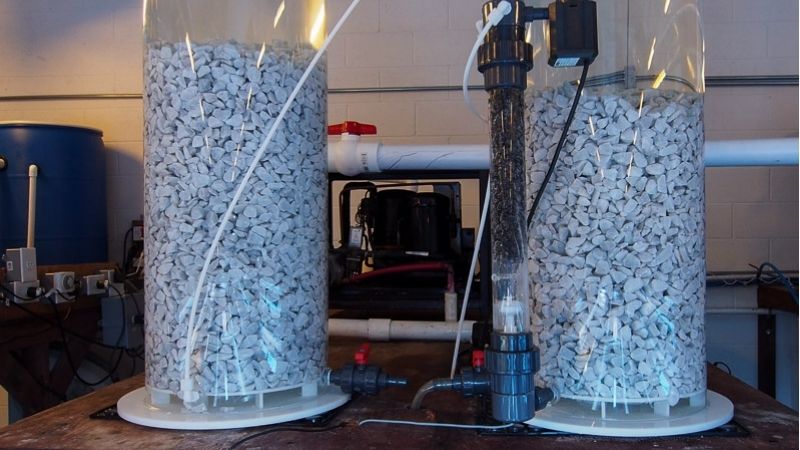
New reefs usually start with low alkalinity demand that two-part dosing or kalkwasser meets easily, so a reactor often solves a problem the tank does not have yet. Choosing no reactor for now is a legitimate, common outcome, not a failure, and it lets you learn parameters before adding CO2 gear.
A reactor becomes worthwhile once daily dosing turns tedious or demand climbs with coral growth. Until then, the automation is not worth the extra complexity, so measure your consumption over a few weeks and let a real, rising demand, rather than eagerness, decide when the reef is ready for one.
Measure Demand Before You Buy
The number that should drive the decision is daily alkalinity consumption, measured on your own tank. Test dKH at a fixed time for several days and note the drop, because that figure tells you both whether a reactor is justified and, later, which body’s range and media capacity actually fit.
Buying before measuring is the classic first-reef mistake, leading to an oversized reactor that is hard to tune down. Let the test log lead: low, easily dosed demand means wait, while a clear upward trend as corals grow is the honest signal that a reactor will start saving you time and effort.
Count Every Required Component
A reactor body is only part of the bill. A working setup adds a feed pump, a CO2 regulator with solenoid, a bubble counter, CO2 media and, ideally, a pH controller, so the reactor-body price excludes most of what makes it run. Total the whole chain before deciding it fits a beginner budget.
Knowing the full parts list also prevents a half-finished install. Some bodies bundle a recirculation pump, such as the T-1’s included Sicce pump, but you still supply the CO2 side, so read each listing and price the gaps before assuming a low body price means a low first-reef reactor cost.
Prefer Clear Tuning Documentation
For a first reactor, good documentation is worth more than a spec edge. A body with a clear setup and tuning workflow lets a beginner establish flow, purge air and dial output without guesswork, which matters far more than a slightly larger chamber when you are learning to read effluent.
Tuning targets are model and media specific, so do not copy another tank’s settings. Figures like the T-1’s internal pH of 6.5 to 6.8 apply to that reactor and its media, not universally, so follow the maker’s own guide, change one variable at a time, and confirm stability over several days.
Top Picks
These picks only make sense once your first reef’s demand actually justifies a reactor, so treat the list as conditional rather than a push to buy. Each is chosen for how manageable it is for a newcomer, with the reminder that continuing to dose remains a perfectly good first-reef decision.
| Product | Best For | Key Spec | Watch Out For |
|---|---|---|---|
| No reactor yet | Best for most first reefs | Two-part or kalkwasser dosing | Revisit once demand clearly rises |
| AquaReady cTech T-1 | Best first body if justified | 75-300 gal; 2.9 L; ~$235 (Sep 2026) | Body plus CO2 gear; needs tuning |
| Reef Octopus CR-100 | Best for a smaller first reef | 69-120 gal; 1.5 L chamber | pH probe and CO2 gear not included |
| GEO CR612 GEN3 | Best for a larger first reef | Up to 150 gal; 8 lb media | More capacity and cost than most need |
No Reactor Yet — Best Choice for Most First Reefs
For a large share of first reefs, the right answer is to hold off. Two-part dosing and kalkwasser meet the modest demand of a young, lightly stocked tank at low cost, and they let you learn how your parameters move before adding CO2, a regulator and the tuning a reactor requires.
This is a real recommendation, not a placeholder. Skipping the reactor now avoids a common beginner mistake of buying automation the tank cannot yet use, and it keeps your budget for a heater, test kits and lighting. Revisit the decision only when measured demand or dosing effort clearly climbs.
AquaReady cTech T-1 — Best First Body If Justified
Once demand justifies a reactor, the AquaReady cTech T-1 is the most beginner-manageable body here. Its 75 to 300 gallon range and 2.9-liter chamber fit most first reefs that have grown into needing one, and at around $235 as of September 2026 it still leaves budget for the CO2 side.
It still arrives needing a regulator, bubble counter and pH controller, and it rewards patient tuning rather than rushed changes. Follow its own documentation for effluent and internal pH instead of copying figures from forums, change one setting at a time, and confirm several days of stability before adjusting again.
Reef Octopus CR-100 — Best for a Smaller First Reef
For a smaller first reef that genuinely needs a reactor, the Reef Octopus CR-100 fits a 69 to 120 gallon window on a 1.5-liter chamber. It is a right-sized current body from an established brand, which keeps a newcomer from overspending on capacity a modest first tank will never use.
Its pH probe and the CO2 gear are not included, so budget those before assuming it is complete, and its smaller chamber means more frequent refills. It is a sensible first body when demand is real but moderate, provided you confirm current pricing and are ready to learn the tuning it requires.
GEO CR612 GEN3 — Best for a Larger First Reef
If your first reef is already large and demanding, the GEO CR612 GEN3, rated up to 150 gallons with 8 pounds of media, gives capacity and long refill intervals. For a big first tank that clearly justifies a reactor, that headroom keeps output steady while you find your footing with tuning.
For most first reefs it is more reactor, cost and CO2 use than the load needs, so reserve it for genuinely large builds. Its media is rated in pounds, which you cannot compare straight to liter-rated bodies, and like the others it still needs the full external control chain to run safely.
Frequently Asked Questions
First-reef keepers mostly ask whether a reactor belongs on a new tank and what to run instead while demand is low. These answers keep the focus on demand and safe, simple starting points, since the biggest beginner risk is adding CO2-driven automation before the reef actually calls for it.
Should a First Reef Start With a Calcium Reactor?
Usually not. A new reef’s demand is typically low enough that two-part dosing or kalkwasser handles it cheaply while you learn how your parameters behave. Starting without a reactor is a common, sensible outcome, and it avoids piling CO2 handling and tuning onto an already busy learning curve.
The time to reconsider is when daily dosing becomes a chore or demand climbs with coral growth. Let a measured, rising alkalinity draw be the trigger, not enthusiasm, and you will add a reactor when it genuinely saves effort rather than when it simply adds equipment to a first-year tank.
What Are the Alternatives While Demand Is Low?
Two-part dosing and kalkwasser are the mainstays. Two-part lets you add measured alkalinity and calcium separately and is easy to control by hand or a small doser, while kalkwasser supplements both through top-off water, and both suit the modest demand of most young, lightly stocked first reefs.
These methods also teach you how your tank consumes buffer, which is exactly the knowledge you need to size a reactor later. Note that no single method suits every reef, and heavier SPS demand eventually favors a reactor, so treat dosing as the right starting tool, not necessarily the permanent one.
Is There a Universal Reactor pH to Aim For?
No. Internal pH targets are specific to the reactor and the media it uses, so a figure like 6.5 to 6.8 quoted for the AquaReady T-1 applies to that body and media, not to every reactor. Copying another tank’s number is a reliable way to end up chasing an effluent that never settles.
Follow the documentation for your exact model and media, then verify with your own testing. Adjust one variable at a time, give the system several days to stabilize between changes, and let your aquarium’s alkalinity trend, not someone else’s setting, tell you whether the internal pH is actually right.
How Do I Know My Tuning Is Right?
The proof is in the tank, not the reactor. When your aquarium’s alkalinity holds steady at your target over several days without manual correction, the reactor is matched to demand. Effluent flow, bubble rate and internal pH are only the control knobs you use to reach that stable trend.
Because targets are model and media specific, judge success by your tank’s readings rather than a borrowed bubble count. Make small, single adjustments, wait for three to five days of stable results before changing anything else, and treat a calm, on-target alkalinity trend as the real sign of correct tuning.
Final Thoughts
The best calcium reactor for a first reef tank is frequently no reactor yet, and that is a sound beginner decision. Measure demand, count every required component, and favor clear documentation, then add a body like the AquaReady cTech T-1 only once a real, rising alkalinity draw justifies the step.
Best Aquarium Chiller for a Nano Reef Tank: Proven Top Picks

Aquarium Hang On Back Nano Protein Skimmer