Last Updated: September 25, 2026
Best wave maker for reef tank choices come down to total flow and pattern rather than raw output. Reefs want 20-40 times the water volume moved per hour, counting the return pump, delivered as broad varied movement rather than as a jet. Magnet rating against glass thickness is the specification most people forget to check first.
As an Amazon Associate we earn from qualifying purchases.
As an Amazon Associate we earn from qualifying purchases at no extra cost to you. Prices and availability are accurate as of the date shown and are subject to change.
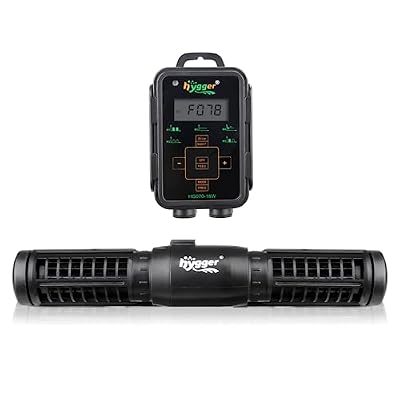
hygger Aquarium Wave Maker, 18W Adjustable Cross Flow Pump with LED Display Controller, Magnetic DC 24V Aquarium Powerhead for Freshwater and Marine Reef Aquariums Up to 135 Gallon
Selected for "Best Wave Maker for Reef Tank: Flow, Control and Placement": this listing is lighting (hygger Aquarium Wave Maker, 18W Adjustable Cross Flow Pump with LED Di), matching the equipment this article covers.
View on Amazon
hygger Aquarium Wave Maker for 5-10 Gallon Fish Tanks, Adjustable DC Power Heads for Aquarium with Controller, Aquarium Circulation Pump With Magnetic Base for Saltwater Freshwater Tank 660 GPH
Selected for "Best Wave Maker for Reef Tank: Flow, Control and Placement": this listing is pumps (hygger Aquarium Wave Maker for 5-10 Gallon Fish Tanks, Adjustable DC P), matching the equipment this article covers.
View on Amazon
hygger Aquarium Wave Maker 1321 GPH 12W, Adjustable Cross Flow Pump with LED Display Controller, Magnetic DC 24V Aquarium Powerhead for Freshwater and Marine Reef Aquariums Up to 60 Gallon
Selected for "Best Wave Maker for Reef Tank: Flow, Control and Placement": this listing is lighting (hygger Aquarium Wave Maker 1321 GPH 12W, Adjustable Cross Flow Pump wi), matching the equipment this article covers.
View on Amazon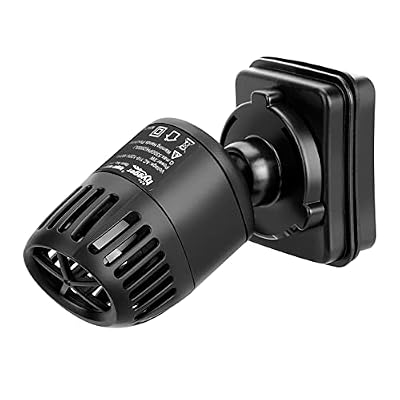
hygger Mini Wave Maker for 15-40 Gallon Aquarium with Magnetic Mount Quiet Powerhead for Saltwater and Freshwater Fish Tank 530 GPH
Selected for "Best Wave Maker for Reef Tank: Flow, Control and Placement": this listing is tanks (hygger Mini Wave Maker for 15-40 Gallon Aquarium with Magnetic Mount Q), matching the equipment this article covers.
View on AmazonBy David Nguyen
Total Flow and Pattern, Not Raw Output
Picking the best wave maker for reef tank use is a matter of reaching a total flow figure without pointing any of it directly at a coral. Four numbers settle it, and one of them is the thickness of your glass.
The Deciding Number: Total Turnover of 20-40 Times
Count the return pump first. A 75 gallon (284 L) reef holding roughly 65 gallons (246 L) of water needs 1300-2600 GPH (4921-9842 LPH) total, and a return pump delivering 400 GPH (1514 LPH) after head loss covers only a fraction of that.
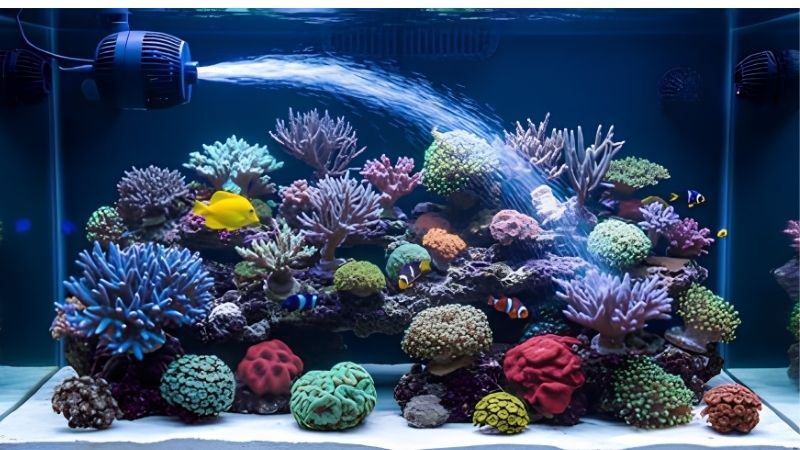
Two smaller powerheads beat one large one at the same total. Opposing flows meeting in open water produce random movement that reaches behind rock, while a single strong pump produces a directional current with dead spots either side of it.
Count what the return pump already contributes before adding anything. A return delivering 500 GPH (1893 LPH) after head loss into a 65 gallon (246 L) system is already supplying nearly eight times turnover, which changes what the powerheads need to add.
Two More Criteria With Numbers Attached
Flow pattern matters as much as volume. Corals are sessile and cannot move out of a jet, so a wide diffused output at 1500 GPH (5678 LPH) is preferable to a narrow one at the same figure aimed across the tank.
Magnet thickness is the specification people miss. Mounts are rated for a maximum glass thickness, commonly 0.5-0.75 in (13-19 mm), and a pump whose magnet is too weak for your glass will detach and land on a coral.
Controllability is the fourth figure. A pump adjustable from 20-100% lets you start low while corals settle and raise output as they grow, which matters because the flow a frag tolerates is not the flow a mature colony needs.
Tank Size, Placement and Fit
Measure your glass thickness against the mount rating before ordering, and check the internal clearance behind rockwork where the pump will sit. A pump that cannot be reached for cleaning gets cleaned rarely, and flow falls accordingly.
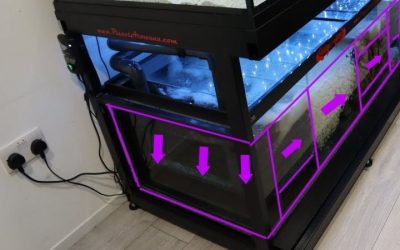
Aim along the glass rather than across the tank. Flow directed down the back wall and returning along the front produces circulation that reaches the whole footprint without any coral sitting in a direct stream.
Leave the surface moving as well. Visible surface agitation is what drives gas exchange, and in a warm reef holding less dissolved oxygen than cooler water, that movement matters as much as the circulation happening lower down.
The Options by Tank Size and Control Needs
Four classes cover almost every reef. Each is matched below to a tank and a need, because the best wave maker for reef tank duty depends on footprint length and on whether variable flow matters to you.
Fixed-Flow Powerhead: The Budget Baseline
Main numbers: a single speed, typically 500-1600 GPH (1893-6057 LPH), with a wide output nozzle on reef-oriented models. Two of these positioned to oppose each other reach the turnover target on most tanks under 75 gallons (284 L).
It suits keepers who simply need to reach a flow figure on a limited budget. It does not suit anyone wanting variation, since constant unidirectional flow tends to produce detritus accumulation in the same spots and gives corals no rest from the current.
Controllable DC Powerhead: The General-Purpose Default
Main numbers: adjustable typically from 20-100% of rated output, with pulse and wave modes and a feed pause. Being able to run at 60% and raise it as corals grow is the practical reason this class dominates.
It suits mixed reefs and any tank where coral placement will change. It does not suit a minimal budget, and the controller adds a failure point, so a model that defaults to a safe speed when the controller drops out is worth choosing.
Gyre or Cross-Flow Pump: For Long Tanks
Main numbers: a wide horizontal output, often 2000-5000 GPH (7571-18927 LPH), producing a broad sheet of flow along the tank rather than a cone. One unit can circulate a 48-72 in (122-183 cm) tank end to end.
It suits long tanks where point-source pumps leave the far end stagnant. It does not suit short or deep tanks, where the sheet reflects off the end glass and creates turbulence stronger than most corals tolerate.
Nano Powerhead: For Tanks Under 30 Gallons
Main numbers: 200-800 GPH (757-3028 LPH) with a compact body and a thinner magnet suited to 6-10 mm glass. A single unit usually reaches the turnover target in a nano when combined with the return pump.
It suits all-in-one nano reefs. It does not suit tanks with thick glass, since nano magnets are rated for thinner panels, and the compact body means the impeller chamber blocks with detritus sooner than a larger pump would.
| Option | Typical output | Flow pattern | Control | Best for |
|---|---|---|---|---|
| Fixed-flow powerhead | 500-1600 GPH (1893-6057 LPH) | Wide cone, constant | None | Reaching turnover on a budget |
| Controllable DC powerhead | 500-3000 GPH (1893-11356 LPH) | Wide cone, variable | 20-100%, wave modes | Mixed reefs, changing layouts |
| Gyre or cross-flow | 2000-5000 GPH (7571-18927 LPH) | Horizontal sheet | Usually variable | Tanks 48 in (122 cm) and longer |
| Nano powerhead | 200-800 GPH (757-3028 LPH) | Narrow to medium cone | Varies by model | Nano reefs under 30 gallons |
| Return pump alone | Rarely enough | Single direction | Not applicable | Never sufficient for a reef |
Head to Head, and When Not to Buy
Two classes get compared constantly, and there are cases where adding flow is the wrong response entirely. The best wave maker for reef tank use is sometimes the pump you already own, repositioned.
Two Small Pumps Versus One Large One
Two pumps win on pattern. Opposing flows create random movement that reaches behind rock and lifts detritus from corners, and they give redundancy if one fails, which matters in a tank where circulation stops mattering within hours.
One large pump wins on tidiness and cost, with a single magnet and cable rather than two. It loses on dead spots, and on the risk that its failure leaves the tank with return flow alone until you notice.
When More Flow Is the Wrong Fix
Detritus settling in one corner is a placement problem rather than a volume problem. Reposition the existing pumps to sweep that area before buying another, since adding output to a poor pattern usually creates a new dead spot elsewhere.
Corals retracting is often too much flow rather than too little, particularly with LPS. Move the coral or the pump before increasing anything, and remember that a retracted coral in strong flow looks similar to one in stagnant water.
The Cheaper Route That Works
Repositioning costs nothing and solves most flow complaints. Aim pumps along the back glass, angle them slightly upward toward the surface, and let the return current do the work rather than pointing anything into the rockwork.
A single controllable pump plus the existing return often reaches the target on tanks under 55 gallons (208 L). Measure what the return actually delivers after head loss before assuming you need two powerheads to make up the difference.
Running It and the 12-Month Cost
The best wave maker for reef tank use runs continuously in saltwater, which is harder on equipment than fresh water is. This section covers what fails, the maintenance that keeps output steady, and the safety points that apply to all of them.
What Fails and How Fast
Calcium deposits build on the impeller shaft and inside the housing, reducing flow gradually with no change in noise. A pump that seems weaker after six months usually needs stripping and soaking rather than replacing.
Magnet mounts lose grip as the rubber facing degrades, and a pump that detaches lands on whatever is beneath it. Check the mount monthly by pushing the pump gently, and replace the facing when it hardens or cracks.
Maintenance That Keeps Flow Steady
Strip and rinse each pump monthly, soaking the impeller in a dilute vinegar solution if deposits have built up, then rinsing thoroughly in RO/DI water before returning it. Detritus in the intake cage also cuts output noticeably.
Check flow against your original target annually. A tank that met 30 times turnover when set up commonly sits below 20 times two years later, and that decline shows as detritus accumulating rather than as anything obviously wrong.
Safety, Controllers and Timing
Every pump should carry a recognised certification such as UL or ETL, sit on a GFCI outlet and have a drip loop in its cable. Route controller cables away from the sump, since salt creep on a connector causes intermittent faults.
On timing, powerheads and controllers see their deepest discounts in late June and again in late November, which suits planned replacements. A sale changes nothing biological, and prices move constantly, so check at the moment of purchase.
Best Wave Maker for Reef Tank Questions
These arrive once the tank is running but before corals are placed. Every answer about the best wave maker for reef tank stays with total turnover and pattern, since those two decide almost every case.
How much flow does a reef need?
Twenty to forty times the actual water volume per hour, including the return pump. Soft corals sit at the lower end of that range and SPS at the upper, so a mixed reef aiming near 30 times covers most placements.
Where should I point the pumps?
Along the back glass or across the surface, never directly into rockwork or at a coral. Opposing two pumps produces random movement, and angling slightly upward keeps the surface moving, which is what drives gas exchange.
Do I need wave modes?
They help rather than being essential. Variable flow reduces the fixed dead spots that constant flow creates, and a feed pause is genuinely useful. Reaching the turnover figure matters more than the modes available to reach it.
Why has my pump got weaker?
Calcium deposits on the impeller shaft, or detritus in the intake cage. Strip it, soak the impeller in dilute vinegar, rinse in RO/DI water and reassemble. That restores most pumps that appear to be failing after six months of running.
See More:
Conclusion
The best wave maker for reef tank use is whatever reaches 20-40 times total turnover as broad, varied movement rather than a jet. For most tanks that means two controllable DC powerheads opposing each other, plus the return pump.
Check magnet rating against glass thickness before ordering, aim along the glass rather than into rock, strip and soak the impellers monthly, and re-measure flow annually as calcium deposits quietly reduce it.
Best Flow Pattern Setup for a Mixed Reef: Top Proven Guide
Best 75 Gallon Aquarium Kit for Saltwater: Top-Rated Guide